


ARLINGTON, VA – The annual Clicker Expo, a premier event for animal training professionals and enthusiasts, recently served as the launchpad for a significant advancement in pet technology: a new, smaller version of the popular Pet Tutor automatic feeder. The unveiling, which occurred several weeks ago in Arlington, Virginia, generated considerable buzz among attendees, particularly for its enhanced portability and practicality. The original blog post from April 2019, reflecting on the event, highlighted the immediate appeal of this compact device, signaling a strategic move by Smart Animal Training Systems to cater to a broader spectrum of pet owners and training scenarios.
Clicker Expo: A Nexus for Positive Reinforcement Training
Clicker Expo is renowned as a pivotal gathering for the positive reinforcement animal training community. Organized by Karen Pryor Clicker Training, the event brings together leading experts, researchers, and practitioners from around the globe to share the latest scientific insights, innovative techniques, and practical applications in animal behavior and training. Held annually in various locations, the Arlington, Virginia, iteration discussed in the original report, drew hundreds of attendees eager to immerse themselves in a collaborative learning environment. The expo typically features a comprehensive schedule of lectures, workshops, and hands-on labs covering topics from basic obedience to complex behavioral modification, sports training, and cooperative care. Beyond the formal sessions, it serves as an invaluable networking opportunity, fostering connections among colleagues and students, and providing a marketplace for cutting-edge training tools and resources. The atmosphere is consistently described as one of vibrant intellectual exchange and shared passion for humane, effective animal training methods. For many attendees, like the author of the initial blog post, Deborah Jones, Ph.D., a retired psychology professor and prominent animal trainer, the expo offers a crucial creative reset and an opportunity to discover "interesting new things" and acquire "new stuff" that can enhance their training practices.
The Evolution of the Pet Tutor: Meeting the Demands of Modern Training
Smart Animal Training Systems, the innovator behind the Pet Tutor, has established itself as a key player in the pet technology sector, particularly for its contributions to remote and automated reinforcement. The original Pet Tutor feeder revolutionized how many trainers approached conditioning, allowing for precise, hands-free delivery of rewards, which is critical for complex behaviors or when physical proximity might interfere with training goals. Its robust design and customizable settings made it a staple in professional training facilities and homes alike.
The development of a smaller Pet Tutor feeder, affectionately dubbed a "little cutie" by early adopters, represents a responsive adaptation to market feedback and evolving training needs. While functionally identical to its larger predecessor, the reduced footprint addresses several practical challenges faced by pet owners and trainers. The decision to introduce a compact model aligns with broader trends in consumer electronics, where miniaturization often enhances usability and expands potential applications. A spokesperson for Smart Animal Training Systems, speaking on the company’s innovation philosophy, might emphasize the commitment to "listening to our community of trainers and pet owners." They would likely add, "Our goal is to provide tools that not only leverage advanced technology but also integrate seamlessly into the daily lives and diverse training environments of our users. The smaller Pet Tutor is a direct result of that philosophy, offering unparalleled convenience without compromising performance." This strategic move aims to solidify Pet Tutor’s position as a versatile and indispensable tool for positive reinforcement training.
Unpacking the Advantages: Portability, Efficiency, and Versatility
The allure of the smaller Pet Tutor feeder extends far beyond its aesthetic appeal. As highlighted by Dr. Deb Jones, an early recipient of the device, its compact size offers a multitude of practical advantages that significantly impact training efficiency and convenience.
One of the primary benefits is enhanced portability. For trainers and pet owners who frequently travel with their animals, space is often at a premium. Dr. Jones, known for her extensive travel with her dogs, noted how her van is typically "crammed full of stuff." The ability to "tuck the smaller feeder into an empty corner" transforms the logistics of maintaining consistent training routines on the go. This ease of transport means the familiar reinforcement tool can accompany pets to new environments, providing a consistent and reassuring element during transitions, which is crucial for reducing stress and reinforcing desired behaviors in unfamiliar settings.
Another critical advantage is optimized space utilization, particularly in crates. Many pet owners use Pet Tutors within crates to teach calmness, reinforce positive crate associations, or manage separation anxiety. A smaller feeder occupies less valuable real estate within the crate, a significant benefit, especially for small dogs in smaller crates where every inch counts. This ensures the dog has ample space to move comfortably while still benefiting from automated treat delivery, preventing the feeder from becoming an obstruction or source of discomfort.
The compact design also contributes to reduced waste. Dr. Jones acknowledged that she rarely fills the larger feeder completely, often leading to the need to empty and potentially discard unused food before subsequent training sessions. The smaller capacity of the new model means trainers can load precisely the amount of treats needed for a session, minimizing spoilage and ensuring fresh rewards for every training interaction. This efficiency is not only economical but also supports healthier treat management for pets.
Furthermore, the smaller feeder’s dimensions make it inherently more suitable for a wider range of animals and training contexts. While effective for all sizes, its reduced bulk is particularly advantageous for training small dogs, cats, and even exotic pets, where a large, imposing feeder might be intimidating or impractical. This expands the accessibility of automated positive reinforcement to a broader demographic of pet companions, fostering more effective and enjoyable training experiences across species.
Expert Application: Deb Jones and the Pet Tutor Mini
Dr. Deborah Jones, a highly respected figure in the animal training community with over 25 years of experience, quickly integrated the compact Pet Tutor into her extensive repertoire. Her immediate appreciation for the device underscores its practical utility. As an author of 12 books on dog training and an instructor at Fenzi Dog Sports Academy, Dr. Jones’s endorsement carries significant weight, highlighting the feeder’s potential to streamline training for both novice and experienced individuals.

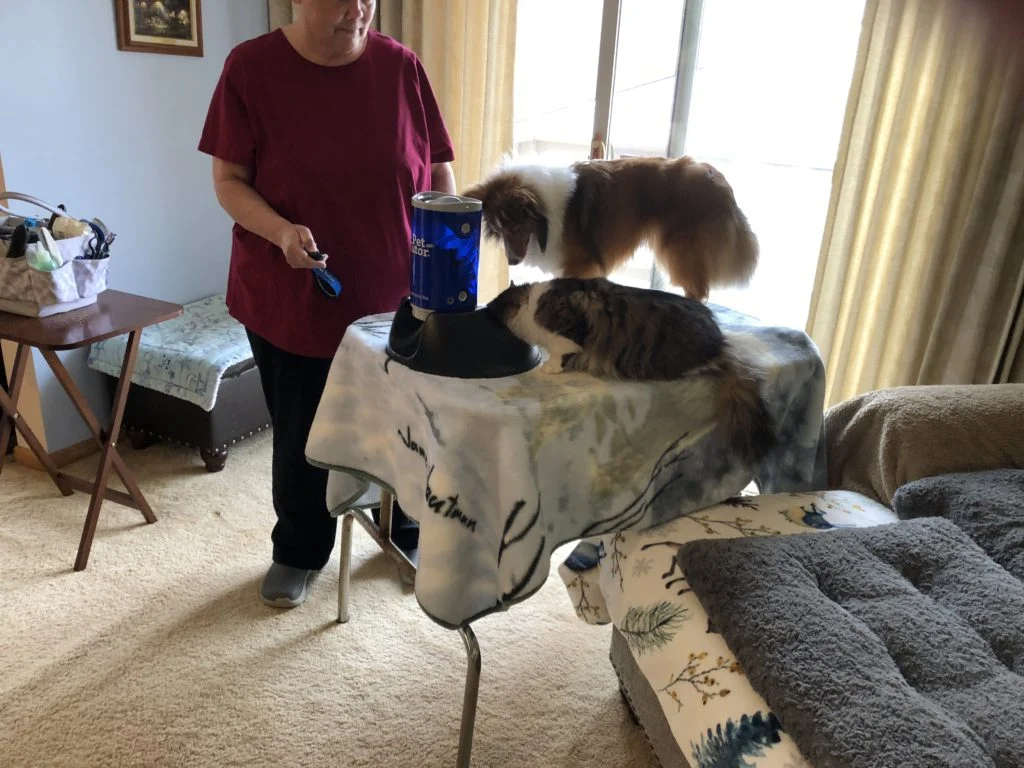
Her initial demonstrations with Pixel, a small dog, vividly illustrated the feeder’s efficacy. Dr. Jones meticulously introduced Pixel to the Pet Tutor, setting it up on a table to ensure a non-threatening and easy initial encounter. This approach emphasizes a core principle of positive reinforcement: minimizing stress and building positive associations from the outset. By allowing the dog to observe the feeder from a distance and learn that treats appear without direct interaction, she established a foundation of trust and understanding. "All they have to do is wait," she explained, highlighting the passive learning opportunity the automated feeder provides.
The Pet Tutor’s functionality, featuring a distinct light and beeping sound, effectively replaces a traditional marker (like a clicker). This allows trainers to maintain focus on the animal’s behavior rather than fumbling with treats. Dr. Jones emphasized, "All I need to do is hit the button just like I’d click a clicker. And the food delivery is automatic, so no reaching for cookies and fumbling or dropping them." This streamlined process enhances timing, a critical component of effective positive reinforcement, ensuring that the reward immediately follows the desired behavior.
Pioneering Cooperative Care with Technology
One of the most compelling applications Dr. Jones demonstrated was the use of the Pet Tutor for cooperative care work. This specialized training focuses on conditioning animals to willingly participate in procedures typically considered unpleasant, such as grooming, veterinary examinations, and husbandry tasks. By pairing these experiences with positive reinforcement, animals learn to associate touch, restraint, or specific tools with rewarding outcomes, thereby reducing fear, stress, and resistance.
In a practical demonstration, Dr. Jones utilized the Pet Tutor to condition Pixel to accept touch, specifically on a grooming table. The sequence involved a gentle touch followed immediately by the release of treats from the feeder. This repetition establishes a powerful classical conditioning link: touch becomes a predictor of something good. The automated and consistent delivery of rewards by the Pet Tutor allows the trainer to concentrate fully on the animal’s body language and the precise timing of the touch, rather than the mechanics of treat delivery.
Dr. Jones also highlighted a critical aspect of her cooperative care philosophy: consent. Her two fundamental rules for handling dogs are: 1) they can leave if they feel the need, and 2) their departure serves as feedback for the trainer to adjust their approach. This "two-way communication" ensures that the animal is an active participant in the training process. When Pixel jumped off the grooming table after a particular touch, Dr. Jones immediately recognized this as a signal that she had pushed "too hard too quickly." She then adjusted subsequent repetitions to be easier and less intrusive. This respect for the animal’s autonomy, often termed "start button behaviors" or "vet station training," is gaining significant traction in progressive dog training circles. "The funny thing is that once they know it’s possible, they rarely take advantage of it," Dr. Jones observed, underscoring that providing an escape route often paradoxically builds trust and willingness to engage.
To further disseminate these crucial cooperative care principles, Dr. Jones has launched a dedicated YouTube channel, "Cooperative Care with Deb Jones." This resource offers a growing library of short training videos designed to empower pet owners to prepare their animals for various grooming and veterinary procedures, thereby enhancing animal welfare and improving the pet-owner-veterinarian relationship.
Broader Implications for Pet Technology and Animal Welfare
The introduction of the compact Pet Tutor feeder, alongside the broader advocacy for positive reinforcement and cooperative care, reflects significant trends within the pet industry. The global pet care market continues to expand, driven by increasing pet ownership and a growing willingness among owners to invest in their companions’ health, well-being, and training. Within this market, pet technology, including smart feeders, activity trackers, and training aids, is a rapidly growing segment. Reports indicate that the pet tech market is projected to reach billions of dollars in the coming years, fueled by innovation and consumer demand for convenience, efficiency, and data-driven insights into their pets’ lives.
Automated feeders like the Pet Tutor align perfectly with this trend, offering a technological solution to common training challenges. They provide consistency, reduce human error, and enable training in contexts where a trainer’s physical presence might be disruptive. This is particularly relevant for addressing behavioral issues like separation anxiety, reactivity, or fear-based responses, where precise and remote reinforcement can be highly effective.
Moreover, the emphasis on cooperative care and consent-based training represents a paradigm shift in animal welfare. Moving away from coercive or force-based methods, trainers and veterinarians are increasingly recognizing the psychological benefits of empowering animals to participate willingly in their own care. Tools like the Pet Tutor facilitate this by enabling rapid, stress-free positive reinforcement, transforming potentially traumatic experiences into neutral or even positive ones. This not only improves the animal’s quality of life but also enhances safety for both pets and professionals. Veterinary practices, for instance, are increasingly adopting "fear-free" techniques, and tools that support this philosophy are highly valued.
Industry experts anticipate that the success of compact, user-friendly training tools will further democratize sophisticated training methods, making them accessible to a wider audience of pet owners. This proliferation of effective, humane training practices is expected to lead to better-adjusted pets, stronger human-animal bonds, and a reduction in behavioral problems that often lead to relinquishment or euthanasia.
Anticipated Release and Future Outlook
While Dr. Jones, at the time of her blog post, may have been among a select few to possess the tiny wonder, Smart Animal Training Systems indicated that the smaller Pet Tutor feeder would soon be available for general purchase. This broader release was eagerly awaited by the training community, poised to integrate this convenient device into their professional practices and personal pet care routines.
The continued innovation from companies like Smart Animal Training Systems, combined with the educational efforts of leaders such as Dr. Deb Jones, signifies a bright future for animal training and welfare. As technology advances and understanding of animal behavior deepens, pets and their owners stand to benefit from increasingly effective, humane, and accessible training solutions, ultimately fostering healthier, happier relationships. The compact Pet Tutor feeder, born from the vibrant environment of Clicker Expo, exemplifies this ongoing commitment to enriching the lives of animals through thoughtful design and scientific application.

