


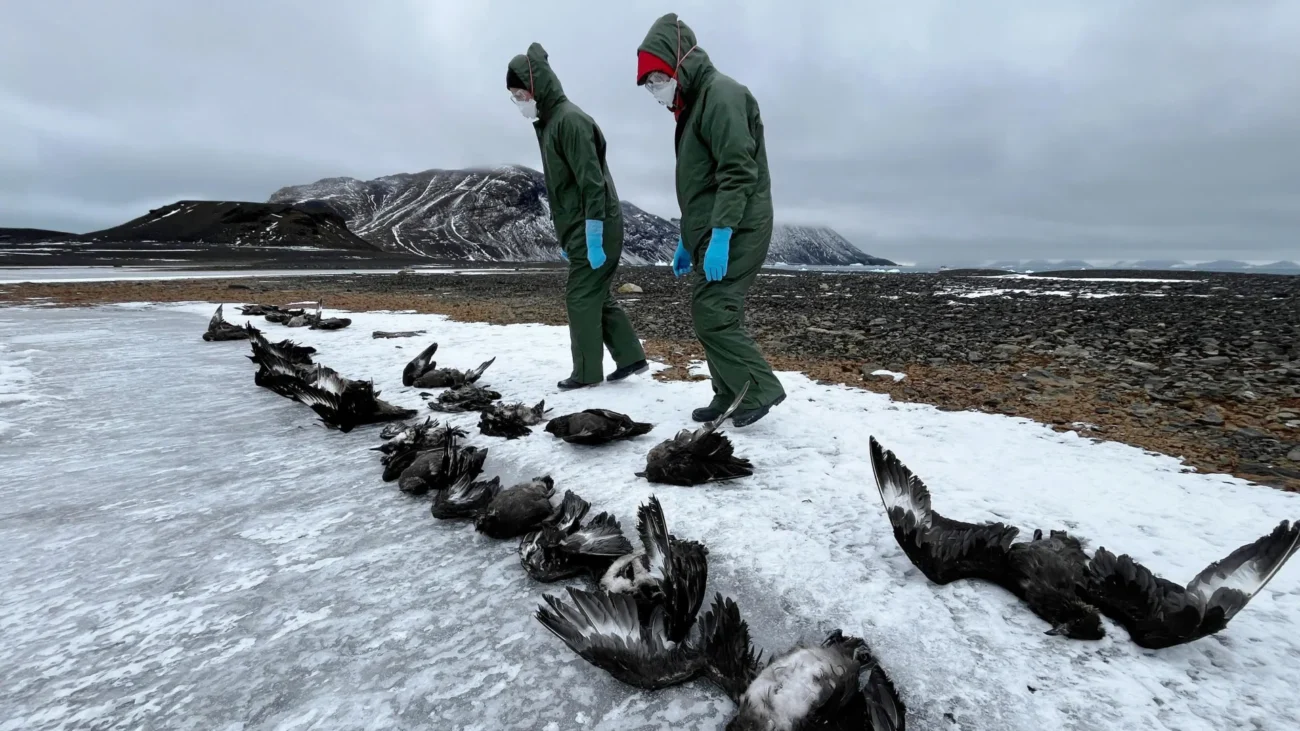
More than 50 skuas have died in Antarctica during the summers of 2023 and 2024 after becoming infected with the highly pathogenic avian influenza virus H5N1. Researchers say this marks the first confirmed wildlife die-off from the virus on the continent. The findings come from a study led by Erasmus MC in The Netherlands and the University of California, Davis, recently published in Scientific Reports. This unprecedented event signifies a critical new chapter in the global spread of H5N1, a virus that has already wrought devastation on poultry and mammalian populations worldwide.
The Silent Spread: H5N1 Reaches the Pristine Antarctic Ecosystem
Skuas, large brown seabirds intrinsically linked to polar and subpolar regions, are vital components of the Antarctic food web. As predators and scavengers, these birds, related to gulls and exhibiting behaviors akin to birds of prey, play a crucial role in maintaining the delicate ecological balance by consuming carcasses. However, it is precisely this scavenging behavior that researchers now believe may have amplified their vulnerability, increasing their risk of contracting and disseminating the H5N1 virus across the vast and sensitive Antarctic landscape.
The initial detection of H5N1 in Antarctic wildlife occurred earlier in 2024. Scientists identified the virus in a kelp gull and two skuas found deceased in January and February. While these findings raised alarms, conclusive proof that the virus was the direct cause of death remained elusive until the comprehensive study.
"We knew there were animals with the infection, but this is the first study to show they died of the viral infection," stated co-senior author Ralph Vanstreels, a wildlife veterinarian with the UC Davis One Health Institute within the Weill School of Veterinary Medicine. "It’s an important distinction in the early days of an outbreak." This confirmation is a pivotal moment, shifting the understanding of H5N1’s impact from mere presence to direct lethality within the Antarctic’s unique biodiversity.
Antarctic Expedition: A Race Against Time to Document the Outbreak
In response to mounting concerns and the preliminary findings, a dedicated research team embarked on an expedition to Antarctica in March 2024, strategically timed shortly after the breeding season for skuas and penguins. Their mission: to systematically investigate wildlife across ten distinct sites spanning the South Shetland Islands, the northern Weddell Sea, and the Antarctic Peninsula. This extensive survey aimed to provide a comprehensive picture of the virus’s presence and impact.
Throughout their journey, scientists meticulously collected tissue and environmental samples from any sick or deceased animals encountered. Necropsies were performed to ascertain the precise cause of death. While the remains of gentoo penguins, Adélie penguins, and Antarctic fur seals were examined, H5N1 was not identified as the causative agent in these species. This focus on skuas, therefore, highlighted them as a particularly vulnerable group.
"As the expedition progressed, it became obvious quickly that skuas were a major victim," Vanstreels observed, underscoring the alarming concentration of the virus within this avian population.
The virus was definitively detected in skuas at three specific locations: Hope Bay, Devil Island, and Beak Island. Beak Island, in particular, experienced a substantial die-off of south polar skuas, a stark indicator of the virus’s devastating potential.
"We diagnosed high pathogenicity avian influenza as the cause of death for nearly all of the dead skuas we found at Beak Island," reported first author Matteo Iervolino, a Ph.D. candidate at Erasmus MC in Rotterdam, The Netherlands. "There, I could really see with my eyes the impact this virus can have on these populations." Iervolino’s firsthand account paints a grim picture of the ecological disruption unfolding in this remote region.
Vanstreels further characterized the situation as a "crisis in animal suffering." The H5N1 virus, known for its neurotoxic effects, attacks the brain, leading to severe neurological symptoms. Infected birds exhibited distressing signs, including twisted necks and unusual body contortions. Observations of birds walking or swimming in circles, crashing into objects, or falling from the air provided a visceral testament to the virus’s devastating neurological impact. The researchers have emphasized that human activities, both in the initial emergence of the virus and in its ongoing transmission, play a significant role and are therefore critical in mitigating its further spread.
A Global Journey: The Evolution and Expansion of H5N1
The H5N1 virus, first identified in 1996 on a domestic goose farm in Southeast China, has a well-documented and alarming history of global expansion. Initially circulating within poultry populations, it eventually jumped to wild bird populations. From these reservoirs, the virus embarked on a relentless journey, colonizing continents and diverse ecosystems. Its path of devastation led it across Europe, the Middle East, and Africa, before making landfall in the Americas. By early 2024, the virus had reached the seemingly impenetrable isolation of Antarctica.
The same strain of H5N1 now impacting Antarctic skuas had previously inflicted catastrophic losses on elephant seals and sea lions in Argentina, highlighting the virus’s adaptability and broad host range. Globally, H5N1 has been responsible for the deaths of over 400 million poultry. Its pathogenic capabilities have extended beyond birds, infecting a wide array of mammals, including dairy cows, mink, foxes, bears, otters, and numerous other wild species.
The potential for human infection remains a significant concern. Of the approximately 1,000 reported human cases of H5N1 globally, a sobering half have proven fatal, underscoring the zoonotic threat posed by this virus.
"We let the virus slip out through our fingers when it first emerged in the poultry industry," lamented corresponding senior author Thijs Kuiken, a professor at Erasmus MC. "Once it got into wild bird populations, we lost ability to control this virus. Now it’s established in wild bird populations in all the continental regions of the world except Oceania." This statement reflects a widespread sentiment of missed opportunities in containing the virus at its origins, leading to its current pervasive distribution.
Mounting Concerns: Increased Surveillance and the Future of Antarctic Wildlife
The arrival of avian influenza in Antarctica presents a grave new challenge for an ecosystem already under immense pressure. Antarctic wildlife faces a complex web of threats, including the escalating impacts of climate change, the growing footprint of human tourism, the insidious spread of invasive species, the depletion of fish stocks through overfishing, and pervasive pollution. The introduction of H5N1 adds yet another significant stressor to this fragile environment, potentially tipping the scales towards irreversible ecological damage.
The current study strongly advocates for enhanced surveillance and monitoring protocols to proactively mitigate the risk of further viral spread. This proactive approach is crucial for early detection and rapid response, minimizing potential outbreaks before they gain momentum.
A significant complicating factor in assessing the true scale of the H5N1 impact is the lack of recent population data for many Antarctic species. The last comprehensive census of Antarctic skuas, for instance, was conducted in the 1980s, estimating approximately 800 breeding pairs. Without updated population figures, it remains challenging to accurately quantify the significance of the loss of 50 or more birds within the broader population dynamics. This data gap poses a critical obstacle to effective conservation and management strategies.
"Everything points toward this virus spreading further," Kuiken warned, emphasizing the ongoing and escalating nature of the threat. "If nobody is watching, we won’t know what is happening." This stark assessment highlights the urgent need for increased scientific investment and logistical support for ongoing monitoring efforts in Antarctica.
The HPAI Australis Expedition, instrumental in documenting these critical findings, was generously funded by the International Association of Antarctica Tour Operators (IAATO) and Ocean Expeditions. The research itself received vital support from the European Union, the Consejo Superior de Investigaciones Científicas (CSIC), and PTI Global Health, underscoring a collaborative, multi-faceted approach to addressing this emerging global health and environmental crisis. The implications of this study extend far beyond the shores of Antarctica, serving as a potent reminder of the interconnectedness of global ecosystems and the profound consequences of unchecked viral emergence. The world is watching, and the need for vigilant observation and decisive action has never been more apparent.

