


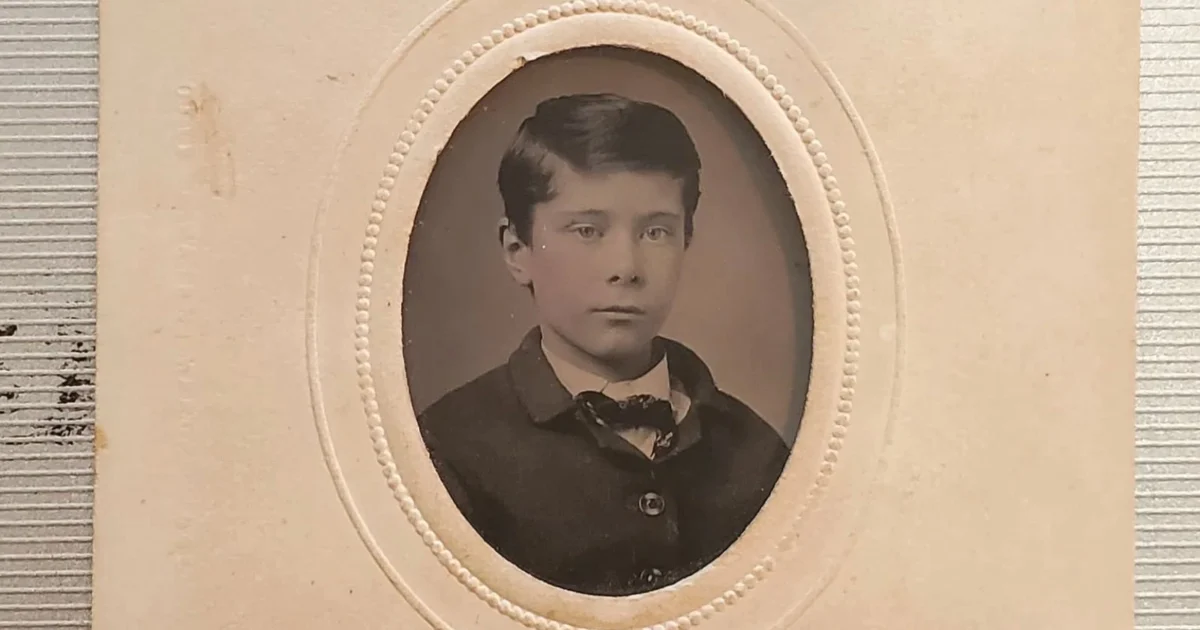
The legendary narrative of Henry McCarty, better known to history as the notorious outlaw Billy the Kid, may be on the verge of a significant biographical expansion. Two newly discovered photographs, purportedly depicting the frontier gunslinger during his childhood and adolescence, are scheduled to be sold at auction on April 25, 2026, by Fox Auctions in South Jersey. If authenticated, these images would provide a rare and intimate look at the early life of a man whose image has been defined for over a century by a single, grainy tintype.
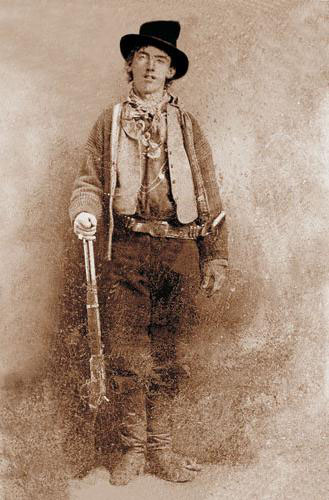
To date, only one photograph of Billy the Kid is universally accepted by historians and forensic experts as genuine. That portrait, attributed to photographer Ben Wittick and taken around 1880, depicts the outlaw standing with an 1873 Winchester rifle and a Colt revolver. In 2011, that image was purchased by businessman William Koch for $2.3 million, marking it as the most expensive historical photograph of the American West ever sold. The emergence of two potential new images has consequently sent ripples through the community of historians, collectors, and Western enthusiasts, as the discovery suggests the Kid’s early years were spent far from the dusty plains of New Mexico.
The Philadelphia Connection and Historical Provenance
The most striking aspect of the new discovery is the geographical evidence accompanying the images. Lee M. Fox, the owner of Fox Auctions, has highlighted records indicating that Billy the Kid’s mother, Catherine McCarty, resided in Philadelphia between 1863 and 1867. This period aligns with Henry McCarty’s early childhood, during which he would have been between the ages of four and eight.
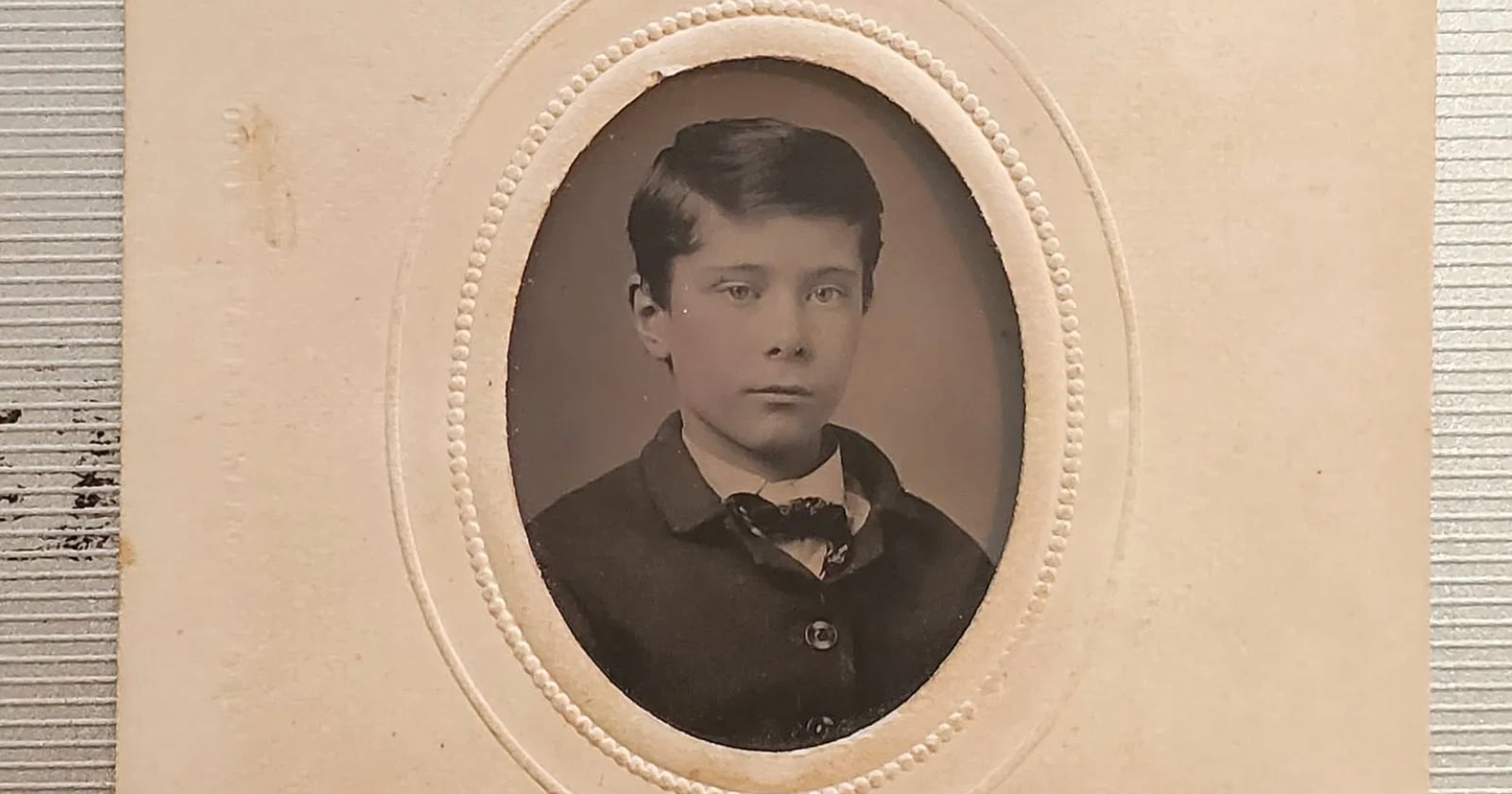
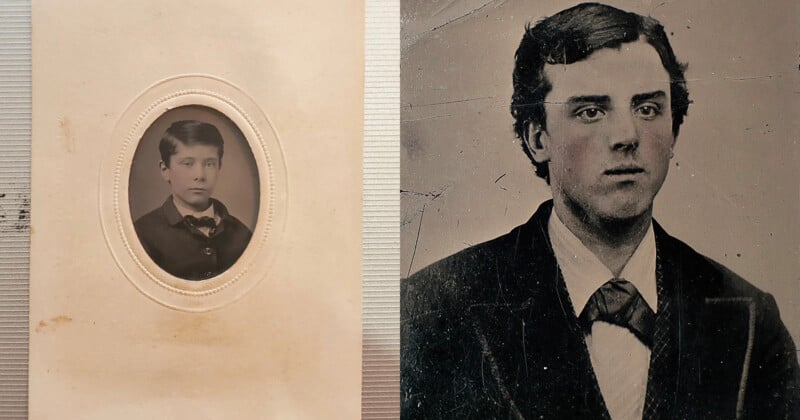
One of the photographs, a "Potter’s Patent" image, contains a studio stamp on the reverse side for "WM. W. Seeler’s Photo-Miniature and Photograph Gallery," located at the intersection of 8th and Spring Garden Streets in Philadelphia. This location was in close proximity to the documented residence of Catherine McCarty during her time in the city. The Potter’s Patent process was a specific photographic method used for a brief window in the mid-1860s, further anchoring the image to the era and location of the McCarty family’s stay in Pennsylvania.
The second image is a tintype featuring a young man in his mid-to-late teens, dressed in a formal suit and bow tie. The reverse of this image bears the handwritten name "Billy." According to the auction house, this second portrait shows a striking resemblance to the known features of the adult outlaw, suggesting a transition from the young boy in the Philadelphia portrait to the hardened figure seen in the Wittick tintype.
The Ronketty Collection: A Family Secret Revealed
The journey of these photographs from a family scrapbook to the auction block is a narrative of long-held family lore finally meeting modern historical inquiry. The images belong to Beth and Tom Ronketty, a couple from South Jersey who had kept the items in a private collection for decades.
Beth Ronketty explains that the photographs were passed down through her family for over a century. However, the connection to the famous outlaw was treated as a source of family embarrassment rather than a historical treasure. According to Tom Ronketty, the significance of the photos only came to light during an episode of the game show Jeopardy! in January 2016. When a clue mentioned Billy the Kid, Beth remarked on her family’s connection to the figure.
"I asked her why in the world would you know about Billy the Kid?" Tom Ronketty recalled. "Beth told me that when she was a kid, her dad always said that they were related to him, but his family wasn’t proud of the relationship."
Following this revelation, the couple began a multi-year research project. While Tom eventually concluded that his wife was likely not a direct blood relative of Henry McCarty, the evidence suggested that her ancestors were close associates or neighbors of the McCartys during their time in the East. The Ronkettys ultimately decided to bring the photos to auction, hoping that the resources of a major collector or institution could provide the final, definitive verification needed to cement the photos’ place in history.
The Technical Challenge of Authentication
While the provenance and the Philadelphia connection offer compelling circumstantial evidence, the authentication of 19th-century photography remains an arduous and often controversial process. Michael Bell, a noted historian of Western outlaws, warns that without a "clear, continuous provenance" tracing the ownership of a photo from the moment of its creation to the present day, any identification remains speculative.
"In the absence of such robust evidence, such photographs remain nothing more than ‘wish-pics,’" Bell stated. He noted that even with modern facial recognition software, the low resolution and physical degradation of 150-year-old images make scientific certainty nearly impossible. Bell argues that many purported photos of Billy the Kid surface every year, but most are eventually debunked as "look-alikes" or opportunistic forgeries.
The debate over Billy the Kid’s image is not new. In 2015, another tintype surfaced depicting a group of men playing croquet in New Mexico. One of the figures was identified by some experts as Billy the Kid alongside members of his gang, the Regulators. While that photo was given a $5 million appraisal and featured in a National Geographic documentary, it remains a subject of intense debate among "Kid-ologists"—the niche group of historians dedicated to the outlaw’s life.
A Timeline of the Kid’s Known Movements
To understand the significance of the Philadelphia photos, one must look at the established timeline of Henry McCarty’s life:
- Circa 1859: Henry McCarty is born in New York City.
- 1863–1867: Catherine McCarty is documented living in Philadelphia (the period associated with the new photos).
- 1870: The family is documented in Indianapolis, Indiana.
- 1873: Catherine McCarty marries William Antrim in Santa Fe, New Mexico Territory.
- 1874: Catherine dies of tuberculosis in Silver City, New Mexico.
- 1875: Henry McCarty (now using the name William Bonney or "Billy the Kid") is arrested for the first time for stealing laundry.
- 1877–1878: The Kid becomes a central figure in the Lincoln County War.
- 1881: After escaping from jail while under a death sentence, the Kid is shot and killed by Sheriff Pat Garrett in Fort Sumner.
If the Philadelphia images are proven authentic, they fill a "black hole" in the biography of the American West’s most famous anti-hero. Most accounts of his life pick up when he arrived in the Kansas and New Mexico territories as a teenager. Evidence of a formal, perhaps even middle-class, upbringing in a major Eastern city would complicate the image of the "born-to-be-wild" outlaw.
The Market for the American West
The upcoming auction highlights the enduring obsession with the American frontier. Artifacts related to figures like Billy the Kid, Jesse James, and Butch Cassidy command prices that rival fine art by the Old Masters. This is due in part to the scarcity of authentic items; the frontier was a transient, violent place where personal belongings were rarely preserved.
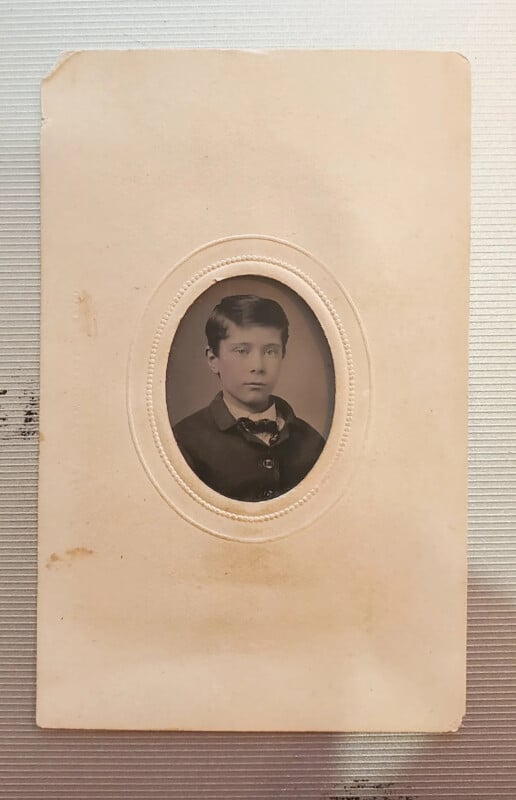
Lee M. Fox believes these images could surpass previous records. "This is a historical discovery that fills in crucial missing western provenance and has great potential to be the new most valuable historic imagery of the American West," Fox said. The auction house is positioning the items not just as photographs, but as foundational documents of American folklore.
The fascination with Billy the Kid persists because he represents the ultimate American paradox: a cold-blooded killer to some, and a romanticized "Robin Hood" figure to others. While legend claims he killed 21 men—one for every year of his life—most modern historians believe the count is closer to nine. Regardless of the tally, his ability to evade capture and his daring escapes made him a media sensation even before his death.
Implications for Historical Research
Should these photographs be validated, they will likely prompt a re-examination of Catherine McCarty’s life. Historians have long struggled to understand how a widowed mother of two navigated the journey from the slums of New York to the harsh environments of the Southwest. The Philadelphia connection suggests a family that was more mobile and perhaps more connected to urban society than previously thought.
For now, the images remain in a state of historical limbo. They are artifacts of high interest and significant circumstantial weight, but they await the scrutiny of the global historical community. As the auction date of April 25, 2026, approaches, the eyes of the art and history worlds will be on South Jersey, waiting to see if the face of the boy from Philadelphia truly belongs to the man who would become the most hunted outlaw in the history of the American West.

