


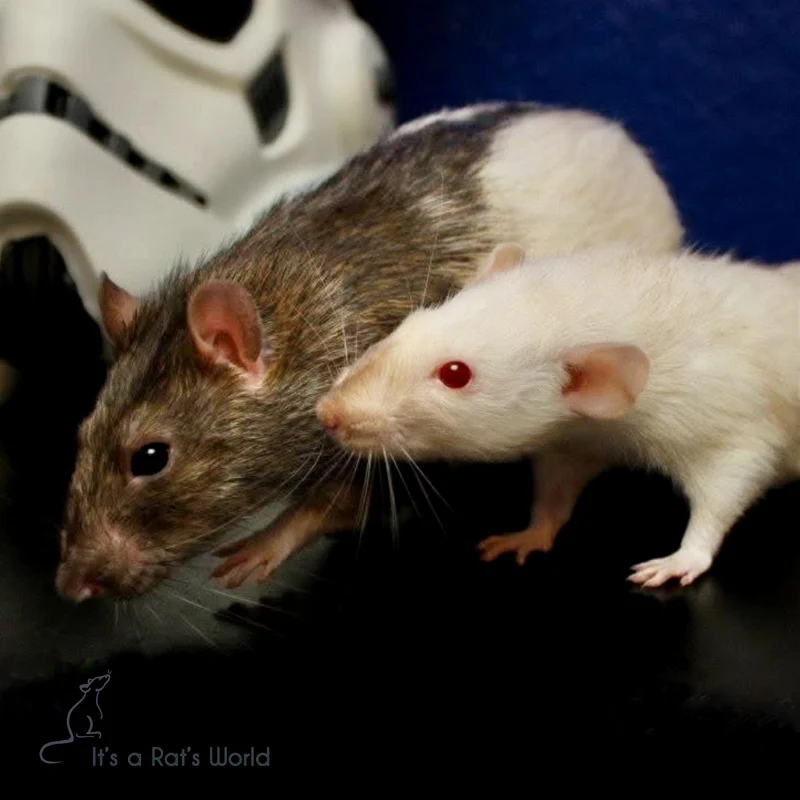
A common inquiry among prospective rat owners revolves around the decision of selecting male or female rats as companions. While both sexes offer distinct and rewarding pet ownership experiences, understanding their individual characteristics can aid in making the most suitable choice. This detailed exploration delves into the physical, aromatic, behavioral, and health-related differences between male and female rats, offering a comprehensive perspective for potential owners.
Physical Attributes: Size and Scent
Size Discrepancies:
Male rats typically exhibit larger physical dimensions compared to their female counterparts. On average, adult males measure between 10 to 12 inches in length, excluding their tails, and weigh approximately 450 to 650 grams (roughly 1 to 1.4 pounds). Female rats, conversely, generally range from 9 to 10 inches in length, tail excluded, with an average weight of 350 to 450 grams (approximately 12.3 ounces to 1 pound).
It is important to note that these are averages, and individual variations are common. For instance, some male rats may be smaller than certain female rats, and vice versa. Exceptional cases, such as Dover Cliffs, a male rat weighing a full 2 pounds (907 grams), and his brothers Gatwick, Camdan, and Regent, who weighed around 850 grams (approximately 1.8 pounds), illustrate the potential for significant size differences within the species.
Coat Texture and "Buck Grease":
Another discernible physical difference lies in the texture of their fur. Adult males often possess a coarser coat, attributed to a higher production of oil on their backs, a phenomenon known as "buck grease." This oily secretion is typically orangish-yellow and, in some cases, can accumulate to the point of requiring baths to alleviate skin irritation. Buck grease production often diminishes or ceases following a male rat’s neutering, which can lead to a softening of their fur. Female rats generally maintain a softer fur texture throughout their lives.
Sensory Distinctions: Aromatic Profiles
Rats possess a unique olfactory signature that can vary between sexes, a characteristic so pronounced that experienced owners can often distinguish between males and females by scent alone.
The Fragrance of Females:
Female rats are known for their pleasant, often described as "grape soda"-like aroma. This scent is sometimes accompanied by undertones of fabric softener or floral notes, creating a generally appealing fragrance. This unique scent is thought to be linked to their estrous cycle and hormonal balance.
The Scent of Intact Males:
Intact male rats emit a distinct aroma, often compared to warm corn tortillas or tortilla chips. While this may sound unusual, many find it surprisingly pleasant. This scent is primarily due to the presence of buck grease.
Post-Neuter Scent Transformation:
A significant change in scent often occurs after a male rat is neutered. Many neutered males begin to adopt a fragrance similar to that of females, characterized by floral and grape-like notes. This transformation highlights the influence of hormones on their natural body odor.
"Huffing" and "Marinating":
Rat owners sometimes engage in a practice known as "huffing," which involves deeply inhaling the scent of their rat’s fur. This behavior underscores the pleasantness of the rats’ natural aromas for many owners. Conversely, the term "marinating" refers to the less appealing habit of rats, primarily males, sleeping in soiled bedding soaked with urine. While this can contribute to a less desirable odor, it is often a temporary issue that can be managed with regular cage cleaning and occasional wipe-downs of the rat with unscented baby wipes or a damp paper towel.
Behavioral Traits: Energy, Temperament, and Social Dynamics
While generalizations exist regarding the energy levels and temperaments of male and female rats, individual personalities play a crucial role.
Energy Levels and Cuddliness:
A common perception is that male rats are more laid-back and inclined to cuddle, while females are more energetic and less prone to being held. However, personal experiences often challenge these stereotypes. Young male rats can be quite active, and not all males exhibit a desire to be held, preferring to rest nearby rather than on their owners. Similarly, while some female rats, like the individual Leeloo mentioned in anecdotal accounts, can be exceptionally energetic, many females become as relaxed and sedentary as males, especially as they age.

The author’s personal observation suggests that the energy levels and cuddliness of rats are more dependent on individual personality than on sex. Many female rats, even those spayed, have been found to be equally cuddly as males. The absence of experiencing a female rat in heat, which can induce restlessness, hyperactivity, and agitation every four to five days, might influence individual perceptions of female rat behavior.
Social Maturity and Temperament:
A more pronounced behavioral difference emerges around the time of social maturity, typically between 5 to 9 months of age for males. During this period, some male rats may undergo a personality shift, becoming more irritable, agitated, and potentially aggressive towards cagemates or even their owners. This phase, though not universal, can necessitate interventions such as neutering to mitigate aggression.
Inter-Rat Introductions:
Introducing new rats to established groups can be a delicate process, with some sex-based differences observed. While male-to-male introductions can be particularly challenging due to territorial tendencies, even females can exhibit resistance to newcomers. However, overall, introductions between males and females or between females have been reported as generally less stressful than male-to-male introductions. The author’s experience indicates that female rats are often more amenable to integrating new members into their social circle compared to many male rats.
Urine Marking:
Intact male rats are significantly more prone to urine marking their territory and belongings, including their owners. While some males may reduce this behavior once settled, others may continue throughout their lives. Female rats exhibit a much lower propensity for urine marking.
Litter Training:
Anecdotal evidence suggests that female rats may be easier to litter box train than males. However, it is important to note that neither sex is guaranteed to be consistently successful with litter box usage.
Sterilization Procedures: Impact on Health and Behavior
Spaying and neutering play a vital role in the health and behavior of pet rats, with distinct benefits for each sex.
Preventing Unplanned Litters:
The most apparent benefit of sterilization is the prevention of unintended pregnancies. Given that female rats can give birth to litters ranging from 8 to 18 pups, ensuring that at least one sex is sterilized is crucial, especially when housing males and females together, or even in adjacent cages, as rats can become pregnant through cage bars.
Minimizing Health Risks:
Both male and female rats are susceptible to hormone-related health issues, including mammary and pituitary tumors. However, female rats are particularly prone to mammary tumors, as well as ovarian and uterine diseases. Spaying female rats at a young age, ideally between 3 to 6 months, can significantly reduce their risk of developing these life-threatening conditions. While some sources suggest a broader spay window of 3 to 7 months, consulting with a veterinarian is recommended for optimal timing.
The spay surgery for females is more invasive and costly than neutering for males. Despite the risks and expense, it is often considered a highly beneficial procedure for female rats. For males, neutering can help reduce aggression, minimize urine marking, and decrease the incidence of buck grease. It can also help prevent penile plugs in older or less mobile males and reduce the risk of testicular cancer, although this is less common.
Currently, there is limited conclusive information regarding whether neutering males significantly reduces their risk of mammary or pituitary tumors. Therefore, from a purely medical standpoint, spaying females appears to offer a broader range of health benefits. Nevertheless, a thorough discussion with a veterinarian is essential to determine the most appropriate surgical interventions for individual rats.
The Dynamics of Mixed-Sex Households
The experience of housing both male and female rats together can be particularly rewarding. Some rats may develop strong bonds, sometimes described as "crushes," with individuals of the opposite sex. In instances where aggression in males is managed through neutering, these cross-sex friendships can endure, leading to deeply affectionate relationships. The author recounts a poignant example of a male and female rat who remained inseparable, with the male providing unwavering companionship to his female friend until her passing.
Conclusion: A Matter of Preference
Ultimately, the choice between male and female rats as pets is a personal one. Both sexes offer unique charms and the potential for deep companionship. Whether one opts for males, females, or a mixed-sex group, the experience is likely to be delightful. Responsible pet ownership, however, necessitates a commitment to preventing unwanted litters through sterilization. By understanding the nuances of each sex, prospective owners can make an informed decision that leads to a fulfilling and enriching relationship with their extraordinary rat companions.

