


The evolution of digital photography has reached a plateau where technical perfection—sharpness, correct exposure, and noise reduction—is no longer a differentiator but a baseline standard. Within the specific niche of black and white photography, a growing disconnect has been observed between technical mastery and emotional impact. Darren Pellegrino, a fine art photographer and the founder of The Monochrome Collective, has identified a critical structural deficit in contemporary monochrome work, leading to the development of a conceptual framework known as the Monochrome Triangle. This framework posits that for a black and white image to transcend being a mere document and become a compelling piece of art, it must achieve a simultaneous synergy between three core pillars: Light, Composition, and Story.
The Paradox of Technical Perfection in Modern Photography
The current landscape of photography is characterized by an abundance of high-quality equipment and accessible education. Digital sensors now possess dynamic ranges that exceed the capabilities of traditional film, and post-processing software allows for the surgical manipulation of tones. However, professional analysis suggests that a significant portion of modern black and white imagery suffers from what critics call "technical vacancy." These are images that adhere strictly to the histograms and the rule of thirds but fail to arrest the viewer’s attention or evoke an emotional response.
This phenomenon mirrors a common plateau in musical education. A musician may master scales and technical exercises to the point of mechanical perfection, yet the resulting performance may remain "cold" if it lacks interpretive depth. In the context of monochrome photography, the absence of color removes a layer of sensory information that often masks poor structural choices in color photography. Without the "distraction" of hue, the viewer is left with only the raw architecture of the image. If that architecture is built solely on technical correctness without a foundational "why," the image becomes forgettable.
Pillar One: Light and Tonal Architecture
In the Monochrome Triangle, light is redefined from a technical requirement into a narrative tool. In color photography, light serves to illuminate subjects and reveal hues. In black and white, light is the sole architect of form. Because the spectrum of color is compressed into a range of grays, the relationship between the brightest highlights and the deepest shadows becomes the primary driver of the image’s mood.
- Directional Influence: Side lighting is utilized to emphasize texture and three-dimensionality, creating a tactile quality that color often flattens.
- Hard vs. Soft Light: Hard light is strategically used to create high-contrast drama and graphic shapes, whereas soft, diffused light is employed to foster a sense of intimacy or melancholy.
- Tonal Range: The mastery of light involves more than just exposure; it involves the deliberate placement of tones. A high-key image (dominated by light tones) suggests airiness or ethereal qualities, while a low-key image (dominated by dark tones) evokes mystery or gravity.
Data from photographic workshops and industry surveys indicates that while 85% of intermediate photographers can achieve a "correct" exposure, fewer than 20% can articulate how the specific quality of light in their frame contributes to the emotional intent of the photograph.
Pillar Two: Composition as Visual Energy
The second point of the triangle, Composition, is frequently misunderstood as a set of rigid rules, such as the Rule of Thirds or the Golden Spiral. Pellegrino’s framework argues that composition should instead be viewed as a "force field" within the frame. Every edge of the photograph exerts a gravitational pull on the subjects within it.
In a monochrome environment, the weight of composition is significantly heavier. A color photograph can sometimes rely on vibrant palettes to guide the eye, but a black and white photograph relies entirely on the arrangement of shapes and the balance of space.
- The Tension of Edges: Placing a subject near the edge of the frame creates a sense of movement or unease, as if the subject is being pulled out of the viewer’s field of vision.
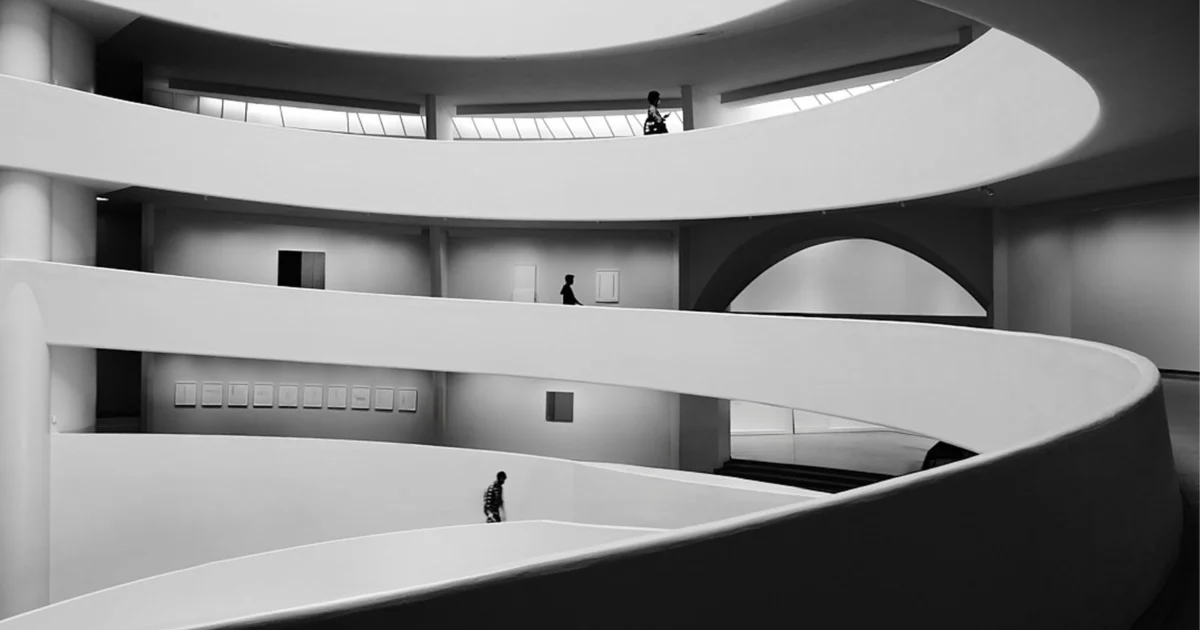
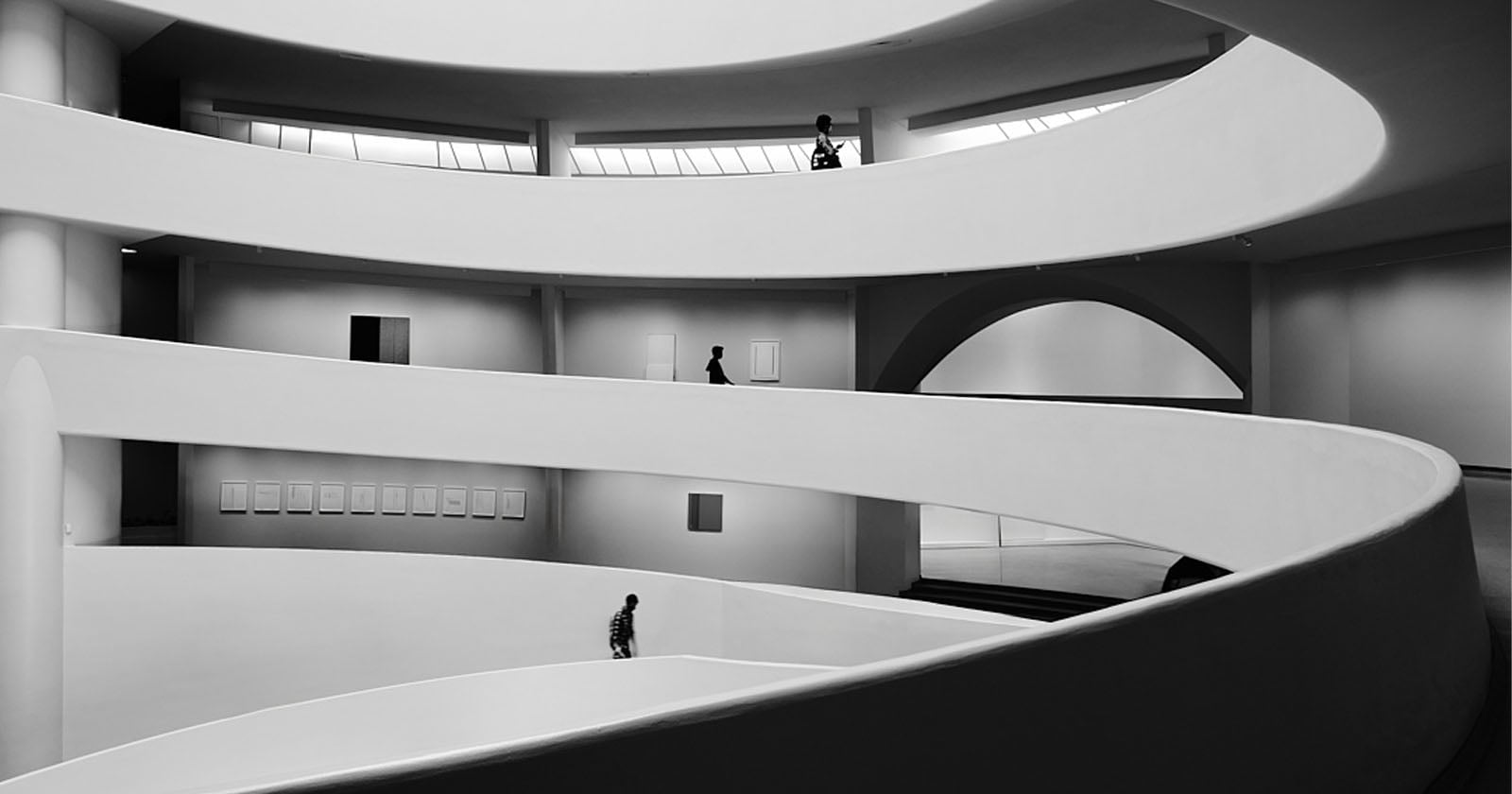
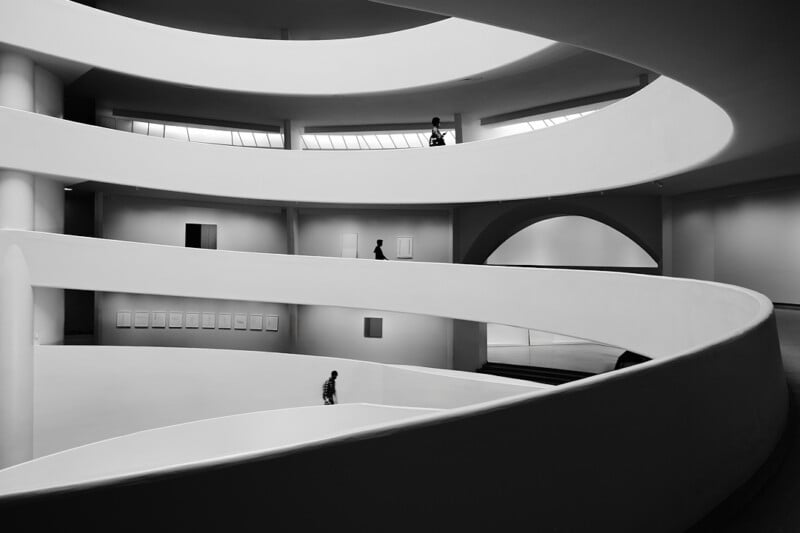
- Structural Geometry: Effective monochrome composition often utilizes leading lines and geometric patterns to create a sense of scale and depth. For instance, circular interiors with winding ramps or the symmetrical ripples left by a rower in calm water provide a structural rhythm that replaces the role of color.
- Minimalism and Negative Space: Black and white photography excels in minimalism. The use of negative space—large areas of uniform tone—can isolate a subject, heightening the viewer’s focus on the "story" element.
Pillar Three: The Narrative Intent (Story)
The final and most elusive point of the Monochrome Triangle is Story. This is defined not as a literal sequence of events, but as the "intention" behind the image. It is the answer to the question: "Why does this photograph matter?"
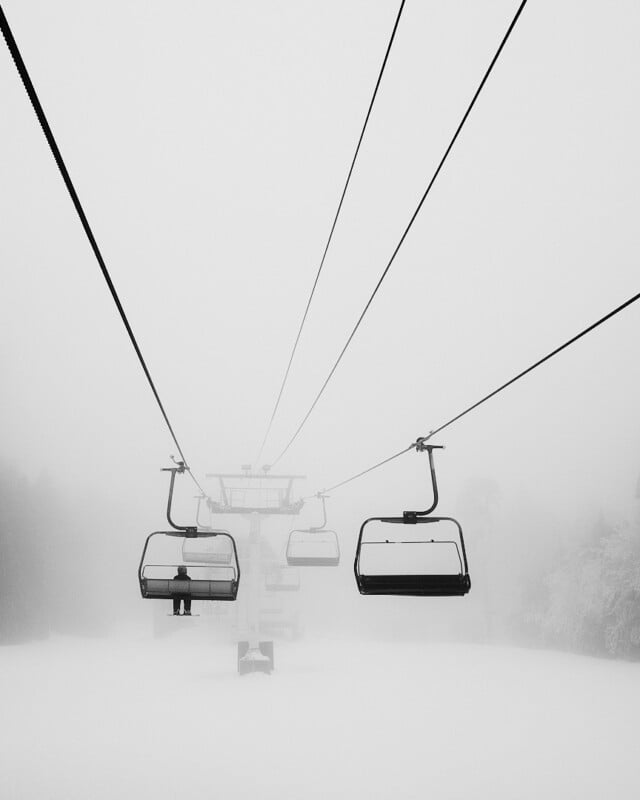
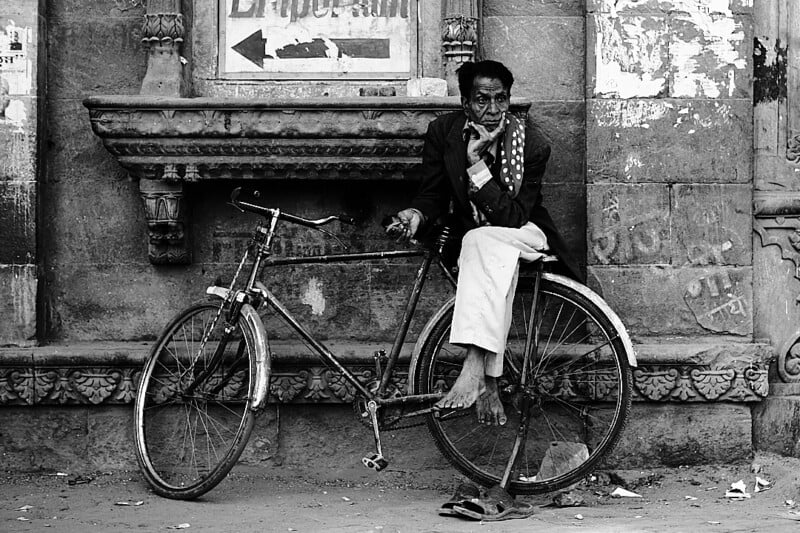
Narrative intent in photography does not require grand subjects or dramatic action. It is often found in quiet, human moments—a lone figure on a train station platform, a plume of smoke exhaled into city air, or a single person on a ski lift shrouded in fog. These images resonate because the photographer has made a deliberate choice to preserve a specific moment of human experience.
Industry experts note that "Story" is the point where most photographers fail. A perfectly lit and composed image of a meaningless subject remains a "document." Conversely, a powerful story can sometimes overcome minor technical flaws, though it is the synergy of all three points that creates a masterpiece.
Chronology of Photographic Mastery
The path toward utilizing the Monochrome Triangle generally follows a predictable timeline in a photographer’s development:
- The Gear Phase (Years 1-2): Focus is placed on acquiring better cameras, lenses, and software. Success is measured by sharpness and lack of digital noise.
- The Technique Phase (Years 2-4): Focus shifts to mastering the "rules" of exposure and composition. Photographers learn to read histograms and apply the Rule of Thirds.
- The Aesthetic Phase (Years 4-6): Photographers begin to experiment with specific styles, such as high-contrast street photography or long-exposure landscapes.
- The Synthesis Phase (Year 6+): The photographer moves beyond rules to the Monochrome Triangle. Technical skills become subconscious, allowing the photographer to focus on the "Why" (Story) and using Light and Composition as tools to serve that intent.
Market Context and Industry Trends
The relevance of the Monochrome Triangle is underscored by current market trends in the camera industry. Despite the dominance of high-resolution color sensors, there has been a significant resurgence in dedicated monochrome technology.
- Dedicated Hardware: Manufacturers like Leica and Pentax have released dedicated monochrome-only sensors (e.g., the Leica M Monochrom and the Pentax K-3 Mark III Monochrome). These cameras remove the color filter array (Bayer filter), allowing for higher light sensitivity and superior tonal gradation. This hardware shift reflects a professional demand for tools that prioritize the "Light" and "Tonal Architecture" pillars of the triangle.
- Film Resurgence: Sales of black and white film stocks from companies like Ilford and Kodak have seen a steady increase over the last five years, driven by a younger demographic seeking the "intentionality" and "storytelling" qualities inherent in the analog process.
- Social Media Dynamics: Analysis of engagement on visual platforms suggests that while color images often receive more initial "likes" due to their immediate sensory appeal, high-quality monochrome images tend to have longer "view times" and higher "save" rates, indicating a deeper level of viewer connection.
Expert Analysis and Implications
The implementation of the Monochrome Triangle has broader implications for how visual media is consumed in an era of AI-generated imagery. As artificial intelligence becomes increasingly capable of producing "perfect" compositions and lighting, the "Story" or "Human Intention" pillar becomes the final bastion of human-created art.
Psychologically, black and white photography functions by removing the literal representation of the world. Because we do not see in monochrome, a black and white image is inherently an abstraction. This abstraction requires the viewer’s brain to work harder to interpret the scene, which can lead to a deeper emotional investment. When a photographer uses the Monochrome Triangle effectively, they are providing the viewer with a structured path for that interpretation.

Critics and educators in the field suggest that the "Monochrome Triangle" is not just a technique for black and white photography, but a philosophy of "slow photography." It encourages the practitioner to pause before pressing the shutter and evaluate the scene against the three criteria.
Conclusion: The Critical Question
The transition from a technically proficient photographer to a compelling artist rests on a single habit: asking "Why does this matter?" before the shutter is released. The Monochrome Triangle provides the framework to translate the answer to that question into a visual reality. By ensuring that the light serves the mood, the composition serves the energy, and the story serves the human connection, photographers can bridge the gap between images that are merely "correct" and those that are truly unforgettable.
As Darren Pellegrino emphasizes in his work with The Monochrome Collective, the triangle is not a set of constraints but a way of seeing. It is a system designed to ensure that the technical foundation of a photograph supports, rather than replaces, the artistic soul of the work. For the modern photographer navigating a sea of digital perfection, this framework offers a return to the fundamental principles of visual storytelling.

