


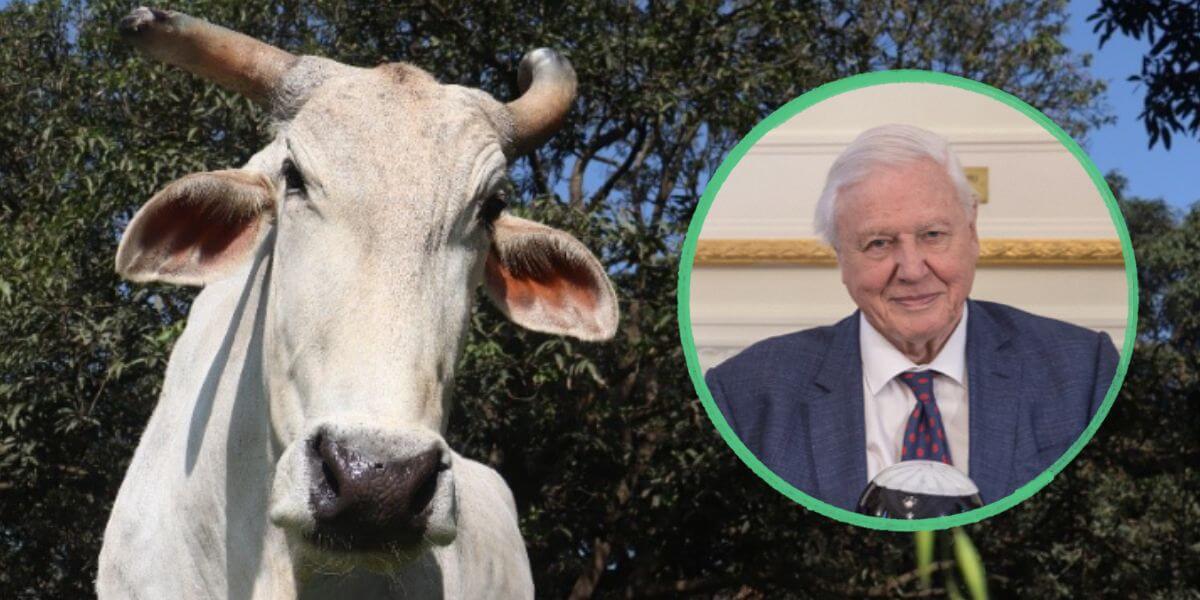
In a landmark tribute to one of the most influential figures in natural history, PETA UK has announced a unique celebration for the 100th birthday of Sir David Attenborough. The organization is honoring the legendary broadcaster’s centenary by naming a rescued bull "David Attenbullock." This gesture serves as a living tribute to Attenborough’s decades of work in awakening global consciousness to the wonders of the animal kingdom and his increasingly urgent warnings regarding the ecological toll of the global meat industry. Sir David, whose voice has narrated the story of life on Earth for over 70 years, is being recognized not just for his cinematic achievements, but for his advocacy for a more sustainable, plant-based future.
The bull chosen for this honor, David Attenbullock, currently resides at a sanctuary in northern India. His story mirrors the themes of resilience and conservation that have defined Sir David’s career. The rescue was made possible through PETA India’s Delhi Mechanization Project, a transformative initiative aimed at modernizing urban transport while ending the cycle of suffering for working animals. By replacing traditional animal-drawn carts with electric vehicles, the project allows horses and bulls—who have spent their lives in grueling labor—to retire to sanctuaries where they can live out their remaining years in peace.
The Journey of David Attenbullock: From Toil to Sanctuary
The life of David Attenbullock before his rescue was one of immense physical strain and hardship. For years, the bull was a fixture in the chaotic, high-density markets of Delhi. These environments, which Sir David Attenborough has frequently visited and documented during his career, are notorious for their intense heat, thick dust, and unrelenting traffic. David Attenbullock spent his days hauling massive loads through these narrow, crowded streets, often suffering from exhaustion, dehydration, and the physical injuries common to animals in the carting industry.
The transition from a working animal to a sanctuary resident has allowed the bull to take on a new, educational role. Much like his namesake, the bull now serves as a bridge between humans and the natural world. At his lush orchard home, he accompanies visitors, encouraging them to observe the subtle complexities of the environment. His presence offers a tangible connection to the lives of animals that are often overlooked in the bustle of industrial society.
Ingrid Newkirk, the founder of PETA, remarked on the bull’s impact, stating that he invites visitors to pause and notice the life moving through the grass and trees. This philosophy of "noticing" is central to the Attenborough legacy—the idea that understanding and appreciation are the first steps toward conservation.
Sir David Attenborough: A Century of Evolution in Conservation
To understand the significance of this tribute, one must look at the trajectory of Sir David Attenborough’s career. Born in 1926, Attenborough joined the BBC in the early 1950s. His early work, such as Zoo Quest, focused on the capture and display of exotic animals, a practice that was standard at the time but which he would later help move away from in favor of observing animals in their natural habitats.
The 1979 series Life on Earth revolutionized natural history broadcasting, using innovative filming techniques to tell the story of evolution. This was followed by iconic series such as The Blue Planet, Planet Earth, and The Private Life of Plants. However, as the decades passed, Attenborough’s tone shifted from one of pure wonder to one of grave concern. In his more recent projects, such as the 2020 documentary A Life on Our Planet, he described the film as his "witness statement," detailing the devastating loss of biodiversity he has witnessed over his lifetime.
A key pillar of Attenborough’s modern message is the necessity of dietary change. He has been vocal about the inefficiency of the meat industry, famously stating that the planet cannot support billions of meat-eaters. His advocacy for a plant-based diet stems from a mathematical reality: the land and resources required to raise livestock are exponentially higher than those required for plant-based food production.
The Environmental Impact of Animal Agriculture: Supporting Data
PETA UK’s tribute highlights a critical issue that Sir David has brought to the forefront of environmental discourse: the role of animal agriculture in the climate crisis. While much of the global conversation around climate change focuses on fossil fuels and transportation, data suggests that the food system is an equally significant driver of ecological collapse.
According to research published in the journal Science, animal agriculture is responsible for approximately 14.5% to 16.5% of global greenhouse gas emissions. Specifically, the industry is a primary source of methane, a gas that is significantly more potent than carbon dioxide. Methane has more than 80 times the warming power of CO2 over a 20-year period. Livestock, particularly cattle, produce methane during digestion (enteric fermentation) and through manure management.
Beyond emissions, the industry is the leading cause of global deforestation. In the Amazon rainforest, roughly 70% of cleared land is used for cattle ranching, with much of the remainder used to grow feed crops like soy for livestock. This destruction of carbon sinks exacerbates global warming and leads to the "Sixth Mass Extinction" that Attenborough has frequently warned about.
Statistical analysis suggests that a global shift toward a vegan diet could reduce the amount of land used for agriculture by 75%. This reduction—equivalent to the size of the United States, China, the European Union, and Australia combined—would allow for massive rewilding projects. Rewilding is essential for sequestering carbon and providing habitats for the millions of species currently threatened by human activity.
The Delhi Mechanization Project and Urban Animal Welfare
The rescue of David Attenbullock is part of a broader shift in animal welfare strategy in developing urban centers. The Delhi Mechanization Project serves as a case study for how technological innovation can intersect with compassion. By providing owners of animal-drawn carts with electric rickshaws or mini-trucks, PETA India addresses both animal suffering and human economic stability.
For the owners, the transition to electric vehicles often results in higher earnings and lower physical strain, as they are no longer limited by the physical endurance of an animal. For the animals, it means an end to being "beasts of burden" in environments that are increasingly hostile to biological life. This project aligns with the broader goals of "One Health," a concept that recognizes that the health of people, animals, and the environment are inextricably linked.
Official Responses and Global Implications
The naming of David Attenbullock has garnered attention from conservationists and animal rights advocates worldwide. While the BBC and Sir David’s official representatives typically remain neutral on specific organizational tributes, the alignment between PETA’s mission and Attenborough’s environmental warnings is clear.
Environmental analysts suggest that tributes like these are crucial for keeping the conversation focused on individual agency. While policy changes at the governmental level are necessary, Attenborough has consistently empowered the public to make personal choices, particularly regarding consumption. "Every life matters," a sentiment often echoed in his documentaries, serves as the foundation for PETA’s "Every animal is someone" campaign.
The implications of Attenborough’s 100-year milestone extend into the future of conservation policy. As he enters his second century, his work continues to inspire a new generation of activists who view animal rights and environmentalism as two sides of the same coin. The narrative of David Attenbullock—a creature saved from the machinery of industry to live in a natural sanctuary—is a microcosm of the "restoration of the wild" that Sir David advocates for on a global scale.
Conclusion: A Centenary of Awareness
As the world celebrates Sir David Attenborough’s 100th birthday, the tribute by PETA UK serves as a reminder of the practical applications of his life’s work. Through the naming of a rescued bull, the organization links the abstract concept of global conservation to the tangible reality of animal welfare.
The data remains clear: the survival of the wonders Sir David has spent his life documenting depends on a radical shift in how humanity interacts with the earth. This includes the mitigation of methane emissions, the cessation of deforestation for grazing, and a transition toward a more efficient, plant-based food system. David Attenbullock, grazing in his orchard in India, stands as a symbol of what is possible when human innovation is guided by compassion and an understanding of the natural world—a fitting tribute to a man who has given the world a front-row seat to the beauty of life on Earth.

