


The periodic renewal of plumage, a fundamental biological process known as molting, often presents bird owners with a distinctive phenomenon: the emergence of "pin feathers." These spiky, nascent structures are integral to a bird’s health and flight capability, yet their appearance can cause concern or confusion among caregivers. This comprehensive guide aims to demystify pin feathers, detailing their physiological role, developmental stages, associated sensations, and best practices for supporting avian comfort and healthy feather growth without inducing stress or harm. It is designed for bird owners observing these new feathers and seeking to understand and facilitate a healthy molt, distinguishing normal processes from conditions requiring professional veterinary intervention. This information is not intended for situations involving open skin lesions, active hemorrhage, rapid and unexplained feather loss, obvious self-mutilation, or systemic signs of illness such as lethargy or anorexia, all of which mandate immediate consultation with an avian or exotics veterinarian.
The Biological Imperative: Understanding the Molting Cycle
Feathers are complex epidermal outgrowths crucial for flight, insulation, waterproofing, and communication. Unlike mammalian hair, feathers are not continuously replaced individually but undergo a cyclical process of shedding and regrowth known as molting. This process is metabolically intensive and essential for maintaining the integrity and functionality of the plumage. Birds typically undergo at least one complete molt annually, though the frequency and duration can vary significantly depending on species, age, health, and environmental factors such as photoperiod and nutrition.
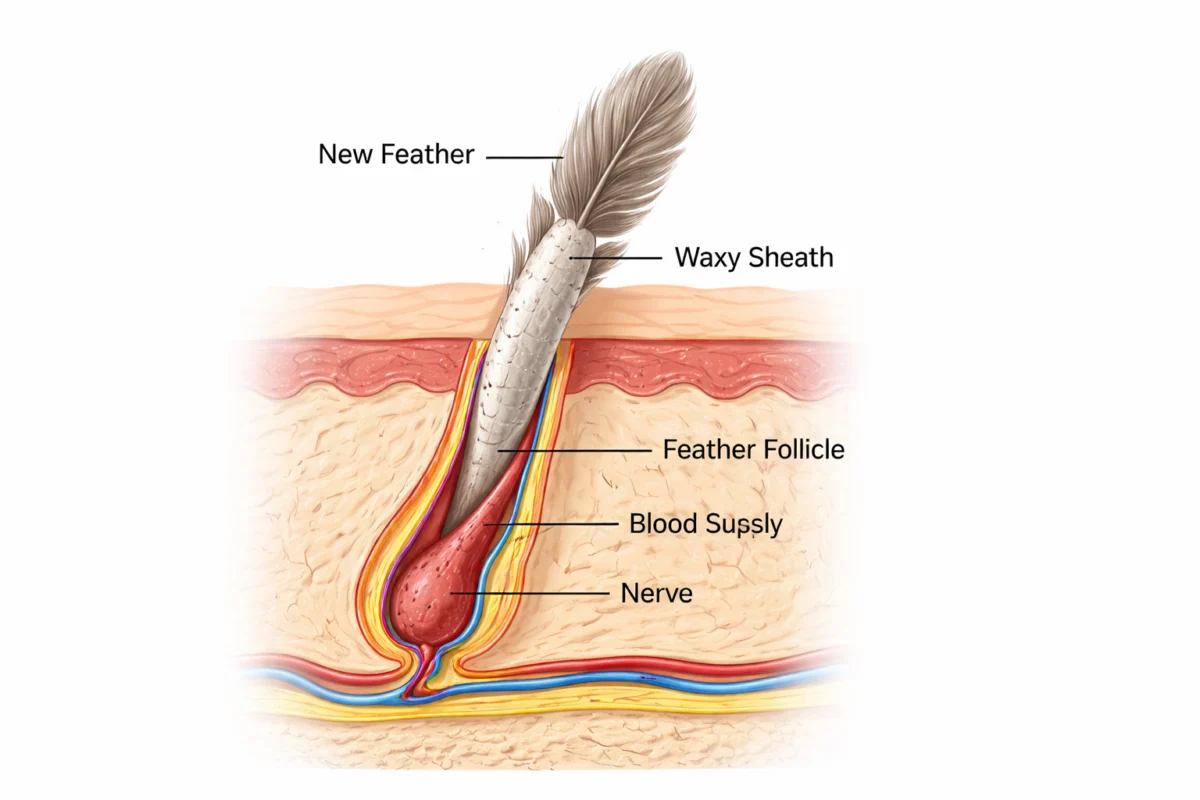
Pin feathers are, in essence, the embryonic stage of new feathers. Each old feather is anchored in a dermal follicle, and beneath it, a new feather germinates. As the new feather develops, it pushes out the old one. This intricate process is orchestrated by hormonal signals and requires a substantial investment of energy and specific nutrients. The keratin sheath, a protective casing, encases the developing feather shaft, safeguarding it from damage as it emerges through the skin. Visually, these sheathed feathers resemble small, rigid spikes, often appearing pale or whitish. Their prominence is particularly noticeable in areas difficult for a bird to preen independently, such as the head and neck. During a typical molt, it is common for pin feathers to emerge in clusters, leading to a temporarily disheveled or "spiky" appearance, which is a normal aspect of feather replacement. The presence of unopened pin feathers is not indicative of being "stuck"; rather, it signifies that the feather is still undergoing its developmental phase and is not yet ready to unfurl.
The Keratin Sheath: A Protective Cradle
The keratin sheath is a cylindrical, waxy covering composed primarily of keratin, the same protein that forms the feather itself, as well as beaks and claws. Its primary function is to protect the delicate, growing feather from physical trauma, desiccation, and infection during its vulnerable early stages. This sheath also facilitates the feather’s smooth emergence through the skin. Beneath this protective layer, the feather’s structure, including the central rachis and barbules, is rapidly forming. As the feather matures within the sheath, it gradually dries, becoming brittle and ready to be shed through preening.
Synchronized Growth: Why Spikes Appear in Clusters
Feather growth is not a solitary event. Avian physiology dictates that feather follicles are activated in groups, often within the same anatomical region, ensuring a coordinated shedding of old feathers and the synchronized emergence of new ones. This explains why pin feathers frequently appear all at once, giving the impression of a sudden transformation. The follicles have been actively preparing beneath the skin for some time, and their visible emergence marks a critical juncture in the molting process. The simultaneous growth of numerous feathers can lead to generalized skin sensitivity and irritation, even in the absence of any underlying medical condition. This sensation is a normal consequence of the body’s extensive feather regeneration efforts.
Chronology of Discomfort: Navigating the Pin Feather Stages
The experience of pin feathers for a bird evolves through distinct stages, each associated with specific sensations and behavioral manifestations. Understanding this chronology is vital for owners to provide appropriate support.
| Stage | How It Feels | Owner Observation / Recommended Action |
|---|---|---|
| Early Growth | Tender pins, sensitivity; avoid handling | Bird avoids touch; skin appears taut. |
| Itchy Phase | Scratching/rubbing increases; bathing helps | Increased preening, rubbing, irritability. |
| Release | Sheaths flake off; comfort improves | Fine white flakes, reduced scratching. |
Early Growth: The Tender Beginnings
In their nascent stage, each pin feather retains a connection to a small blood supply, which nourishes its rapid development. This vascular link renders the surrounding skin and follicle highly sensitive. Any direct pressure, squeezing, or rough handling of pin feathers at this point can cause significant discomfort or even pain to the bird. Owners may observe their bird becoming withdrawn, irritable, or actively avoiding physical contact, particularly near areas with newly emerging pin feathers. Gentle interactions and respecting the bird’s boundaries are paramount during this period. Offering opportunities for self-soothing activities, such as bathing or misting, can provide some relief without direct intervention.
The Pruritic Peak: Managing the Itchy Phase
As the keratin sheath gradually dries and begins to break down, a common and often noticeable symptom emerges: intense itching. This "itchy phase" is when owners typically observe a marked increase in self-preening, rubbing against surfaces, and focused scratching. While these behaviors might superficially resemble behavioral issues, they are primarily physical responses to the irritation caused by the drying and fragmenting sheaths. The bird is attempting to slough off the protective layer to allow the feather to unfurl. This stage can be particularly taxing for birds, as the constant irritation can lead to agitation. Providing frequent bathing opportunities, either through a shallow dish or gentle misting, can significantly soften the keratin sheaths, making them easier and less irritating for the bird to remove. This also promotes general skin hydration, which can alleviate some of the discomfort.
The Final Unfurling: Relief and Resolution
Once a pin feather reaches full maturity, its protective sheath becomes completely dry and brittle. At this point, the sheath naturally flakes away, allowing the fully formed feather to expand and settle into its functional position. This stage often coincides with a noticeable improvement in the bird’s comfort levels. Owners may observe fine white flakes resembling dandruff accumulating around the bird’s cage or on its feathers, which are simply the remnants of the shed keratin sheaths. While the bird will continue to preen to remove these flakes and arrange its new plumage, the intense scratching and rubbing typically subside. Continued access to bathing and a humid environment can aid in the final shedding process, ensuring the new feathers are clean and properly aligned.
Distinguishing Critical Conditions: Pin Feathers Versus Blood Feathers
A critical distinction for bird owners is between a normal pin feather and a "blood feather." While all pin feathers in their early stages are connected to a blood supply, the term "blood feather" typically refers to larger, still-growing feathers—most commonly found in the wings or tail—that retain a substantial active blood supply. Due to their size and the larger volume of blood flowing through their quills, damage to a blood feather can lead to more significant and potentially dangerous bleeding than a minor pin feather on the body.
Understanding the Vascular Connection
Every developing feather, whether a small contour feather or a large flight feather, is initially vascularized. The shaft of a growing feather, particularly its base, contains an artery and a vein. As the feather matures and extends, the blood supply recedes from the distal parts of the shaft, eventually disappearing completely once the feather is fully grown. A "blood feather" is simply a large, actively growing feather that has not yet completed this process of vascular recession. Its quill will appear darker or translucent, revealing the blood within. Breaking such a feather can result in continuous bleeding because the vessel within the quill is effectively an open artery or vein.
Emergency Protocols for Broken Blood Feathers
If a blood feather breaks, the immediate concern is controlling the bleeding. In smaller birds, even what appears to be a moderate amount of blood loss can quickly lead to anemia, shock, or even death. Owners should be prepared with a bird-safe clotting agent (e.g., styptic powder, cornstarch, or flour) and clean gauze or cotton pads.
- Apply Direct Pressure: Gently but firmly apply pressure to the bleeding quill with a clean cloth or gauze for several minutes. Avoid applying pressure directly to the bird’s body, only to the feather shaft.
- Apply Clotting Agent: Once direct pressure has been applied, carefully apply a small amount of clotting agent to the broken end of the quill.
- Monitor Closely: After the bleeding appears to have stopped, monitor the bird closely for 30 to 60 minutes. Minor re-bleeding might occur, in which case the clotting agent can be reapplied once or twice.
- Seek Veterinary Care Immediately If:
- Bleeding continues heavily for more than 10-15 minutes despite pressure and clotting agents.
- The bird shows signs of weakness, lethargy, or shock.
- The owner is unsure whether the bleeding is fully controlled.
Crucially, owners should never attempt to pull a broken blood feather themselves. Feather removal is an extremely painful procedure that can exacerbate bleeding, damage the feather follicle, and potentially lead to permanent feather growth issues or infection. This procedure should only be performed by an avian veterinarian or a trained veterinary professional who can assess the situation, administer pain relief, and ensure proper follicle care.
Proactive Care: Supporting Avian Comfort During Molt
The primary goal during molting is to alleviate skin irritation, prevent excessive or fixated scratching that could lead to self-mutilation, and protect the emerging feathers. Simple, safe home support measures can provide significant relief for birds experiencing normal molting discomfort.
Environmental Enrichment: Humidity and Hygiene
Maintaining an optimal environment plays a crucial role in facilitating a comfortable molt. Indoor environments, particularly those with central heating or air conditioning, often have low humidity, which can cause the keratin sheaths to dry out too quickly and become excessively rigid, leading to increased itching and difficulty in shedding.
- Humidity: Increasing ambient humidity through humidifiers, frequent misting with plain water, or placing the bird’s cage in a steamy bathroom (supervised) can soften the pin feather sheaths. Softer sheaths are easier for the bird to remove through preening, reducing irritation.
- Bathing: Regular bathing is perhaps the single most effective intervention. Birds naturally use water to soften their feathers and facilitate preening. Offer a shallow bath dish with fresh water daily, or gently mist the bird with a fine spray bottle. The frequency can be increased during periods of intense molting.
- Cleanliness: A clean cage environment helps prevent secondary skin infections, which can worsen irritation during molt. Regularly clean perches and toys, and change cage liners.
Nutritional Foundations for Feather Health
Given the high metabolic demand of growing new feathers, optimal nutrition is non-negotiable. A diet rich in specific vitamins, minerals, and fatty acids directly supports skin integrity and robust feather development.
- Protein: Feathers are primarily protein (keratin), so adequate dietary protein is essential. High-quality pellets, certain seeds (in moderation), and cooked legumes can contribute.
- Vitamin A: Crucial for epithelial tissue health, including skin and feather follicles. Deficiency can lead to abnormal feather growth and skin issues. Sources include dark leafy greens, carrots, and sweet potatoes.
- Vitamin E: An antioxidant that supports skin health and immune function. Found in nuts, seeds, and leafy greens.
- Omega Fatty Acids (e.g., Omega-3, Omega-6): Essential for maintaining healthy skin barriers and reducing inflammation. Flaxseed, chia seeds, and certain avian-specific supplements are good sources.
- Calcium and Vitamin D3: Important for overall health and bone structure, indirectly supporting the bird’s ability to cope with the stress of molt.
Supplementation, if deemed necessary, should be discussed with an avian veterinarian to avoid over-supplementation, which can be harmful.
The Role of Gentle Assistance (and its Limitations)
While most birds manage their pin feathers independently through preening and bathing, some owners inquire about offering assistance. This is an optional, not mandatory, intervention and must be approached with extreme caution and sensitivity.
- When Help May Be Appropriate:
- For older or infirm birds who struggle to preen effectively, particularly in hard-to-reach areas like the head and neck.
- When a bird tolerates and appears to enjoy the gentle interaction.
- Only for pin feathers where the keratin sheath is clearly dry, flaky, and detaching, and the feather feels firm, not tender.
- When Not to Help:
- If the bird shows any signs of discomfort, fear, or aggression.
- If the pin feather appears dark (indicating an active blood supply), swollen, or tender.
- If the sheath is not visibly flaky and loose.
- Never attempt to squeeze, pull, or force open pin feathers.
Many experienced owners opt against direct intervention, relying solely on environmental support and allowing the bird to manage the process naturally. If gentle assistance is offered, it should involve lightly rolling the dry sheath between two fingers (never pulling) to help it flake off, ensuring the bird’s comfort is prioritized at all times.
When Normalcy Deviates: Recognizing Signs of Concern
Normal pin feather irritation is a transient phenomenon that gradually improves as feathers mature. Persistent or escalating discomfort, however, suggests a deviation from the normal molting process and warrants immediate veterinary attention. Owners should be vigilant for the following red flags:
- Rapidly expanding bald areas: While some temporary patchiness is normal, rapidly enlarging bald spots or complete feather loss in an area without new feather growth is concerning.
- Open skin lesions or bleeding: Any breaks in the skin, active bleeding (other than from a broken blood feather managed as described), or signs of infection (redness, swelling, discharge) require prompt evaluation.
- Feather destruction: Obsessive plucking, chewing, or mutilation of new or existing feathers that goes beyond normal preening. This can be a sign of underlying pain, severe irritation, stress, or a medical condition.
- Signs of systemic illness: Lethargy, loss of appetite, changes in droppings, puffed-up appearance, or any other general signs of sickness, which indicate that the bird’s discomfort may be related to a broader health issue rather than just molting.
- Chronic irritation or fixation: If the bird’s itching or preening becomes relentless, self-destructive, or appears to be causing significant distress for an extended period without relief from home care.
If any of these signs appear, home troubleshooting should cease, and an avian veterinarian should be consulted without delay. These symptoms are not typical components of a healthy molt and often signal underlying problems requiring professional diagnosis and treatment.
Expert Perspectives and Common Misconceptions
Avian behavior specialists and veterinarians consistently emphasize a proactive, supportive approach during molting. Addressing common owner queries can further clarify this essential biological process.
The Head and Neck Conundrum
It is indeed common for pin feathers on the head and neck to cause more visible irritation and discomfort for birds. The primary reason is anatomical: birds cannot effectively preen these areas themselves. Unlike the rest of their body, which they can reach with their beak, the head and neck rely on rubbing against perches, cage bars, or solicitating allopreening (mutual preening) from a trusted flock mate or owner. This limitation means the keratin sheaths in these areas may take longer to flake off, prolonging the itchy phase. Gentle misting and providing suitable rubbing surfaces can offer some relief.
Addressing the Risk of Chronic Irritation
While temporary irritation is normal, persistent discomfort without relief can indeed contribute to the development of chronic feather destructive behaviors, including plucking. When a bird experiences prolonged itching or pain, it may become fixated on the sensation, leading to excessive preening that escalates into self-mutilation. Providing early and consistent comfort support—through bathing, humidity, and optimal nutrition—is crucial in reducing this risk. Addressing the underlying physical irritation helps prevent the behavior from becoming a learned coping mechanism or a chronic habit.
Molting is a testament to the dynamic biology of birds, a process that ensures their continued health, flight, and survival. For bird owners, understanding the nuances of pin feathers and the molting cycle transforms a potentially confusing or concerning observation into an opportunity for informed, compassionate care. By providing appropriate environmental support, optimal nutrition, and discerning when professional intervention is necessary, owners can significantly enhance their feathered companions’ comfort and well-being, fostering a healthier and happier life for their pets. This holistic approach to avian wellness strengthens the bond between bird and owner, grounded in knowledge and attentive care.

