


The landscape of veterinary medicine has undergone a profound transformation over the last two decades, moving from a primary focus on traditional companion animals and livestock toward a highly sophisticated and specialized field encompassing avian, exotic, and wildlife species. This shift is reflected in the rigorous extracurricular programming offered at top-tier veterinary colleges worldwide. By examining the chronology of seminars, wet labs, and distance-learning events scheduled between 2007 and 2026, it becomes evident that the veterinary community has placed an increasing premium on non-traditional species, driven by both public demand for exotic pet care and a global urgency for wildlife conservation.
The Foundation of Specialized Student Chapters
The majority of these educational initiatives are spearheaded by student-led organizations such as the Zoo, Exotic, and Wildlife (ZEW) clubs and the American Association of Avian Pathologists (AAAP) student chapters. These groups act as a bridge between the standard Doctor of Veterinary Medicine (DVM) curriculum and the specialized skills required for treating "non-traditional" patients.
In the early years of this recorded timeline, specifically between 2007 and 2012, the focus was largely on establishing foundational knowledge. Events such as Dr. R. Avery Bennett’s 2008 presentation at Kansas State University and Dr. Samuel Rivera’s 2012 lecture at Tuskegee University provided students with access to diplomates of the American College of Zoological Medicine (ACZM) and the American Board of Veterinary Practitioners (ABVP). These early interactions were critical in legitimizing exotic medicine as a viable and necessary career path for incoming veterinarians.
Technical Sophistication and the Rise of Wet Labs
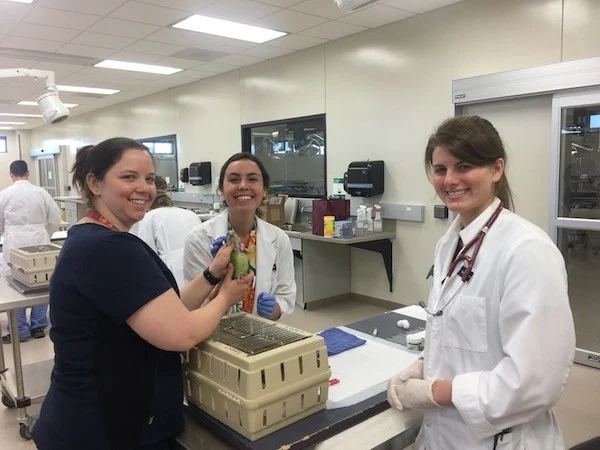
As the field matured, the training moved from the lecture hall to the laboratory. Between 2013 and 2019, there was a notable surge in "wet labs"—hands-on sessions where students practice clinical techniques on cadavers or under-sedation models. Texas A&M University and North Carolina State University emerged as leaders in this hands-on approach.
For instance, the October 2013 rabbit dental wet lab at Texas A&M, led by Dr. Anneliese Strunk, addressed one of the most common clinical presentations in exotic mammal medicine: dental malocclusion. Similarly, the 2016 avian emergency techniques lab led by Dr. Sharman Hoppes provided students with high-stakes training in stabilization and life-saving procedures. These sessions are often supported by industry partners like Lafeber Company, which provides the resources necessary to facilitate advanced training in specialized nutrition and critical care.
The diversity of topics during this period also expanded to include highly technical surgical interventions. Dr. Stephen Fronefield’s repeated sessions on avian reproductive surgery at Texas A&M highlight the move toward providing exotic pets with the same level of surgical sophistication available to canine and feline patients.
The Digital Transformation of Veterinary Learning
The year 2020 marked a pivotal turning point in how veterinary knowledge is disseminated. The global pandemic necessitated a shift to "distance-learning events," a format that proved so effective it has remained a staple of the curriculum through the mid-2020s.
This digital shift allowed universities to host international experts who might otherwise have been inaccessible due to travel costs or scheduling conflicts. A prominent example is Dr. Jaime Samour’s two-part series on the medical and nursing procedures of birds of prey, presented to Mississippi State University and the University of Tennessee in late 2021. By utilizing virtual platforms, students in the United States gained direct insight from a world-renowned expert in raptor medicine based in the Middle East.
Furthermore, the 2022 and 2025 presentations by Dr. Yvonne van Zeeland and Dr. Olivia Petritz demonstrate the collaborative nature of modern veterinary education. Dr. Petritz’s lecture on avian anatomy was made available to students at both Michigan State University and Utrecht University in the Netherlands, showcasing a new era of cross-continental academic synergy.
Specialized Nutrition and Critical Care as a Clinical Pillar
A recurring theme throughout the nearly twenty-year timeline is the critical importance of nutrition. Kara Burns, a specialist in veterinary nutrition and internal medicine, has been a frequent contributor to this educational series, presenting at universities ranging from Oklahoma State to Purdue.
Nutrition is often cited as the "fifth vital assessment" in veterinary medicine, and this is particularly true for exotic species, where improper diet is the root cause of a vast majority of clinical illnesses. The focus on "Avian Nutrition Fundamentals" and "Rabbit Nutrition & Critical Care Feeding" emphasizes a preventative approach to medicine. By training students to recognize the nutritional requirements of diverse species—from parrots to hedgehogs—educational programs are directly improving the long-term welfare of these animals in domestic settings.
Conservation Medicine and One Health Implications
The educational programming also reflects a growing awareness of the "One Health" initiative—the concept that human, animal, and environmental health are inextricably linked. Many seminars in the 2020s have focused on wildlife rehabilitation and conservation medicine.
Dr. LoraKim Joyner’s 2021 presentation, "Liberating Wings: The Possibility of Transformative Parrot Conservation," and Dr. Sara McReynolds’ 2023 briefing on Highly Pathogenic Avian Influenza (HPAI) at Kansas State University underscore the veterinarian’s role in global health security. The monitoring of shellfish diseases (Atlantic Veterinary College, 2025) and lead toxicity in local bird species (Purdue University, 2020) illustrates how veterinary students are being trained to act as frontline biosurveillance officers, identifying environmental hazards that could eventually impact human populations.
Chronology of Future Programming: 2024 to 2026
The schedule for the 2024–2026 academic years suggests a continued commitment to high-level specialization. Upcoming events include:
- April 2026: Dr. Rebecca Duerr will present on "Oiled Wild Bird Care" at Kansas State University, addressing the clinical response to environmental disasters.
- March 2026: Kara Burns returns to Purdue University to deliver a masterclass on Avian Nutrition Fundamentals.
- April 2025: A bird walk and raffle for the Sibley’s Guide to Birds at Atlantic Veterinary College, highlighting the importance of field observation and species identification in veterinary practice.
- January 2025: A joint session between Kansas State University and the European Association of Avian Veterinarians explores the intersection of behavior and medical issues in birds, led by Dr. Yvonne van Zeeland.
These future events indicate that the curriculum is evolving to include not just clinical skills, but also behavioral health and environmental stewardship.
Industry Support and Broader Impacts
The role of industry sponsorship in these programs cannot be overstated. Companies like Lafeber have historically provided the "Gold" and "Silver" level sponsorships required to host symposia and wet labs. This support ensures that students have access to the latest medical equipment, specialized formulas for critical care, and the ability to bring in keynote speakers who are at the forefront of their respective fields.
The impact of this consistent, high-quality programming is twofold. First, it ensures that the next generation of veterinarians is equipped to handle the increasing complexity of exotic animal cases. Second, it fosters a community of specialists who are dedicated to the welfare of animals that were once considered "pocket pets" or "disposable."
Conclusion: The Future of the Exotic Veterinary Profession
The two-decade trajectory of veterinary educational programming reveals a profession that is becoming more inclusive, more technical, and more globally connected. From the early handling labs of the late 2000s to the complex virtual symposia of the 2020s, the goal has remained consistent: to provide the highest standard of care for every species, regardless of size or rarity.
As we look toward 2026 and beyond, the integration of advanced diagnostics—such as sea turtle CT scans and avian ultrasound—into the student experience suggests that the gap between traditional and exotic medicine is closing. The veterinarian of the future is no longer just a "dog and cat doctor" but a versatile clinician capable of pivoting from rabbit dentistry to elephant reproduction or shellfish disease control. This evolution is essential for the preservation of biodiversity and the continued advancement of medical science in an increasingly complex world.

