


Thousands of years ago, a dramatic scene unfolded in the subterranean darkness of Hispaniola, an island now divided between Haiti and the Dominican Republic. A giant barn owl, a formidable predator, brought its prey, a hutia—a large rodent native to the Caribbean—back to its lair deep within a cave. The owl likely intended to feed its young, and the meal, though brief for the hutia, left behind a grim testament to its end: scattered remains within the cave’s silt-rich floor. Unbeknownst to the owl or its prey, this ancient tableau would eventually become a canvas for an unexpected act of creation, revealing a fascinating chapter in the island’s ecological history.
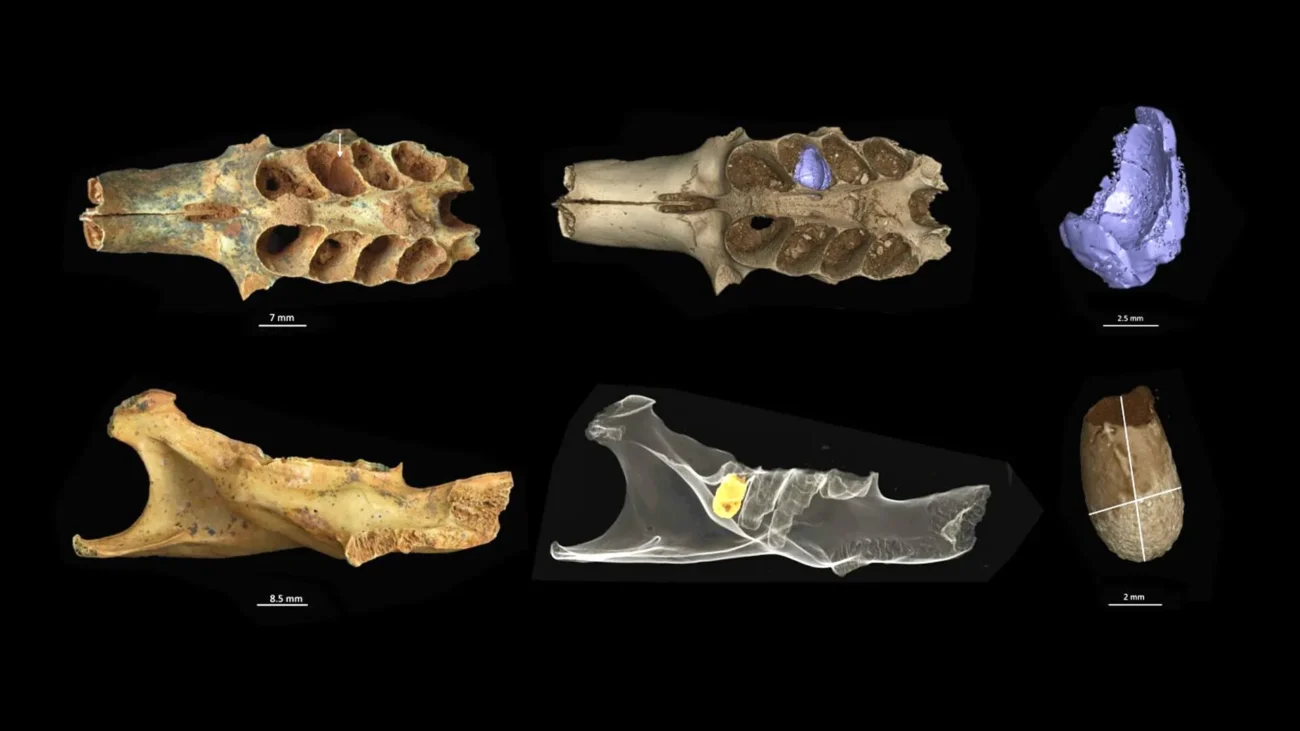
This ancient drama is pieced together by paleontologists who have uncovered fossilized jawbones of the hutia, intricately repurposed by burrowing bees as nesting sites. The discovery, detailed in a recent publication in the Proceedings of the Royal Society B, highlights a rare and unprecedented behavior that sheds light on the ingenuity of nature and the often-overlooked intricate relationships within ecosystems. The narrative begins not with the bees, but with the predatory habits of the giant barn owl, a creature that likely dominated the Caribbean’s skies for millennia.
The Owl’s Larder: A Foundation for Future Life
The cave, identified as Cueva de Mono in the southern Dominican Republic, served as a long-term feeding station for these large owls. Over generations, these owls would repeatedly bring prey, including the now-extinct hutia species, to this sheltered location. The soft, clay-rich silt that accumulated in the cave’s darker recesses provided a stable substrate, but it was the skeletal remains of the hutias that would ultimately play a crucial role in a subsequent ecological drama.
The hutia, a creature that once roamed Hispaniola and other Caribbean islands, faced extinction likely due to a combination of factors, including human arrival and habitat changes. Its large size and rodent characteristics made it a prime target for avian predators like the giant barn owl. The owl’s method of hunting and feeding would have involved dismembering its prey and leaving behind inedible parts, including skull fragments and jawbones, within its nesting territory. These bones, embedded in the cave’s sediment, became silent witnesses to the passage of time.
The Arrival of the Unlikely Architects
Much later, after the owl and hutia populations had long since vanished from this specific cave, a different kind of inhabitant arrived: a burrowing bee. Driven by an instinct to find a safe and stable location to raise its young, the bee began to excavate. The fine, clay-rich silt offered a promising material, but before it could reach the desired depth for its nest, it encountered the fossilized remains of the hutia.
This seemingly random encounter proved to be a serendipitous discovery for the bee. The hutia’s jawbones, though devoid of teeth, still retained their alveoli – the small, socket-like cavities that once held the rodent’s teeth. These empty alveoli, remarkably, were of a size that perfectly suited the bee’s nesting requirements. Instead of laboriously digging through the dense silt, the bee found pre-existing, ready-made chambers.
From Predator’s Feast to Bee’s Nursery: A Chronology of Coexistence
The timeline of these events is crucial to understanding the discovery. Paleontologists estimate that the hutia remains are thousands of years old, predating the arrival of modern human settlement on the island. The giant barn owls, also now extinct or significantly diminished in their historic range, would have been active during this prehistoric period. The process of fossilization, where organic material is gradually replaced by minerals, would have occurred over vast stretches of time, solidifying the hutia’s bones within the cave’s geological strata.
The arrival of the bees, therefore, represents a much later event, occurring after the bones had become fossilized and embedded in the sediment. The bees likely exploited these cavities for a period, with subsequent generations of bees potentially reusing these sites. This extended period of bee activity, occurring long after the initial predation event, is what ultimately preserved the evidence of their nesting behavior.
A Meticulous Excavation Uncovers a Hidden Story
The discovery of this unusual nesting behavior might have been overlooked entirely. Paleontologists, when excavating fossils, typically focus on cleaning the specimens, removing any adhering sediment. Lazaro Viñola Lopez, who led the excavation as a doctoral student at the Florida Museum of Natural History, initially followed this convention. However, his particular interest in this specific species of hutia, which was scarce in other parts of the island, prompted a more thorough examination.
At Cueva de Mono, Viñola Lopez uncovered thousands of hutia fossils, suggesting the cave’s long history as an owl feeding site. While cleaning these specimens, he noticed something peculiar. "Usually, when collecting fossils, you get all the sediment out of the alveoli while cleaning the specimen," he explained. But in this instance, he found one cavity that stood out. "Its inner surface was smooth instead of rough like bone." This subtle detail, overlooked by many, sparked his curiosity.
A Case of Mistaken Identity: Wasps or Bees?
Viñola Lopez’s initial hypothesis was that the smooth-walled cavities were the remnants of wasp nests. He recalled a similar discovery in Montana in 2014, where wasp cocoons were found mixed with dinosaur fossils. He even contemplated writing a short paper about this supposed occurrence of wasp nests within the hutia mandibles.
However, his colleague, Mitchell Riegler, also a doctoral student at the museum, expressed skepticism. The idea was temporarily shelved until Riegler, challenged by a former advisor to write a scientific paper within a week, revisited the intriguing fossil samples. The collaborative effort, a friendly competition to produce research, led them to delve deeper into the nature of the nests.
Their initial assumption of wasp nests began to unravel when they consulted research on ichnofossils—traces of past biological activity. Wasp nests are typically constructed from chewed plant material mixed with saliva, resulting in rough, textured walls. The smooth, polished interior of the cavities in the hutia fossils did not align with this characteristic.
The Revelation: The Delicate Touch of Bees
Further investigation, including detailed literature reviews and consultations with experts in modern bees, led to a groundbreaking correction. Bees, particularly certain species of solitary bees, are known to line their nests with a waxy secretion. This secretion creates a waterproof and smooth interior, a characteristic that precisely matched the fossilized cavities. The team realized they were not looking at wasp nests, but at evidence of ancient bee nesting behavior.
This realization elevated the significance of their discovery. While there are documented cases of burrowing bees nesting in caves, and even instances of bees drilling into human bones, this represents the first known instance of bees utilizing pre-existing fossil structures without modification. The bees had found an ideal, pre-constructed dwelling, saving them the effort of excavation and providing a protected environment for their offspring.
Supporting Data: The Prevalence of Bee Nests in Diverse Fossil Remains
The study’s findings were not limited to hutia jawbones. The researchers discovered these repurposed fossil cavities being used as nests in a variety of other skeletal elements. This indicates a widespread adaptation by the bees to utilize available fossil structures within the cave environment.
- Sloth Teeth: In one remarkable instance, a nest was found within the pulp cavity of a fossilized sloth tooth. Tree sloths, once native to the Caribbean, eventually disappeared from the region. The discovery suggests that the bees were not selective about the type of fossil, as long as the internal cavity met their requirements.
- Hutia Vertebrae: Another nest was located within a hutia vertebra, occupying the space where the spinal cord once resided. This further demonstrates the bees’ opportunistic approach to nesting.
The use of advanced imaging techniques, such as CT scans, provided even more granular detail about the nesting behavior. These scans revealed that some cavities contained multiple layers of nests, stacked one inside another like Russian nesting dolls. This suggests that if a previously used alveolus was empty, subsequent bees would reuse it, further optimizing their nesting strategies. In one documented case, six distinct nests were found layered within a single hutia alveolus.
The Environmental Context: Karst Terrain and the Drive for Shelter
The researchers propose a compelling environmental explanation for this unusual behavior. The region where Cueva de Mono is located is characterized by karst topography—a landscape formed from soluble rocks, primarily limestone, resulting in sharp, edgy terrain and a scarcity of stable soil.
"The area we were collecting in is karst, so it’s made of sharp, edgy limestone, and it’s lost all of its natural soils," Riegler stated. "I actually fell on it at one point, so I can tell you all about it."
In such an environment, soil that does accumulate on the surface is prone to being washed away by rainfall, often draining into subterranean cave systems. These cave deposits can create pockets of more suitable material for burrowing insects. Therefore, the caves, with their accumulated sediment, may have offered some of the only viable nesting conditions for burrowing bees in the wider region. The fossilized bones within these deposits provided an added bonus: ready-made, protected chambers.
Implications and Broader Impact: Life’s Unforeseen Adaptations
The discovery carries significant implications for our understanding of paleoecology and animal behavior. It underscores the remarkable adaptability of life and the intricate ways in which different species can interact, even across vast timescales.
- Ichnofossil Research: The study contributes to the growing field of ichnofossil research, expanding the known repertoire of trace fossils to include the utilization of fossilized skeletal structures by modern insects.
- Paleoenvironmental Reconstruction: The presence of these nests within specific fossil types can offer insights into the environmental conditions that prevailed during different periods, including the availability of suitable nesting materials and the presence of predators like owls.
- Conservation Awareness: The potential threat to the cave from proposed development, which aimed to convert it into a septic tank, highlights the vulnerability of such unique paleontological and ecological sites. The researchers’ "rescue mission" to recover fossils before potential destruction emphasizes the importance of protecting these natural archives.
A Cave Full of Unfolding Stories
The work at Cueva de Mono is far from over. The researchers are continuing to analyze the wealth of fossils recovered from the cave, anticipating further discoveries that will illuminate more about the island’s past inhabitants and their interactions. This remarkable finding, where the remains of an ancient meal became the foundation for a new generation of life, serves as a potent reminder of the interconnectedness of ecosystems and the enduring power of adaptation. The cave, once a silent tomb, has become a vibrant testament to life’s persistent ability to find a way, even in the most unexpected of circumstances.

