


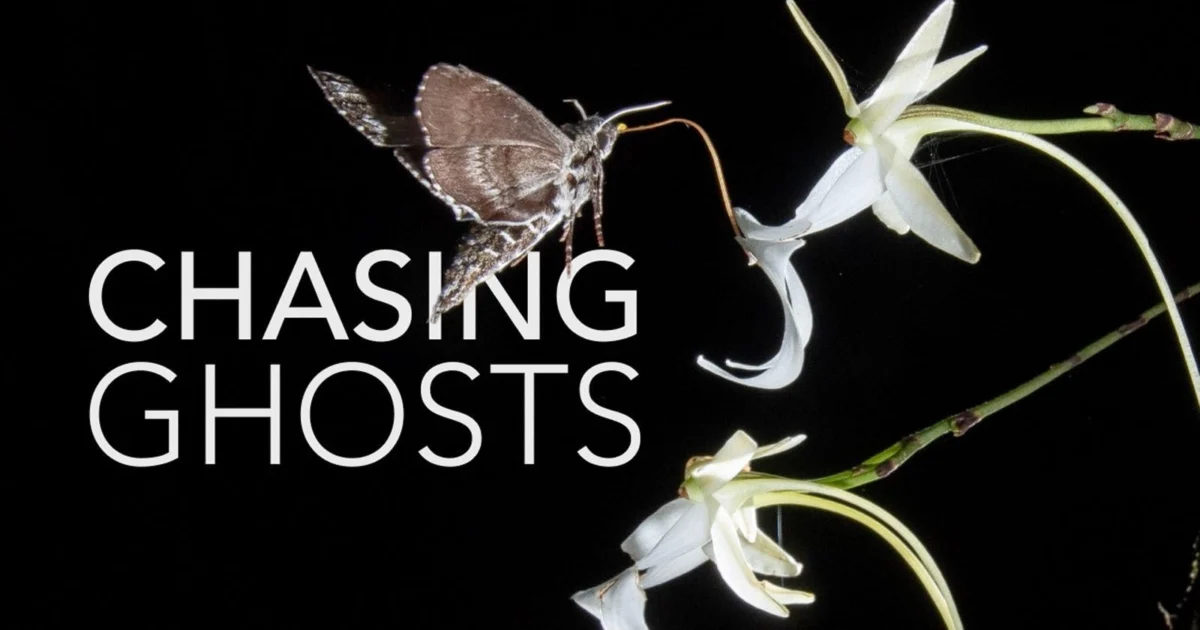
A new documentary film, Chasing Ghosts, has brought global attention to one of the most enduring mysteries in North American botany: the pollination of the elusive ghost orchid (Dendrophylax lindenii). Produced through a collaboration between Grizzly Creek Films, BioGraphic Magazine, and the Matador Network, the production follows an interdisciplinary team of scientists and photographers into the most remote reaches of Florida’s flooded forests. For decades, the ghost orchid has remained a symbol of the wild, untamed Florida Everglades, yet its reproductive cycle has largely eluded scientific documentation. By integrating advanced field biology with long-term camera trapping and expedition-style research, the team has successfully captured breakthrough moments that are fundamentally reshaping the scientific community’s understanding of this fragile and mysterious species.
The Botanical Enigma of the Ghost Orchid
The ghost orchid is a leafless perennial epiphyte, a plant that grows upon another plant—usually a cypress, pond apple, or pop ash tree—without being a parasite. It is famously difficult to locate because it lacks foliage; for most of the year, it exists only as a network of green, photosynthetic roots that cling to the bark of its host tree. When it does bloom, typically between June and August, it produces a striking, white, frog-shaped flower that appears to float in mid-air, giving the species its "ghostly" moniker.
Found primarily in the Big Cypress National Preserve and the Fakahatchee Strand Preserve State Park in South Florida, as well as in parts of Cuba, the ghost orchid is highly specialized. It requires a specific microclimate characterized by high humidity, dappled sunlight, and a particular fungal associate to survive. Despite its fame, popularized by Susan Orlean’s book The Orchid Thief and the subsequent film Adaptation, the ghost orchid remains one of the least understood flowering plants in the United States. Its rarity is compounded by its unpredictable blooming patterns and the extreme difficulty of accessing its habitat.
A Multi-Disciplinary Approach to Conservation
The search documented in Chasing Ghosts was led by a team that merged the rigors of scientific inquiry with the patience of professional wildlife photography. Carlton Ward Jr., a renowned conservation photographer and National Geographic Explorer, approached the project with a focus on the broader Florida Wildlife Corridor. His work emphasizes the interconnectedness of species and the landscapes they require to survive. Joining him was Mac Stone, an environmental storyteller and photographer with extensive experience in the Everglades, who utilized long-form imagery to document the intricate details of the swamp’s ecosystem.
The scientific foundation of the project was provided by Peter Houlihan, a tropical ecologist and orchid specialist. Houlihan’s expertise in pollination biology was critical in moving the project beyond mere observation into the realm of formal scientific discovery. This collaboration reflects a growing trend in conservation: the use of high-end visual storytelling to support and fund field research that might otherwise go unnoticed. The team’s willingness to spend years in the field, often waist-deep in water and surrounded by alligators and mosquitoes, underscores the level of commitment required to study a species that offers no guarantee of a "payoff" in terms of data.
Challenges of the Florida Wilderness
The terrain of South Florida’s cypress swamps serves as a formidable barrier to scientific research. The researchers were forced to navigate a landscape defined by unstable footing, fluctuating water levels, and dense vegetation. These environmental factors create a slim margin for error, particularly when deploying sensitive electronic equipment like camera traps.
According to Carlton Ward Jr., the swamp itself is a character in the story. "The swamp itself is steeped in mystery, holding a wildness that is so increasingly rare in modern life," Ward noted during the production. The difficulty of the environment is a primary reason why the ghost orchid’s pollination remained a mystery for so long. To capture the necessary footage, the team had to mount cameras high in the canopy, often twenty or thirty feet above the swamp floor, using infrared sensors to trigger shutters when a moth approached the bloom under the cover of darkness.
The Long-Held Theory: The Giant Sphinx Moth
For over a century, the prevailing scientific hypothesis was that the Giant Sphinx Moth (Cocytius antaeus) was the sole pollinator of the ghost orchid. This theory was based on the orchid’s unique anatomy; it possesses a long, thin nectar spur that can reach up to five inches in length. In the mid-19th century, Charles Darwin famously predicted that an orchid in Madagascar with a similarly long spur must be pollinated by a moth with an equally long proboscis (tongue). When such a moth was discovered decades later, it solidified the idea that long-spurred orchids and long-tongued moths evolved in a specialized "lock and key" relationship.
In the case of the ghost orchid, the Giant Sphinx Moth—the only moth in the region with a proboscis long enough to reach the bottom of the orchid’s nectar spur—was the natural candidate. However, while this theory was widely accepted, it had rarely been observed in the wild. One of the primary goals of the Chasing Ghosts team was to provide the first photographic evidence of this specific interaction.
Rethinking Pollination: Breakthroughs and New Questions
The team’s findings initially seemed to confirm the Darwinian theory. They successfully captured the first-ever high-resolution images of a Giant Sphinx Moth visiting a ghost orchid. "Dude, you have the first ever photo of a giant sphinx moth at a ghost orchid," Mac Stone recalled saying during the breakthrough. However, as the team analyzed the footage more closely, the evidence began to contradict the established narrative.
Detailed analysis of the images revealed a physical mismatch. While the moth was indeed visiting the flower, its proboscis was so long that it could drain the nectar without its head making contact with the orchid’s pollen-bearing structures (pollinia). In biological terms, this is known as "nectar robbing." If the moth does not pick up or deposit pollen, it is not acting as a pollinator, but rather as a thief.
"Could it be that the giant sphinx actually has a proboscis that is almost too long to get its face into the orchid?" Ward questioned. This discovery opened a "Pandora’s box" of new scientific questions. As the team continued their surveillance, they documented other moth species visiting the flowers, including the Fig Sphinx (Pachylia ficus). Unlike the Giant Sphinx, these moths had shorter tongues, forcing them to push their heads deeper into the flower to reach the nectar, thereby making contact with the pollen.
Data and Statistical Realities of the Ghost Orchid
The data collected during the expedition highlights the precarious nature of the ghost orchid’s existence. Carlton Ward Jr. noted that the odds of successful reproduction are remarkably low. "One in 10 of these ghost orchids actually produced a flower each year. And of those, one in 10 actually get pollinated," Ward explained.
These statistics illustrate why the species is so vulnerable. With only an estimated 2,000 ghost orchids remaining in the wild in Florida, the low rate of pollination means that the population’s genetic diversity and overall survival are on a knife’s edge. If the specialized pollinators—whether they are Fig Sphinx moths or other species—decline due to habitat loss or pesticide use, the ghost orchid could vanish entirely.
Broader Implications for Everglades Conservation
The findings of the Chasing Ghosts team have significant implications for the conservation of the Florida Everglades. The ghost orchid is increasingly viewed as a "sentinel species"—an organism that reflects the health of its entire ecosystem. The fact that the orchid relies on a diverse suite of moths, rather than a single species, suggests that the health of the orchid is tied to the health of the broader insect population and the various plants those insects require during their larval stages.
The documentary arrives at a critical time for environmental policy in Florida. In recent years, there have been intensified efforts by conservation groups to have the ghost orchid listed under the Endangered Species Act (ESA). Such a listing would provide federal protections for the orchid’s habitat and mandate recovery plans. The evidence gathered by the Chasing Ghosts team provides vital data for these legal and scientific petitions, demonstrating both the rarity of the plant and the complexity of its ecological requirements.
Conclusion: A Relic of the Wild
The quest to document the ghost orchid is more than a search for a single biological answer; it is an effort to preserve a piece of Florida’s natural heritage that is rapidly disappearing. As Mac Stone observed, "This ghost orchid is a relic of that ecosystem of how it used to be."
The collaboration between scientists and storytellers in Chasing Ghosts has successfully pulled back the veil on one of nature’s most secretive processes. By proving that the ghost orchid’s survival is linked to a complex network of pollinators rather than a single moth, the team has underscored the importance of large-scale landscape conservation. To save the ghost orchid, one must save the entire swamp, the insects that inhabit it, and the hydrological cycles that sustain them both. The "ghost" of the Florida swamps remains a symbol of mystery, but thanks to this research, its future is now grounded in a clearer, more data-driven reality.

