


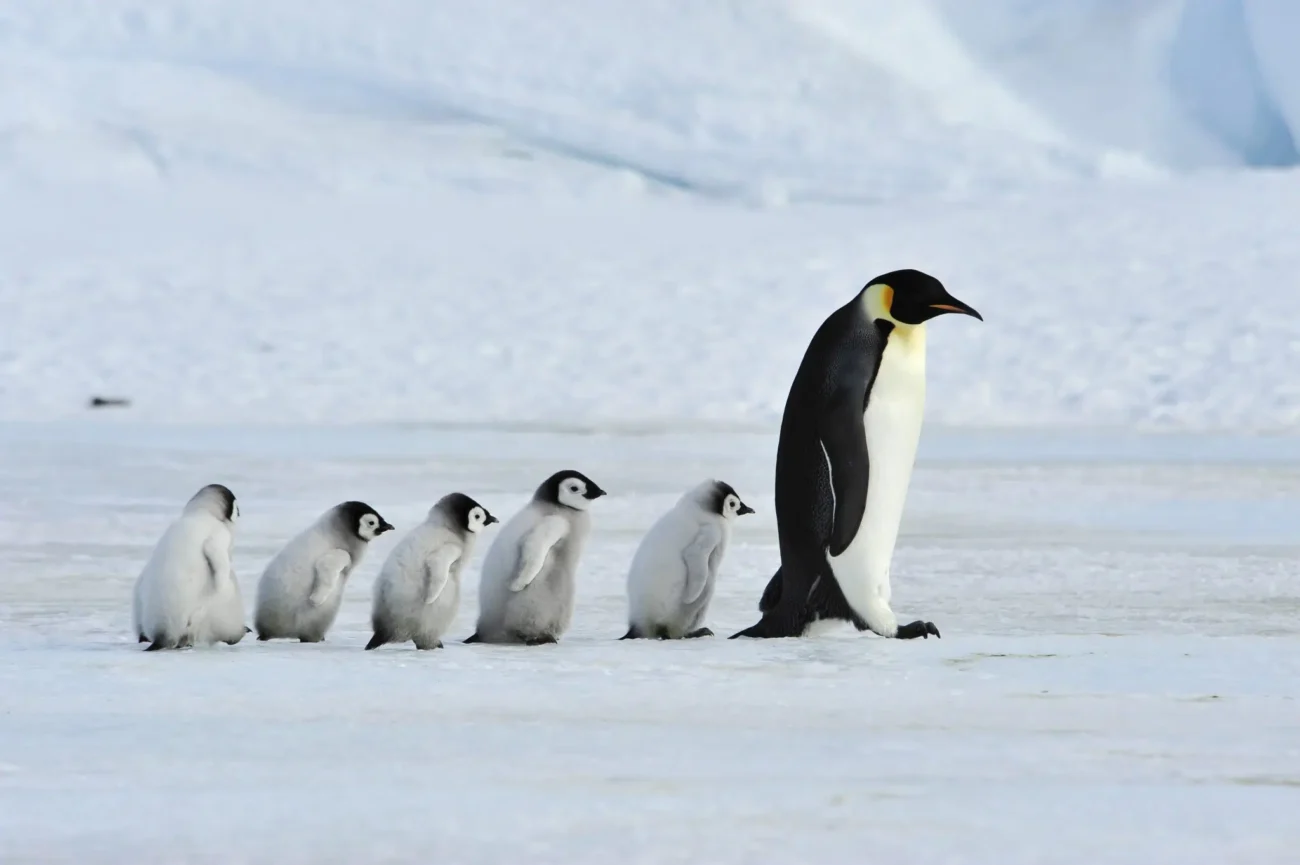
BirdLife International’s latest Red List assessment has officially reclassified the iconic Emperor Penguin (Aptenodytes forsteri) from "Near Threatened" to "Endangered," a stark indicator of the profound and accelerating impact of climate change on the Antarctic ecosystem. This significant reclassification, announced following a comprehensive reassessment by BirdLife scientists in collaboration with the IUCN SSC Penguin Specialist Group, underscores the urgent need for international action to protect this beloved species and its fragile habitat. The organization is now calling on governments to designate the Emperor Penguin as an Antarctic Specially Protected Species at the upcoming 48th Antarctic Treaty Consultative Meeting in Hiroshima this May.
A Dire Warning from the Antarctic Ice
The Emperor Penguin, a symbol of resilience and the harsh beauty of the Antarctic continent, now faces a precarious future. The primary driver behind this alarming downgrade in conservation status is the dramatic and unpredictable alteration of sea ice conditions, a direct consequence of global climate change. Sea ice is not merely a frozen expanse for these birds; it is the cornerstone of their entire life cycle, from breeding and raising their young to molting and foraging.
"The Emperor Penguin’s shift from Near Threatened to Endangered is a worrying signal of the reach of climate change impacts into the most remote parts of the globe," stated Rob Martin, Red List Team Manager at BirdLife International and the coordinator of the reassessment. "Future projections for the species robustly point to severe reductions over the rest of this century. Emperor Penguins are completely dependent on the Antarctic habitat for breeding, moulting, and feeding, but it will become harder for them to survive as ice patterns become less predictable and this crucial habitat keeps decreasing."
The scientific data supporting this reclassification paints a grim picture. Satellite imagery has revealed a significant population decline, with an estimated loss of around 10% of the Emperor Penguin population between 2009 and 2018 alone. This equates to a devastating loss of over 20,000 adult penguins. The primary culprit identified is the premature break-up and loss of sea ice, a phenomenon that has reached critical levels, with record lows reported since 2016.
The Critical Role of Sea Ice
Emperor Penguins have evolved a highly specialized reliance on "fast ice" – sea ice that remains attached to the coastline, ocean floor, or grounded icebergs. This stable ice platform is essential for their breeding colonies, providing a safe haven for chicks during their vulnerable early development and serving as a vital refuge for adults during their annual molt, a period when they are unable to enter the water due to their new, waterproof feathers.

When this fast ice breaks up prematurely, the consequences can be catastrophic. Chicks that have not yet developed their waterproof plumage are unable to survive in the frigid waters, leading to mass mortality events. These tragic occurrences, while difficult to quantify precisely in every instance, are becoming increasingly frequent and severe, pushing the species towards the brink.
Population modeling, which considers a wide spectrum of future climate scenarios, consistently indicates a rapid decline in Emperor Penguin populations throughout the 21st century unless there are significant and immediate reductions in greenhouse gas emissions. The current trajectory suggests that without drastic intervention, the Emperor Penguin population could be halved by the 2080s.
A Global Effort to Understand and Protect
BirdLife International, as the official Red List Authority for birds, plays a crucial role in monitoring the global extinction risk of avian species. Their regular reassessments serve to highlight species facing the greatest threats and to draw attention to conservation efforts that are proving effective. The reclassification of the Emperor Penguin is a direct outcome of this ongoing scientific vigilance.
The collaboration with the IUCN SSC Penguin Specialist Group, comprised of leading experts in penguin research and conservation, ensures the scientific rigor and accuracy of these assessments. This partnership allows for the pooling of extensive data and expertise, providing a comprehensive understanding of the challenges facing penguin populations worldwide.
Historical Context and Escalating Threats
The Emperor Penguin was first assessed as "Near Threatened" in 2000, reflecting a growing awareness of potential threats but not yet the full severity of the climate crisis. Over the past two decades, the scientific community has gathered increasingly robust evidence linking rising global temperatures to the destabilization of Antarctic sea ice.
The early 2000s saw initial concerns about the impact of climate change on polar ecosystems, but the pace of change has since accelerated. Events such as the catastrophic collapse of a breeding colony at Halley Bay in 2016, where an estimated 10,000 breeding pairs were lost due to premature sea ice break-up, served as a stark, real-world demonstration of the vulnerability of these populations. Subsequent years have continued to witness similar, albeit sometimes less publicized, breeding failures across various Emperor Penguin colonies.

The current reassessment represents a critical update, moving beyond observational data to incorporate sophisticated modeling that projects future population trends based on various emissions scenarios. This forward-looking analysis underscores the urgency of the situation, indicating that even moderate warming could have devastating consequences.
The Call to Action: Antarctic Treaty Consultative Meeting
The upcoming 48th Antarctic Treaty Consultative Meeting (ATCM) in Hiroshima presents a pivotal opportunity for international governments to take decisive action. This annual gathering is the primary forum for discussing and shaping environmental protection policies for the Antarctic region. BirdLife International’s Red List assessment for the Emperor Penguin will be a crucial piece of evidence informing the deliberations of national representatives.
The Significance of Specially Protected Status
Designating the Emperor Penguin as an Antarctic Specially Protected Species would carry significant weight. This designation would translate into legally binding obligations for all signatory nations to prevent actions that could directly harm or disturb Emperor Penguins and their critical habitat. Such protections could include measures to regulate tourism, scientific research activities, and any potential future industrial activities in or near breeding grounds.
"Governments have an opportunity to act for Emperor Penguins at the upcoming 48th Antarctic Treaty Consultative Meeting in Hiroshima in May," urged Martin Harper, CEO of BirdLife International. "This meeting will bring together governments to oversee and shape environmental protection policy for the Antarctic. BirdLife International contributes by providing the Red List assessment for the Emperor Penguin to inform decision-making."
Harper further emphasized the broader implications: "Penguins are already among the most threatened birds on Earth. The Emperor Penguin’s move to Endangered is a stark warning: climate change is accelerating the extinction crisis before our eyes. Governments must act now – starting by designating the Emperor Penguin as an Antarctic Specially Protected Species this May."
Analyzing the Implications
The implications of this reclassification extend far beyond the fate of a single charismatic species. The Emperor Penguin serves as a sentinel for the health of the entire Antarctic environment. Its struggles highlight the interconnectedness of global climate systems and the disproportionate impact that human-induced climate change is having on polar regions.

The designation as an Antarctic Specially Protected Species would not only offer direct protection to the penguins but would also reinforce the commitment to preserving the unique biodiversity of the Antarctic continent. It would send a powerful message about the international community’s willingness to confront the climate crisis and to prioritize conservation in the face of mounting environmental pressures.
The success of such a designation will hinge on the political will of the nations party to the Antarctic Treaty. Robust implementation and enforcement of any protective measures will be crucial to ensure that the designation translates into tangible conservation outcomes. Furthermore, this action should be viewed as part of a larger, global effort to reduce greenhouse gas emissions.
Broader Environmental Context and Future Outlook
The plight of the Emperor Penguin is emblematic of a wider crisis facing numerous species and ecosystems around the world. BirdLife International’s Red List assessments consistently reveal the pervasive threat of habitat loss and degradation, exacerbated by climate change. From the tiniest insect to the largest mammal, few species are unaffected by the warming planet.
The call for urgent decarbonization of economies, as voiced by BirdLife International, is not merely an environmental plea but an economic and social imperative. The long-term stability and prosperity of human societies are inextricably linked to the health of the natural world.
"Birds are our compass," Martin concluded. "Their health reveals the health of our world. And Emperor Penguins are showing us how stark the future of the Antarctic will be if we don’t change course now and urgently decarbonise our economies."
The decision made at the ATCM in Hiroshima will be a critical indicator of the world’s commitment to protecting one of Earth’s last great wildernesses and its most iconic inhabitants. The future of the Emperor Penguin, and by extension, the fragile Antarctic ecosystem, hangs in the balance, awaiting a decisive response to the undeniable evidence of a planet in peril.

