


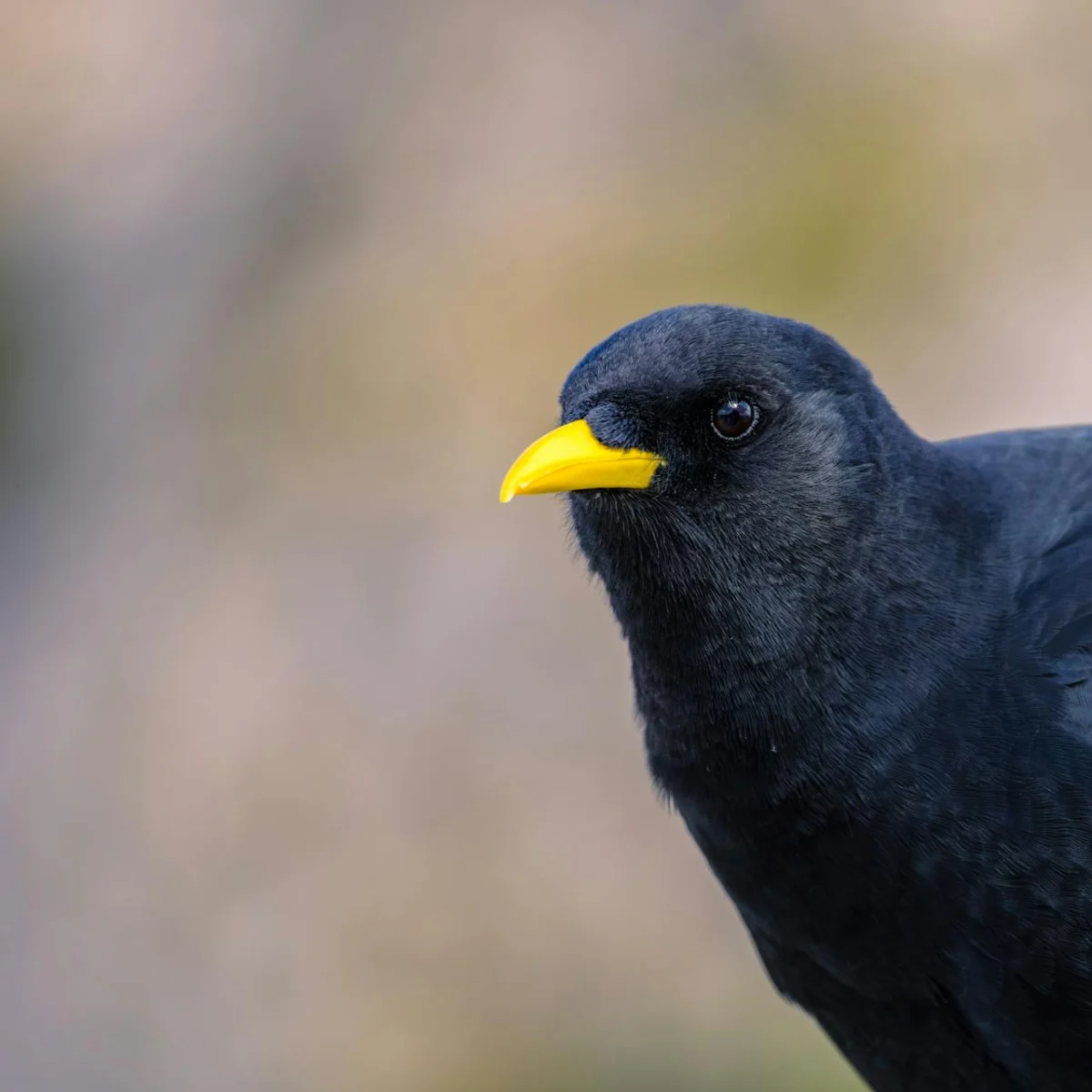
The world of ornithology is replete with fascinating adaptations, and few are as immediately captivating as the striking visual dichotomy presented by black birds with yellow beaks. This dramatic contrast, a bold statement of glossy, obsidian plumage against a vibrant, often golden bill, makes these species instantly recognizable and highly appealing. Beyond their arresting appearance, these avian marvels are celebrated for their remarkable intelligence, profound adaptability, complex vocalizations, and indispensable roles within their respective ecosystems. From the familiar Common Blackbird gracing European gardens to elusive tropical species found on remote island archipelagos, black birds with yellow beaks command human attention across diverse cultures and continents, serving as potent symbols in both nature and human imagination.
The Evolutionary Significance of Color Contrast
In the intricate tapestry of avian life, coloration is rarely a matter of mere aesthetics; it is a language of survival, communication, and reproduction. For species sporting predominantly black plumage, these dark feathers can serve multiple evolutionary purposes. In shaded forest environments, they may offer effective camouflage, allowing birds to blend seamlessly with the dappled light and shadows. In cooler climates, black feathers possess superior heat absorption capabilities, providing a vital advantage for thermoregulation. Furthermore, the sheen and depth of black can act as a powerful signal of dominance and physical health, playing a crucial role in courtship rituals and territorial displays.
The bright yellow beak, in contrast, is often intrinsically linked to the bird’s diet and overall fitness. In many species, a more vivid and saturated yellow hue in the bill is a direct indicator of excellent nutrition and a robust immune system. This visual cue is particularly significant during the mating season, signaling to potential partners that the individual is healthy, well-resourced, and capable of producing strong offspring.
This pronounced color contrast also serves a critical function in intra-species recognition. In dense foliage, crowded colonies, or across considerable distances, a bright, contrasting beak can act as a beacon. It facilitates visual communication during courtship displays, aids in identifying flock members during foraging activities, and helps delineate territorial boundaries. For human observers, this distinctive coloration makes these birds exceptionally easy to identify, even from a distance, fostering a sense of connection and familiarity with the natural world.

Avian Ambassadors: Notable Black Birds with Yellow Beaks
The Common Blackbird: A European Icon
The Eurasian Blackbird (Turdus merula) is arguably the archetypal "black bird with a yellow beak," its simplicity being its most defining and striking characteristic. The adult male is cloaked in a uniform, coal-black plumage that possesses a subtle, velvety sheen, giving it the appearance of being sculpted from polished obsidian. This dark canvas serves as the perfect backdrop for its most iconic feature: a vivid, bright yellow to orange bill. This striking bill is not merely ornamental; it is a key indicator of the bird’s health and reproductive status.
Complementing the bill’s brilliance is a matching yellow eye-ring, which imparts a bright, alert, and almost perpetually inquisitive expression against its dark feathers. This quintessential, high-contrast aesthetic is, however, a privilege reserved for the males. Females and juveniles, by contrast, exhibit a more muted, streaky brown coloration, providing them with superior camouflage and reducing their visibility in their natural habitats. This difference in plumage underscores the role of coloration in sexual selection and survival strategies.
The Common Blackbird’s adaptability is well-documented. While historically a woodland dweller, it has successfully colonized urban and suburban environments across Europe, demonstrating an impressive ability to thrive alongside human populations. Its diet is omnivorous, consisting of invertebrates, berries, and fruits, which it forages for on lawns, in gardens, and within parks. Its melodious song, often heard at dawn and dusk, has made it a beloved and familiar presence in many European landscapes.
The Common Hill Myna: A Glossy Jewel of the Tropics

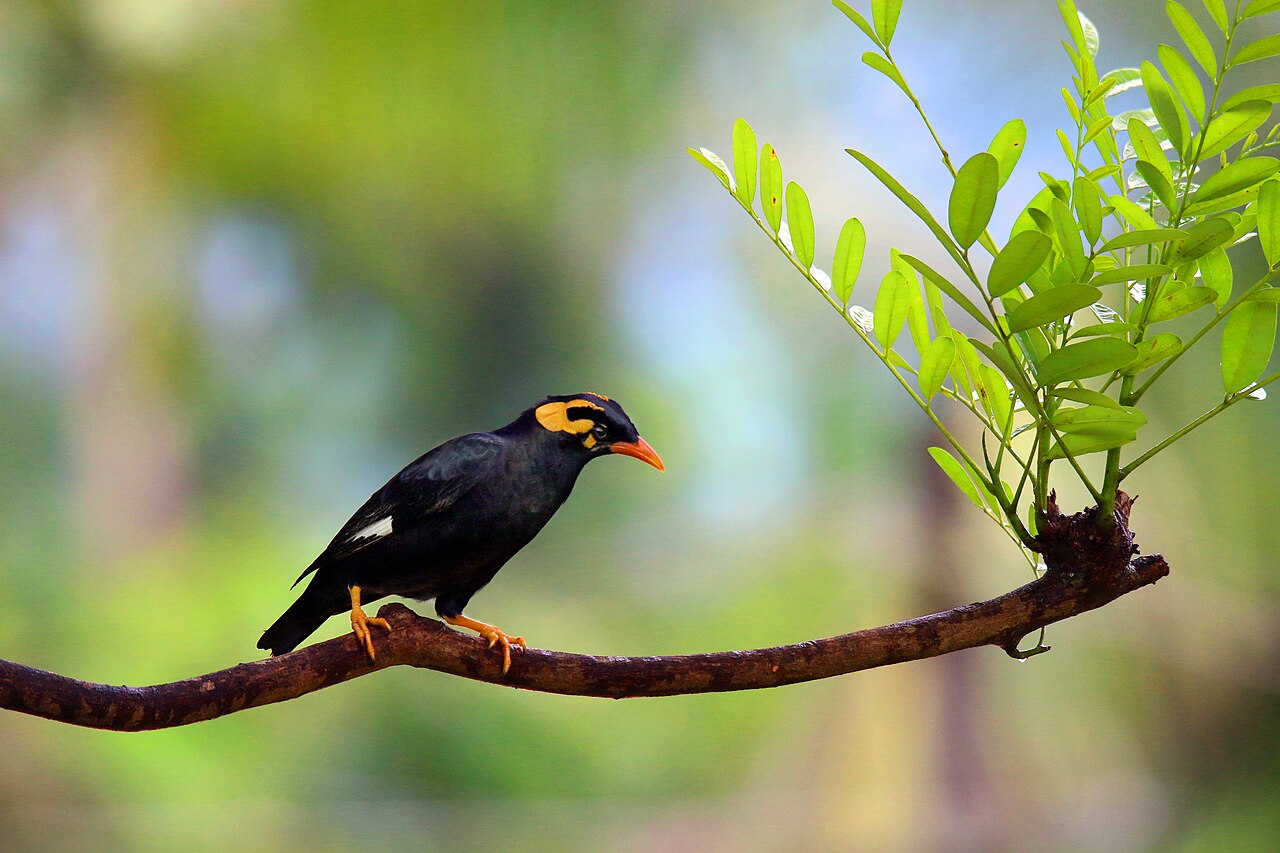
The Common Hill Myna (Gracula religiosa) elevates the "black and yellow" aesthetic to a level of high-fashion gloss and iridescence. Its plumage is not simply black but a deeply iridescent blend of purple and green, shimmering like polished metal under the sunlight. This lustrous, dark body is dramatically juxtaposed with a bright, robust orange-yellow bill, perfectly adapted for its diet of fruits and nectar.
However, the Hill Myna’s most flamboyant adornment lies in its bright yellow wattles – fleshy strips of bare skin that wrap around the back of its head, reminiscent of golden ribbons. These wattles, combined with the vivid yellow bill, create a bold, almost "splashed" effect against the dark, glossy head, lending the Hill Myna a far more ornate and visually arresting appearance than the understated Common Blackbird.
These mynas are renowned for their remarkable intelligence and their astonishing capacity for mimicry. They possess complex vocal repertoires, including a wide range of whistles, clicks, and harsh calls, and are capable of imitating human speech with impressive accuracy. This vocal prowess has contributed to their popularity as pets, but it has also led to significant conservation challenges. Native to Southeast Asia, Hill Mynas have been introduced to various parts of the world, sometimes becoming invasive species that compete with native avifauna.
The Yellow-billed Chough: The Alpine Aerialist
The Yellow-billed Chough (Pyrrhocorax graculus), also known as the Alpine Chough, is the high-altitude specialist within the "black and yellow" avian ensemble, carrying this striking color palette to the literal peaks of mountain ranges. Its plumage is a dense, uniform jet-black, imbued with a subtle metallic greenish sheen that aids in heat absorption in the thin, cold mountain air. Against this dark silhouette, its short, bright lemon-yellow bill stands out as a sharp, vibrant contrast, perfectly adapted for probing for insects and seeds in rocky terrain.
Unlike the other species discussed, the Yellow-billed Chough introduces a third striking color into its palette: vivid red legs. This surprising splash of crimson provides a warm counterpoint against the stark white snow and grey rock of its alpine habitat. A master of aerial acrobatics, the sight of a Yellow-billed Chough performing high-speed maneuvers above the treeline, its yellow bill leading the way, is an iconic and unforgettable image of the Himalayas and the Alps.
These birds are highly social, often seen in flocks, and their calls are a distinctive, high-pitched "chuffing" sound that echoes through the mountain valleys. They are well-adapted to harsh conditions, capable of enduring extreme cold and finding sustenance in challenging environments. Their presence in these remote, rugged landscapes underscores the incredible diversity of life that can flourish even in the most demanding climates.
The European Starling: A Kaleidoscope of Iridescence
The European Starling (Sturnus vulgaris) offers a complex, almost "maximalist" interpretation of the black-and-yellow theme. During the spring breeding season, it appears as a solid black bird with a bright lemon-yellow bill, a familiar sight in many urban and rural settings across Europe and its introduced ranges. However, a closer inspection reveals a breathtaking kaleidoscope of color. Its feathers are not merely black but are saturated with an intense iridescence, shimmering with oily purples, greens, and bronzes that shift and change with every movement.
This metallic sheen is further punctuated by a dusting of tiny white or cream-colored feather tips, the "stars" that give the species its common name. The yellow bill of the breeding season is a crucial signal of reproductive readiness. As summer wanes and the breeding season concludes, the bill undergoes a remarkable transformation, darkening to a sober, almost black hue for the winter months, reflecting the bird’s changing physiological state and ecological focus.

European Starlings are highly intelligent and remarkably adaptable birds, known for their complex social behavior and their prodigious vocal abilities. They are gregarious, often forming enormous flocks, particularly during the non-breeding season, where they engage in spectacular aerial displays known as murmurations. Their diet is broadly omnivorous, and their ability to exploit a wide range of food sources, including agricultural pests and human food scraps, has contributed to their widespread success.
The Regent Bowerbird: A Dazzling Masterpiece of Australia
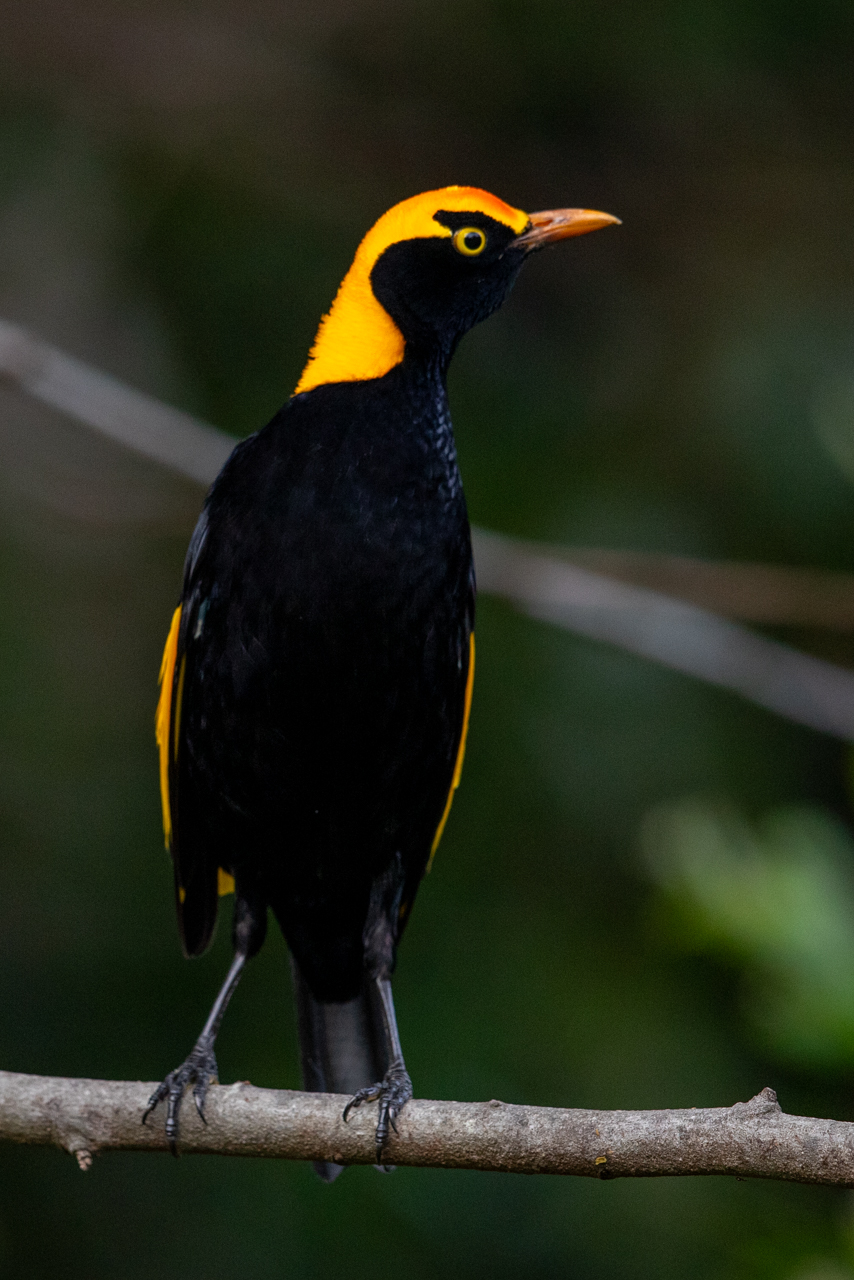
The Regent Bowerbird (Sericulus chrysocephalus) is arguably the most spectacular member of the "black and yellow" club, presenting a visual spectacle that rivals any work of art. The adult male’s plumage is a breathtaking display of high-fashion contrast: his back, wings, and chest are a blindingly bright, velvety yellow, so saturated it can appear almost orange in the dappled light of the Australian rainforest. This brilliant yellow is dramatically offset by a deep, shimmering jet-black head, throat, and tail.
This is not merely a simple combination of bill and feather; the intensity and distribution of color create an almost molten, luminous effect. To complete the ensemble, the Regent Bowerbird sports piercing yellow eyes and a yellowish-horn bill, rendering it one of the most visually arresting and distinctive birds in the Australian avifauna.
The male Regent Bowerbird is also renowned for its elaborate courtship displays. It constructs a "bower," a pathway or avenue of twigs, which it meticulously decorates with colorful objects such as berries, flowers, and shells. It then performs an intricate dance and vocalization display to attract females. This behavior highlights the crucial role of visual signaling and courtship rituals in the reproductive success of many bird species.

Intelligence, Behavior, and Ecological Interdependence
Beyond their striking appearances, black birds with yellow beaks often exhibit remarkable levels of intelligence and complex behavioral patterns. Many species, including blackbirds, mynas, and choughs, belong to avian families known for their cognitive abilities. Studies have documented their problem-solving skills, their capacity for social learning, and their impressive adaptability to changing environments. They can learn novel feeding strategies, recognize individual humans, and adjust their behavior to navigate human-dominated landscapes.
Vocal communication is another hallmark of these species. While not all possess the mimicry skills of the myna, many boast rich and varied vocal repertoires. Their songs and calls serve a multitude of purposes, including attracting mates, warning rivals of their presence, and coordinating group activities. In urbanized areas, some species have demonstrated an astonishing ability to adapt their vocalizations, altering the pitch and timing of their songs to overcome the cacophony of traffic noise, a testament to their remarkable auditory plasticity.
The dietary habits of most black birds with yellow beaks are omnivorous, contributing significantly to their ecological success. Their diets often encompass a wide array of food sources, including insects, worms, fruits, seeds, small reptiles, and even scraps of human food. This dietary flexibility allows them to thrive in diverse habitats, from pristine wilderness to bustling urban centers. By consuming insects, they play a vital role in controlling pest populations, thus benefiting agriculture and natural ecosystems. Their consumption of fruits and subsequent seed dispersal contributes directly to plant regeneration and the maintenance of forest health.
In coastal and marine environments, seabirds featuring yellow beaks, such as certain species of gulls and terns, contribute to nutrient cycling. Their droppings, collectively known as guano, are exceptionally rich in nitrogen and phosphorus, acting as a natural fertilizer that supports the unique ecosystems of remote islands and coastal areas.
Cultural Resonance and Human Interactions
The striking appearance and intriguing behaviors of black birds with yellow beaks have cemented their presence in human culture for millennia. They frequently appear in folklore, poetry, and artistic symbolism. In European literature, the blackbird is often depicted as a harbinger of dawn, a symbol of song, and an emblem of quiet contemplation. Its ubiquitous presence in gardens has rendered it a symbol of everyday beauty, resilience, and the enduring connection between humanity and nature.
In parts of Asia, mynas are revered for their intelligence and vocal abilities, often perceived as clever tricksters or even as feathered philosophers. Their capacity to mimic human speech has led to their integration into various cultural narratives and traditions.
However, the relationship between humans and these birds is not always harmonious. Certain species, notably the Common Myna, have become invasive in some regions due to introductions by humans. In Australia, for example, the Common Myna is considered a significant pest, outcompeting native bird species for food and nesting sites, leading to ecological imbalances and biodiversity loss. This dual role—as a culturally admired companion and a challenging ecological force—underscores the profound impact and adaptability of these avian species.
Conservation Imperatives and Future Challenges
While some black birds with yellow beaks, such as the Common Blackbird and European Starling, are abundant and widespread, many others face considerable conservation challenges. Habitat loss, driven by agricultural expansion, urbanization, and deforestation, is a primary threat. Climate change is altering ecosystems, disrupting food sources, and forcing migratory patterns. Pollution, including pesticide use and plastic waste, poses direct risks to avian health and survival. The illegal wildlife trade, particularly for species like the Hill Myna, continues to decimate wild populations.
Conservation efforts are increasingly focused on protecting critical habitats, enforcing anti-poaching laws, and educating the public about the importance of biodiversity and the detrimental effects of the illegal pet trade. For species like the Common Blackbird that have successfully adapted to urban environments, coexistence with humans is possible, but even these birds are vulnerable to threats such as window collisions, pesticide exposure, and the ongoing loss of green spaces. Ultimately, the protection of these birds often necessitates a broader commitment to safeguarding entire ecosystems, which benefits a vast array of other flora and fauna.
A Symphony of Nature and Symbolism
Black birds with yellow beaks are far more than just visually striking creatures; they are dynamic performers in the grand theater of nature. They are accomplished singers, resilient survivors, astute mimics, and vital contributors to the ecological health of their environments. Their bold, high-contrast appearance is a reflection of equally bold personalities—intelligent, adaptable, and often surprisingly social beings. Whether observed hopping across a garden lawn, announcing their presence from a forest canopy, or soaring gracefully above ocean waves, these birds serve as a potent reminder of the elegant interplay between color, behavior, and ecology in the natural world. By fostering an appreciation for and actively engaging in the conservation of these remarkable birds, we not only preserve their striking beauty but also contribute to the delicate balance of the ecosystems they inhabit and enrich.

