


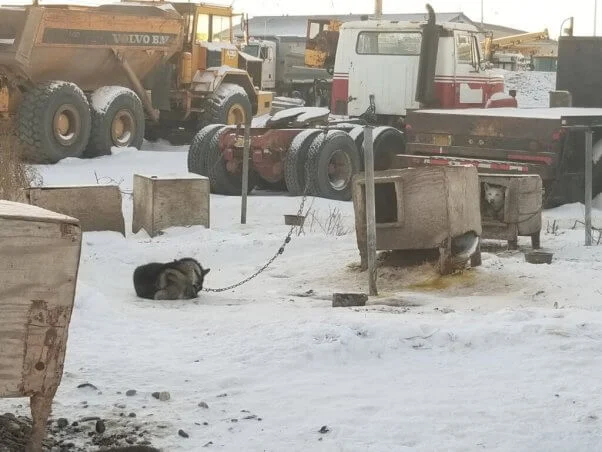
The silence that greeted Mike Dolinar as he approached the "Walker’s Wild Ride" kennel in the Matanuska-Susitna Borough of Alaska was the first indication that something was deeply wrong. In the world of professional and recreational dog sledding, kennels are defined by a constant cacophony of vocalizations—barking, howling, and the rhythmic jangling of chains. However, on the property located in the heart of Alaska’s dog-driving country, the usual noise had been replaced by a chilling stillness. Upon closer inspection of the dilapidated wooden shelters that dotted the property, Dolinar discovered the grim reality of months of alleged systemic neglect. Twenty-five dogs were found dead, many of them still tethered to their posts, frozen in the positions where they had eventually succumbed to the elements and a lack of sustenance.
The discovery has sent shockwaves through the local community and the broader mushing industry, leading to the arrest of Misty Rehder on April 21, 2026. Rehder now faces 26 counts of animal cruelty following a preliminary investigation by the Alaska State Troopers. The case has not only highlighted the vulnerabilities of animals within the commercial sledding industry but has also sparked a fierce debate regarding the efficacy of local animal control agencies, which residents claim were warned about the deteriorating conditions at the kennel months before the fatalities were confirmed.
A Discovery of Systemic Neglect
The investigation began in earnest after Mike Dolinar, a local resident who had heard rumors that the kennel’s dogs were being put up for adoption due to the owner’s inability to care for them, visited the site to verify the situation. What he found was a scene described by investigators as a "graveyard of neglect." Dolinar recounted seeing a single paw protruding from one of the small, makeshift dog houses. As he moved from one shelter to the next, he found a succession of deceased animals. Many of the dogs were still attached to heavy chains, their bodies emaciated and preserved by the sub-zero temperatures of the Alaskan winter.
Among the 26 dogs on the property, only one was found alive. The survivor, a dog that had endured the same conditions as its companions, was reportedly in a state of advanced starvation. The animal was immediately seized by authorities and transported to a veterinary facility for emergency treatment. The physical evidence at the scene suggested that the dogs had been without consistent food or adequate bedding for a significant period, forcing them to endure the peak of the winter season without the biological resources necessary to maintain body heat.
The Timeline of Warnings and Institutional Failure
The tragedy at Walker’s Wild Ride has raised significant questions regarding the oversight responsibilities of the Matanuska-Susitna Borough Animal Care and Regulation office. According to several local residents, the alarm had been sounded as early as the previous autumn. Neighbors and concerned citizens reported that they had observed the dogs’ physical condition declining and noted a lack of activity at the kennel that suggested the animals were being left unattended for days or weeks at a time.
One local citizen claimed that her attempts to intervene were actively rebuffed by local authorities. She reported that she had attempted to bring straw for bedding and bags of high-calorie dog food to the property after noticing the animals were shivering and visibly thin. However, she alleges that a borough animal control officer intercepted her and instructed her to stay off the property, dismissing her concerns and stating that the situation was being monitored.
This disconnect between community reports and official action is now a focal point of the public outcry. Critics argue that had the borough acted on the initial complaints filed in late 2025, the mass mortality event could have been prevented. The Alaska State Troopers’ subsequent involvement and the filing of criminal charges suggest that the level of neglect reached a threshold that transcended simple mismanagement, entering the realm of criminal liability.
Legal Proceedings and the Scope of Charges
Misty Rehder’s arrest on 26 counts of Cruelty to Animals marks one of the most significant animal welfare cases in recent Alaskan history. Under Alaska Statute 11.61.140, animal cruelty can range from a Class A misdemeanor to a Class C felony, depending on the severity of the neglect and whether the defendant has prior convictions. In this instance, the sheer number of fatalities and the prolonged nature of the alleged suffering are expected to play a central role in the prosecution’s case.
The 26 counts correspond to the 25 deceased dogs and the single survivor. Legal experts suggest that the prosecution will likely focus on the "failure to provide necessary care," which includes food, water, and protection from the elements. In Alaska, where winter temperatures can drop to -40 degrees Fahrenheit or lower, the provision of "straw" and "high-fat kibble" is considered a baseline requirement for the survival of outdoor-housed sled dogs. The absence of these essentials, combined with the fact that the dogs were tethered and unable to seek natural shelter, forms the backbone of the criminal complaint.
The Broader Context of the Sled Dog Industry
The incident at the Mat-Su kennel has reignited a long-standing controversy surrounding the sled dog industry in Alaska. While many mushers maintain high standards of care and view their dogs as elite athletes and companions, the commercial side of the industry—particularly kennels that provide rides for tourists or maintain large numbers of dogs for racing—has faced increasing scrutiny from animal rights organizations.
Groups such as PETA (People for the Ethical Treatment of Animals) have long campaigned against the practice of "tethering" or "chaining," which is a standard method of housing in many Alaskan kennels. Proponents of the practice argue it prevents fights and allows for individual monitoring of each dog, but welfare advocates contend it leads to psychological distress and prevents dogs from moving enough to stay warm. The case of Walker’s Wild Ride serves as a worst-case scenario of the tethering system, where the chains that were meant to manage the dogs became the instruments that ensured they could not escape their fate when food and care were withdrawn.
Furthermore, the economic pressures of maintaining a kennel can be immense. A typical sled dog requires significantly more calories than a house pet, especially during the winter months. For a kennel with 26 dogs, the cost of high-quality meat and kibble can run into thousands of dollars per month. Investigators are looking into whether financial hardship played a role in the abandonment of the dogs at Walker’s Wild Ride, though legal experts note that financial distress does not absolve an owner of the legal obligation to provide care or surrender the animals to a shelter.
Implications for Alaska’s Tourism and Policy
The Matanuska-Susitna Borough is a hub for Alaska’s dog sledding culture, serving as a starting point for various races and a popular destination for tourists seeking "authentic" Alaskan experiences. The news of 25 dogs dying of neglect is expected to have a tangible impact on the region’s tourism industry. Cruise lines and tour operators often book excursions to local kennels, and the negative publicity surrounding this case may prompt these companies to implement more rigorous vetting processes for their partners.
In the wake of the discovery, there are growing calls for legislative reform regarding kennel licensing and inspections. Currently, Alaska lacks a comprehensive state-wide inspection program for sled dog kennels, often leaving oversight to local borough animal control offices that may be understaffed or lack the specific expertise required to evaluate large-scale mushing operations.
Advocates are calling for "The 25’s Law," a proposed set of regulations that would mandate biannual inspections for any facility housing more than ten dogs for commercial or racing purposes. Such a law would aim to bridge the gap between community reports and official intervention, ensuring that a "quiet kennel" is investigated before it becomes a graveyard.
Conclusion and Current Status
As of late April 2026, Misty Rehder remains in the legal system as the discovery phase of her trial begins. The lone surviving dog is reportedly making a slow recovery in a specialized foster home, though veterinarians warn of potential long-term organ damage due to prolonged malnutrition.
The investigation into the Mat-Su Borough Animal Care and Regulation office’s handling of the initial complaints is also ongoing. Local officials have promised a full internal review to determine why the reports from Mike Dolinar and other neighbors were not escalated sooner. For the 25 dogs that perished in the silence of the Mat-Su woods, the focus now shifts from rescue to justice, as the state seeks to hold those responsible accountable for a tragedy that many believe was entirely preventable. The case remains a somber reminder of the responsibilities inherent in animal ownership and the catastrophic consequences that occur when the systems designed to protect the vulnerable fail to act.

