


Global Birdfair 2026 has announced its significant commitment to supporting BirdLife International’s crucial conservation efforts aimed at protecting the unique endemic bird species of São Tomé and Príncipe, a vital island nation facing the pressing threat of avian extinctions. This initiative underscores the global ornithological community’s dedication to preserving the rich biodiversity of this equatorial archipelago.
The Fragile Jewel of São Tomé: A Biodiversity Hotspot Under Threat
Deep within the verdant, mist-shrouded rainforests of São Tomé, a remarkable avian trinity navigates a precarious existence. The Dwarf Ibis (Bostrychia bocagei), the São Tomé Grosbeak (Crithagra concolor), and Newton’s Fiscal (Lanius newtoni) represent the pinnacle of São Tomé and Príncipe’s endemic avifauna, each found nowhere else on Earth. These three species are not merely rare; they are critically endangered, listed as such on the International Union for Conservation of Nature (IUCN) Red List. Their restricted range, confined to the dwindling forest ecosystems of this small island nation in the Gulf of Guinea, places their survival in a critical state, necessitating immediate and robust conservation interventions.
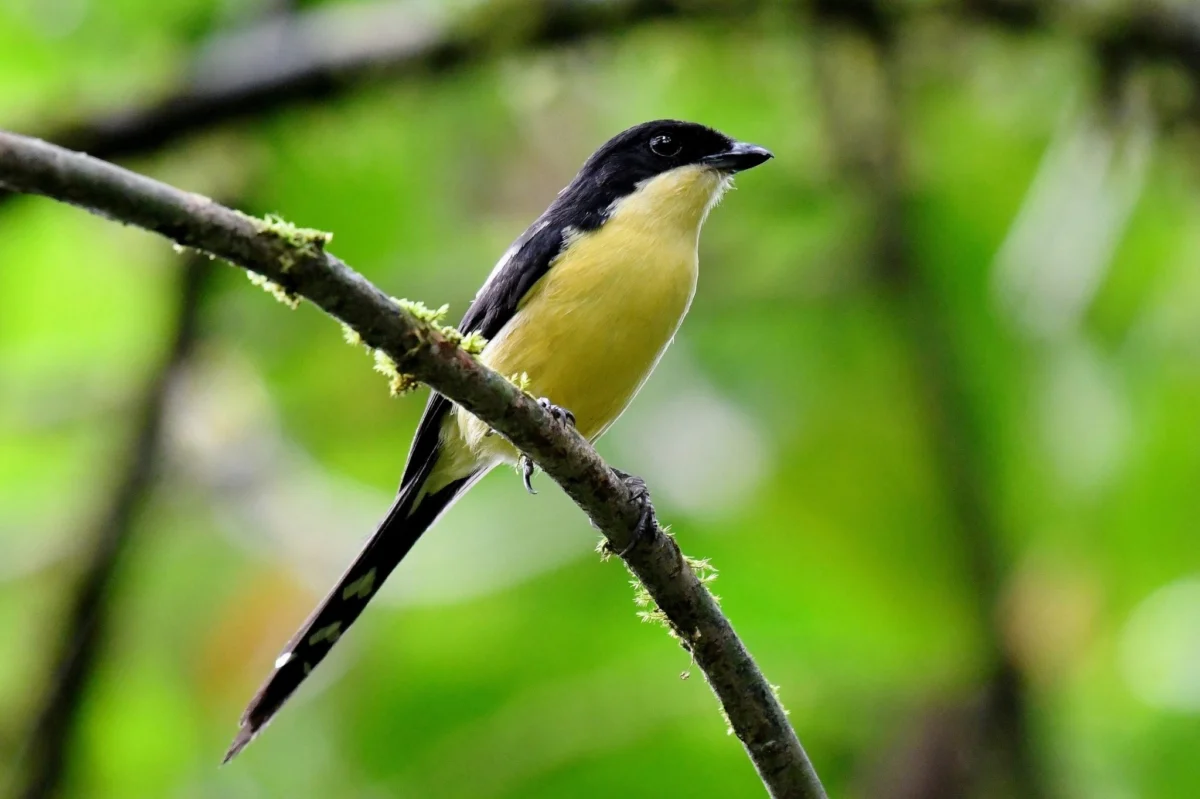
Each of these species embodies a narrative of profound rarity and extraordinary resilience. The Dwarf Ibis, a reclusive inhabitant of the dense forest undergrowth, is characterized by its distinctive, haunting call. Current estimates suggest its population may be fewer than 2,000 individuals, a stark indicator of its vulnerability. The São Tomé Grosbeak, a bird once believed to have vanished from scientific record for over a century, clings to existence in scattered forest fragments. Its population is believed to be critically low, possibly comprising fewer than 250 adult individuals. Newton’s Fiscal, an imposing shrike with a striking black and white plumage, patrols the forest ridges in the island’s interior. Its numbers are also alarmingly low, estimated at fewer than 250 individuals, making it one of the rarest birds on the African continent.
Despite legal protections in place, these species remain extraordinarily susceptible to a confluence of anthropogenic and environmental pressures. The relentless march of agricultural expansion, particularly for cash crops like cocoa and coffee, coupled with unsustainable timber extraction, continues to shrink their vital forest habitats. Further compounding these threats are hunting, habitat disturbance, and the insidious impact of invasive mammalian species, all of which exert additional strain on already fragile populations.
A Decade of Dedication: BirdLife’s Groundbreaking Conservation Strategy
Since 2018, BirdLife International, in close collaboration with dedicated local partners on São Tomé and Príncipe, has been implementing a multi-faceted conservation strategy. This strategy focuses on strengthening the management of protected areas, a cornerstone of biodiversity preservation, while simultaneously promoting sustainable livelihoods that actively reduce pressure on the islands’ natural resources. Recognizing that effective conservation transcends the mere safeguarding of forests, BirdLife has prioritized an approach that intrinsically involves the human communities who share these precious landscapes.

A pivotal initiative, undertaken between 2022 and 2024, showcased the transformative power of community engagement. By fostering direct dialogue and collaboration with local hunters, the project successfully initiated a paradigm shift in perceptions surrounding wildlife conservation and the adoption of sustainable hunting practices. The objective was to move away from viewing conservation as an imposition and instead cultivate a sense of stewardship among hunters, empowering them to become active custodians of the forest and its inhabitants.
From Hunters to Guardians: Agents of Change in Action
The outcomes of this community-driven initiative have been nothing short of remarkable. A total of 75 hunters enthusiastically joined the program, adopting the mantle of "Agents of Change." Leveraging their intimate knowledge of the forest – honed over generations – these individuals are now instrumental in locating rare species, such as the elusive Dwarf Ibis, and reporting instances of illegal bird hunting. Their invaluable expertise and deep-seated understanding of the forest ecosystem have become indispensable assets to the conservation efforts.
In conjunction with national authorities, dedicated biologists, and other civil society stakeholders, these local hunters played an indispensable role in the critical process of reviewing existing hunting laws. Their contributions were vital in formulating a comprehensive roadmap for the improvement and modernization of these regulations. Furthermore, a targeted mentoring program was established to foster the development of alternative economic activities. This program offered 25 selected hunters the opportunity to explore the tangible impact of developing viable economic alternatives on their household incomes, while simultaneously strengthening their foundational management and financial literacy skills.
A competitive selection process identified the five most promising ideas, which then received crucial technical and financial support to develop and implement their business plans. This was a powerful demonstration of how local hunters can evolve into genuine contributors to on-the-ground conservation, fostering a delicate yet essential balance between human needs and the imperative of biodiversity preservation.
Global Birdfair 2026: Expanding the Frontier of Conservation
Building upon this successful momentum, the Global Birdfair 2026 project is set to intensify its efforts. The project’s renewed focus will be on addressing critical knowledge gaps concerning these endangered birds. Simultaneously, it aims to further bolster the local capacity for their protection. This will involve a collaborative approach, bringing together researchers, park rangers, and community members to gain a more profound understanding of species distribution, population dynamics, and the specific interventions required to secure their long-term future.
Concurrently, the project will continue to champion and strengthen community involvement, ensuring that conservation initiatives are deeply rooted in local knowledge, active participation, and a commitment to long-term ecological stewardship. This inclusive approach recognizes that sustainable conservation is intrinsically linked to the empowerment and well-being of the communities that inhabit these vital ecosystems.

A Symbol of Heritage, A Call to Action
The trio of critically endangered birds – the Dwarf Ibis, the São Tomé Grosbeak, and Newton’s Fiscal – are far more than just rare species; they are potent symbols of São Tomé and Príncipe’s extraordinary natural heritage. Their protection is inextricably linked to the preservation of the pristine forests, the intricate ecosystems, and the vibrant communities that collectively define the unique character of these islands.
The organizers of Global Birdfair 2026 express profound gratitude to the entire Global Birdfair team for their unwavering dedication and support towards this vital conservation project. With continued global support, collaborative partnerships, and a shared spirit of curiosity from individuals worldwide, there is a tangible hope that the haunting call of the Dwarf Ibis, the subtle presence of the São Tomé Grosbeak, and the watchful silhouette of Newton’s Fiscal will continue to resonate within São Tomé’s forests for generations to come. This collective effort represents a crucial step towards safeguarding some of Africa’s most imperiled avian treasures.
Supporting Data and Context
- Endemic Species Crisis: São Tomé and Príncipe, a nation comprising two main islands and several smaller islets, is a biodiversity hotspot renowned for its high levels of endemism. However, it is also highly vulnerable to habitat loss and climate change, making its species particularly susceptible to extinction.
- IUCN Red List Status: All three focal species are classified as Critically Endangered, the highest risk category for wild species. This classification indicates an extremely high risk of extinction in the wild.
- Population Estimates: The extremely low population estimates (under 2,000 for Dwarf Ibis, under 250 for São Tomé Grosbeak and Newton’s Fiscal) highlight the urgency of conservation actions. Even small declines can have catastrophic consequences for these small, isolated populations.
- Habitat Loss Drivers: Major drivers of habitat loss include the expansion of agriculture (cocoa, coffee, palm oil), logging, and infrastructure development. Deforestation not only reduces available habitat but also fragments remaining forest patches, isolating populations and limiting gene flow.
- Community Engagement Impact: The "Agents of Change" program demonstrates the effectiveness of integrating local knowledge and participation into conservation strategies. Empowering local communities, particularly those with traditional roles in resource use like hunting, can transform them into powerful allies for conservation.
- Economic Alternatives: Providing viable economic alternatives to unsustainable practices is crucial for long-term conservation success. Initiatives that support ecotourism, sustainable agriculture, or other nature-based enterprises can offer tangible benefits to local communities while reducing pressure on wildlife and habitats.
- Global Birdfair Significance: Global Birdfair is a significant international event that brings together birdwatchers, conservationists, scientists, and the public to celebrate birds and raise awareness and funds for bird conservation worldwide. Its support for specific projects like the one in São Tomé provides vital financial and promotional backing.
Chronology of Key Conservation Efforts
- 2018: BirdLife International initiates conservation work in São Tomé and Príncipe, focusing on strengthening protected area management and promoting sustainable livelihoods.
- 2022-2024: A key initiative is implemented, emphasizing community engagement with local hunters, leading to the establishment of the "Agents of Change" program.
- 2023-2024: A review of hunting laws is undertaken with the participation of local hunters, authorities, and biologists, resulting in a roadmap for legislative reform.
- 2024: A mentoring program for alternative economic activities is launched for selected hunters, with the top five business ideas receiving support.
- 2026: Global Birdfair designates its support for a project to further research and bolster local capacity for protecting São Tomé’s endemic birds, building on previous successes.
Broader Implications for Conservation and Ecotourism
The success of initiatives like those championed by Global Birdfair 2026 in São Tomé and Príncipe carries significant implications beyond the immediate conservation of these three avian species. It serves as a powerful model for how effective conservation can be achieved through a combination of scientific research, robust policy, and, crucially, deep community engagement. The transformation of local hunters into conservation stewards highlights the potential for shifting human-wildlife relationships from conflict to collaboration.
Furthermore, the preservation of São Tomé’s unique biodiversity, particularly its charismatic endemic birds, holds immense potential for the growth of responsible ecotourism. Birdwatching tourism, when managed sustainably, can provide significant economic benefits to local communities, creating incentives for conservation and offering an alternative to more destructive land-use practices. The enhanced visibility and conservation success stories generated by events like Global Birdfair can attract international attention and investment, further bolstering these conservation efforts and the development of a sustainable ecotourism sector. The story of São Tomé’s endemic birds is thus not just about species survival; it is about the interconnectedness of biodiversity, human well-being, and the future of sustainable development in vulnerable island nations.

