


Ohio is a state rich in avian biodiversity, boasting a remarkable 443 species of birds as cataloged in the official Ohio Ornithological Society (OOS) bird checklist updated in July 2021. For residents eager to connect with the natural world right in their own backyards, understanding these common feathered visitors is the first step. This comprehensive guide delves into the characteristics, behaviors, and preferred habitats of some of Ohio’s most frequently observed backyard birds, offering practical advice for identification and attraction.
The Avian Tapestry of Ohio
The significant number of bird species found in Ohio is a testament to the state’s varied landscapes, which include expansive forests, rolling farmlands, extensive wetlands, and a considerable stretch of Lake Erie coastline. This ecological diversity provides a wide range of niches for different bird species to thrive. The OOS checklist serves as a crucial reference for ornithologists, conservationists, and bird enthusiasts alike, documenting the current state of Ohio’s bird populations and their distribution. While 443 species represent the full spectrum of avian life, a smaller, more accessible group of these birds regularly visits human-populated areas, making them prime candidates for backyard observation.
Familiar Faces in the Feathered Community
Understanding the birds that frequent our immediate surroundings can foster a deeper appreciation for local ecosystems and contribute to their conservation. By learning to identify these common species and understanding their needs, individuals can play an active role in supporting bird populations. This article aims to demystify the identification process and provide actionable tips for creating bird-friendly environments.
1. Northern Cardinal (Cardinalis cardinalis)
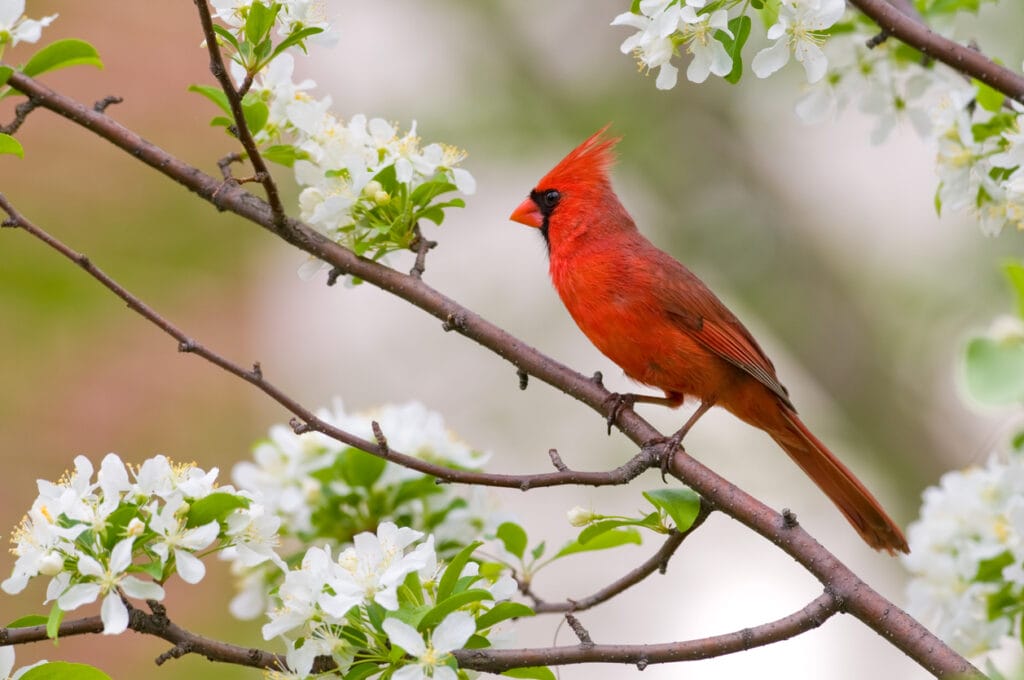
Perhaps one of the most iconic and easily recognizable birds across North America, the Northern Cardinal is a perennial favorite in Ohio backyards. Scientifically known as Cardinalis cardinalis, this species is distinguished by the male’s brilliant scarlet plumage, a stark contrast to the female’s more subdued reddish-brown coloration. Both sexes share distinctive crests, often described as a "mohawk," and a prominent reddish-orange beak.
Northern Cardinals typically measure between 8.3 to 9.1 inches in body length, with a wingspan ranging from 8.9 to 12.2 inches, and weigh approximately 1.5 to 1.7 ounces. They are known for their territorial nature, particularly during the breeding season, and their cheerful, melodic songs. Their diet consists of a variety of foods, including sunflower seeds, millet, berries, and peanuts. To attract these vibrant birds, scattering seeds on the ground or utilizing platform, tube, or hopper feeders are effective methods. The continuous presence of cardinals throughout the year makes them a consistent source of color and song.
2. American Robin (Turdus migratorius)
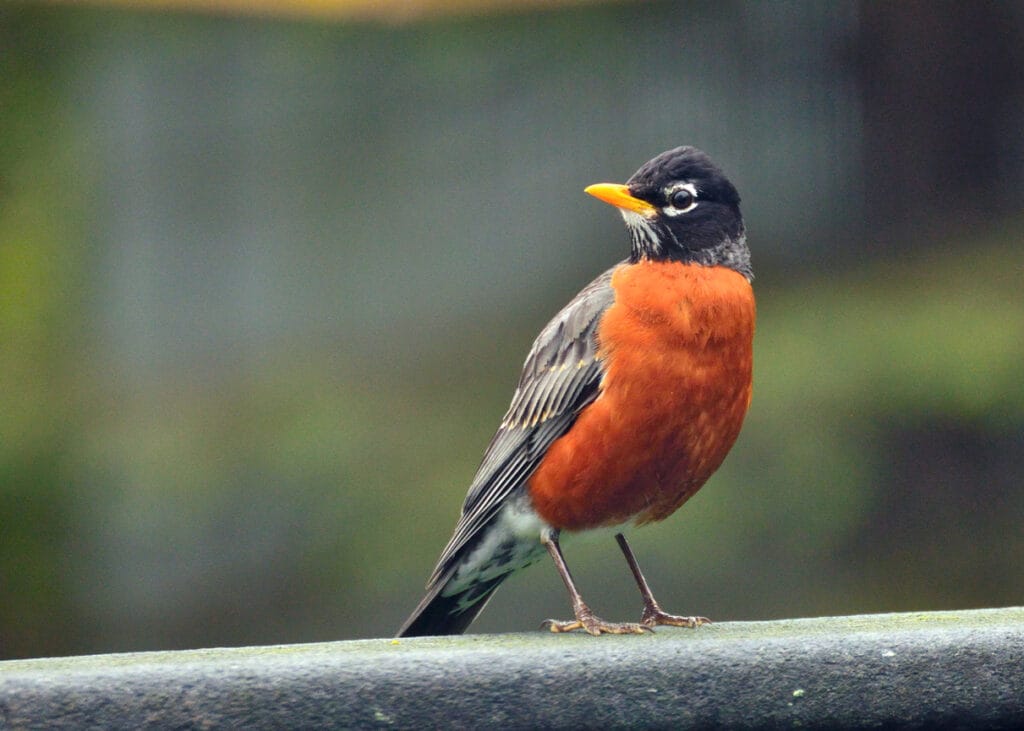
The American Robin, Turdus migratorius, is not only a common sight but is also recognized as the most common bird in Ohio, according to frequently asked questions. These familiar birds are characterized by their rusty orange breasts and bellies, contrasting with black heads and backs. Their yellow beaks stand out against their dark feathers.
American Robins generally measure between 9.0 to 11.0 inches in length, with a wingspan of 14.7 to 16.5 inches, and weigh between 2.3 to 2.8 ounces. They are frequently observed foraging on lawns and in gardens, where they primarily feed on earthworms and other small invertebrates. While they also consume fruits, they are not typically attracted to seeds. Providing mealworms or offering fruits in platform feeders can effectively draw American Robins to a backyard. Their presence is often associated with the arrival of spring, though many remain in Ohio year-round.
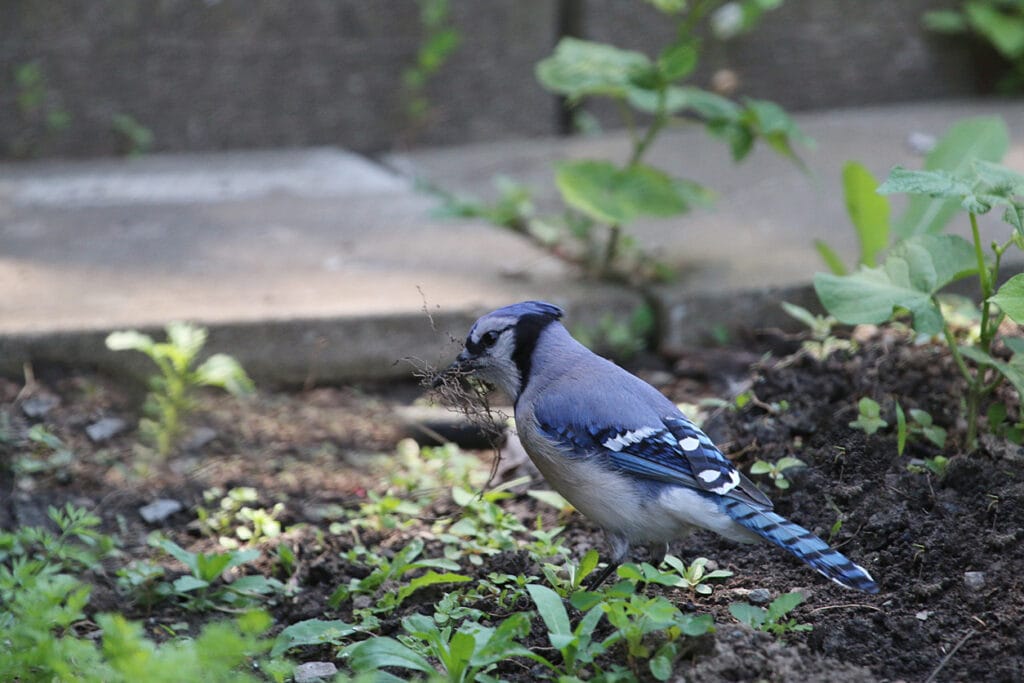
3. Blue Jay (Cyanocitta cristata)
The Blue Jay, Cyanocitta cristata, is a striking bird known for its intelligence and vibrant blue, black, and white plumage. These birds are readily identified by their prominent blue crests, which can be raised or lowered depending on their mood. They measure between 9.8 to 11.8 inches in length, with a wingspan of 13.3 to 16.9 inches, and weigh around 2.5 to 3.5 ounces. A distinctive black line encircles the neck, resembling a necklace.
Blue Jays are year-round residents in Ohio and are known for their varied diet, which includes nuts, suet, berries, and sunflower seeds. Their bold personalities and distinctive calls make them a memorable addition to any backyard. To attract them, offer food in platform or hopper feeders. They also appreciate access to birdbaths, which serve as both a water source and a place for bathing.
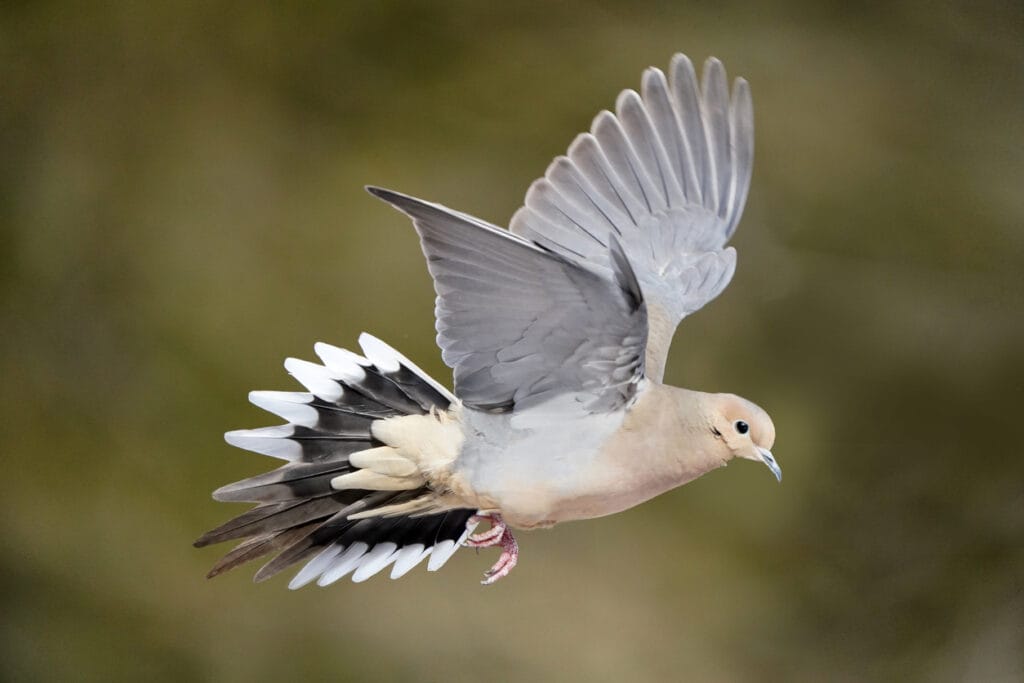
4. Mourning Dove (Zenaida macroura)
The Mourning Dove, Zenaida macroura, is a graceful bird often seen perched on trees, wires, or fences. These doves are larger than American Robins, measuring between 9.1 to 13.4 inches in length and weighing from 3.0 to 6.0 ounces. Their wingspan extends to just over 17.5 inches.
Mourning Doves are characterized by their soft brown and gray bodies, accented with black spots on their wings. They have pale peach-colored breasts and bellies, and a distinctive cyan ring around their eyes. While they prefer feeding at ground level, they may visit tray feeders. Offering black sunflower seeds is an effective way to attract them. Their gentle cooing sound is a familiar auditory cue in many Ohio neighborhoods.
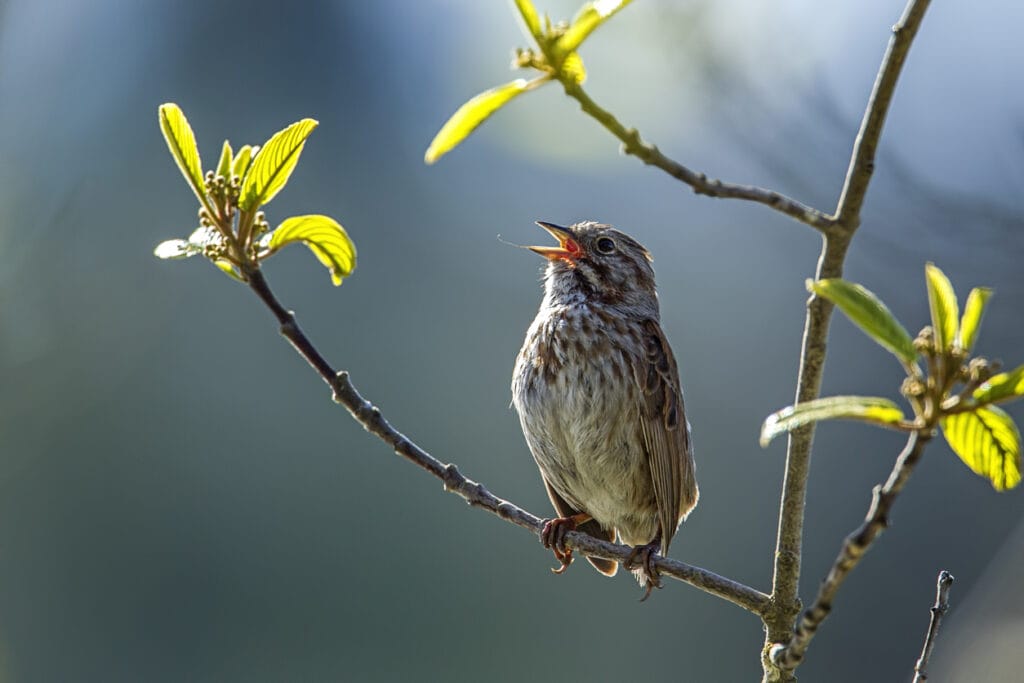
5. Song Sparrow (Melospiza melodia)
The Song Sparrow, Melospiza melodia, is a small, streaky bird celebrated for its complex and varied songs. These sparrows measure between 4.7 to 6.7 inches in length, with a wingspan of 7.1 to 9.4 inches, and weigh between 0.4 to 1.9 ounces. Their plumage is primarily light brown with dark brown streaks, providing excellent camouflage in their preferred habitats.
Male Song Sparrows use their elaborate songs not only to attract mates but also to defend their territories. They are frequent visitors to yard feeders, where they seek out mixed seeds. To encourage more Song Sparrows to your yard, provide black sunflower seeds, nyjer seeds, and cracked corn on platform feeders. Their presence adds a delicate charm to the backyard bird population.
6. American Goldfinch (Spinus tristis)
Often referred to as the "wild canary," the American Goldfinch, Spinus tristis, is a small and cheerful bird. Males are particularly striking in the summer months, displaying brilliant lemon-yellow feathers, black wingtips, and a black cap. Females and males in winter plumage are more subdued, exhibiting a mix of olive, grayish-yellow, and soft brown.
These birds measure between 4.3 to 5.5 inches in length, with a wingspan of approximately 7.5 to 8.7 inches, and typically weigh well under an ounce. American Goldfinches have a particular fondness for thistle feeders but will also visit feeders offering black sunflower seeds and nyjer seeds. Their vibrant color and energetic demeanor make them a delightful sight.
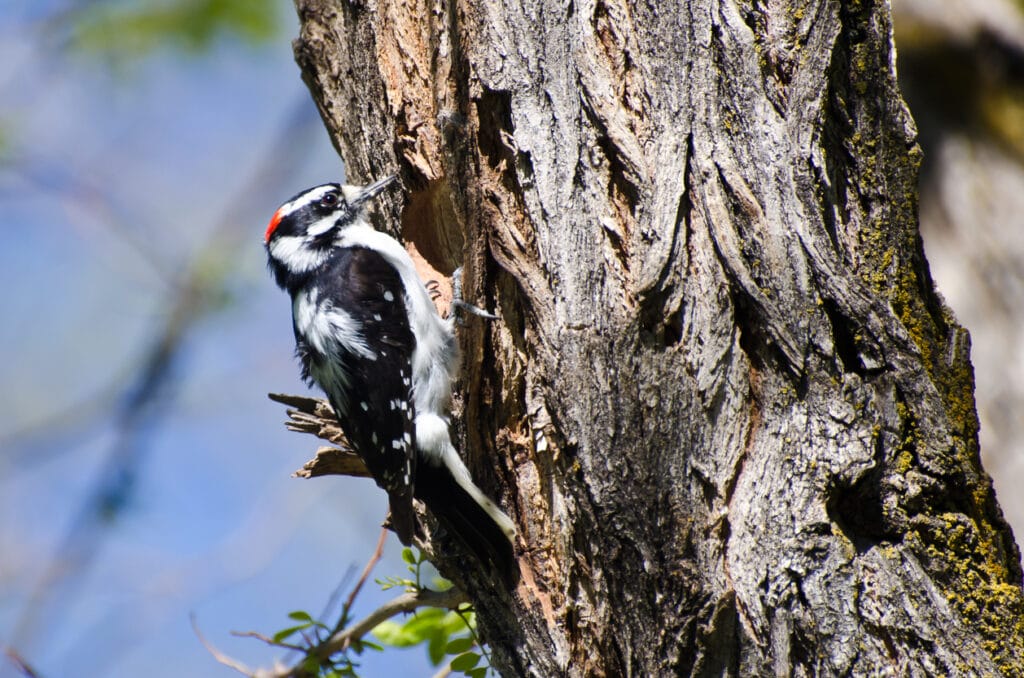
7. Downy Woodpecker (Dryobates pubescens)
The Downy Woodpecker, Dryobates pubescens, is the smallest woodpecker species found in North America. These birds measure 5.5 to 7.1 inches in length and weigh around 0.7 to 1.1 ounces, with a wingspan ranging from 9.8 to 12.2 inches. They are easily identified by their black and white plumage and, in males, a distinctive red patch on the back of their heads.
Downy Woodpeckers are frequent visitors to backyard feeders throughout Ohio and are particularly fond of black sunflower seeds, peanuts, and millet, often found in suet or platform feeders. Their ability to cling to vertical surfaces and their energetic foraging behavior make them a constant source of activity.
8. Red-bellied Woodpecker (Melanerpes carolinus)
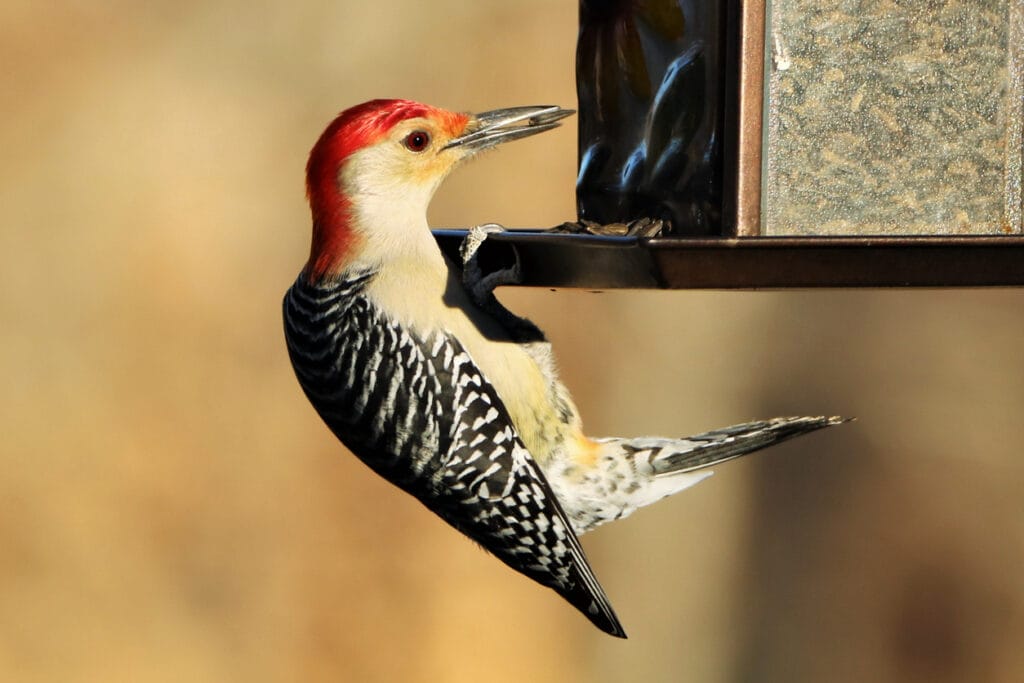
Another woodpecker commonly encountered in Ohio backyards is the Red-bellied Woodpecker, Melanerpes carolinus. Despite their name, the reddish hue on their belly is often faint and difficult to discern. Their most prominent feature is a streak of bright red extending from their beak to the back of their heads and necks. Their wings are adorned with distinctive black and white stripes.
These medium-sized woodpeckers measure 9.2 to 10.3 inches in length and weigh between 2.2 to 3.2 ounces, with a wingspan of 15.7 to 17.8 inches. They are primarily attracted to suet feeders but will also visit seed and hummingbird feeders occasionally.
9. European Starling (Sturnus vulgaris)
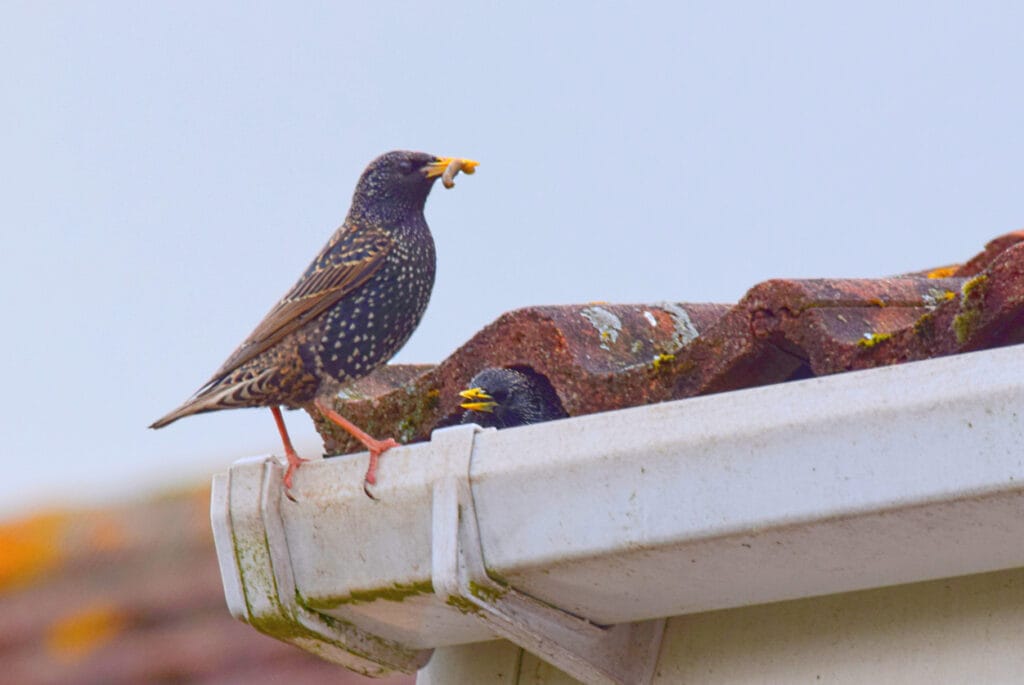
The European Starling, Sturnus vulgaris, is an invasive species that has become widespread across North America, including Ohio. These birds measure 7.9 to 9.1 inches in length, with a wingspan of 12.2 to 15.8 inches, and weigh 2.1 to 3.4 ounces. Despite their often aggressive behavior, they possess a captivating appearance. Their dark bodies shimmer with iridescent purple, blue, and green hues under sunlight, and their long beaks and legs are yellow. White speckles dot their backs and wings.

Introduced to North America in the 1890s, their adaptability has led to their significant population growth. They are attracted to a wide variety of feeders and readily consume black sunflower seeds, cracked corn, suet, and peanuts. Due to their non-native status and tendency to outcompete native species, their presence is often viewed with concern by conservationists.
10. American Crow (Corvus brachyrhynchos)
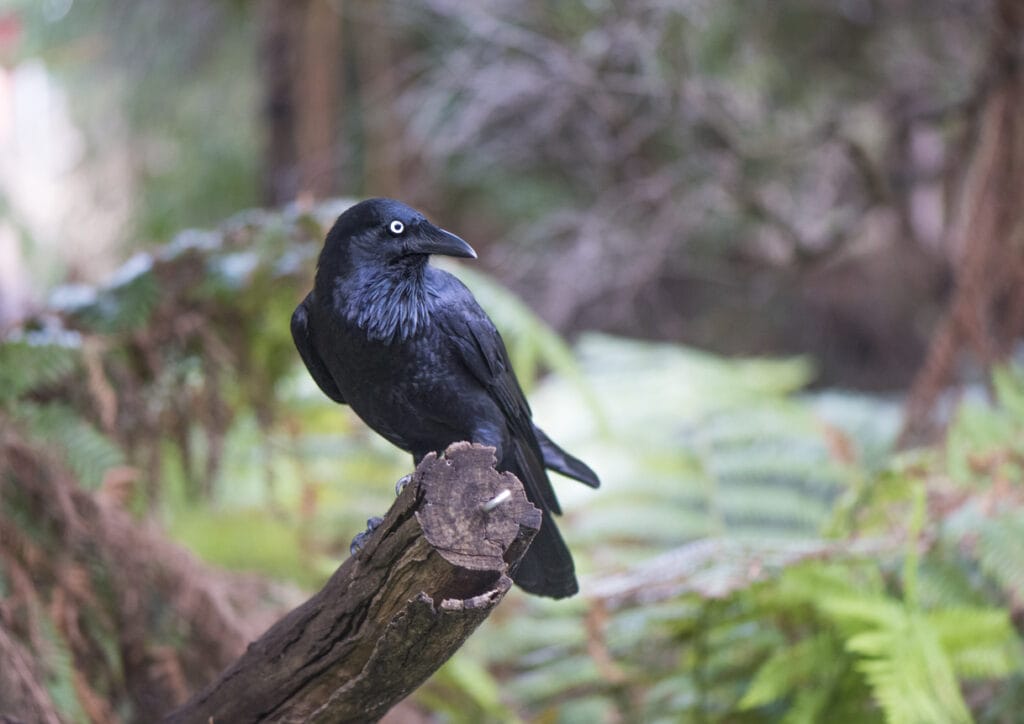
The American Crow, Corvus brachyrhynchos, is a large, intelligent bird easily recognized by its entirely black plumage, from beak to claws. These birds are substantial in size, measuring 15.8 to 20.9 inches in length with a wingspan of 33.5 to 39.4 inches, and weighing between 11.2 to 21.9 ounces. Their characteristic "caw" is a familiar sound in many areas.
American Crows are known for their intelligence and often perch high in trees to survey their surroundings. They are omnivorous and can be attracted to backyards by offerings of peanuts. However, their scavenging habits also mean they are drawn to outdoor trash and pet food, which can sometimes be problematic.
11. White-breasted Nuthatch (Sitta carolinensis)
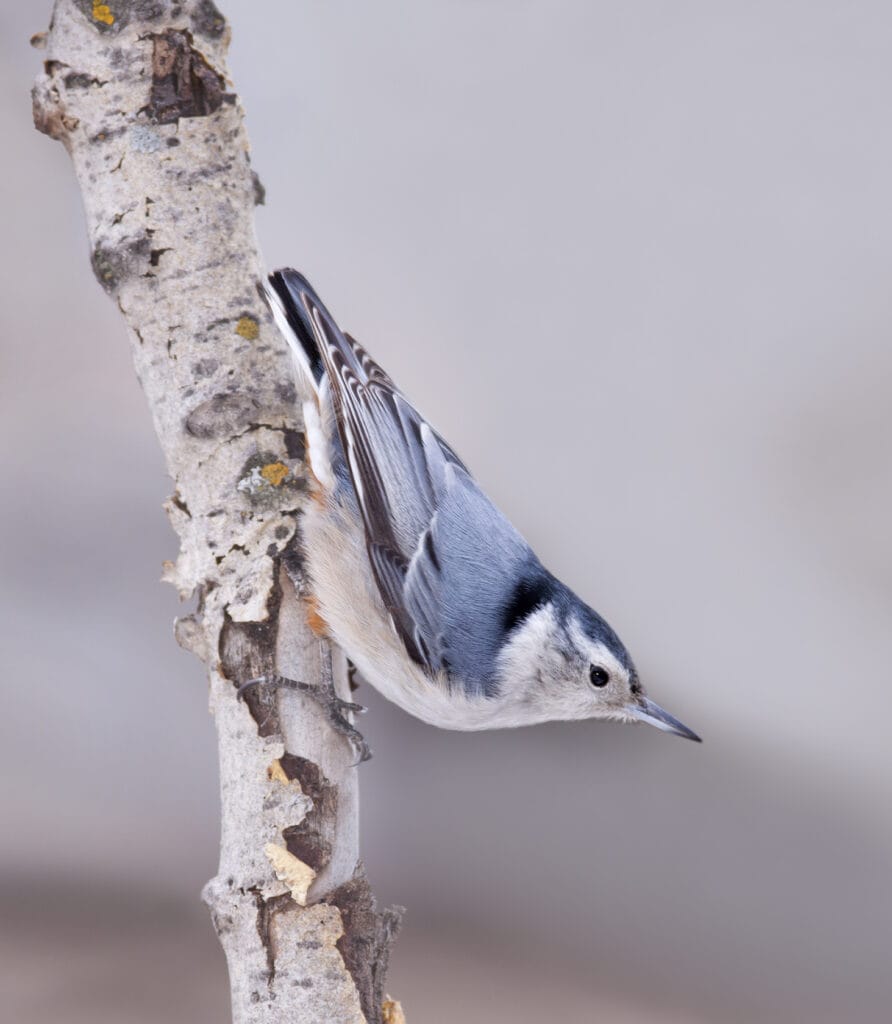
The White-breasted Nuthatch, Sitta carolinensis, is a small, energetic bird known for its unique ability to climb headfirst down tree trunks. They measure approximately 5 inches in length with a wingspan of 7.9 to 10.6 inches and weigh around one ounce. Their name derives from their habit of storing nuts and using their beaks to "hatch" them open.
These birds are easily identified by a bold black stripe across the top of their head, contrasting with their grayish-white faces and bellies. Their wings are a mix of black and gray. Offering peanuts and sunflower seeds on suet or tube feeders is an effective way to attract them.
12. Tufted Titmouse (Baeolophus bicolor)
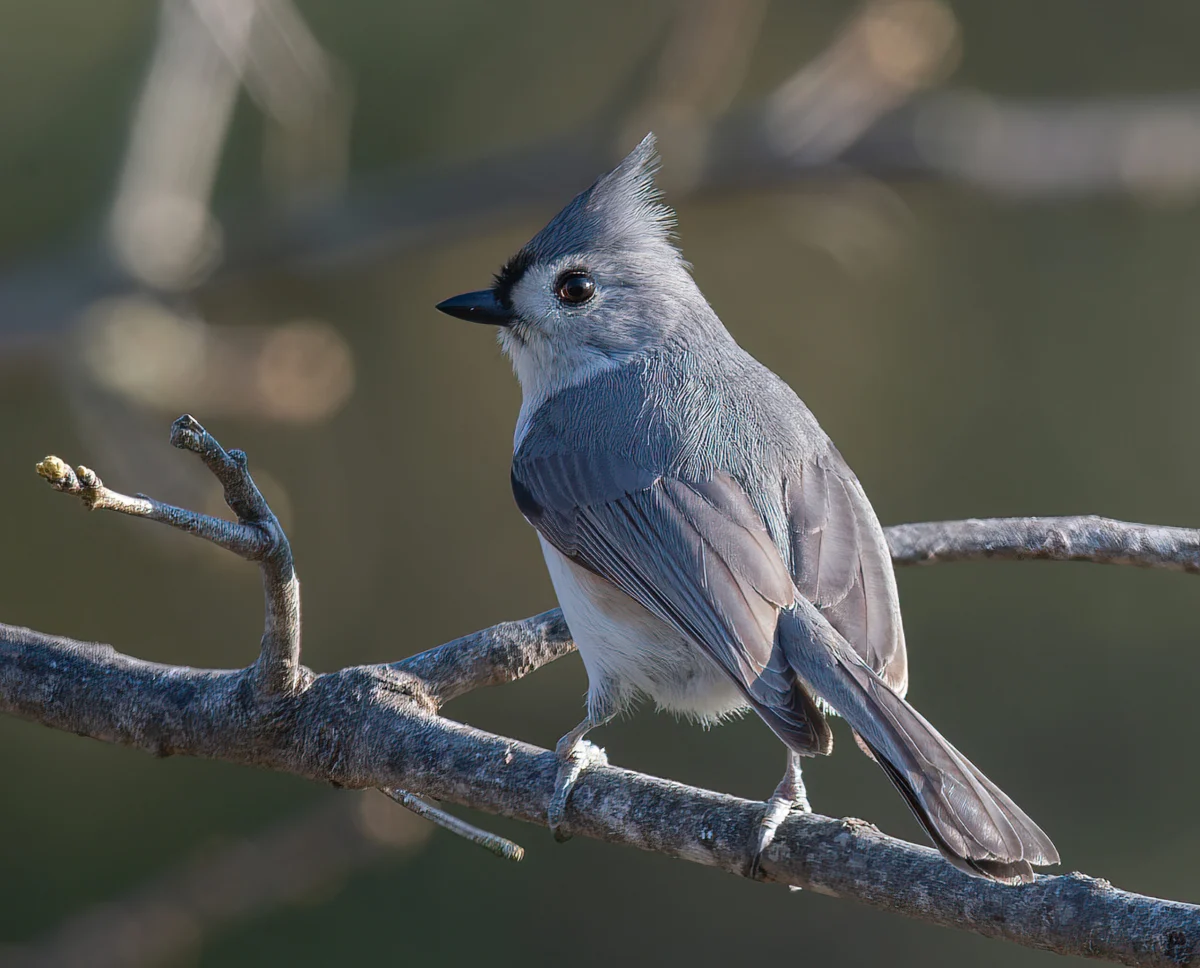
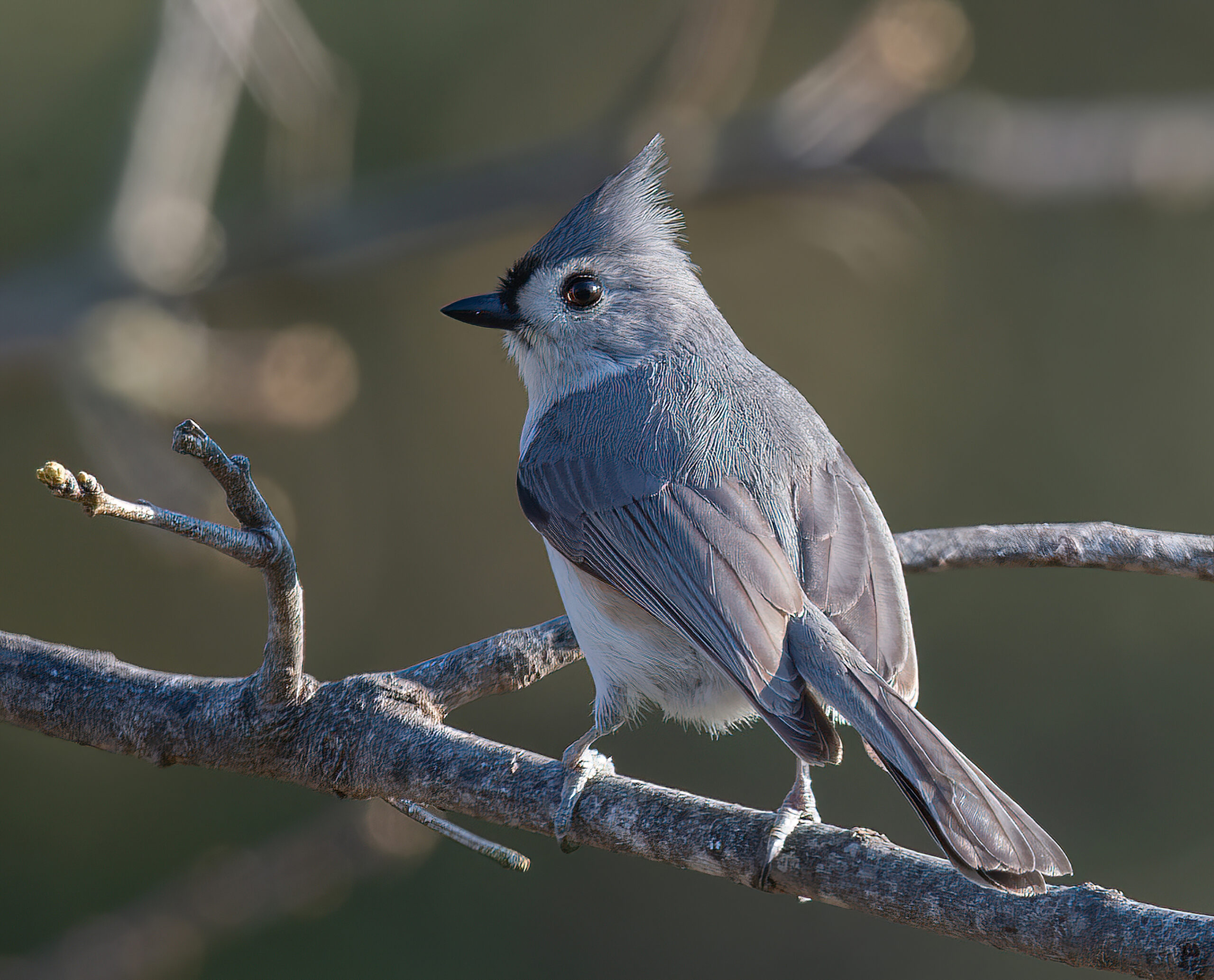
The Tufted Titmouse, Baeolophus bicolor, is a charming songbird with a distinctive crest. Measuring about 5.5 to 6.3 inches in length and weighing less than an ounce, they have a wingspan of 7.9 to 10.2 inches. Like the Northern Cardinal, they possess a notable "mohawk" that aids in identification.
Their plumage is silver on the upper parts and grayish-white on the underside, with a black beak and a small black spot just above it. To encourage Tufted Titmice to visit, provide tube, suet, or platform feeders stocked with sunflower seeds, peanuts, and suet.
13. House Sparrow (Passer domesticus)
The House Sparrow, Passer domesticus, is another non-native species that is often considered a pest. These birds measure 5.9 to 6.7 inches long and weigh around an ounce, with a wingspan of 7.5 to 9.8 inches. Introduced to North America alongside European Starlings, they are known for their aggressive behavior, particularly towards other birds competing for nesting sites.
House Sparrows will consume virtually any type of seed and are not deterred by a lack of artificial feeding. Their plumage is brown with streaks of black and orange-brown on their wings and backs. Under federal law in the United States, House Sparrows are among the few wild bird species that can be legally captured and humanely dispatched, reflecting their status as an invasive species.
14. Common Grackle (Quiscalus quiscula)
The Common Grackle, Quiscalus quiscula, is a striking blackbird with glossy, iridescent plumage that shimmers with hues of purple, blue, and green. These birds measure 11.0 to 13.4 inches in length and weigh between 2.6 to 5.0 ounces, with a wingspan of 14.2 to 18.1 inches. They are often found in noisy groups, frequenting treetops.
Common Grackles are known to consume corn and other grains, as well as garbage. To attract them to your backyard, offer mixed grain and seed on platform feeders or sprinkle it on the ground. Their opportunistic feeding habits mean they can be both a nuisance and a spectacle.
15. House Finch (Haemorhous mexicanus)
The House Finch, Haemorhous mexicanus, is another invasive species found in Ohio, measuring 4.9 to 6.1 inches long and weighing less than an ounce, with a wingspan of 8.1 to 10.5 inches. While they can gather in large flocks and sometimes dominate feeders, they are generally not as aggressive or destructive as House Sparrows.
Males are easily identified by their reddish-orange coloration on their heads and chests, while females are uniformly brown. House Finches readily visit feeders offering black sunflower seeds or nyjer seeds, and can be attracted using platform or tube feeders.
Creating a Welcoming Backyard Habitat
Attracting birds to your backyard is a rewarding experience that can be achieved through thoughtful landscaping and the provision of essential resources. Beyond offering appropriate food sources, consider including native plants that provide natural food and shelter, as well as a clean water source like a birdbath. Understanding the specific dietary preferences and nesting habits of these common Ohio birds can significantly enhance your success in bringing more avian life into your immediate environment. The presence of these 15 species, among the many others documented by the OOS, offers a rich opportunity for engagement with the natural world, right outside your door.
Frequently Asked Questions
What is the most common bird in Ohio?
The American Robin is widely considered the most common bird in Ohio.
What is the rarest bird in Ohio?
The Kirtland’s Warbler is considered one of the rarest birds in Ohio and is a threatened species, highlighting the importance of conservation efforts.
What kind of birds do they have in Ohio?
Ohio hosts a diverse array of bird species, including numerous waterbirds, songbirds, birds of prey, and gamebirds. Beyond the common backyard visitors, species like the Eastern Bluebird, Red-tailed Hawk, and various waterfowl contribute to the state’s rich avifauna.
What is the official bird of Ohio?
The official bird of Ohio is the Northern Cardinal.

