


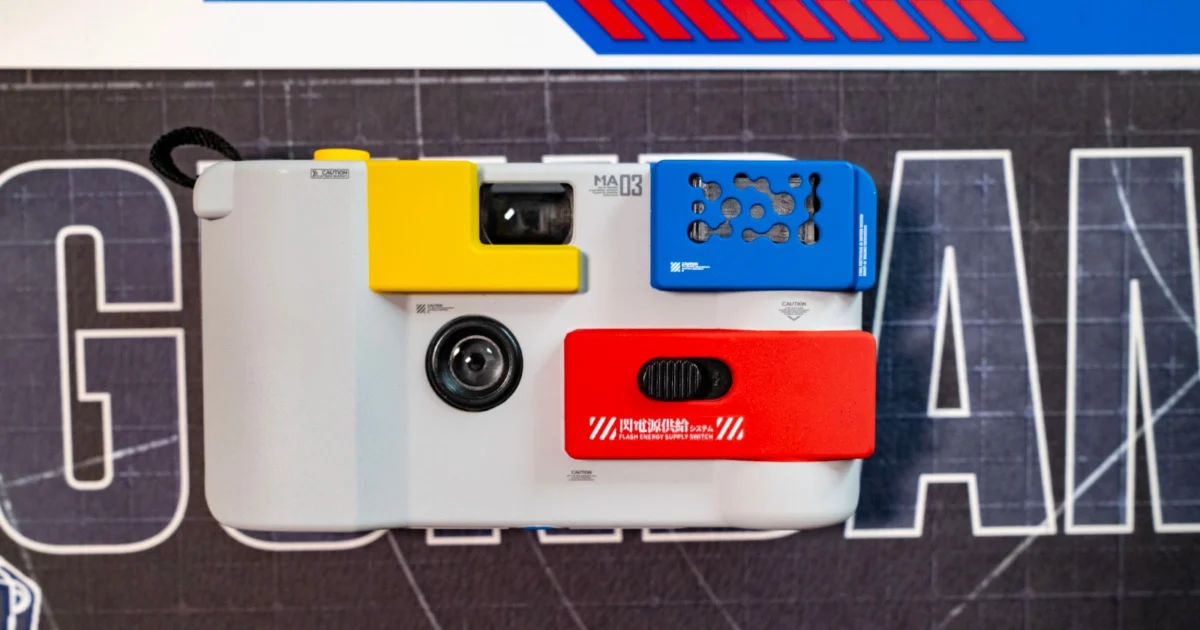
The intersection of niche hobbies often produces unique artifacts that transcend their original utility, evolving into symbols of subcultural identity. This phenomenon is currently exemplified by the emergence of a specialized, hand-painted 35mm film camera themed after the iconic "Gundam" franchise. Created by David C W, a Taiwan-based artisan operating under the brand Little Road Camera, this piece of equipment represents a meticulous fusion of analog photography and the expansive world of Japanese mecha anime. While the digital age has largely pushed film photography into the realm of enthusiasts, and anime has moved into the global mainstream, the "Gundam Camera" serves as a bridge between these two distinct yet overlapping worlds of craftsmanship and fandom.
The Cultural Weight of the Gundam Franchise
To understand the significance of this camera, one must first grasp the cultural magnitude of the Gundam franchise. Broadly speaking, Gundam refers to a sprawling science fiction metaseries produced by Sunrise (now Bandai Namco Filmworks). The franchise began in 1979 with the television series Mobile Suit Gundam, directed by Yoshiyuki Tomino. Unlike the "Super Robot" shows of the era, which featured fantastical, almost magical machines, Gundam pioneered the "Real Robot" genre. Here, the giant mechanical suits—known as Mobile Suits—were treated as military hardware: they required maintenance, ran out of fuel, and were piloted by young soldiers caught in the crossfire of complex political conflicts.
The term "Gundam" typically refers to a specific, high-performance prototype within these stories, often distinguished by a signature color palette and a "V-fin" antenna. Over the last four decades, the franchise has expanded into dozens of television series, films, manga, and novels. In Japan, Gundam is more than just a cartoon; it is a pillar of pop culture, comparable in stature to Star Wars in the West. Its influence is physical, manifested in life-sized statues in Tokyo and Yokohama, and economic, through the multi-billion dollar "Gunpla" (Gundam plastic model) industry.
In the United States and other Western markets, the franchise gained significant traction in the early 2000s. The series Mobile Suit Gundam Wing was a cornerstone of Cartoon Network’s Toonami programming block, introducing an entire generation of Western viewers to the concept of sophisticated, character-driven mecha drama. This historical context is essential to understanding why a Gundam-themed camera resonates so deeply with collectors today.
Technical Specifications: The IUTD To Be Continued Base
The foundation of this artistic endeavor is the IUTD "To Be Continued" (TBC) 35mm reusable film camera. Produced by IUTD Studios, the TBC is part of a modern wave of "reusable disposables." These cameras are designed to mimic the aesthetic and technical simplicity of a classic single-use camera but are built with a mechanism that allows users to reload film, thereby reducing environmental waste.
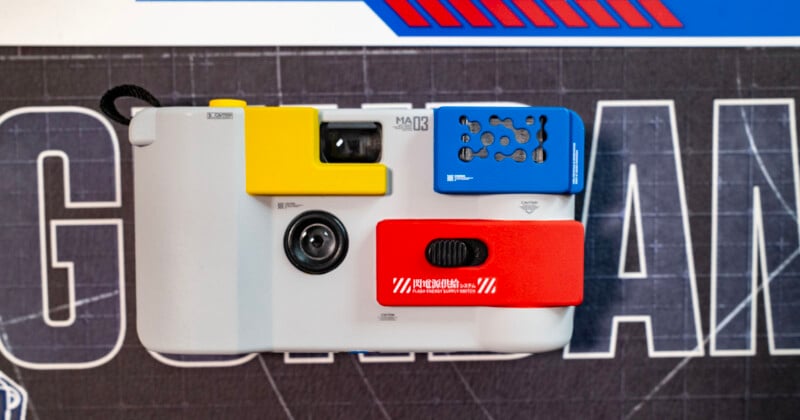
Technically, the camera is a study in simplicity. It features a fixed 28mm f/8 lens, which provides a wide-angle perspective suitable for street photography and snapshots. The shutter speed is fixed at approximately 1/120th of a second, and the focus is set to a "snapshot" range, typically from one meter to infinity. A built-in flash, powered by a single AA battery, allows for indoor and low-light shooting.
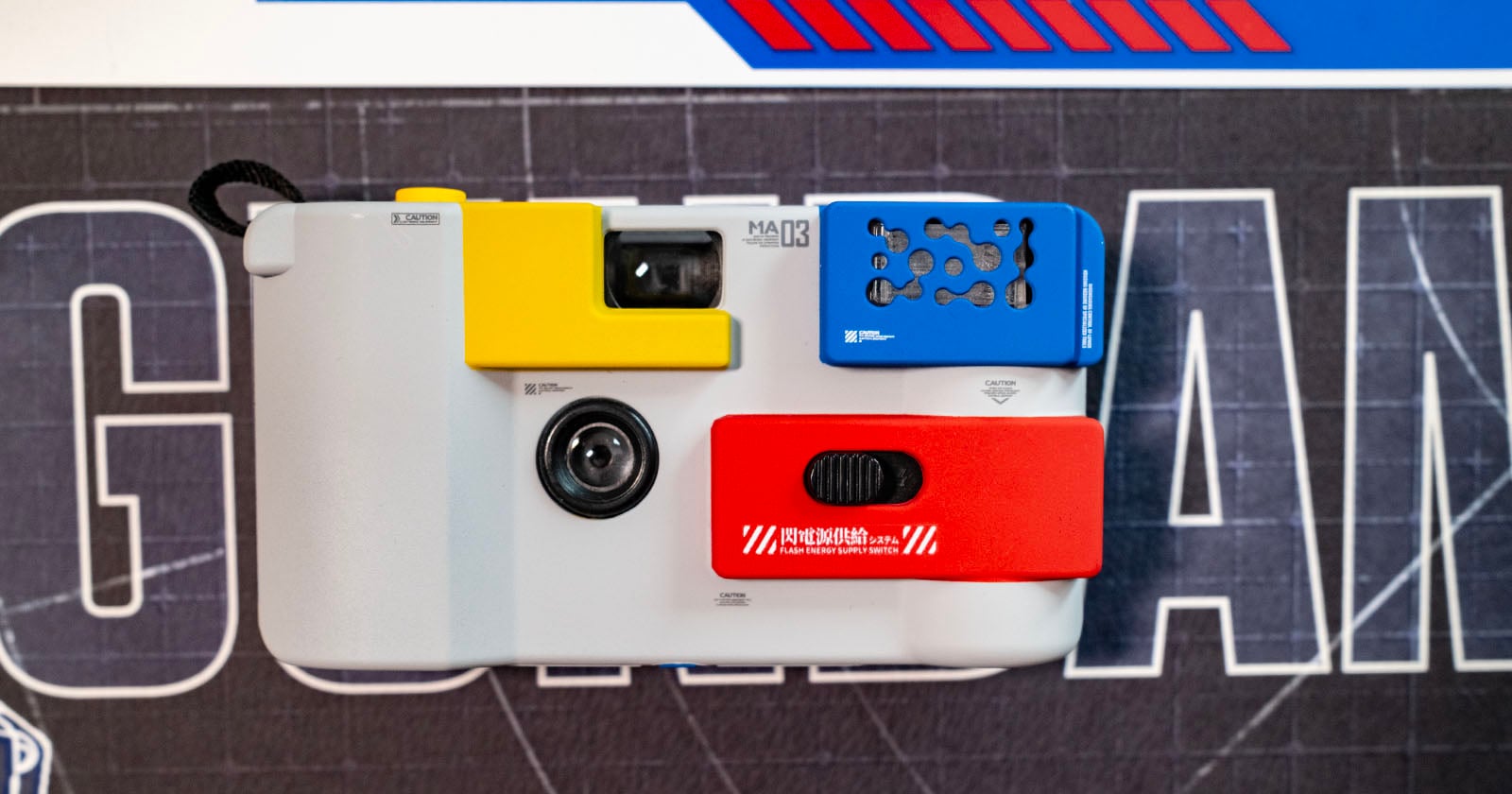
The TBC camera was chosen for this project because its "blocky," utilitarian design language mirrors the industrial aesthetics of a Mobile Suit. The angular body of the camera provides the perfect "canvas" for a livery inspired by the RX-78-2, the original Gundam piloted by protagonist Amuro Ray. This specific colorway—consisting of primary red, blue, and yellow against a neutral gray or white base—has become the shorthand for "protagonist mech" across the entire franchise.
The Art of Customization: Little Road Camera’s Process
David C W’s customization process elevates the TBC from a mass-produced plastic tool to a collector’s item. The artisan applies the classic Gundam livery through a combination of precision hand-painting and the application of water-transfer decals. These decals are a staple of the Gunpla hobby, used by modelers to add realistic military markings, warning labels, and mechanical details to their kits.
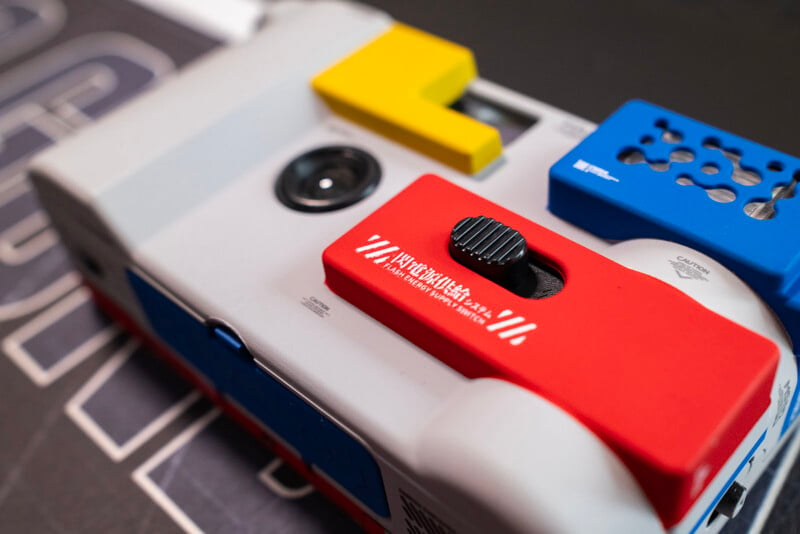
The integration of these decals onto a functional camera requires a high degree of skill, as the surface of a camera is subject to more handling and friction than a static model kit displayed on a shelf. The placement of the markings is deliberate, designed to make the camera look like a piece of equipment that might exist within the Universal Century (the primary timeline of the Gundam series).
In a statement regarding his creative process, David C W noted that his work is iterative. "I’ve made 58 cameras so far, and I genuinely enjoy every part of this process," he shared. "With each batch, I make small tweaks to improve the camera." This commitment to improvement was evident in the most recent production run, where David decided to remove an orange filter from the flash compartment. Although the orange flash provided a unique aesthetic "vibe" to the photos, David concluded that it reduced the flash’s effective power and compromised overall image quality. His decision to prioritize performance over aesthetics reflects a professional journalistic approach to product design, ensuring the tool remains functional for actual photography.
Production Logistics and Global Distribution
The Gundam Camera is not a mass-market product. It is released in extremely small, numbered batches, making it a "rare drop" in the world of photography gear. The scarcity is a direct result of the labor-intensive nature of the hand-painting process.
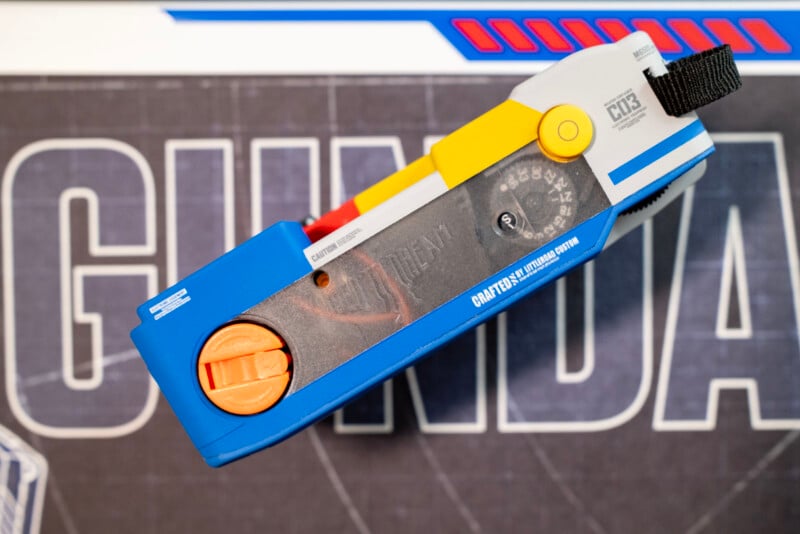
According to production data provided by the creator, the third batch of these cameras consisted of only eight units. The geographical distribution of these units highlights the global nature of the Gundam and film photography communities:
- United States: 4 units
- United Kingdom: 2 units
- Japan: 1 unit
- Philippines: 1 unit
The first batch consisted of 15 units, which David described as "intense" to produce. To date, only 58 customized cameras have been completed across all variations. Because of this limited supply, the cameras are not listed on traditional e-commerce platforms like eBay or Amazon. Instead, interested collectors must engage in a "waiting list" system by contacting the artist directly via social media. This "maker-to-consumer" model is increasingly common in the creator economy, where the value of a product is tied to the personal reputation and craftsmanship of the individual artisan.
The Resurgence of Analog in a Digital World
The popularity of the Gundam Camera coincides with a broader resurgence in analog photography. While digital sensors offer unparalleled resolution and convenience, many younger photographers are drawn to film for its "tactile" nature and the inherent "imperfections" of the medium. The rise of the "lo-fi" aesthetic on platforms like Instagram and TikTok has fueled demand for cameras that produce grainy, saturated images with light leaks and vignettes—qualities that the IUTD TBC base provides in abundance.
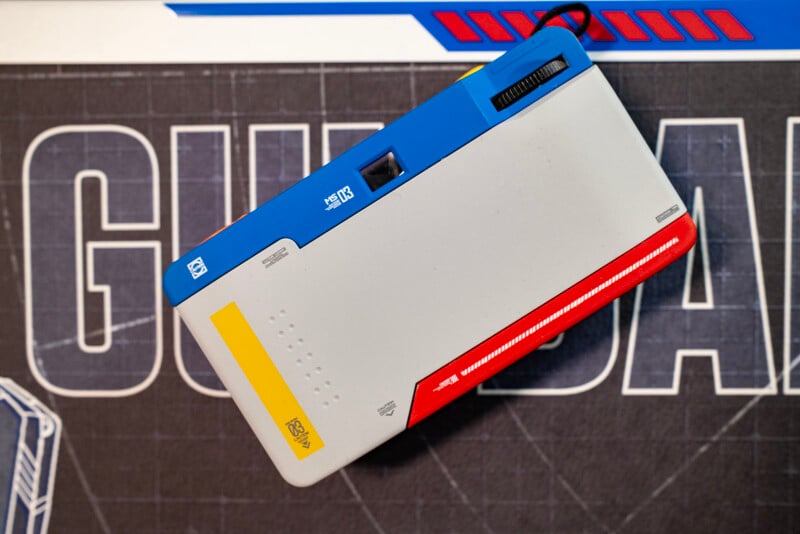
Furthermore, the Gundam Camera taps into the "lifestyle" segment of the photography market. For many owners, the camera is as much a display piece as it is a tool. It fits seamlessly into a "Gunpla" display, sitting alongside high-grade and master-grade model kits. This dual-purpose nature—functional tool and decorative collectible—is a key driver of its market value.
Broader Implications and Market Analysis
The success of projects like Little Road Camera’s Gundam Camera suggests several trends in the consumer electronics and hobbyist markets:
- The Value of Hyper-Niche Customization: Consumers are increasingly willing to pay a premium for products that reflect their specific interests. A standard IUTD TBC camera is relatively affordable, but the "Gundam-ized" version commands attention due to the artistry involved.
- The Convergence of Hobbies: The lines between different enthusiast communities are blurring. A person who builds Gundam models is likely to appreciate the mechanical nature of a film camera, and vice versa.
- The "Slow" Movement: Just as "slow fashion" and "slow food" have gained traction, "slow photography" (film) and "slow builds" (model kits) offer a meditative alternative to the rapid pace of digital life.
- Intellectual Property as Design Language: The Gundam color palette has become a recognizable design language in its own right, independent of the actual characters or stories. It signals a specific set of values: retro-futurism, industrial utility, and heroic optimism.
While some might view a hand-painted plastic camera as a mere novelty, the level of detail and the dedication of the creator suggest a more profound cultural artifact. It is a testament to the enduring power of the Gundam IP and the vibrant health of the global analog community. As David C W continues to refine his process and release new batches, the Gundam Camera remains a benchmark for how independent creators can successfully merge two seemingly disparate worlds into a single, cohesive work of art.
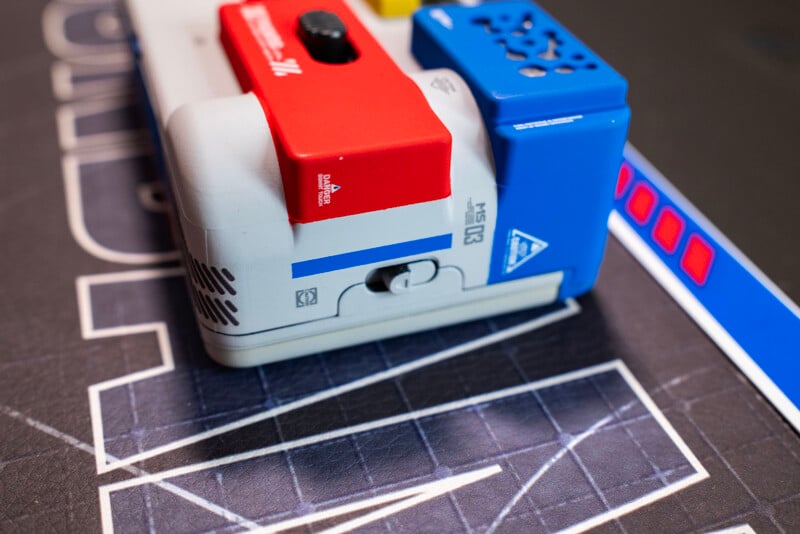
For the photography community, it serves as a reminder that the tools we use to capture memories can be just as memorable as the images they produce. For the Gundam fandom, it is another way to bring the "Universal Century" into the real world, one frame at a time.

