


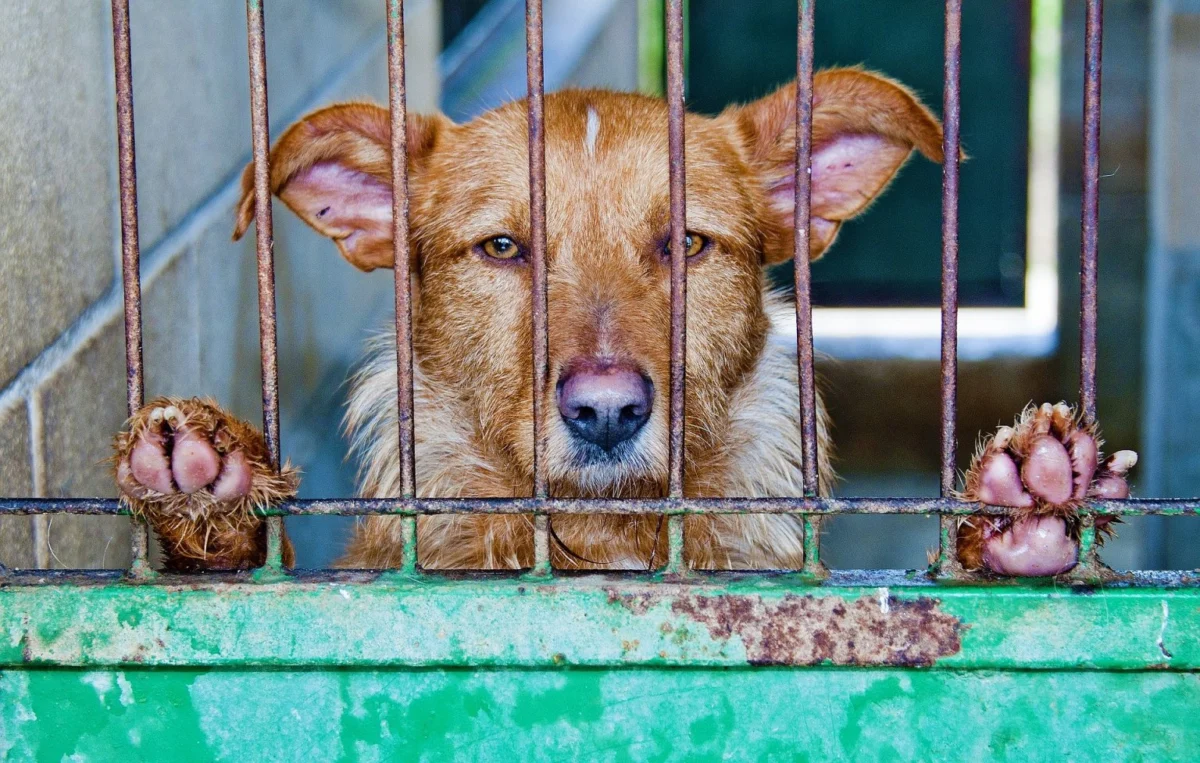
The debate surrounding animal shelter management and the ethics of "no-kill" policies has reached a new level of public scrutiny following a candid discussion on the latest episode of The Rocky Mountain Vet Podcast. Featuring Daphna Nachminovitch, Senior Vice President of People for the Ethical Treatment of Animals (PETA), alongside Dr. Jeff Young and Andrew Duffer, the conversation highlights a growing concern within the animal welfare community: the rise of "ghost animals" and the unintended consequences of prioritizing statistical "save rates" over individual animal welfare. For decades, the "no-kill" movement has served as a powerful marketing tool for animal rescues and municipal shelters, but critics argue that the slogan often masks a grim reality where the most vulnerable animals are turned away to keep success metrics high.
The episode, titled "Statistically Saved," explores the shift in the American sheltering landscape, where the pressure to maintain a 90% live-release rate has led many facilities to transition from open-admission to limited-admission models. This shift, according to Nachminovitch and Young, creates a vacuum of care for sick, injured, elderly, or unsocialized animals—the very populations that require the most resources and medical intervention. By refusing to accept these "unadoptable" cases, shelters can maintain their "no-kill" status on paper, while the animals themselves are left to suffer on the streets or are abandoned in environments where they face slow, painful deaths.
The Evolution of the No-Kill Movement and the 90 Percent Threshold
The "no-kill" movement gained significant momentum in the late 1980s and early 1990s, spearheaded by organizations seeking to end the euthanasia of healthy, adoptable pets. The movement established a benchmark known as the "90% save rate," which posits that at least 90% of animals entering a shelter should be rehomed, with euthanasia reserved only for those with terminal illnesses or irredeemable aggression. While the goal was rooted in compassion, the practical application has faced increasing criticism from field professionals who manage the day-to-day realities of animal overpopulation.
The rise of organizations like Best Friends Animal Society, which has championed the goal of making the entire United States "no-kill" by 2025, has placed immense pressure on local municipalities and private shelters. During the podcast, Nachminovitch expressed a sharp critique of this influence, stating that the push for "no-kill" has had a detrimental effect on the state of sheltering across the country. The contention is that the movement focuses on the "out" (live releases) without adequately addressing the "in" (the sheer volume of animals needing help).
The Phenomenon of Ghost Animals and Data Manipulation
One of the most striking concepts introduced in the discussion is that of "ghost animals." These are animals that are denied entry into shelters that have reached their capacity or are protecting their save-rate statistics. When a shelter operates under a "no-kill" or limited-admission policy, it often implements "managed intake" or "appointment-based intake." While these systems are framed as organizational tools, they frequently serve as barriers to entry.
Andrew Duffer noted that if a shelter refuses to take in an animal, that animal disappears from the official data. "If a shelter refuses to take in an animal, that animal doesn’t show up in the data—but [they] still exist, and [they] still suffer," Duffer remarked. This creates a statistical illusion of success. If a community reports a 95% save rate but has hundreds of stray dogs roaming the streets because the local shelter is "full" or "no-kill," the data fails to reflect the actual state of animal welfare in that region.

Dr. Jeff Young, a veteran veterinarian known for his work in high-volume spay/neuter clinics, echoed these concerns. He argued that the "no-kill" label can sometimes be a shield for neglect. "I’ve been in no-kill shelters all over the world and all over this country," Young stated. "I’ve never been in one that I felt I couldn’t prosecute for cruelty or neglect." This refers to the practice of "warehousing" animals—keeping them in cages for years on end without adequate socialization or quality of life—simply to avoid the act of euthanasia.
The Burden on Open-Admission Shelters
The direct result of limited-admission "no-kill" policies is the increased burden placed on open-admission shelters. These facilities, often government-run or PETA-supported, maintain a policy of never turning away an animal in need, regardless of its health, age, or temperament. Because they accept the most difficult cases—those that "no-kill" shelters reject—their euthanasia rates are naturally higher.
Consequently, open-admission shelters and their staff are often vilified by the public and "no-kill" advocates. Nachminovitch highlighted the psychological toll on these workers, noting that they are frequently bullied, called "murderers," and even compared to "Nazis" for performing the essential, albeit heartbreaking, task of providing a peaceful end to animals that are suffering or dangerous. This social pressure has led to a mass exodus of experienced professionals from the animal welfare field, leaving a gap in expertise and leadership.
Supporting Data: The Reality of Animal Homelessness
To understand the scope of the issue, one must look at the national statistics provided by organizations such as Shelter Animals Count and the ASPCA. Approximately 6.3 million companion animals enter U.S. animal shelters every year. While euthanasia rates have dropped significantly from the 1970s—when an estimated 15 to 20 million animals were euthanized annually—roughly 920,000 shelter animals are still euthanized each year.
The drop in euthanasia is largely attributed to increased spay/neuter efforts rather than "no-kill" policies alone. PETA, for instance, has operated high-volume mobile spay/neuter clinics for decades, sterilizing more than 250,000 animals since 2001. Data suggests that communities with mandatory spay/neuter laws and accessible, low-cost sterilization services see a more sustainable decline in shelter intake than those that focus solely on adoption-out metrics.
Furthermore, the "no-kill" push has led to a controversial trend in "managed intake," where shelters may have waiting lists months long. For a person in a crisis—such as facing eviction or dealing with a sudden illness—a three-month waiting list is equivalent to a door being slammed in their face. This often results in the "dumping" of animals in rural areas, parks, or industrial zones.
Safety Concerns and the Adoption of Aggressive Animals
The podcast participants also addressed the public safety implications of "no-kill" mandates. In an effort to keep save rates high, some shelters have been documented adopting out dogs with known histories of aggression. By re-labeling aggressive behaviors or failing to disclose bite histories, shelters risk the safety of the adopting families and the community at large.
When these adoptions fail, or worse, result in injury, it fuels a negative perception that shelter animals are "damaged goods." This stigma ultimately harms the very animals the movement seeks to protect. Dr. Young emphasized that a responsible sheltering system must balance the desire to save lives with the necessity of maintaining public safety and ensuring that every animal placed in a home is truly suitable for domestic life.
Official Responses and the Need for Systemic Reform
While proponents of the "no-kill" movement, such as Best Friends Animal Society, argue that the 90% goal is a necessary catalyst for innovation and community involvement, the PETA perspective calls for a more holistic approach. The consensus among the podcast guests was that "no-kill" is a "sexy slogan" that prioritizes optics over the messy, difficult work of systemic prevention.
The proposed solution involves a three-pronged approach:
- Aggressive Spay/Neuter Programs: Reducing the number of animals born is the only way to permanently lower shelter intake.
- Humane Education: Teaching responsible pet ownership and the importance of lifelong commitment to an animal.
- Legislation: Implementing and enforcing laws regarding animal neglect, breeding regulations, and mandatory sterilization.
Dr. Young remarked, "The tip of the spear will always be spay/neuter. You have to have humane education, and you have to have legislation." Without these foundational elements, "no-kill" remains a reactive policy rather than a proactive solution.
Broader Implications for Animal Welfare Policy
The debate highlighted in The Rocky Mountain Vet Podcast signals a potential turning point in how the public perceives animal sheltering. As more stories emerge of "no-kill" shelters operating at 150% capacity with animals living in crates in hallways, or of animals being "warehoused" for years without human touch, the demand for transparency is growing.
The term "statistically saved" serves as a warning to donors and policymakers. A high save rate is not a catch-all metric for success if it is achieved by excluding the animals most in need of help. Journalistic analysis of the current landscape suggests that the next phase of animal welfare will likely move away from divisive slogans and toward a "One Welfare" approach, which recognizes the interconnectedness of animal health, human safety, and environmental stability.
In conclusion, the conversation between Daphna Nachminovitch, Dr. Jeff Young, and Andrew Duffer underscores the complexity of the animal overpopulation crisis. While the "no-kill" movement was born out of a noble desire to value every life, its implementation has created a bifurcated system that often rewards exclusion and punishes those who handle the most difficult realities of the field. True progress, according to these experts, will be measured not by the number of animals a shelter turns away to keep its stats clean, but by the number of animals prevented from entering the system in the first place through community-wide support and preventative care.

