


Texas, a state celebrated for its iconic cowboy culture, thrilling rodeos, and world-renowned barbecue, harbors a secret avian richness that often goes unnoticed. Far from being solely a land of dusty plains and cattle drives, the Lone Star State is, in fact, a national leader in bird diversity. With a remarkable 655 confirmed bird species, Texas stands as one of the most ornithologically diverse states in the United States, offering a vibrant tapestry of feathered life for enthusiasts and casual observers alike. This comprehensive guide delves into some of the most captivating backyard birds found across Texas and provides actionable tips for attracting these magnificent creatures to your own outdoor sanctuary.
The Unrivaled Avian Diversity of Texas
Texas’s vast and varied geography plays a pivotal role in its exceptional bird diversity. Spanning multiple ecological zones, from the humid piney woods of the east to the arid deserts of the west, the coastal prairies, the rolling hills of the Edwards Plateau, and the dense forests of the Trans-Pecos, the state provides a multitude of habitats. This ecological mosaic supports a staggering array of species, including resident birds, migratory visitors, and rare vagrants. The sheer number of species recorded—over 650—places Texas among the top states for birding, making it a significant destination for ornithologists and nature lovers.

The migratory flyways that cross Texas are another critical factor. The state lies along the Central and Mississippi Flyways, major aerial highways for millions of birds traveling between their breeding grounds in North America and their wintering grounds in Mexico, Central America, and South America. During the spring and fall migration periods, Texas’s coastal regions and interior landscapes become crucial stopover points, offering vital food and shelter for exhausted travelers. This constant influx of avian life contributes significantly to the state’s dynamic bird population.
Backyard Birds of Texas: A Closer Look
For residents and visitors eager to connect with Texas’s feathered inhabitants, focusing on common backyard species offers an accessible and rewarding introduction. These birds are not only visually appealing but also play important ecological roles within urban and suburban environments.
1. Northern Cardinal (Cardinalis cardinalis)
The Northern Cardinal is an iconic symbol of the American South and a beloved resident across the eastern half of Texas. Instantly recognizable by their vibrant crimson plumage, striking crests, and distinctive red, cone-shaped bills, these birds are a common sight year-round. Their presence in backyards is remarkably consistent, appearing in an estimated 45% to 49% of Texas backyards, according to various birding surveys.

To entice these cheerful birds, offering a diverse buffet is key. Northern Cardinals are omnivorous and readily accept a variety of foods. Their preferences include seeds, berries, fruits, and corn. Specifically, white millet, sunflower seeds (especially black oil sunflower seeds), safflower seeds, and shelled or cracked corn are highly favored. Providing these options in a well-maintained feeder will significantly increase the chances of attracting these striking songbirds. Their melodious whistles and cheerful demeanor make them a delightful addition to any garden.
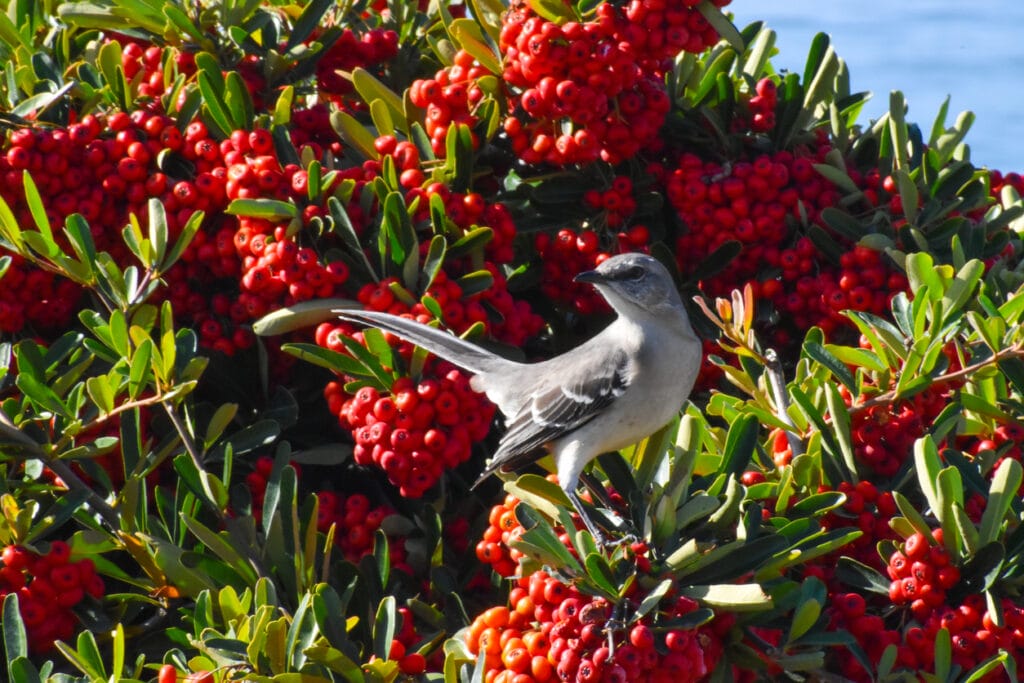
2. Northern Mockingbird (Mimus polyglottos)
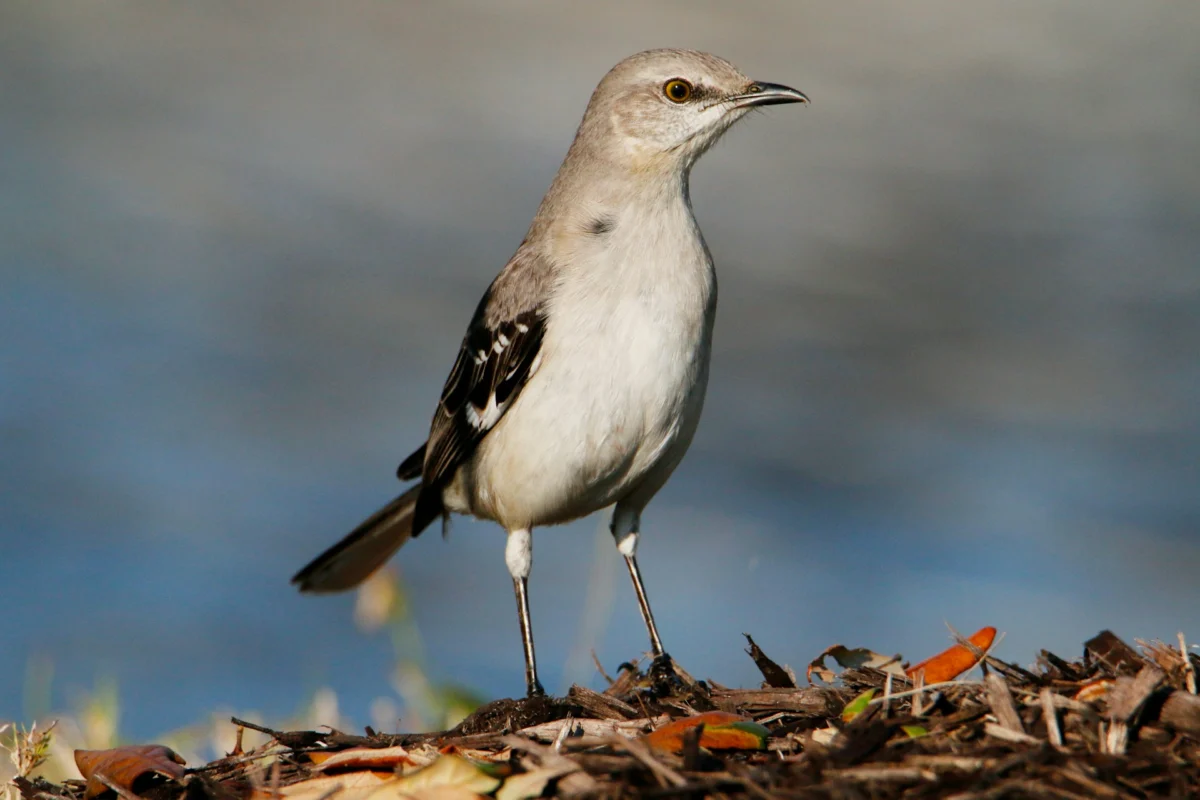
A testament to the state’s appreciation for its avian residents, the Northern Mockingbird was officially designated the state bird of Texas in 1927. These intelligent and remarkably vocal birds are known for their impressive ability to mimic a wide range of sounds, from other birdsongs to mechanical noises. While not as visually flamboyant as some species, their outsized personalities and constant activity have endeared them to Texans.
Northern Mockingbirds are nearly as prevalent as Northern Cardinals in Texas backyards, appearing with a similar frequency of around 45%. Their diet is varied, encompassing both seeds and insects. To attract them, offer a mix of insects, fruits, and berries. Raisins, apple slices, and grapes are particularly appealing. Suet blocks also serve as an excellent attractant.
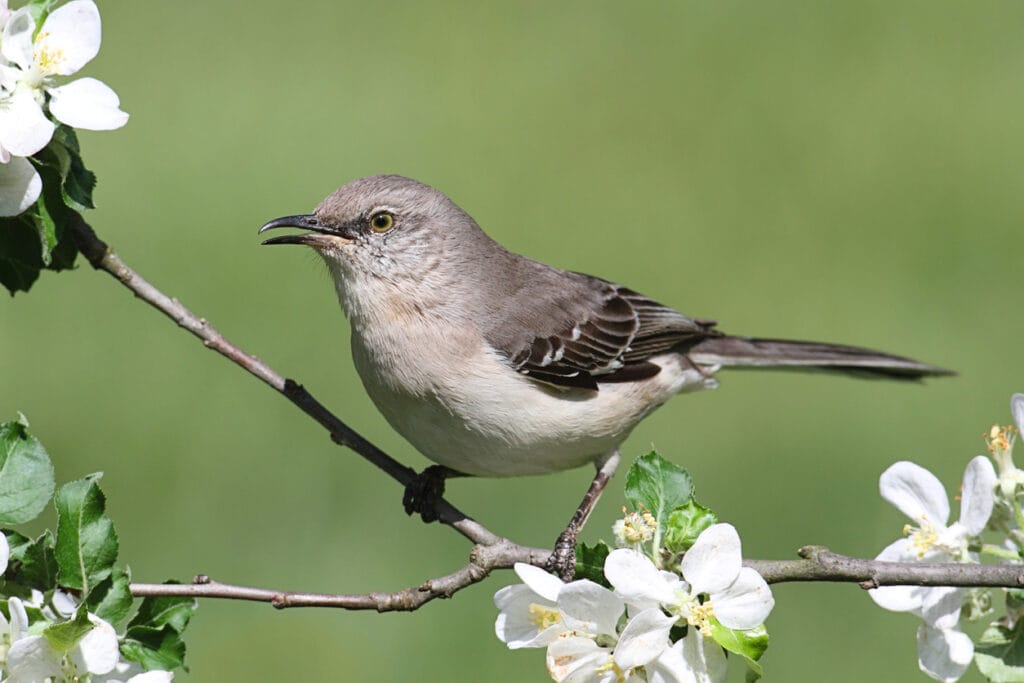
A crucial tip for mockingbird enthusiasts: a birdbath is an essential amenity. Northern Mockingbirds are known to relish splashing and bathing, making a clean water source a powerful lure. Their acrobatic displays in the water are a joy to observe.
3. Blue Jay (Cyanocitta cristata)
The Blue Jay, with its striking blue, black, and white plumage and prominent crest, is a familiar and boisterous presence in the eastern half of Texas. These intelligent corvids are particularly active during the late summer and early fall, their distinctive "Jay! Jay!" calls echoing through wooded areas and parks.
Despite their relatively common status, Blue Jays are often cautious and prefer the cover of trees and shrubs to open spaces. To draw them out into the open, offering their favorite treats can be effective. Shelled peanuts, acorns, and mealworms are particularly attractive to Blue Jays. Providing these in a feeder located near trees or dense vegetation can encourage them to visit. Their bold personalities and striking appearance make them a captivating addition to the backyard birding experience.

4. Summer Tanager (Piranga rubra)
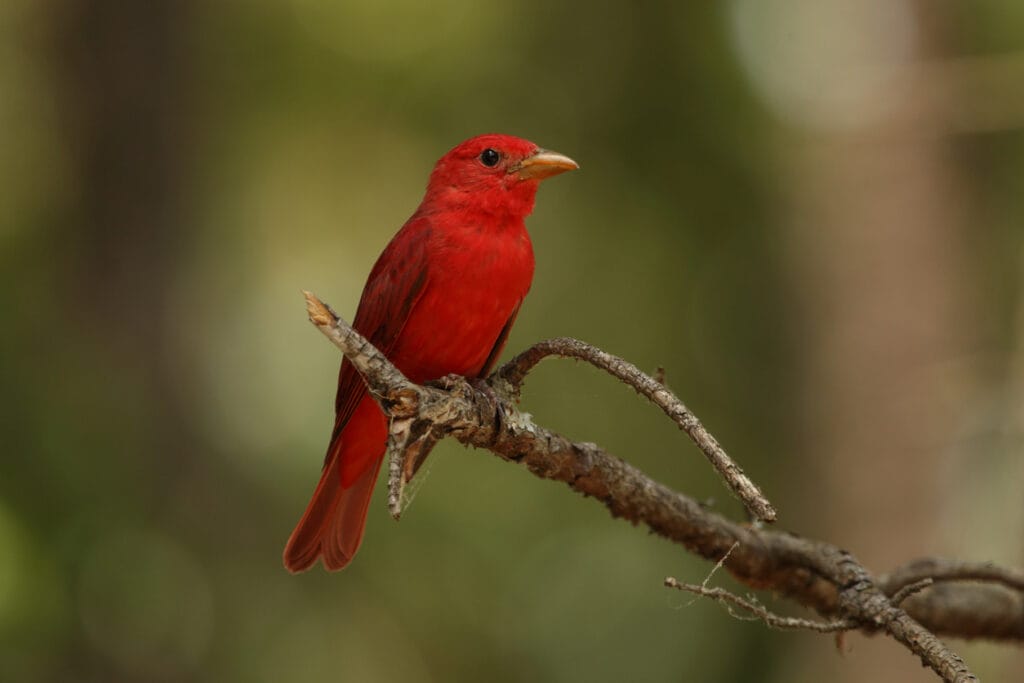
Summer Tanagers, also known as Summer Redbirds, are neotropical migrants that grace Texas with their presence from late March to mid-May. These elegant birds are distinguished by their uniformly bright red plumage in males, while females display a soft yellow hue. This distinct sexual dimorphism makes observing both sexes a particularly rewarding experience for birdwatchers.
Their primary diet consists of insects, particularly bees and wasps, which they adeptly catch in mid-air or pluck from vegetation. However, they also supplement their diet with fruits and seeds. To attract migrating Summer Tanagers, consider offering a variety of fruits such as grapes, blackberries, mulberries, pokeberries, and bananas. These sweet treats are highly sought after by these beautiful visitors, offering a chance to witness their delicate feeding habits up close.
5. Painted Bunting (Passerina ciris)
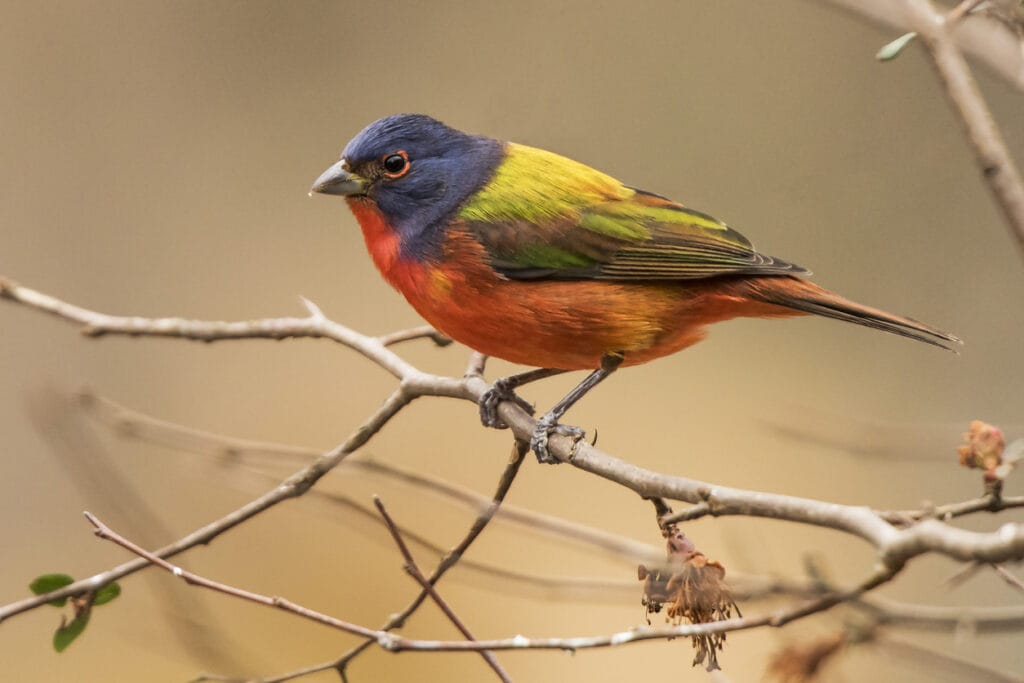
Often described as the "Easter egg of the bird world," the Painted Bunting is arguably the most colorful songbird found in Texas. With a breathtaking mosaic of red, blue, yellow, and green in their plumage, these birds are a true spectacle. The French aptly named them Nonpareils, meaning "without equal," a fitting tribute to their unparalleled vibrancy.
Painted Buntings are summer residents in Texas, typically found in overgrown grassy fields, abandoned farmsteads, and brushy roadside edges. Due to their dazzling colors, they often seek refuge in dense thickets to avoid predators. While they tend to be reclusive, they may visit backyard feeders, particularly in mid to late summer. To increase your chances of spotting these avian jewels, offer seeds like white millet and nyjer thistle. Their presence is a testament to the wild beauty that Texas harbors.
6. Carolina Wren (Thryothorus ludovicianus)
The Carolina Wren is a ubiquitous and spirited resident across Texas and much of the eastern United States. These small, robust birds, characterized by their rusty brown underparts and warm brown upperparts, are known for their surprisingly powerful and almost comically loud vocalizations. Their round bodies and short necks give them a distinctive appearance.
Carolina Wrens are commonly found in brushy suburban yards and shrubby thickets, making them frequent visitors to many backyards. Their diet primarily consists of insects. To attract them to your feeder, offer mealworms and suet, which they readily consume. Their energetic presence and constant singing add a lively soundtrack to any garden.
7. Carolina Chickadee (Poecile carolinensis)
Carolina Chickadees are common and charming backyard birds throughout Texas. Easily recognizable by their distinctive black cap, white cheeks, and gray and buff plumage, they bear a strong resemblance to their northern counterparts, the Black-capped Chickadees. The key differentiator is their slightly smaller size.
While they may not be frequent visitors to traditional seed feeders, Carolina Chickadees can be enticed with sunflower seeds. They are also known to visit nectar feeders. A fascinating feeding behavior of Carolina Chickadees involves their inability to chew their food. Instead, they will often carry a single sunflower seed to a nearby branch and pound it open, a remarkable adaptation that showcases their resourcefulness.
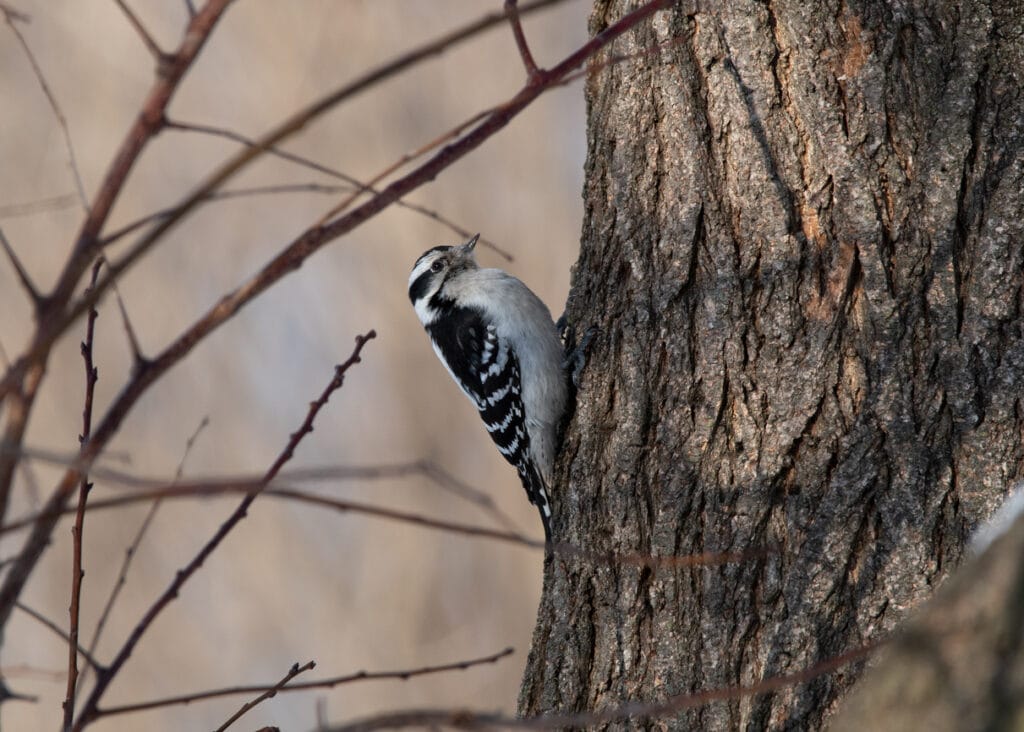
8. Downy Woodpecker (Dryobates pubescens)
The Downy Woodpecker holds the distinction of being the smallest woodpecker species in both Texas and North America. These diminutive birds are often mistaken for their larger cousins, the Hairy Woodpecker, but possess a more delicate build. During the spring and summer months, their presence is often announced by a near-constant drumming on trees, accompanied by shrill, whine-like calls that can carry considerable distances.

Downy Woodpeckers are a familiar sight in backyards, exhibiting a diverse diet that includes insects, fruits, and seeds. They show a particular fondness for suet and black oil sunflower seeds. Occasionally, they have been observed drinking from hummingbird feeders, demonstrating their adaptable feeding habits.
9. American Goldfinch (Spinus tristis)
The American Goldfinch, with its brilliant yellow plumage, is a cheerful and easily identifiable bird found throughout much of Texas, especially in areas rich with thistle and milkweed plants. Unlike many other bird species, American Goldfinches are strictly vegetarian, with any insect consumption being purely incidental.
Their diet consists mainly of seeds, maple sap, and buds. When other food sources are scarce, they may even consume the bark of young twigs. To attract these vibrant birds to your yard, fill your feeders with the seeds of sunflowers, dandelions, thistles, goldenrods, asters, and burdocks. Seeds from alder, elm, and conifer trees are also appealing.

10. Blue Mockingbird (Melanotis caerulescens)
The Blue Mockingbird is a secretive species, making a sighting at a bird feeder a particularly special event. While widespread in Central and South America, they are regular residents in southern Texas, with a notable presence around Rio Grande City. Their preferred habitats include forests, dense scrubby woodlands, and riparian thickets.
During the winter months, when food sources become scarcer, Blue Mockingbirds are more likely to visit backyard feeders. They are attracted to insects, fruits, and berries. Offering mealworms, sunflower seeds, peanut hearts, apple peels, and suet can significantly increase your chances of observing these elusive birds.
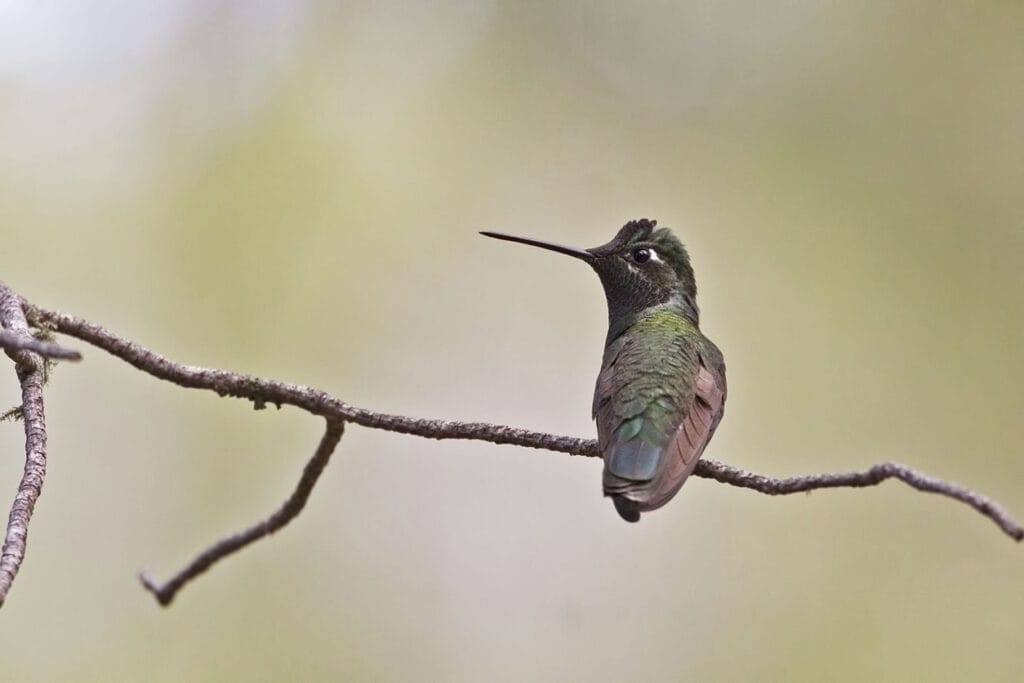
11. Rivoli’s Hummingbird (Eugenes fulgens)
Formerly known as the Magnificent Hummingbird, the Rivoli’s Hummingbird is the second-largest hummingbird species found in Texas, surpassed only by the Blue-throated Mountain-gem. These striking birds inhabit the shady canyons and pine-oak forests of the state, areas where nectar-rich flowers are abundant.
Despite their size, Rivoli’s Hummingbirds are notably docile. Unlike some other hummingbird species that can be territorial, they tend to wait patiently for other birds to finish feeding or seek out alternative locations. Their diet, like most hummingbirds, consists of nectar and insects. Providing multiple nectar feeders throughout your yard is the most effective way to attract and sustain these dazzling aerialists.
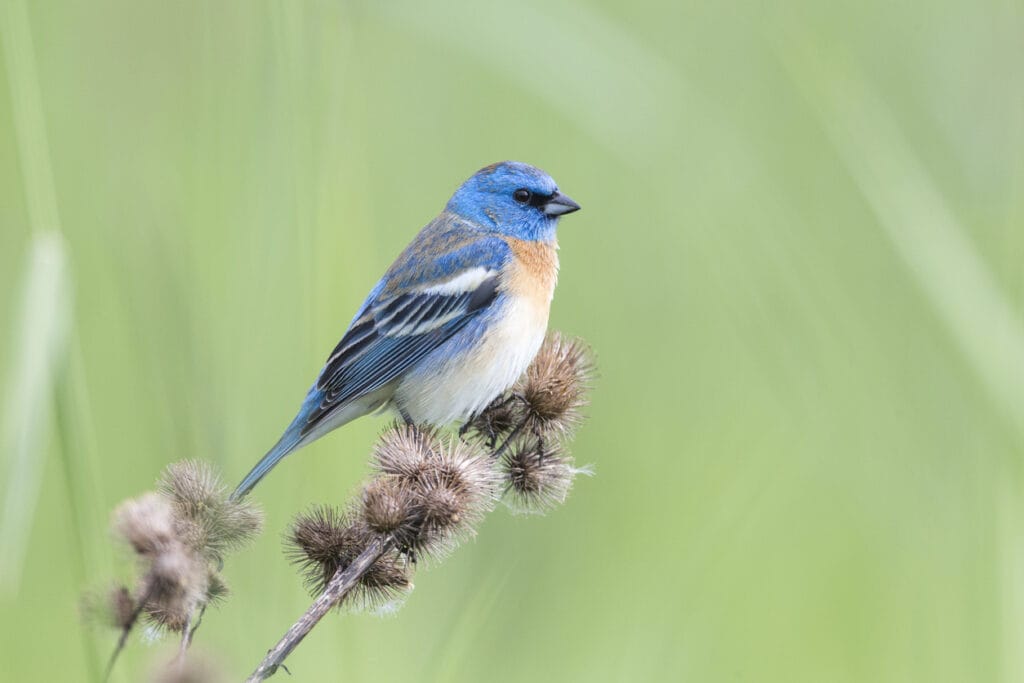
12. Lazuli Bunting (Passerina amoena)
Named after the gemstone lapis lazuli, the Lazuli Bunting is a year-round resident across northern, western, and central Texas. While not as intensely colorful as the Painted Bunting, they are still a stunning sight with their brilliant blue heads, white bellies, and warm, rust-colored breasts.
Lazuli Buntings are generally secretive but will frequent backyard feeders that offer their preferred grains, seeds, and berries. They show a particular liking for sunflower seeds, chickweed, serviceberries, and chokecherries, making these excellent choices for attracting them to your garden.

13. American Robin (Turdus migratorius)
American Robins in Texas are broadly categorized into two groups: Eastern American Robins, which are winter migrants, and Southern American Robins, present throughout most of the year. These highly social birds are naturally drawn to areas with a high density of human activity, including towns, cities, farmlands, and well-maintained lawns.
American Robins exhibit a remarkably broad diet, consuming insects, fruits, berries, and seeds. This makes them highly adaptable to backyard offerings, readily accepting a wide variety of food provided by homeowners. Their presence is often an indicator of a healthy local ecosystem, and their cheerful demeanor is a familiar sight across the state.
14. Bullock’s Oriole (Icterus bullockii)
Bullock’s Orioles are common breeding birds in southern and western Texas, easily identifiable by their striking orange, white, and black plumage. They are often observed hanging upside down in forested stream areas, irrigated farms, orchards, and suburban neighborhoods.
While they rarely feed from traditional seed feeders, Bullock’s Orioles are attracted to suet and sunflower seeds. They also have a penchant for sugary foods and fruits, particularly during their spring migration. To entice them, consider offering a mixture of jelly and water, or a plate of fruits and berries. Their vibrant colors and unique feeding behaviors make them a captivating addition to any backyard.
15. Pine Grosbeak (Pinicola enucleator)
Pine Grosbeaks are remarkable for their unusual tameness, often remaining motionless as birdwatchers approach. This placid nature can lead to them being overlooked, despite being among the largest finches found in Texas. These birds inhabit open forests of spruce, pine, and fir, and during winter, they venture closer to areas with ash and maple trees.
Primarily vegetarians, Pine Grosbeaks subsist mainly on seeds, fruits, and buds from birch, juniper, pine, and ragweed. As they often forage on the ground, scattering seeds on your lawn can increase the likelihood of attracting these large, gentle finches.
Creating a Bird-Friendly Backyard in Texas
Attracting a diverse array of birds to your backyard in Texas involves more than just setting out a feeder. A holistic approach that considers food, water, and shelter is essential for creating a welcoming habitat.
Food Sources: The variety of foods offered should cater to the specific diets of the birds you wish to attract. Sunflower seeds, especially black oil varieties, are a universal favorite for many seed-eating birds. Suet is an excellent source of fat and protein, particularly attractive to woodpeckers and wrens. For fruit-loving species like tanagers and orioles, offering fresh or dried fruits such as grapes, berries, and apple slices can be highly effective. Nectar feeders are essential for hummingbirds, and a good quality nectar mix (four parts water to one part sugar, boiled and cooled) will keep them returning.
Water Availability: A reliable source of fresh water is as crucial as food. Birdbaths are indispensable for providing drinking water and opportunities for bathing, which is vital for maintaining plumage health and cooling. Ensure the birdbath is kept clean and filled regularly.
Shelter and Nesting Sites: Providing dense shrubs, trees, and native plants offers essential cover from predators and harsh weather, as well as safe nesting sites. Native plants are particularly beneficial as they support a wider range of insects, a crucial food source for many bird species, especially during the breeding season.
Conclusion
Texas’s reputation as a land of cowboys and barbecue only scratches the surface of its ecological richness. The state’s diverse geography and strategic location along major migratory flyways create a haven for an astonishing number of bird species. From the vibrant flash of a Northern Cardinal to the intricate aerial maneuvers of a hummingbird, the avian life of Texas offers endless opportunities for discovery and appreciation. By implementing thoughtful landscaping, providing appropriate food and water sources, and offering essential shelter, Texans can transform their backyards into thriving avian sanctuaries, contributing to the conservation of these magnificent creatures and enriching their own connection with the natural world. The pursuit of birdwatching in the Lone Star State promises a rewarding journey through a vibrant and dynamic feathered ecosystem.
Frequently Asked Questions
What is the most common bird in Texas?
While the provided text suggests the American Robin is the most common, bird population data can fluctuate and vary by region. However, the American Robin is indeed a very widespread and frequently observed species across Texas, particularly in urban and suburban environments. Other highly common birds include the Northern Cardinal and the Mourned Dove.

What is the rarest bird in Texas?
The Attwater’s Prairie Chicken is indeed one of the rarest and most critically endangered birds in Texas. Its population has been severely impacted by habitat loss, and conservation efforts are ongoing to protect its dwindling numbers. Other rare birds might include specific vagrant species that occasionally appear outside their normal range.
What kind of birds do they have in Texas?
Texas hosts an incredible diversity of birds, encompassing nearly every major avian group. This includes numerous species of waterfowl, shorebirds, wading birds, raptors (hawks, eagles, owls), game birds, woodpeckers, flycatchers, corvids (jays, crows), songbirds (finches, sparrows, warblers, tanagers, orioles), and many more. The state’s varied habitats support a rich mix of resident and migratory species.
What is the official bird of Texas?
The official state bird of Texas is the Northern Mockingbird, designated in 1927, recognizing its widespread presence, its beautiful song, and its spirited nature.

