


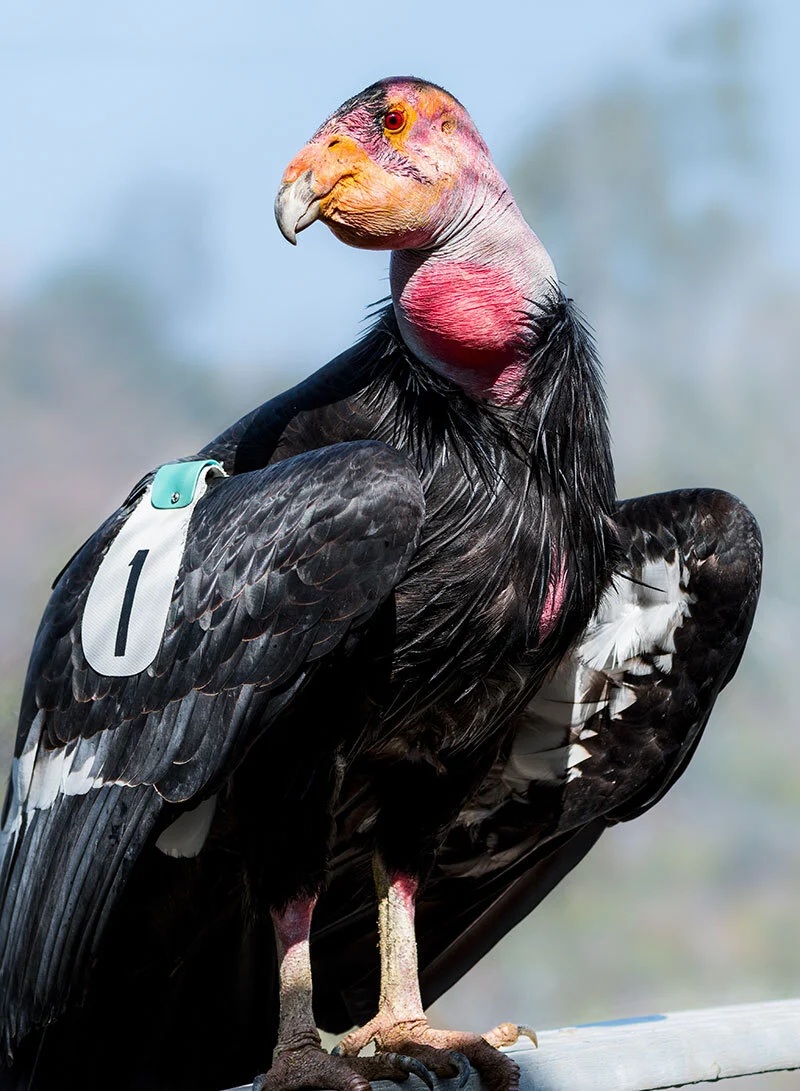
The Los Angeles Zoo is commemorating a monumental milestone: the 60th anniversary of Topa Topa, a California condor whose remarkable life has profoundly shaped the trajectory of his critically endangered species. Rescued as a vulnerable fledgling in 1964, Topa Topa transitioned from a struggling wild bird to a pioneering resident of the L.A. Zoo, becoming an indispensable pillar of the California Condor Recovery Program and a living testament to the power of sustained conservation efforts. His journey, from a frail 17-pound chick to a venerable patriarch, encapsulates a six-decade-long struggle to pull one of North America’s most iconic birds back from the precipice of extinction, contributing to a population rebound from a perilous low of just 27 individuals to over 600 today.
A Vulnerable Beginning: Topa Topa’s Formative Years and Rescue
Topa Topa’s story began in 1964, a period when the fate of the California condor (Gymnogyps californianus) was already hanging precariously in the balance. As a one-year-old fledgling, he was discovered in a severely weakened and malnourished state, weighing a mere 17 pounds – a stark indicator of the struggles faced by the species in the wild. This discovery prompted an urgent intervention by wildlife officials, leading to his rescue and placement into a rehabilitation program. For ten critical days, experts worked diligently to restore his health, nurturing him back from the brink of collapse with the hope of returning him to his natural habitat.
Following his rehabilitation, Topa Topa was released back into the wild. However, continuous monitoring revealed a distressing reality: the young condor struggled profoundly. He exhibited weak foraging skills, a critical trait typically imparted by adult condors to their offspring. Without the guidance of experienced adults, who were already dwindling in number, Topa Topa’s prospects for survival were deemed minimal. Faced with this grim assessment, wildlife authorities made the difficult but ultimately prescient decision to recover him from the wild. This marked a historic moment: Topa Topa became the first California condor ever to reside under human care within a zoological institution anywhere in the world, taking up permanent residence at the Los Angeles Zoo. This initial, seemingly desperate measure would inadvertently lay the groundwork for one of the most ambitious and successful species recovery programs in history.
On the Brink of Oblivion: The California Condor’s Historical Decline
To truly appreciate Topa Topa’s significance, one must understand the dire ecological backdrop against which his life unfolded. The California condor, with its impressive wingspan of up to 10 feet and a lifespan that can exceed 60 years, is the largest terrestrial bird in North America. Historically, these magnificent scavengers played a vital ecological role, cleaning landscapes by consuming carrion across vast territories from British Columbia to Baja California. However, by the mid-20th century, their populations had suffered a catastrophic decline, primarily due to a confluence of human-induced factors.
Key among these threats was widespread lead poisoning. Condors, as obligate scavengers, frequently consume carrion left behind by hunters, ingesting lead bullet fragments in the process. This lead accumulates in their systems, leading to debilitating illness, neurological damage, and often, death. Other significant factors contributing to their precipitous fall included habitat loss and degradation due to agricultural expansion and urbanization, direct shooting (often mistaken for pests), and the widespread use of pesticides like DDT, which thinned eggshells and hampered reproductive success. The species also faced challenges from microtrash ingestion, where condors would feed small, indigestible plastic or glass fragments to their chicks, leading to fatal impactions.
By 1982, the situation was alarmingly critical. The California condor was officially listed as critically endangered by the IUCN, and the wild population had dwindled to a terrifyingly small number. The species was teetering on the very edge of extinction, with fewer than two dozen individuals remaining in the wild. The scientific community and conservation organizations recognized that without drastic intervention, the California condor would vanish forever, taking with it a piece of North America’s natural heritage. This stark reality led to the controversial but ultimately necessary decision in 1987 to capture all remaining wild condors and bring them into a controlled environment for an intensive captive breeding program.
Forging a Blueprint for Survival: The California Condor Recovery Program
The "all-capture" strategy initiated in 1987 was a desperate last resort, born out of the recognition that the species could not survive without direct human intervention. With only 27 birds left in the world, the goal was audacious: to breed them in captivity and eventually reintroduce their offspring back into the wild. This unprecedented effort required immense collaboration and dedication from numerous agencies and institutions, including the U.S. Fish and Wildlife Service (USFWS), the California Department of Fish and Wildlife (CDFW), the National Park Service, and, crucially, zoological partners like the Los Angeles Zoo and the San Diego Zoo Safari Park.
These two zoos became the primary hubs for the captive breeding program. The task was fraught with challenges. Condors are slow to reproduce, typically laying only one egg every one to two years. Furthermore, understanding their specific breeding requirements, dietary needs, and social behaviors in captivity was an evolving science. The program focused on pioneering techniques, including "double-clutching," where the first egg laid by a pair would be removed for artificial incubation, prompting the female to lay a second egg, effectively doubling reproductive output. Artificial incubation and puppet-rearing, where handlers used condor puppets to feed chicks, were also employed to minimize human imprinting and ensure the young birds developed natural condor behaviors essential for eventual release.
The overarching aim was not merely to increase numbers but to foster a genetically diverse and behaviorally competent population capable of thriving once reintroduced to designated wild habitats. This required meticulous genetic management, careful pairing of individuals to avoid inbreeding, and a deep understanding of condor biology, often gleaned from the very few birds like Topa Topa who had spent significant time under human observation.
Topa Topa’s Enduring Legacy: From Ambassador to Progenitor
From his unique position as the first California condor to reside in a zoo, Topa Topa quickly transcended his role as a mere captive specimen. He became an invaluable educational ambassador for his species, providing the public with a tangible face for the condor’s plight and its majestic beauty. For decades, he served as a living symbol of the recovery effort, inspiring countless visitors to the L.A. Zoo and fostering a deeper appreciation for conservation. His presence helped to demystify a species that was once a remote and elusive symbol of the wild, making its struggle relatable and urgent.
Beyond his ambassadorial duties, Topa Topa’s most profound contribution was to the breeding program itself. Despite his initial struggles in the wild and his early human contact, zoo staff worked diligently to prepare him for breeding, recognizing the critical importance of his unique genetics to the small founding population. In 1993, a significant breakthrough occurred when Topa Topa successfully helped raise his first two chicks. This achievement marked a turning point, demonstrating his viability as a breeding male and adding crucial genetic diversity to the program.
His success was not an isolated event. Over the subsequent decades, Topa Topa became a cornerstone of the breeding efforts, directly contributing to the birth of numerous offspring. The program’s strategy, which included careful rearing techniques designed to maintain the chicks’ wild instincts, was meticulously applied to his progeny. This ensured that while born in captivity, his descendants were equipped with the behavioral repertoire necessary for survival in the wild. Remarkably, Topa Topa is now associated with the addition of more than 300 birds to the recovery program. His genetic legacy is particularly strong, with 100 of his direct descendants currently part of the ongoing captive breeding and rehabilitation efforts, and an impressive 94 of his offspring now soaring freely in the wild across designated release sites in California, Arizona, and Baja California. His longevity and reproductive success have been instrumental in diversifying the gene pool, mitigating the risks associated with a small founder population, and accelerating the rate of population growth.
A Resurgent Population, Persistent Peril: The Condor’s Current Status
The California Condor Recovery Program stands as one of the most celebrated and hard-won conservation victories globally. From the harrowing low of 27 individuals in 1987, the total population has surged to over 607 birds as of late 2023. This figure includes both the free-flying wild population, which now exceeds 340 individuals distributed across several distinct release sites (Pinnacles National Park, Big Sur, and Vermilion Cliffs in Arizona, and Baja California), and a robust captive breeding population that continues to supply new birds for release. This extraordinary rebound is a testament to the unwavering dedication of conservationists, scientists, and zoo staff over more than three decades.
Despite this impressive numerical recovery, the California condor’s journey is far from over. The species remains listed as Critically Endangered by the IUCN, a designation that underscores the persistent threats and vulnerabilities it faces. The primary challenge continues to be lead poisoning. Even with extensive public education campaigns promoting non-lead ammunition in condor habitats, the ingestion of lead fragments from gut piles and carcasses left by hunters remains the leading cause of mortality and illness for wild condors. Veterinary teams frequently rescue poisoned birds, administering chelation therapy to remove lead from their systems, but many do not survive, and the process is resource-intensive.
Other ongoing threats include collisions with power lines, particularly for younger, less experienced birds, and the ingestion of microtrash, which continues to pose a risk to chicks. Habitat fragmentation and the slow reproductive rate of condors also mean that the population growth, while significant, requires continuous vigilance and management. The genetic diversity, though improved by individuals like Topa Topa, still requires careful monitoring to ensure the long-term health and resilience of the species. The reintroduction sites themselves require constant management, including supplemental feeding stations and monitoring efforts to track individual birds and respond to emergencies.
Voices of Dedication: Tributes and Reflections from the Conservation Community
The celebration of Topa Topa’s 60th anniversary has elicited widespread tributes from the conservation community, underscoring his unparalleled contribution and the collective effort behind the recovery program. Dr. Beth Schaefer, Director of the Los Angeles Zoo, remarked, "Topa Topa is more than just a condor; he is a living legend and a symbol of hope. His six decades at the L.A. Zoo represent an extraordinary commitment from our staff and partners. He exemplifies what dedicated conservation can achieve, transforming a species from the brink of extinction into a burgeoning population. His genetic legacy is woven into the fabric of the wild condor population, a testament to his resilience and our collective will."
Mike Clark, a veteran condor biologist with the U.S. Fish and Wildlife Service, added, "The success of the California Condor Recovery Program is a story of scientific innovation, collaborative partnerships, and sheer human determination. Topa Topa’s role as both an ambassador and a prolific breeder cannot be overstated. He provided critical genetic diversity in the early, desperate days and continues to inspire us. His life reminds us that every individual animal can play a pivotal role in conservation, and that long-term commitment, often spanning generations of researchers and zookeepers, is essential for truly impactful results."
Conservationists from organizations like the National Audubon Society have also highlighted the broader implications of the program. "The California condor’s comeback, spearheaded by individuals like Topa Topa, showcases the incredible potential of species recovery when science, policy, and public engagement align," stated Dr. Sarah Jenkins, a spokesperson for Audubon. "However, it also serves as a poignant reminder that even with significant progress, flagship species require ongoing protection from persistent threats like lead. The work is far from over, but Topa Topa’s journey gives us immense confidence in what can be achieved." These statements collectively emphasize not only Topa Topa’s individual importance but also the collaborative, multi-generational effort that has been central to the condor’s survival.
A Beacon of Hope: Broader Implications for Global Conservation
The California Condor Recovery Program, with Topa Topa at its heart, stands as a globally recognized paradigm for endangered species management. It demonstrates that even species on the very edge of extinction can be brought back through intensive, scientifically grounded interventions, sustained funding, and strong political will. The lessons learned from the condor program—particularly in areas such as captive breeding techniques, genetic management of small populations, reintroduction protocols, and public outreach—have informed and inspired conservation efforts for countless other imperiled species worldwide.
The program highlights the critical importance of zoological institutions in conservation. Zoos provide safe havens for critically endangered animals, serve as breeding centers, and offer invaluable opportunities for research into species biology and behavior. They are also crucial educational platforms, connecting the public with wildlife and fostering a sense of stewardship. Topa Topa’s journey from a fragile fledgling to a celebrated conservation icon perfectly illustrates this multifaceted role.
Looking ahead, the future of the California condor, while significantly brighter than six decades ago, still requires diligent effort. The battle against lead poisoning remains paramount, necessitating continued advocacy for lead-free ammunition and responsible hunting practices. Ongoing habitat restoration, public education about condor safety, and continued monitoring of wild populations are essential to ensure the species’ long-term viability. The condor’s story is a powerful narrative of resilience and recovery, a testament to the enduring spirit of nature and the profound impact of human dedication. Topa Topa, in his 60th year, embodies this hope, proving that even a single, vulnerable life can become a powerful force, helping to steer an entire species away from the precipice and towards a future of soaring freedom. His legacy is not just one of survival, but of a renewed promise for biodiversity and the relentless pursuit of a kinder, more sustainable future for all living creatures.

