


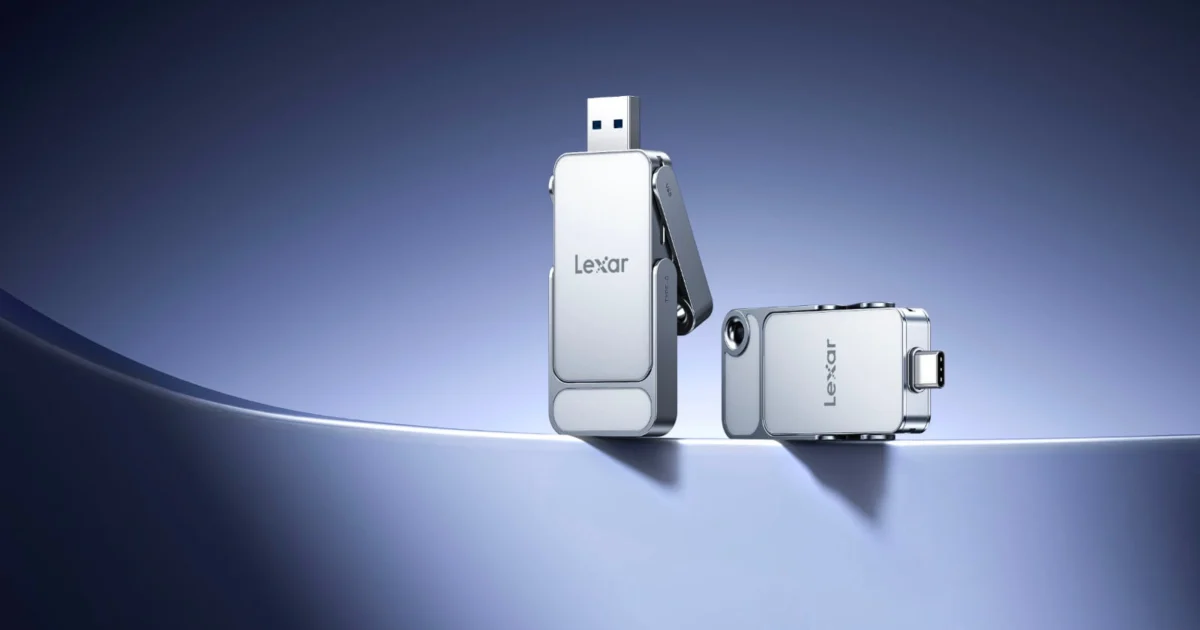
Lexar has officially unveiled the D70E, a high-performance external storage solution that challenges the traditional boundaries between portable Solid State Drives (SSDs) and standard USB flash drives. While the device maintains the ultra-compact form factor commonly associated with "thumb drives" or "jump drives," its internal architecture and performance metrics align it more closely with modern external SSD technology. The D70E features a dual-connector design, incorporating both USB Type-C and USB Type-A interfaces, and offers storage capacities reaching up to 2TB. This release marks a significant step in Lexar’s strategy to provide high-capacity, high-speed storage for a mobile-first generation of content creators, photographers, and professionals who require rapid data transfers without the bulk of traditional cables and enclosures.
A New Benchmark for Ultra-Portable Storage Design
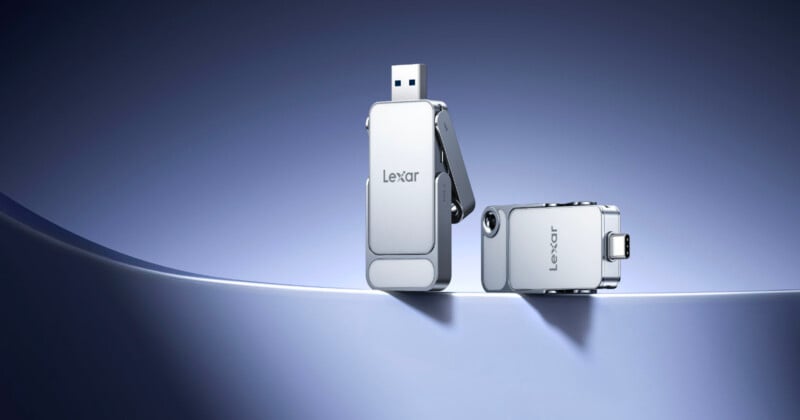
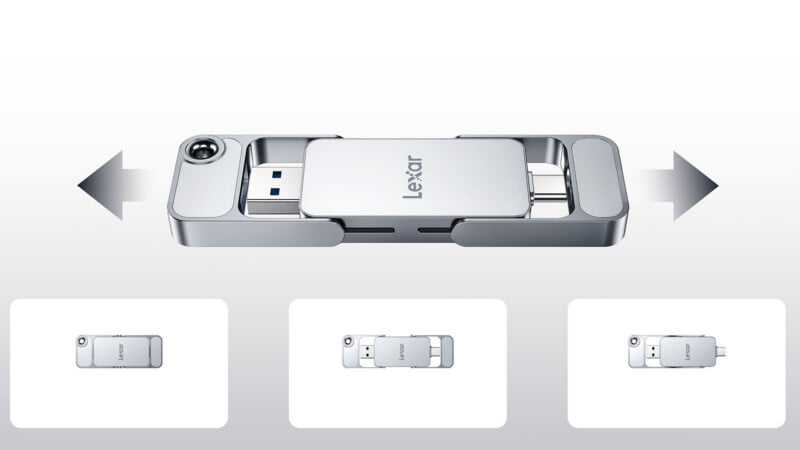
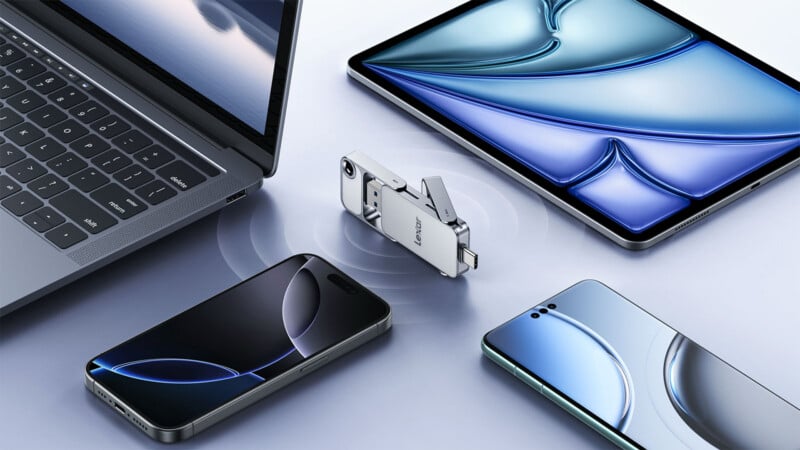
The primary design philosophy behind the Lexar D70E is the elimination of the "cable clutter" that typically accompanies external SSDs. Most high-speed portable drives require a dedicated USB-C or USB-A cable, which can be easily lost or damaged, rendering the drive useless in the field. By integrating the connectors directly into the chassis, Lexar has created a "plug-and-play" device that interfaces directly with laptops, tablets, smartphones, and gaming consoles.
The D70E is housed in a sleek, durable metal casing designed to withstand the rigors of everyday carry. The metallic exterior serves a dual purpose: providing physical protection for the internal components and acting as a passive heat sink to manage the thermal output generated during high-speed data transfers. The drive also features protective port covers to shield the connectors from dust and debris, alongside a built-in lanyard loop for secure attachment to keychains or equipment bags.
Technical Specifications and Performance Metrics
The Lexar D70E distinguishes itself through its impressive read and write speeds, which far exceed those of standard USB 3.0 flash drives. The performance varies depending on the interface used, reflecting the inherent bandwidth differences between USB-C and USB-A standards.
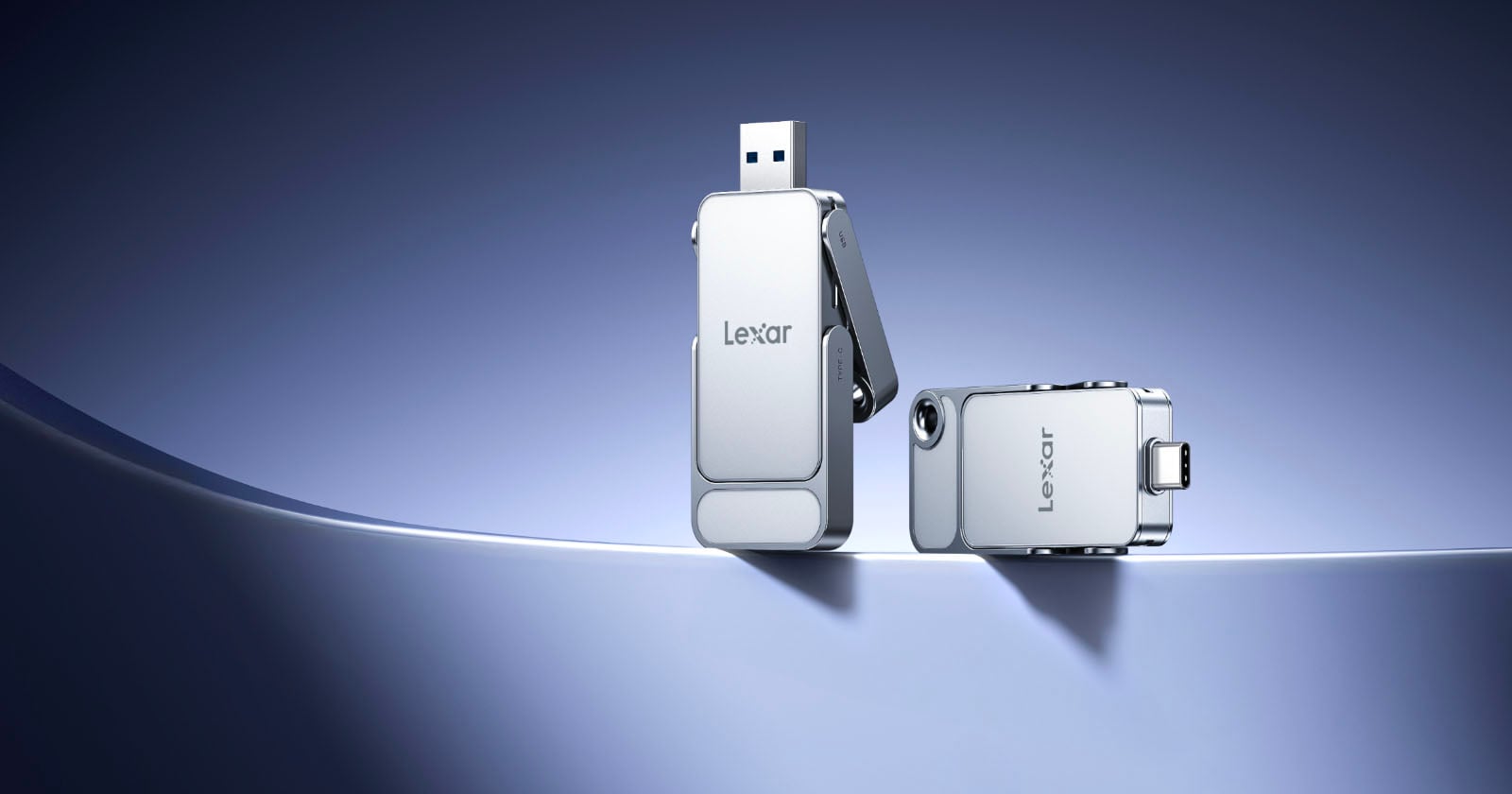
When utilizing the USB-C connector—optimized for modern devices like the iPhone 15 and 16 series, iPad Pro, and the latest MacBook models—the D70E delivers sequential read speeds of up to 2,000 MB/s and sequential write speeds of up to 1,800 MB/s. These figures suggest the use of USB 3.2 Gen 2×2 technology, allowing for the rapid transfer of large 4K or 8K video files in seconds rather than minutes.
Conversely, the USB-A side is designed for legacy compatibility with older PC hardware, car audio systems, and office equipment. On this interface, the drive offers read speeds of up to 1,000 MB/s and write speeds of up to 900 MB/s. This dual-speed profile ensures that while the drive is backwards compatible, it does not sacrifice the performance potential of modern hardware.
The device is confirmed to be compatible with a broad range of operating systems, including Windows, macOS, iOS, and Android. This cross-platform utility is particularly relevant for "social-first" creators who may film content on a smartphone and need to move it quickly to a desktop environment for advanced editing.
Chronology of Lexar’s Innovation in Portable Storage
The launch of the D70E represents the latest chapter in Lexar’s long history of memory manufacturing. Over the past decade, the company has pivoted from being primarily a producer of SD and CompactFlash cards to a leader in the SSD market.
- The Early 2010s: Lexar focused on high-speed professional memory cards, establishing a reputation among DSLR and mirrorless camera users.
- The Rise of Portable SSDs: As file sizes grew due to 4K video, Lexar introduced the SL-series of portable SSDs. These were traditional "brick" style drives that offered speeds of 500 MB/s to 1,000 MB/s.
- The Miniaturization Phase: Recognizing a gap in the market for "prosumer" thumb drives, Lexar began experimenting with high-capacity flash drives that mimicked SSD controllers.
- 2024 and Beyond: The D70E is the culmination of this miniaturization, successfully fitting a 2TB SSD-grade controller and NAND flash into a chassis no larger than a standard car key.
This timeline illustrates a clear industry trend: the merging of form factors. As NAND flash becomes denser and controllers become more efficient, the physical distinction between a "flash drive" and an "SSD" is increasingly determined by the internal controller’s ability to handle sustained workloads rather than the physical size of the device.
Market Analysis: The Economics of High-Capacity Flash
One of the most discussed aspects of the Lexar D70E is its aggressive pricing structure. At a time when global flash memory prices have seen volatility due to manufacturing shifts and supply chain constraints, Lexar has positioned the D70E as a highly affordable alternative to traditional external SSDs.
The suggested retail prices are as follows:
- 512GB: $120
- 1TB: $200
- 2TB: $300
When compared to professional-grade rugged SSDs from competitors, which can often exceed $400 or $500 for 2TB capacities, the D70E appears to be a bargain. However, industry analysts point out that this lower price point often reflects the use of different types of NAND flash. While high-end working drives typically use TLC (Triple-Level Cell) flash for better endurance, ultra-compact drives may utilize QLC (Quad-Level Cell) flash or more consumer-oriented controllers to achieve these price-to-capacity ratios.
Critical Considerations: Reliability and Professional Use Cases
Despite its "SSD" branding, the D70E carries the inherent limitations of the thumb drive form factor. Professional tech reviewers and long-time photographers have raised a cautionary note regarding the intended use of such devices.
Traditional external SSDs are built with larger circuit boards that allow for better heat dissipation and more robust power management. In contrast, thumb drives—even those with SSD speeds—concentrate a significant amount of heat in a very small area. When subjected to "working drive" conditions, such as editing 4K video directly off the drive for hours at a time, these devices can experience thermal throttling or, in extreme cases, premature hardware failure.
The D70E is best utilized as a "delivery" or "transit" drive. In the professional photography and videography industry, there is a recurring need to physically hand off large amounts of data to clients. While cloud storage is an option, transferring 2TB of raw footage via the internet is often bottlenecked by upload speeds and bandwidth caps. Mailing a $300 2TB D70E is often more cost-effective and time-efficient than managing massive cloud transfers. It serves as a high-speed "digital envelope" for project delivery.
Official Positioning and Inferred Industry Reaction
Lexar’s official communication emphasizes the D70E as a "convenient backup solution made for those on the move." By focusing on the "backup" and "share" aspects, the company subtly distinguishes it from their more robust "SL" series of portable SSDs, which are marketed for active editing.
"Designed with portability at its core, the Lexar Dual Drive Portable SSD D70E features an ultra-compact, cable-free design that plugs directly into devices without the need for extra accessories," Lexar stated during the announcement. "It provides a clutter-free and streamlined experience for users who want to create, store, and share content anytime, anywhere."
The reaction from the creative community has been largely positive regarding the drive’s versatility. The inclusion of both USB-C and USB-A is seen as a major win for "bridge" users who work between older studio workstations and modern mobile devices. However, there remains a consensus that for mission-critical data or long-term archival, users should continue to rely on multi-drive RAID systems or dedicated, cooled external SSDs.
Broader Impact and Future Implications
The release of the Lexar D70E signals a shift in the storage landscape. As smartphones become more capable of recording high-bitrate video—such as Apple’s ProRes—the demand for external storage that can be "worn" or "pocketed" is skyrocketing.
We are likely entering an era where the 2TB thumb drive becomes the standard for personal data transport. Furthermore, the D70E’s speeds suggest that the bottleneck is no longer the flash memory itself, but the interface. As USB4 and Thunderbolt 5 become more common, we may see even smaller devices reaching speeds of 4,000 MB/s or higher.
For now, the Lexar D70E stands as a testament to how far miniaturization has come. It offers a compelling balance of speed, capacity, and price, provided the user understands the tool’s limitations. It is not a replacement for a heavy-duty workstation drive, but as a high-speed vehicle for moving data between the field and the studio, it represents one of the most efficient solutions currently available on the market. Lexar’s move to democratize 2TB of high-speed portable storage at the $300 price point is likely to force competitors to re-evaluate their own ultra-portable offerings, ultimately benefiting the consumer through increased competition and lower prices.

