


A landmark study, spearheaded by a researcher from the University of Hawaiʻi at Mānoa, has unveiled a sobering reality for the archipelago’s critically endangered native forest birds: nearly every species possesses the capability to transmit avian malaria. This widespread transmissibility, the research indicates, is a primary driver behind the pervasive presence of the deadly disease across the islands, explaining its infiltration into nearly every habitat where its mosquito vectors thrive. The findings, published on February 10 in the esteemed scientific journal Nature Communications, paint a stark picture of the challenges facing conservationists and highlight the urgent need for intensified mosquito control measures.
Unprecedented Scope of Avian Malaria Transmission
The comprehensive investigation tested avian malaria presence at an astonishing 63 out of 64 surveyed locations statewide. These diverse sites encompassed a wide array of forest ecosystems, each characterized by unique assemblages of bird species. The disease, caused by the opportunistic parasite Plasmodium relictum, has been a devastating force, directly contributing to the precipitous declines and outright extinctions of many endemic Hawaiian honeycreepers.
Christa M. Seidl, who coordinated mosquito research and control for the Maui Forest Bird Recovery Project and conducted this pivotal research as part of her doctoral work at the University of California, Santa Cruz, emphasized the gravity of these findings. "Avian malaria has taken a devastating toll on Hawaiʻi’s native forest birds, and this study shows why the disease has been so difficult to contain," Seidl stated. "When so many bird species can quietly sustain transmission, it narrows the options for protecting native birds and makes mosquito control not just helpful, but essential." This revelation underscores a significant shift in understanding the disease’s ecological dynamics, moving beyond the assumption that only a few key species act as primary reservoirs.
The Devastating Impact on Native Hawaiian Avifauna
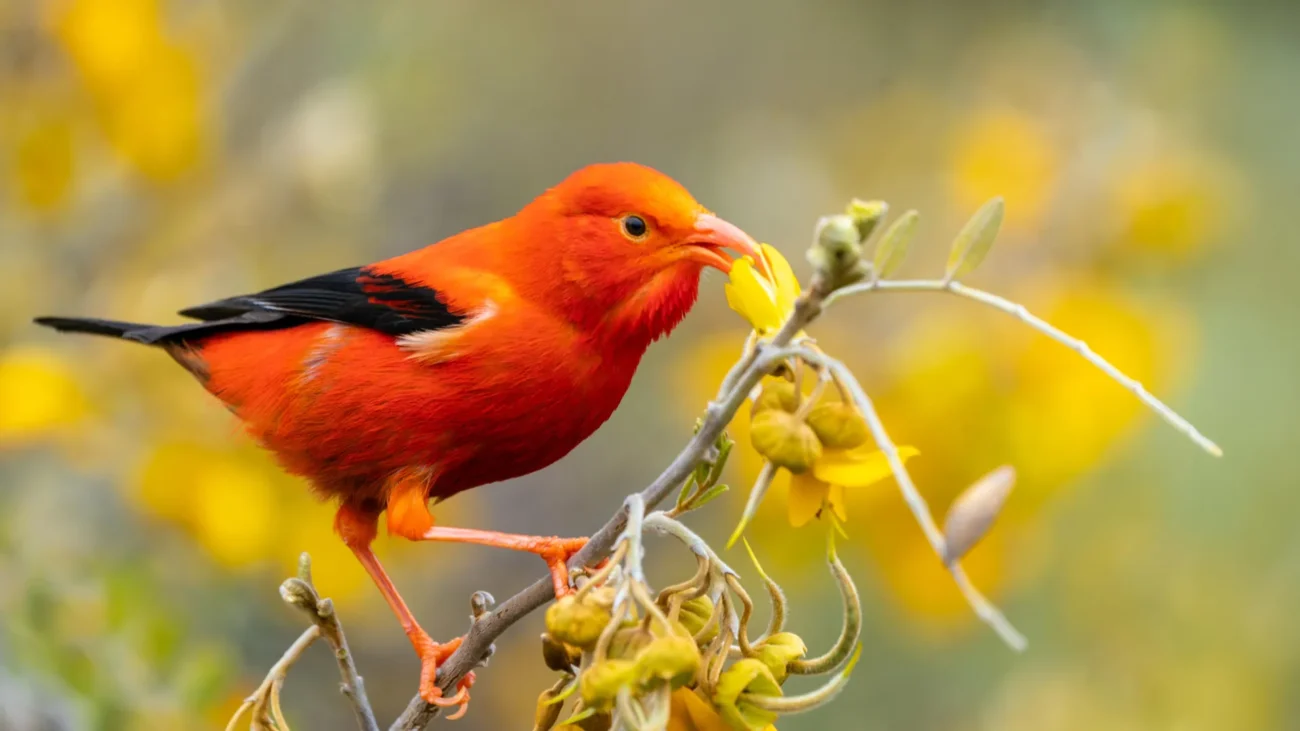
Avian malaria poses a severe threat to the health of birds by directly attacking their red blood cells. This parasitic invasion can trigger a cascade of debilitating conditions, including anemia, organ failure, and significantly reduced survival rates, often culminating in death. The consequences for Hawaiʻi’s iconic native bird populations have been catastrophic. For instance, the ʻIʻiwi, a striking scarlet honeycreeper, faces a mortality rate approaching 90 percent if infected. Even more tragically, the ʻAkikiki, a honeycreeper endemic to Kauaʻi, is now presumed extinct in the wild, with avian malaria identified as a principal factor in its demise.
Historically, many infectious diseases have relied on a limited number of host species to maintain their spread within an ecosystem. However, this groundbreaking research demonstrates that avian malaria in Hawaiʻi operates on a fundamentally different principle. The study found that a broad spectrum of forest birds, encompassing both native and introduced species, exhibit at least a moderate capacity to infect the southern house mosquito (Culex quinquefasciatus), the primary vector responsible for transmitting the parasite. Alarmingly, even birds harboring minuscule quantities of the malaria parasite were found to be capable of infecting mosquitoes. This means that a diverse range of bird communities, regardless of their native or introduced status, can collectively sustain ongoing transmission cycles of the parasite.
"We often understandably think first of the birds when we think of avian malaria, but the parasite needs mosquitoes to reproduce and our work highlights just how good it has gotten at infecting them through many different birds," Seidl elaborated, underscoring the complex interplay between avian hosts and insect vectors.
Chronic Infections: A Silent Engine of Transmission
The research team meticulously analyzed blood samples from over 4,000 birds across the islands of Kauaʻi, Oʻahu, Maui, and Hawaiʻi Island. These extensive field data were then integrated with sophisticated laboratory experiments designed to quantify the ease with which southern house mosquitoes acquired the parasite after feeding on infected birds. The results were unequivocal: both native and introduced bird species demonstrated comparable levels of infectiousness, indicating that both groups play a significant role in propagating the parasite throughout the environment.
Furthermore, the study uncovered a critical aspect of avian malaria transmission: chronic infections. Birds can harbor these infections for extended periods, often spanning months or even years. During these protracted phases, birds may exhibit only mild or subclinical symptoms, yet they remain capable of transmitting the parasite to feeding mosquitoes. The researchers estimate that this prolonged period of low to moderate infectiousness is responsible for the majority of avian malaria transmission observed statewide. This finding is particularly concerning as it implies that infected birds can act as persistent reservoirs of the disease, contributing to its persistent presence even when acute outbreaks are not apparent.
Climate Change: Shrinking Sanctuaries and Expanding Threats
The pervasive ability of Plasmodium relictum to infect a wide array of avian hosts is a key factor explaining its widespread distribution across Hawaiʻi’s diverse landscapes. The study’s implications are stark: few mosquito-infested habitats now remain entirely free from the risk of avian malaria transmission. The situation is further exacerbated by the relentless march of climate change. As global temperatures continue to rise, mosquitoes and avian malaria are expanding their range into higher elevation areas. These higher altitudes have historically served as vital refuges for vulnerable native bird species, offering them a degree of protection from both the disease and its vectors. However, these once-safe havens are increasingly becoming accessible to the threat, shrinking the available safe zones for Hawaiʻi’s most imperiled avifauna.
The implications of this research extend far beyond academic understanding. It provides critical data for conservation strategies, reinforcing the absolute necessity of aggressive and innovative mosquito control programs. Seidl and the Maui Forest Bird Recovery Project are actively involved with Birds, Not Mosquitoes, a vital collaborative initiative that unites academic institutions, state and federal agencies, non-profit organizations, and industry partners. This coalition is dedicated to advancing mosquito control methodologies in direct support of Hawaiian bird conservation efforts.
A Legacy of Loss and the Urgency for Action
The story of Hawaiian forest birds is one of profound loss, intricately linked to the introduction of non-native species and diseases. For centuries, Hawaiʻi’s unique avifauna evolved in isolation, largely free from the parasites and predators that plague continental bird populations. The arrival of Europeans and subsequent human settlement brought with them a host of new challenges, including the introduction of invasive species. Among the most detrimental were mosquitoes, which arrived in the islands in the late 19th century, carrying with them avian malaria.
The timeline of devastation is stark. By the early 20th century, avian malaria was already causing significant mortality among native birds. The construction of reservoirs and irrigation systems for agriculture, particularly in the early to mid-20th century, inadvertently created more breeding grounds for mosquitoes, expanding their range and intensifying the transmission of the parasite. Efforts to combat the disease have historically focused on protecting high-elevation forests, where mosquitoes were less prevalent due to cooler temperatures. However, the current study highlights the limitations of this strategy as climate change erodes these natural barriers.
Supporting Data and Scientific Rigor
The scale of the study—involving over 4,000 birds and 64 distinct locations—provides a robust statistical foundation for its conclusions. The combination of field sampling and controlled laboratory experiments allows for a comprehensive understanding of the transmission dynamics. The detection of Plasmodium relictum at such a high proportion of sites (98.4%) is particularly striking, underscoring the pervasive nature of the parasite.
The study’s methodology adhered to the highest scientific standards. All birds were captured and handled by experienced ornithologists under strict state and federal permits, ensuring the welfare of the animals and the integrity of the data. The Maui Forest Bird Recovery Project operates under the umbrella of the Pacific Cooperative Studies Unit within the College of Natural Sciences, underscoring its institutional support and commitment to rigorous scientific inquiry.
Broader Implications and Future Directions
The findings of this study have significant implications for conservation policy and resource allocation. They necessitate a re-evaluation of current strategies and underscore the critical importance of sustained funding for mosquito control research and implementation. The expansion of mosquito populations into higher elevations due to climate change requires proactive measures to protect these newly vulnerable areas.
Future research may focus on developing more targeted and effective mosquito control methods, such as gene drive technologies or novel insecticides, that minimize collateral damage to native ecosystems. Additionally, understanding the genetic resistance of certain native bird populations to avian malaria could offer avenues for assisted evolution or captive breeding programs.
The ongoing collaboration through Birds, Not Mosquitoes is a testament to the understanding that addressing this complex ecological crisis requires a united front. The scientific community, government agencies, and conservation organizations must work in concert to implement innovative solutions and protect Hawaiʻi’s irreplaceable natural heritage. The fate of many of Hawaiʻi’s most beloved and iconic bird species hangs in the balance, and this latest research serves as a critical alarm bell, urging immediate and decisive action. The widespread ability of nearly every forest bird species to transmit avian malaria presents an unprecedented challenge, demanding a comprehensive and unwavering commitment to conservation.

