


The Albanian coast in spring transforms into a vibrant spectacle, a crucial staging ground for millions of migratory birds. Flamingos elegantly wade through brackish lagoons, Dalmatian Pelicans, the largest of the pelican species, glide majestically overhead, and countless other avian travelers find refuge in the shelter of ancient pine forests before continuing their arduous journeys between Europe and Africa. This remarkable natural sanctuary, known as Pishë-Poro-Narta, is recognized as one of the finest remaining wild coastlines in the Mediterranean and a site of immense global ecological importance. However, this irreplaceable natural heritage is currently facing an unprecedented assault, with bulldozers tearing through its delicate landscapes.
Unprecedented Destruction in a Protected Zone
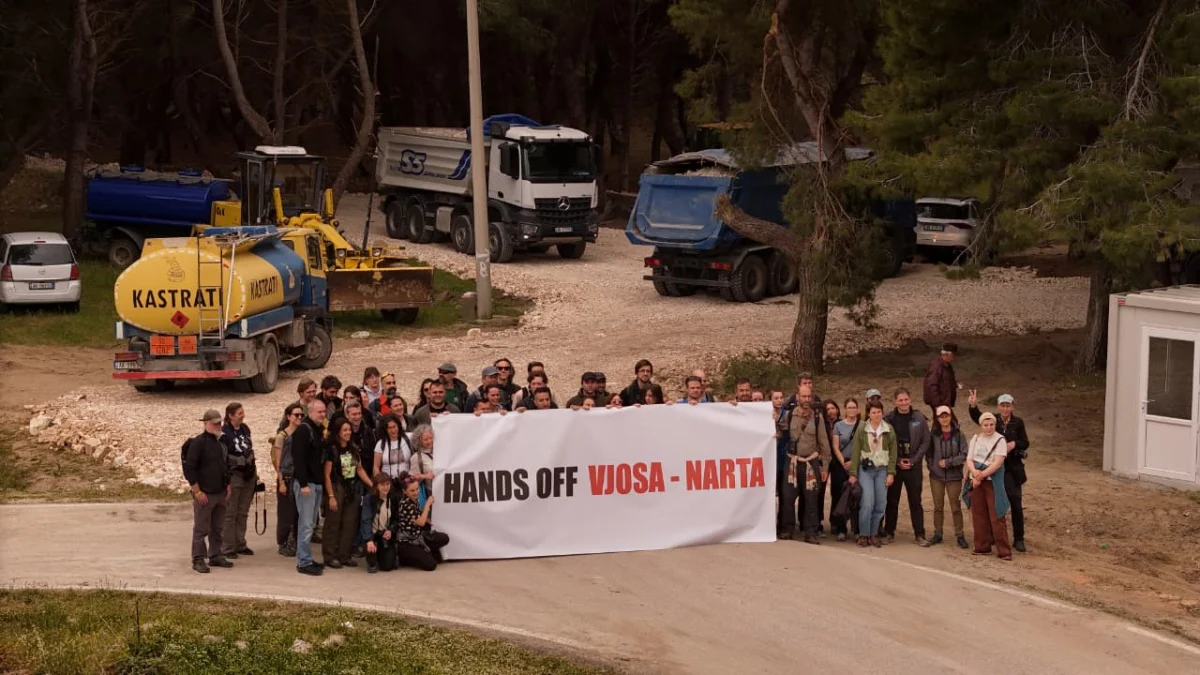
Reports have emerged detailing the commencement of heavy machinery operations within the protected Pishë-Poro-Narta area at the end of April. Disturbingly, these incursions appear to have occurred without the necessary prerequisites: no approved project proposal, no public consultation, no comprehensive environmental impact assessment, and no visible sign of a construction permit. The scale of the destruction is alarming, with ancient trees being felled and sand dunes, sculpted over millennia by natural forces, being systematically leveled. The most egregious aspect of this unfolding situation is the apparent lack of transparency and accountability, as no official authority has stepped forward to claim responsibility or explain the authorization of these destructive activities. This opacity, in itself, points to a significant governance failure and a potential scandal.
A Globally Significant Ecological Haven Under Siege
Pishë-Poro-Narta is an integral part of the Vjosë-Narta Protected Landscape, a vast area encompassing the delta of the Vjosë River, one of Europe’s last truly wild and untamed rivers. This broader protected zone is a biodiversity hotspot, providing a critical habitat for over 70 endangered species and supporting more than 200 distinct bird species. The ancient pine forest, a unique and irreplaceable ecosystem, stands on one of Europe’s most vital bird migration corridors – the Adriatic Flyway. The degradation or destruction of this area would have far-reaching consequences, impacting bird populations and ecological balance extending well beyond Albania’s national borders.
Exploiting a Legislative Window of Opportunity
This alarming development unfolds against a backdrop of legislative maneuvering. The Albanian government had previously amended its Law on Protected Areas, a move that controversially permits luxury resort construction within designated protected zones. This amendment directly contravenes established EU nature protection standards, a point of contention given Albania’s ongoing EU accession negotiations. The European Commission has unequivocally stated that this law must be revised, and the Albanian government has reportedly provided assurances that such reforms are forthcoming.
However, while legal reforms are being debated and deliberated on paper, the physical destruction of the protected area is proceeding at an accelerated pace on the ground. Aleksandër Trajçe, Director of the Albanian partner organization PPNEA (Protection and Preservation of the Natural Environment in Albania), has articulated the apparent strategy: to expedite construction before a stricter legal framework can be implemented, thereby rendering such projects impossible. This tactic, if indeed intentional, represents a deliberate exploitation of a legislative gray area.
Questions of Legality and Transparency
What intensifies the shock and concern surrounding these events is that the ongoing works appear to be illegal even under the current, already contentious legislation. The absence of environmental assessments, public consultations, and a transparent permitting process raises serious questions about the legality of the operations. Furthermore, there has been no official explanation from any government authority regarding the nature of the construction, its purpose, or the identity of the entities undertaking the work. Adding another layer of complexity, a major development project reportedly linked to Jared Kushner has been planned for this region. While it remains unclear whether the current unauthorized works are directly connected to this specific project, the timing and location raise further concerns about potential undisclosed interests and motivations.
International and Local Advocacy for Immediate Intervention
In response to this critical situation, BirdLife Europe’s Regional Director, Ariel Brunner, and Head of Policy, Anouk Puymartin, recently traveled to Tirana to engage with Albanian authorities. While conversations with officials were described as constructive, and assurances were received regarding legislative updates expected within the current year, the urgency of the on-the-ground destruction cannot be overstated.
During a press conference held in Tirana, Ariel Brunner underscored the immediate threat, stating, "Bulldozers are operating in a completely illegal way, based on unclear decisions and a total lack of transparency – and this needs to stop." The sentiment is clear: any positive legislative changes planned for the future will be rendered moot if the natural heritage they are intended to protect is irrevocably damaged in the interim.
A Call for Accountability and Immediate Action
BirdLife Europe and its partner organizations are issuing an urgent appeal to Albanian institutions. They are calling for an immediate cessation of all ongoing works within the Pishë-Poro-Narta protected area. Furthermore, they demand the full transparency of all permits and project-related documents pertaining to the site, along with the launch of a comprehensive legal investigation into the activities that have already transpired.
Albania’s wild coastline is not merely a scenic backdrop; it is one of the nation’s most valuable natural assets, contributing significantly to its ecological integrity, biodiversity, and potential for sustainable tourism. The clandestine destruction of this vital ecosystem, occurring without authorization within a protected zone, represents a profound betrayal of the Albanian people’s right to a healthy environment, a disregard for European commitments to conservation, and a severe threat to the millions of migratory birds that rely on this critical habitat annually. The international community and conservation advocates are closely watching, hoping for swift and decisive action to preserve this irreplaceable natural treasure.

