



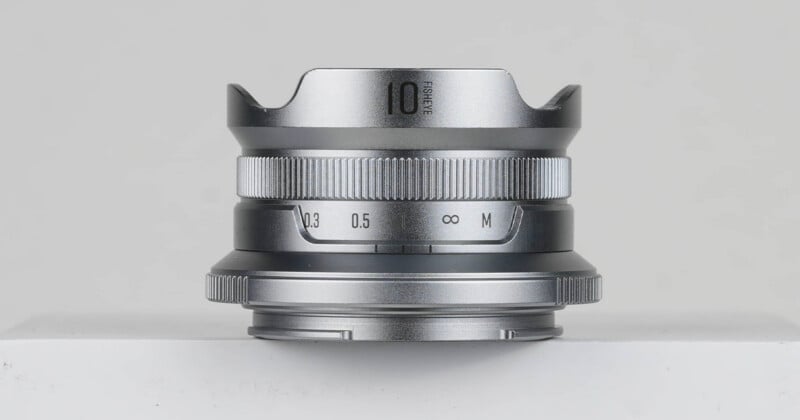
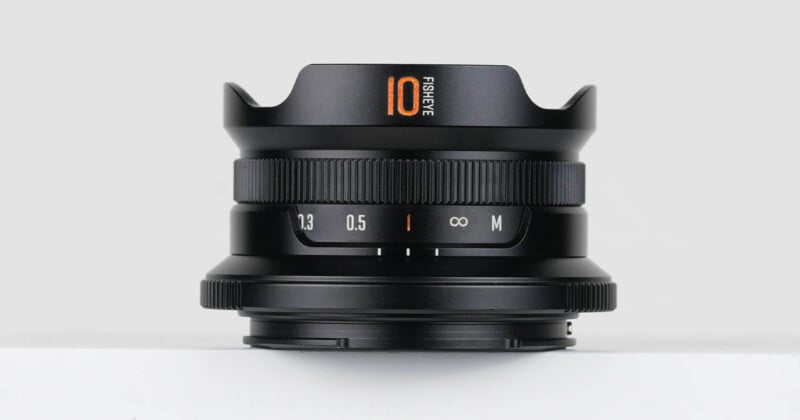
Brightin Star has officially announced the release of the MF 10mm f/5.6 II, a second-generation ultra-wide manual-focus lens specifically engineered for APS-C format mirrorless cameras. This updated optic represents a significant evolution over its predecessor, offering a wider field of view, a drastically reduced minimum focusing distance, and a physical redesign aimed at improving the tactile experience for manual-focus enthusiasts. Positioned as an accessible yet high-performance tool for creative photography, the lens enters a competitive market of compact primes, targeting users who prioritize portability and dramatic perspective in their daily photographic pursuits. By focusing on mechanical refinements and optical coating improvements, Brightin Star aims to provide a more robust solution for landscape, street, and architectural photographers who require an expansive frame without the bulk of traditional wide-angle zooms.
A New Benchmark for Ultra-Wide Accessibility
The launch of the MF 10mm f/5.6 II signals Brightin Star’s continued commitment to the "budget-friendly but high-utility" segment of the lens market. In an era where flagship lenses often reach prices exceeding several thousand dollars, the introduction of a specialized ultra-wide optic at a double-digit price point is a notable event for the photography community. The lens is designed to serve as a "playful" alternative to standard kit lenses, allowing photographers to explore the exaggerated distortions and immersive depth characteristic of fisheye-adjacent focal lengths.
While the original 10mm f/5.6 was praised for its compact "pancake" style and metal construction, the Mark II version addresses several user-driven critiques. The most prominent change is the expansion of the field of view to 173 degrees. While a single degree of difference—increasing from the original 172 degrees—may seem negligible in technical specifications, in the realm of ultra-wide optics, every increment of coverage at the periphery adds to the sense of immersion and the ability to capture vast environments in a single frame. This makes the lens particularly useful for interior real estate photography in tight spaces, or for capturing the sweeping scale of urban architecture.

Chronology of Development and Mechanical Refinements
The development of the MF 10mm f/5.6 II follows a timeline of iterative improvement within the Brightin Star lineup. The company has spent the last several years carving out a niche in the manual-focus market, competing alongside brands such as 7Artisans and TTArtisan. The transition from the Mark I to the Mark II version was prompted by a desire to modernize the lens’s ergonomics to better suit the high-resolution sensors found in modern APS-C cameras like the Fujifilm X-T5 or the Sony A6000 series.
The physical design of the Mark II features a redesigned aperture ring and more legible hyperfocal distance markings. For manual focus users, these markings are not merely aesthetic; they are essential tools for "zone focusing." By setting the lens to a specific aperture and aligning the focus distance, photographers can ensure that everything from a certain distance to infinity remains in acceptable focus. This technique is a staple of street photography, allowing the user to capture fleeting moments without the delay of an autofocus system. The refined tactile feedback of the new rings suggests a move toward a more professional build quality, despite the lens’s entry-level pricing.
Enhanced Optical Engineering and Closer Focusing Capabilities
One of the most technically significant upgrades in the MF 10mm f/5.6 II is the reduction of the minimum focusing distance. The original model required a distance of 7.9 inches (20 centimeters) to achieve focus. The Mark II slashes this requirement to just 4.7 inches (12 centimeters). This change fundamentally alters how the lens can be used creatively. By allowing the photographer to get closer to a foreground subject, the lens can create a more pronounced sense of three-dimensionality. In ultra-wide photography, the "near-far" composition is a classic technique where a close-up object is used to lead the eye into a vast background. The 12cm minimum focus capability empowers users to exaggerate this relationship to a much greater degree than was possible with the previous version.
Furthermore, Brightin Star has integrated its updated Integrated Multi-Coating (IMC) technology into the Mark II’s glass elements. Ultra-wide lenses are notoriously susceptible to lens flare and ghosting because their expansive front elements often pick up stray light from angles that would be shielded in narrower lenses. The IMC coating is specifically designed to suppress these internal reflections, preserving contrast and color saturation even when shooting in backlit conditions or under harsh artificial lighting. This is a critical update for landscape photographers who often work during "golden hour" when the sun is low on the horizon and prone to causing veiling flare.

Supporting Data and Technical Specifications
The MF 10mm f/5.6 II is built around a fixed aperture of f/5.6. While some may view a fixed aperture as a limitation, it allows the lens to remain incredibly thin and lightweight, maintaining a "pancake" profile that does not unbalance small mirrorless camera bodies. At a focal length of 10mm on an APS-C sensor, the depth of field is naturally very deep, meaning that even at f/5.6, achieving a sharp image from the foreground to the horizon is relatively simple.
Key Technical Specifications:
- Focal Length: 10mm (approximately 15mm full-frame equivalent)
- Aperture: Fixed f/5.6
- Format: APS-C
- Field of View: 173 Degrees
- Lens Construction: Optimized for compact mirrorless mounts
- Minimum Focus Distance: 12cm (4.7 inches)
- Focus Type: Manual Focus
- Coating: Upgraded IMC (Integrated Multi-Coating)
- Weight/Size: Ultra-compact pancake design
The lens is expected to be available in multiple mounts, including Sony E, Fujifilm X, Nikon Z, Canon EF-M, and Micro Four Thirds (MFT). On MFT systems, the 2x crop factor results in a 20mm equivalent field of view, which remains a very capable wide-angle option for users of Olympus and Panasonic cameras.
Market Positioning and Official Response
Brightin Star has positioned this lens as a "playful" tool, a descriptor that reflects a growing trend in the industry where photographers seek "character" lenses over clinically perfect, expensive autofocus primes. In promotional statements, the company emphasizes that the lens is meant to "push your perspective further than before," encouraging an experimental approach to framing.
Industry analysts suggest that the release of the Mark II is a strategic move to capture the "EDC" (Everyday Carry) photography market. As more hobbyists transition toward smaller camera setups for travel and vlogging, there is a heightened demand for lenses that can fit into a jacket pocket. Early reactions from the photography community have been largely positive, specifically regarding the price-to-performance ratio. At an introductory price of $66, the lens is being viewed as a "no-brainer" addition to a camera bag, offering a specialized look that standard zooms cannot replicate at that price point.
Broader Impact and Industry Implications
The arrival of the Brightin Star 10mm f/5.6 II highlights a broader shift in the photographic equipment landscape: the democratization of specialized optics. A decade ago, a 10mm ultra-wide lens was a niche, expensive piece of glass reserved for professionals. Today, through the manufacturing efficiencies of third-party Chinese optical firms, these perspectives are available to students, hobbyists, and casual travelers.
This trend toward manual, affordable primes also serves as a pedagogical tool. By stripping away autofocus and electronic aperture control, lenses like the MF 10mm f/5.6 II force photographers to engage more deeply with the fundamentals of their craft—understanding distance, light, and the physical properties of optics. Furthermore, the success of such lenses challenges major camera manufacturers to reconsider their own APS-C lens roadmaps, which have often been criticized for being sparse compared to full-frame offerings.
The environmental impact of these small, metal-and-glass lenses is also worth noting. Unlike plastic-heavy kit lenses that are often discarded, the robust manual construction of the Brightin Star series suggests a longer lifespan, fitting into a "vintage" ethos where mechanical tools are valued for their longevity and tactile simplicity.
Pricing and Availability Schedule
Brightin Star has implemented an aggressive pricing strategy for the launch of the MF 10mm f/5.6 II. The lens is currently available at an introductory promotional price of $66, a figure that significantly undercuts most competitors in the ultra-wide category. This promotional period is scheduled to run through May 25, after which the price will adjust to a standard retail MSRP of $75.
This pricing structure is clearly intended to generate immediate momentum and establish the Mark II as the de facto choice for budget-conscious wide-angle seekers. Given the improvements in coating, focusing distance, and ergonomics, the $75 retail price remains highly competitive, ensuring the lens will likely remain a popular recommendation in photography forums and gear guides for the remainder of the year.
As the mirrorless market continues to mature, the Brightin Star 10mm f/5.6 II stands as a testament to the fact that innovation does not always require a high price tag. By refining a proven design and focusing on the specific needs of street and landscape photographers, Brightin Star has delivered a tool that expands the creative horizons of the APS-C community. Whether used for dramatic architectural shots, immersive travel vlogs, or experimental street portraits, this lens offers a unique perspective that belies its diminutive size and modest cost.

