


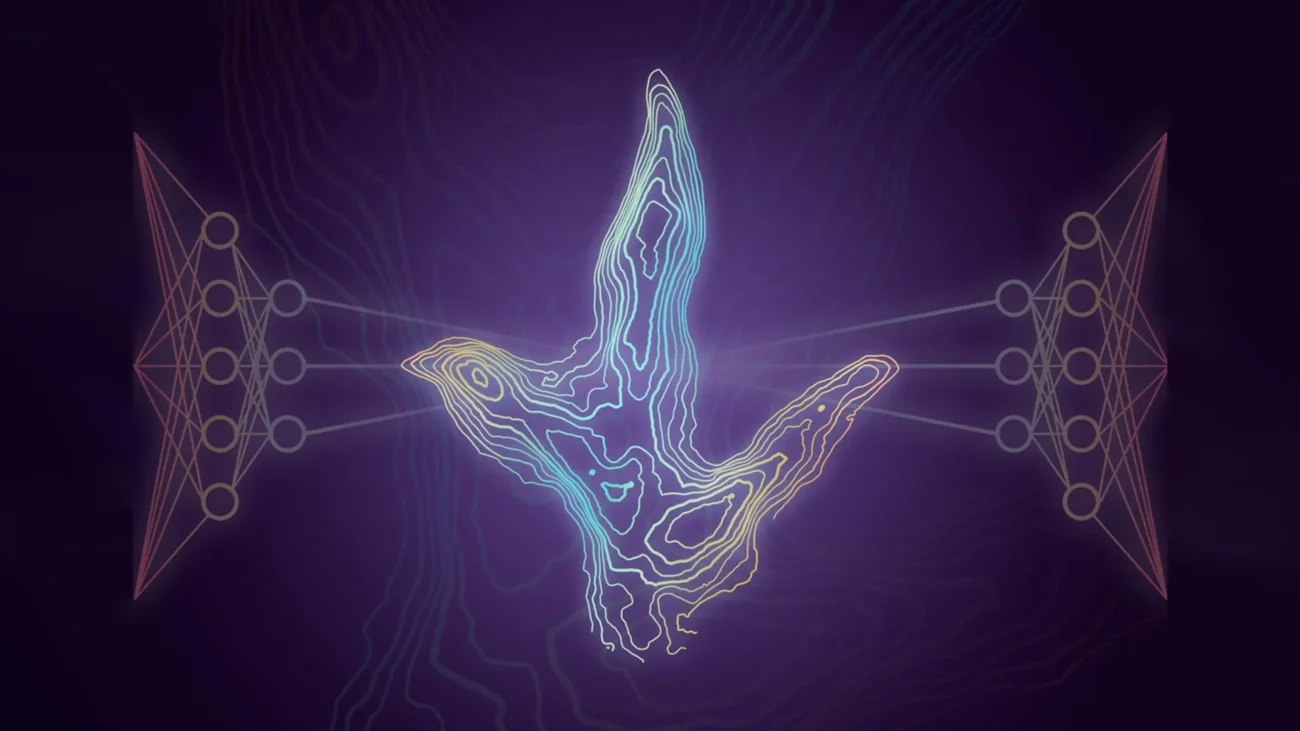
A groundbreaking application, powered by sophisticated artificial intelligence, is ushering in a new era for paleontology, enabling scientists and amateur enthusiasts alike to decipher the enigmatic story etched in dinosaur footprints millions of years old. This innovative technology promises to unravel long-standing mysteries surrounding fossilized tracks, offering unprecedented clarity and accessibility to the study of prehistoric life.
The Enduring Puzzle of Fossilized Tracks
For generations, paleontologists have grappled with the silent narratives of ancient footprints, dedicating countless hours to their meticulous study and classification. The sheer diversity and often ambiguous nature of these impressions have fueled decades of debate. Were these tracks the deliberate stride of a formidable meat-eating predator, the gentle tread of a herbivorous behemoth, or perhaps even the tentative steps of some of the earliest avian ancestors? Each fossilized print presents a unique puzzle, a fragment of a lost world that has, until now, resisted definitive interpretation.
The challenge lies not only in the inherent variability of dinosaur anatomy but also in the transformative processes that occur during fossilization. Over millennia, geological forces, erosion, and the very nature of sedimentary rock can distort, obscure, or even obliterate crucial details of a footprint. This often leads to subjective interpretations and disagreements among experts, hindering the development of a comprehensive understanding of dinosaur locomotion, behavior, and evolutionary lineage. Traditional methods, while invaluable, have often been labor-intensive and prone to human bias, particularly when dealing with incomplete or unusually preserved specimens.
DinoTracker: Transforming Photos into Instant Paleontological Analysis
At the heart of this scientific leap forward is the newly developed DinoTracker app. This intuitive platform empowers users, from seasoned researchers to curious members of the public, to transform a simple photograph or even a drawing of a fossilized footprint into an immediate, AI-driven analysis. By leveraging advanced machine learning algorithms, DinoTracker meticulously evaluates the intricate shape, structure, and dimensions of the track, providing a probable identification of the dinosaur species responsible.
Fossilized footprints are far more than mere curiosities; they are invaluable windows into the daily lives of creatures that roamed the Earth millions of years ago. They offer crucial insights into how dinosaurs moved, their gait, their speed, and even their social interactions. However, the preservation of these tracks is a capricious process. Studies have consistently highlighted how the original form of a footprint can be significantly altered by the passage of time, environmental conditions, and the type of substrate upon which it was made. This means that a print from the same dinosaur could appear dramatically different depending on where and when it was fossilized, adding layers of complexity to their interpretation.
Advancing Beyond Traditional Classification Methods
Historically, the classification of dinosaur footprints relied heavily on manually curated databases. These databases, built over years by dedicated paleontologists, linked specific track morphologies to known dinosaur genera and species. While these efforts laid the foundational understanding of ichnology (the study of fossil footprints), experts acknowledge that such methods could inadvertently introduce bias. When a footprint was particularly ambiguous or its identification was a subject of ongoing scientific dispute, the human element could inadvertently influence its classification, potentially perpetuating inaccuracies.
To overcome these limitations and introduce a more objective and data-driven approach, a collaborative research team, spearheaded by the Helmholtz-Zentrum in Berlin and involving researchers from the University of Edinburgh, developed sophisticated algorithms. These algorithms are designed to enable computers to learn independently, discerning the nuanced variations in dinosaur footprint shapes without pre-programmed assumptions.
The AI’s Learning Process: From Real to Simulated
The AI system at the core of DinoTracker underwent an extensive training regimen. This involved exposing it to a vast dataset comprising nearly 2,000 meticulously documented fossil footprints from various geological periods and locations. Crucially, this real-world data was augmented with millions of additional simulated examples. These simulated tracks were engineered to replicate the myriad of distortions and alterations that naturally occur during the fossilization process. This included incorporating realistic variations such as compression, the spreading of sediment at the edges of the print, and other post-depositional modifications. By learning from both authentic fossil evidence and carefully constructed artificial scenarios, the AI developed a robust and adaptable understanding of footprint variability.
Deconstructing the Footprint: Key Features for Identification
The AI’s analytical prowess stems from its ability to recognize and weigh eight critical features that distinguish one footprint from another. These key characteristics provide a detailed blueprint for classification:
- Digit Spread: The angular separation between individual toes.
- Heel Position: The relative placement and depth of the heel impression.
- Surface Contact Area: The total area of the footprint pressed into the substrate.
- Weight Distribution: How pressure was distributed across different sections of the foot during locomotion.
- Claw Marks: The presence, depth, and shape of any impressions left by claws.
- Stride Length and Width: The distance between successive footprints and the lateral separation of tracks from the same gait.
- Asymmetry: Deviations from a perfectly symmetrical impression, which can indicate how the dinosaur moved or landed.
- Depth and Preservation Quality: The degree to which the footprint has been preserved, influencing the clarity of other features.
Once these variations are meticulously identified and analyzed, the AI system compares the characteristics of a newly submitted footprint against its extensive library of known fossil examples. This comparison allows it to predict, with a high degree of confidence, which dinosaur species most likely created the track.
A Triumph of Accuracy: AI Outperforms Expectations
The rigorous evaluation of the DinoTracker AI has yielded remarkable results. The algorithm demonstrated an impressive ability to match the classifications made by human experts, achieving an accuracy rate of approximately 90 percent. This level of precision is particularly significant when considering that the AI was tasked with identifying species that are notoriously difficult to classify or are subject to ongoing scientific debate. The unbiased nature of the AI’s analysis provides a powerful new tool for resolving long-standing paleontological enigmas and establishing a more consistent framework for footprint identification.
Unexpected Avian Connections Emerge
One of the most profound and surprising revelations to emerge from the AI’s analysis concerns ancient footprints dating back over 200 million years. The system detected striking morphological similarities between certain dinosaur footprints and the foot structures of both extinct and modern birds. This finding has significant implications for our understanding of avian evolution.
According to the research team, these similarities could suggest that the evolutionary lineage leading to birds may have diverged much earlier than previously estimated, potentially tens of millions of years prior to the commonly accepted timeline. Alternatively, it is also plausible that some early dinosaurs independently evolved foot structures that coincidentally resembled those of birds, a testament to the convergent evolution that often occurs in nature. Regardless of the precise explanation, these findings challenge existing chronologies and open new avenues for investigating the deep roots of avian ancestry.
Unlocking Secrets of Scotland’s Mysterious Tracks
The DinoTracker AI has also shed new light on a series of enigmatic footprints discovered on the Isle of Skye in Scotland. These tracks, imprinted on the muddy margins of a lagoon approximately 170 million years ago, have perplexed scientists for decades. Their unique characteristics have defied easy categorization, leaving their creators a mystery.
The AI’s analysis indicates that these perplexing Skye footprints may have been made by some of the earliest known relatives of the iconic duck-billed dinosaurs (hadrosaurs). If confirmed, this would represent one of the oldest documented occurrences of this significant dinosaur group anywhere in the world, pushing back the known timeline for their existence and providing critical data on their early dispersal and evolution.
Democratizing Paleontology: Empowering Public Participation
Researchers emphasize that this AI-driven technology is not merely a tool for academic pursuit; it is a powerful catalyst for democratizing the field of paleontology. DinoTracker creates unprecedented opportunities for individuals to actively engage in scientific research. By enabling the public to analyze footprints themselves, the app fosters a deeper connection with the prehistoric world and inspires a new generation of citizen scientists. This widespread participation can accelerate the pace of discovery and enrich our collective understanding of dinosaur life and their ancient ecosystems.
The groundbreaking study detailing the DinoTracker app and its findings was recently published in the prestigious scientific journal Proceedings of the National Academy of Sciences (PNAS). The research was made possible through the generous support of several key organizations, including the innovations pool of the BMBF-Project: Data-X, the Helmholtz project ROCK-IT, the Helmholtz-AI project NorMImag, the National Geographic Society, and the Leverhulme Trust.
Dr. Gregor Hartmann of the Helmholtz-Zentrum research center, a lead figure in the project, articulated the significance of their work: "Our method provides an unbiased way to recognize variation in footprints and test hypotheses about their makers. It’s an excellent tool for research, education, and even fieldwork." His sentiment underscores the multifaceted utility of the technology.
Professor Steve Brusatte, Personal Chair of Palaeontology and Evolution at the School of GeoSciences, further highlighted the transformative potential: "This study is an exciting contribution for paleontology and an objective, data-driven way to classify dinosaur footprints – something that has stumped experts for over a century." He added, "It opens up exciting new possibilities for understanding how these incredible animals lived and moved, and when major groups like birds first evolved. This computer network might have identified the world’s oldest birds, which I think is a fantastic and fruitful use for AI."
The implications of DinoTracker extend far beyond mere identification. By providing an objective, data-driven method for classifying footprints, it resolves long-standing ambiguities, potentially rewriting aspects of dinosaur taxonomy and evolutionary timelines. The AI’s ability to identify subtle variations previously overlooked by human observation could lead to the discovery of new dinosaur species or subspecies. Furthermore, its application to vast, previously uncatalogued collections of fossil footprints globally could unlock a treasure trove of new information about dinosaur distribution, behavior, and the ancient environments they inhabited. The accessibility of the app also promises to foster a greater public appreciation for paleontology, turning passive observers into active participants in scientific exploration.

