


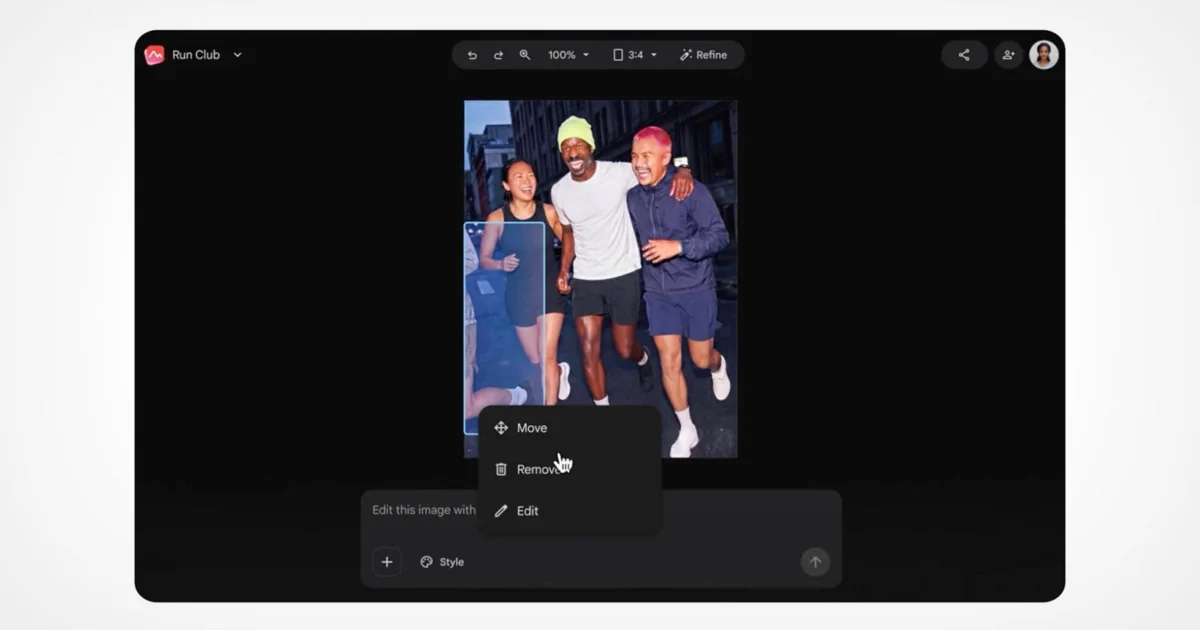
Google has officially introduced Google Pics, a sophisticated artificial intelligence image creation and editing application, during the keynote presentation at Google I/O 2026. Designed as a core addition to the Google Workspace ecosystem, Google Pics represents a strategic shift in generative AI, moving away from the unpredictability of early text-to-image models toward a more controlled, professional-grade creative environment. The announcement signals Google’s intent to bridge the gap between casual AI experimentation and the high-precision requirements of enterprise design, marketing, and collaborative communication.
According to Google’s product leadership, Google Pics was developed to solve a recurring frustration in the generative AI space: the "lottery effect" of image generation. In current workflows, users often find that while an AI model can produce a high-quality image, it rarely captures every detail correctly on the first attempt. Traditional solutions require the user to regenerate the entire image, often losing the positive aspects of the original draft. Google Pics aims to eliminate this inefficiency by introducing granular editing controls that allow for the modification of specific elements within a generated or uploaded image without altering the surrounding context.
The Evolution of Nano Banana: The Engine Behind Google Pics
At the heart of Google Pics is the latest iteration of the company’s proprietary AI model, Nano Banana 2. This model, which was initially previewed in early 2026, has been optimized for spatial awareness and object-level manipulation. Unlike standard diffusion models that treat an image as a single flattened layer of pixels, Nano Banana 2 utilizes advanced object segmentation technology to recognize and isolate individual components within a frame.
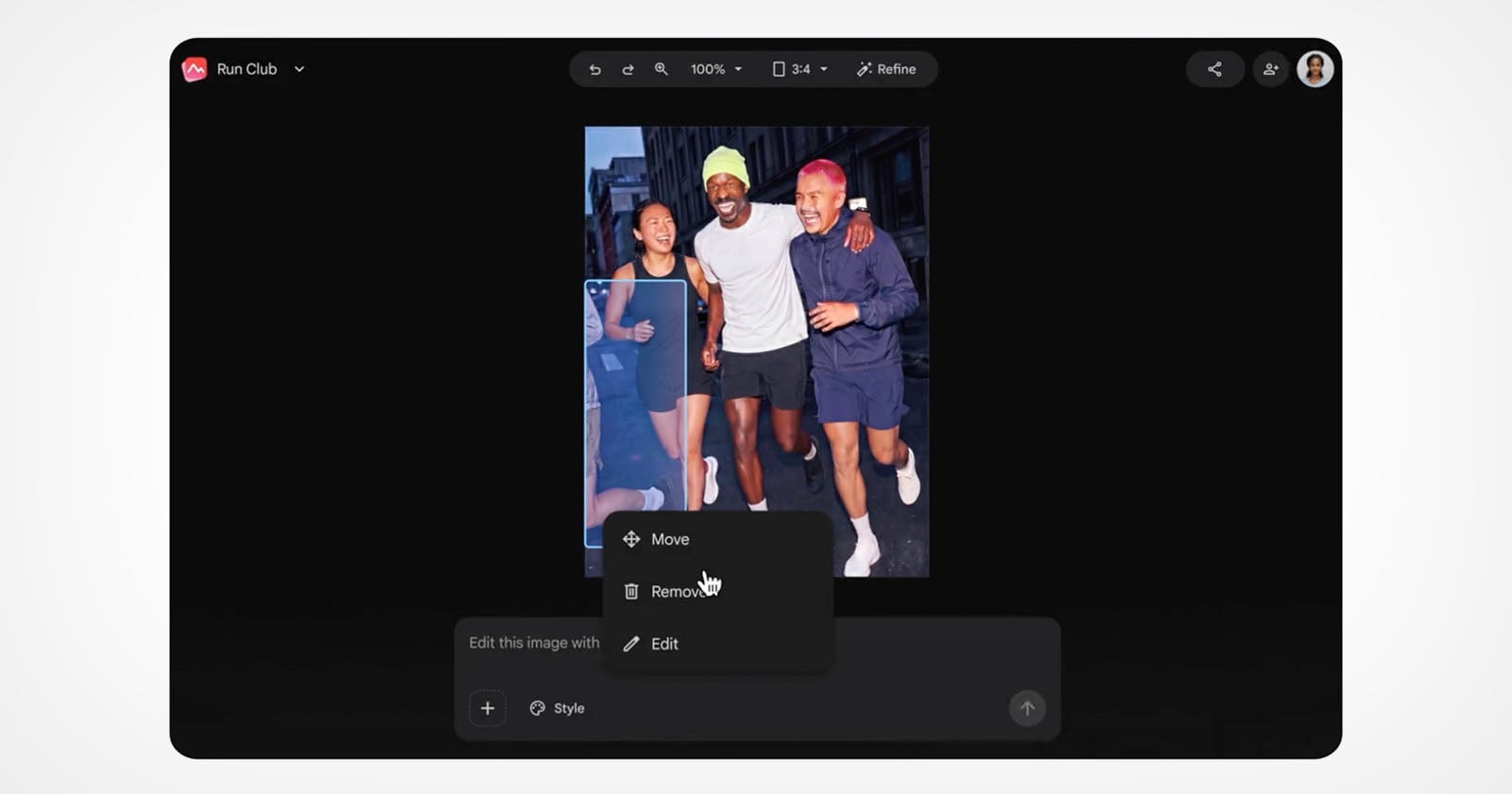
This architectural shift allows Google Pics to offer "Object-Level Transformation." During the I/O demonstration, Google showcased how a user could select a specific person in a photo of a group of joggers and move them to a different position on the path, resize them to adjust perspective, or remove them entirely. The AI then intelligently fills the background—a process known as in-painting—to ensure the final composition looks seamless and natural. The precision of Nano Banana 2 also extends to aesthetic modifications, such as changing the color or texture of clothing, or more radical "semantic swaps," such as replacing a household pet with a different species while maintaining the original animal’s pose and lighting.
Integrated Collaborative Features for the Modern Workspace
Recognizing its primary audience within the Google Workspace environment, the company has built Google Pics with a "collaboration-first" philosophy. The application introduces "Shareable Canvases," which function similarly to Google Docs or Google Slides. Multiple team members can access a single project simultaneously, viewing edits in real-time.
A standout feature of the collaborative suite is the integration of text-based editing via comments. Rather than relying solely on manual brush tools or complex sliders, users can highlight a specific area of an image and leave a text-based instruction, such as "make this car red" or "add more sunlight to this corner." The AI processes these comments as prompts for targeted local edits. Furthermore, Google Pics includes advanced text editing and translation tools within the image itself. If a graphic contains text, the tool can translate that text into dozens of languages while perfectly preserving the original font style, kerning, and aesthetic integration, making it an invaluable tool for global marketing teams.
At launch, Google Pics will feature direct "one-click" integration with Google Drive and Google Slides, allowing users to generate and refine visual assets directly within their presentation workflows. This eliminates the need for exporting and importing files between disparate software packages, streamlining the creative process for business professionals who may not have formal training in graphic design.
Chronology of Development and Availability
The development of Google Pics follows a multi-year trajectory of AI investment by Google. While 2024 and 2025 focused on the foundational capabilities of the Gemini large language models, 2026 has been defined by the application of those models to specific professional utilities.
The rollout of Google Pics is structured to ensure stability and user safety. As of the announcement at I/O 2026, the tool is available to a "Limited Group of Trusted Testers." This phase is designed to gather feedback on the interface’s usability and the model’s adherence to safety guidelines regarding synthetic media.
Following this testing phase, Google plans to release a preview version in the summer of 2026. This preview will be accessible to:
- Google AI Pro and Ultra Subscribers: Individual users who pay for Google’s premium AI tiers.
- Google Workspace Business Customers: Enterprise-level accounts that utilize the Workspace suite for organizational operations.
While Google Pics will debut as a web-based application, the company confirmed that native integration into the mobile and desktop versions of Google Workspace apps is scheduled for late 2026 and early 2027.
Broader Announcements at Google I/O 2026
Google Pics was a cornerstone of a keynote that emphasized the ubiquity of AI across the Google product line. Other significant announcements included:
- Gemini Omni: A new multimodal model capable of processing and generating text, audio, and high-fidelity video in a single unified stream, designed to power more natural human-computer interactions.
- Google Flow: A platform that allows users to build "custom creative tools" without code. By combining various Google APIs, users can create automated workflows, such as a tool that automatically generates social media banners from a product description and then optimizes them for different platforms.
- Search Generative Experience (SGE) Updates: Major enhancements to Google Search that allow the engine to act as a personal researcher, synthesizing complex data from across the web into actionable reports.
- Intelligent Eyewear Teaser: In a "one more thing" moment, Google teased a partnership for a new series of "smart" glasses arriving in the fall. These glasses are expected to feature heads-up displays powered by Gemini, offering real-time translation and visual search capabilities.
Market Context and Industry Implications
The introduction of Google Pics arrives at a time of intense competition in the creative software market. Industry analysts note that Google is positioning itself to compete directly with Adobe’s Firefly-powered Creative Cloud and Microsoft’s Designer application. By embedding high-end image manipulation directly into Workspace, Google is leveraging its massive user base—which exceeded 3 billion monthly active users in recent years—to normalize AI-driven design in the corporate world.
Data from recent market reports suggests that the demand for "generative editing" (the ability to modify existing images) is growing faster than the demand for "pure generation" (creating images from scratch). Corporate users, in particular, require the ability to maintain brand consistency and factual accuracy, tasks that are difficult with traditional AI prompts but made easier by the object-segmentation approach of Google Pics.
Furthermore, the focus on "precision" addresses a significant hurdle in AI adoption: copyright and ethical concerns. By providing tools that allow users to edit their own proprietary photography with AI, rather than relying on the model’s internal training data for every pixel, Google offers a more legally defensible path for enterprise creative work.
Expert Reactions and Future Outlook
Early reactions from the tech community have been largely positive, particularly regarding the tool’s potential to democratize high-level photo editing. Design experts suggest that the "text-in-image" translation feature alone could save multinational corporations thousands of hours in localized content creation. However, some privacy advocates have raised questions regarding the "Trusted Testers" phase, urging Google to be transparent about how user-uploaded images are used to further train the Nano Banana models.
Google has responded to these concerns by stating that Google Pics adheres to the company’s standard Workspace privacy commitments, ensuring that enterprise data is not used to train global models without explicit consent. The company also confirmed that all images modified or generated by Google Pics will include industry-standard metadata (C2PA) to identify them as AI-assisted content, aligning with global efforts to increase transparency in digital media.
As the summer rollout approaches, the industry will be watching closely to see if Google Pics can truly transform the "hassle" of complex image generation into a predictable, professional utility. If successful, Google Pics may not only change how images are edited but also redefine the very nature of visual communication within the modern office. With the integration of Nano Banana 2 and the collaborative power of Workspace, Google is betting that the future of creativity is not just artificial, but precisely controlled and inherently social.

