


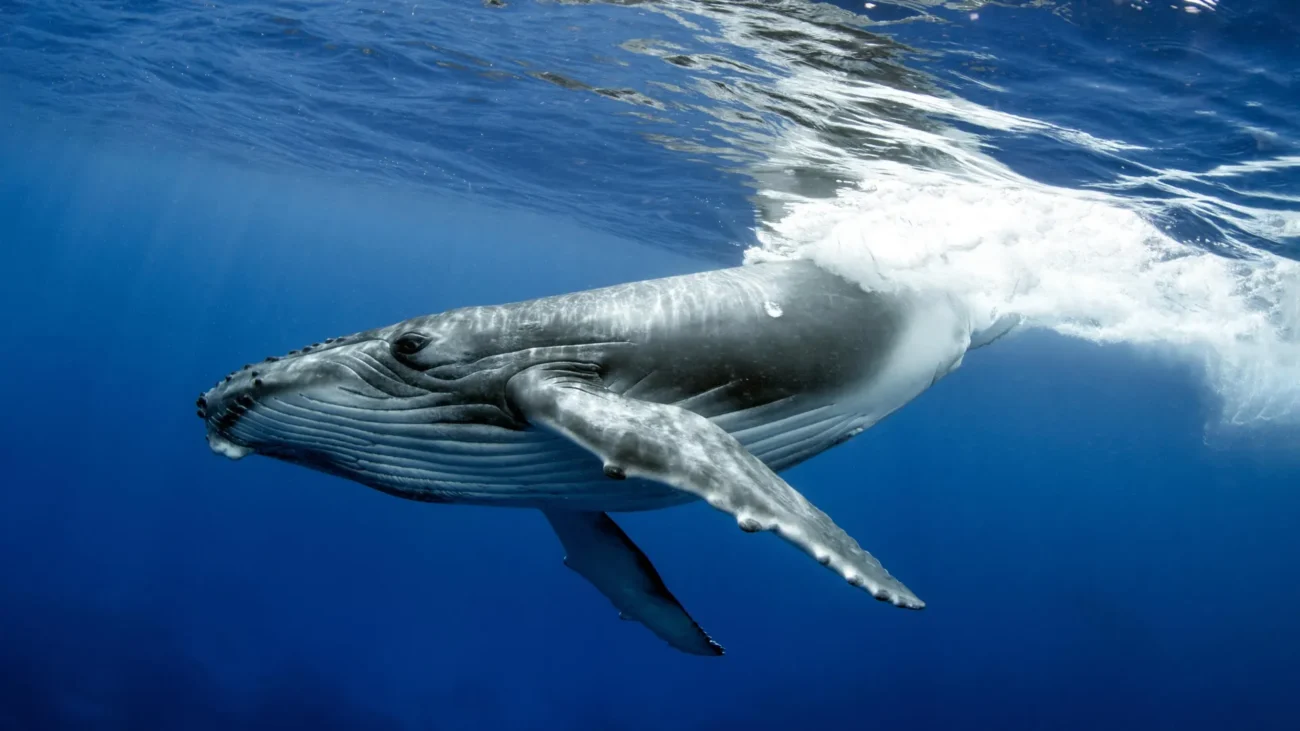
Scientists have documented an extraordinary feat of whale migration for the first time, confirming that humpback whales traveled between breeding grounds in eastern Australia and Brazil across more than 14,000 kilometers of open ocean. This discovery marks the greatest confirmed distance ever recorded between sightings of individual humpback whales anywhere in the world, pushing the boundaries of our understanding of these magnificent marine mammals’ migratory capabilities. The research, which involved meticulous analysis of photographic data spanning decades and continents, highlights the power of long-term scientific investment and the invaluable contributions of citizen scientists in unraveling the mysteries of the ocean.
The groundbreaking findings reveal two individual humpback whales undertaking migrations of unprecedented scale. One whale, first documented in Hervey Bay, Queensland, Australia, in 2007, was later observed near São Paulo, Brazil, in 2019. The minimum straight-line distance between these two locations is approximately 14,200 kilometers, a journey equivalent to traveling from Sydney to London. Scientists emphasize that this represents a minimum distance, as the whale’s precise migration route remains unknown and it likely traveled considerably farther.
Even more remarkable is the journey of a second whale. Initially photographed in 2003 off Brazil’s Abrolhos Bank, the country’s primary humpback whale nursery, this individual was sighted 22 years later, in September 2025, alone in Hervey Bay, Australia. The documented separation between these sightings was a staggering 15,100 kilometers, establishing a new world record for the longest known movement of an individual humpback whale. These incredible transoceanic voyages challenge previous assumptions about the migratory patterns and limitations of humpback whales, underscoring their remarkable resilience and navigational prowess.
The Power of the Fluke: Unlocking Migratory Secrets Through Photography
The remarkable discoveries were made possible through the meticulous comparison of tens of thousands of photographs of humpback whale tails, known as flukes. Each whale possesses unique patterns of scars, nicks, and pigmentations on its fluke, akin to a human fingerprint, allowing researchers to identify and track individuals over extended periods. This technique, a cornerstone of whale research for decades, has now yielded its most significant results to date.
Researchers utilized automated image recognition software to sift through a vast database of fluke photographs, identifying potential matches. These matches were then painstakingly verified by human experts, ensuring the accuracy of the identifications. The comprehensive dataset comprised 19,283 high-quality fluke photographs collected between 1984 and 2025. These images were gathered from a wide geographical range, encompassing eastern Australia and Latin America, and were contributed by both professional researchers and a global network of citizen scientists.
The global whale tracking platform Happywhale played a crucial role in aggregating and managing this extensive photographic archive. "Discoveries like this are only possible because of investment into long-term multi-decadal research programs and international collaboration," stated Stephanie Stack, a PhD Candidate at Griffith University and co-author of the study. "These whales were photographed decades apart, by different people, in opposite parts of the world, separated by two different oceans, and yet we can connect their journey."
A Chronology of Incredible Journeys
The documented journeys of these two record-breaking whales can be pieced together through the photographic evidence:
Whale 1:
- 2007: First photographed in Hervey Bay, Queensland, Australia.
- 2013: Resighted in Hervey Bay, Queensland, Australia.
- 2019: Sighted near São Paulo, Brazil.
- Minimum straight-line distance: Approximately 14,200 kilometers.
Whale 2:
- 2003: First photographed at Brazil’s Abrolhos Bank, off the coast of Bahia, Brazil. At this time, it was observed swimming with a group of nine adult whales.
- September 2025: Resighted alone in Hervey Bay, Australia.
- Documented distance: 15,100 kilometers.
These timelines highlight the immense periods over which these individual whales were tracked, demonstrating the dedication of researchers and citizen scientists alike. The gap of 22 years between sightings for the second whale is particularly astounding, underscoring the longevity and expansive migratory behavior of these animals.
The Unsung Heroes: Citizen Science and International Collaboration
The success of this research is a testament to the power of citizen science and international collaboration. Dr. Cristina Castro, lead researcher from the Pacific Whale Foundation, emphasized the critical role of public participation: "This kind of research highlights the value of citizen science. Every photo contributes to our understanding of whale biology and, in this case, helped uncover one of the most extreme movements ever recorded."
The involvement of individuals from diverse backgrounds, equipped with cameras and a passion for marine life, has provided an invaluable resource for scientists. These contributions, when pooled through platforms like Happywhale, create a powerful dataset that would be impossible to collect through traditional research methods alone. The global nature of the sightings, spanning Australia and Brazil, further underscores the necessity of international cooperation in understanding the migratory patterns of highly mobile species like humpback whales.
Rarity and Significance: The Implications of Extreme Migrations
Despite the extraordinary nature of these findings, researchers are quick to point out that such long-distance crossings appear to be exceptionally rare. Across more than four decades of data encompassing nearly 20,000 identified humpback whales, only these two individuals were found to have traveled between the eastern Australian and Brazilian breeding grounds. This represents a mere 0.01 percent of the whales included in the records, suggesting that these extreme migrations are not the norm but rather occasional, albeit significant, events.
However, scientists believe these rare movements play a crucial role in the long-term health and resilience of whale populations. "Despite their rarity, these exchanges matter for the long-term health of whale populations," Ms. Stack explained. "Occasional individuals moving between distant breeding grounds can help maintain genetic diversity across populations and may even carry new song styles from one region to another – humpback whale songs are known to spread culturally across ocean basins, much like music trends in human populations."
The potential for these rare exchanges to facilitate the spread of cultural elements, such as song, across vast oceanic distances is a fascinating aspect of whale behavior. This suggests a complex social network and a capacity for rapid cultural transmission within whale populations.
The "Southern Ocean Exchange" Hypothesis and Future Outlook
The findings also lend strong support to the "Southern Ocean Exchange" hypothesis. This theory posits that humpback whales from different breeding populations may converge in shared feeding grounds in the Antarctic. During their return migration, some individuals may opt for different routes, ultimately arriving at breeding regions they have not previously frequented. This could explain how populations maintain genetic connections and how novel migratory pathways might emerge.
Looking ahead, researchers believe that climate change could influence the frequency of these rare crossings. Alterations in Antarctic sea ice extent and shifts in the distribution of Antarctic krill, the whales’ primary food source, could necessitate changes in traditional migratory routes. As feeding grounds become less predictable or accessible, whales may be compelled to explore new areas or adopt different migration strategies, potentially increasing the likelihood of intercontinental exchanges.
The study, titled "First evidence of bidirectional exchange between distant humpback whale breeding populations in eastern Australia and Brazil," was published in the esteemed journal Royal Society Open Science. This research not only sets a new benchmark for documented whale movements but also opens new avenues for understanding the adaptive capacity and interconnectedness of humpback whale populations in a changing world. The dedication of scientists and citizen observers, coupled with advancements in technology, continues to shed light on the extraordinary lives of these ocean giants.

