


The People for the Ethical Treatment of Animals (PETA) has released a comprehensive report detailing what it describes as a "den of depravity" within the research laboratories of the University of Massachusetts Chan Medical School (UMass Chan). At the center of the organization’s latest investigation is Dr. Heather Gray-Edwards, an associate professor whose research involves the use of large animal models, including sheep, calves, and cats, to study rare and fatal neurodegenerative diseases. According to documents obtained by the advocacy group and recent scientific publications, these experiments involve the intentional induction of debilitating genetic conditions, invasive surgical procedures, and, in several documented cases, the withholding of analgesics to manage the resulting physical distress.
The investigation has prompted PETA to issue a formal appeal to the National Institutes of Health (NIH), urging the federal agency to rescind funding for Dr. Gray-Edwards’ projects. Since 2013, her research has reportedly been supported by more than $10 million in federal grants, with current active funding totaling nearly $3 million. The controversy highlights a growing rift between traditional animal-based medical research and the push for "human-relevant" methodologies, while also casting a spotlight on the oversight of animal welfare at major American research institutions.
Detailed Allegations Regarding Large Animal Models
The research conducted by Dr. Gray-Edwards focuses on gene therapies for lysosomal storage diseases and other neurodegenerative conditions that affect the central nervous system. To simulate these human conditions, the laboratory utilizes animals bred to express specific genetic mutations.
The Use of Calves in Maple Syrup Urine Disease Research
One of the most harrowing components of the investigation involves the breeding of calves to suffer from Maple Syrup Urine Disease (MSUD), a metabolic disorder that prevents the body from processing certain amino acids. In humans, the condition can lead to neurological damage and death if not strictly managed. In the UMass Chan laboratory, PETA alleges that calves are bred specifically to manifest the most severe symptoms of the disease.
Within the first days of their lives, these calves reportedly suffer from tremors, seizures, extreme muscle weakness, and mental confusion as toxic molecules accumulate in their brains. The experimental protocol involves frequent sedation, repeated blood draws, and invasive spinal taps. According to the investigation, a control group of calves receives no treatment for the disease. These animals often suffer brain damage so severe that they lose the ability to stand within 72 hours of birth, at which point they are euthanized. For the calves that do receive experimental treatments, the suffering is prolonged over months or years as researchers monitor the long-term progression of the disease and the efficacy of gene interventions, often while intentionally withholding pain relief to avoid interfering with experimental data.
Sheep Models and the Tay-Sachs Maze Tests
The investigation also highlights experiments involving sheep and mice bred to exhibit symptoms of Tay-Sachs disease and other motor-function disorders. These animals undergo significant physiological decline, including organ degeneration, visual impairment, and total loss of coordination.
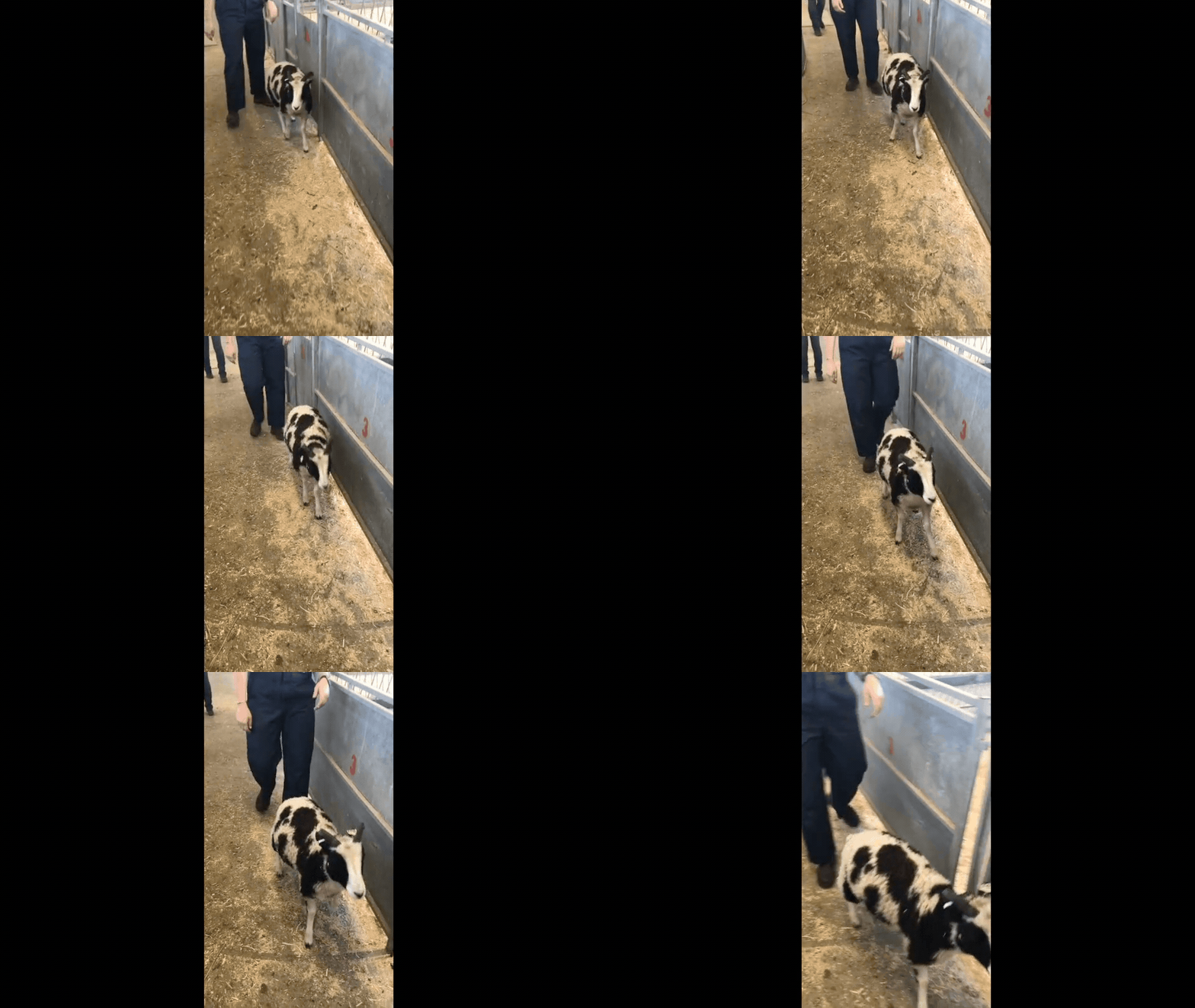
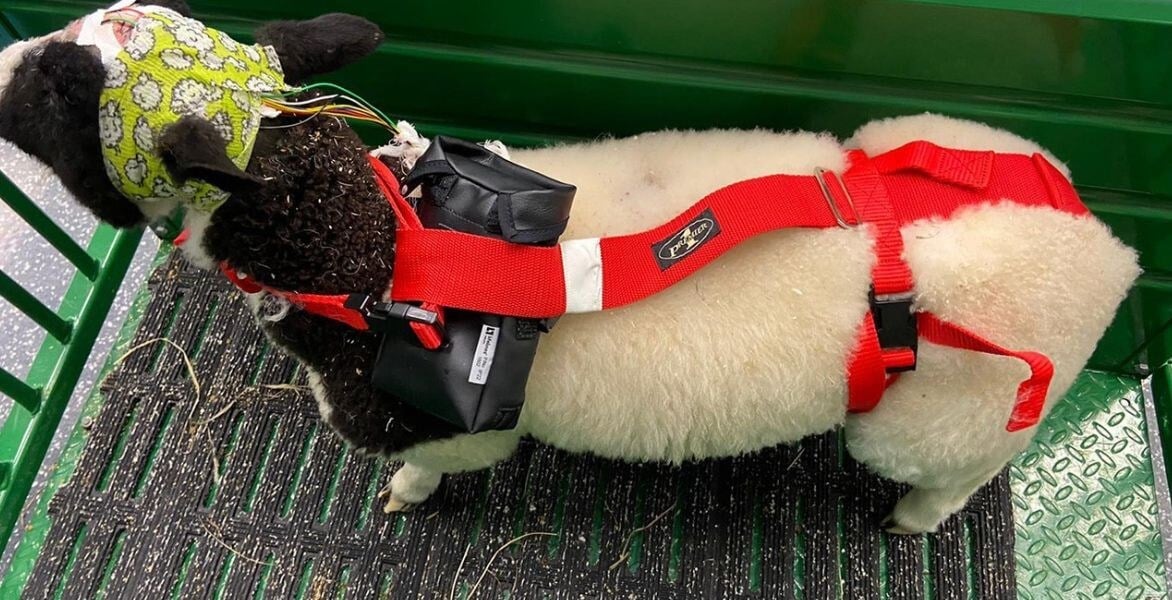
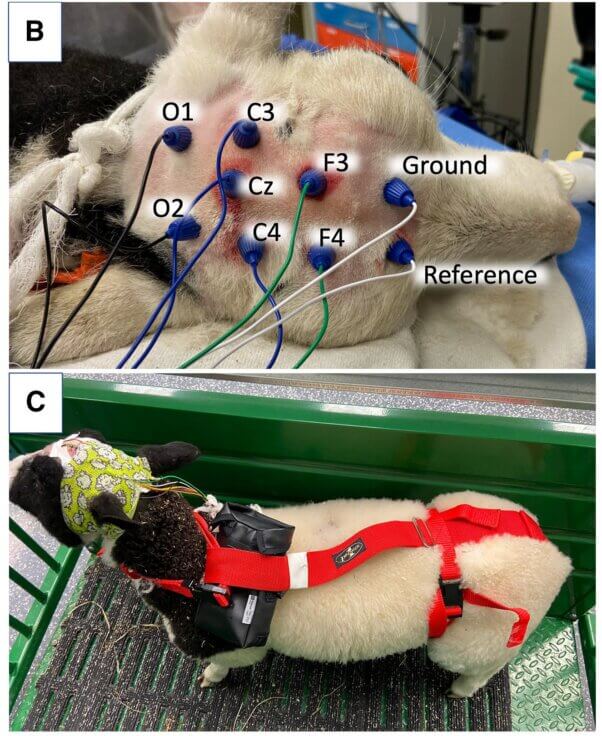
To test the effectiveness of experimental gene therapies, researchers reportedly perform invasive surgeries on the sheep, including direct injections into the brain and spinal cord. PETA points to a 2025 study co-authored by Gray-Edwards that utilized a "maze test" to track the cognitive and physical decline of the sheep. As the animals’ conditions deteriorated, they were separated from their social herds—a known stressor for flock animals—and forced through mazes. Video evidence and reports suggest the sheep appeared disoriented, frequently stumbling and exhibiting signs of fear. Once the data collection period concluded, any surviving animals were killed and dissected for tissue analysis.
Invasive Procedures on Feline Subjects
The research also extends to feline models. A paper published in 2025 describes the breeding of cats to suffer from genetic mutations that cause progressive muscle wasting and early death. The experimental procedures described in the study include "jamming" needles into the cats’ skulls to extract cerebrospinal fluid and performing multiple invasive surgeries before the animals were eventually killed. In other related studies, cats were subjected to craniotomies—where the skull is sliced open—to allow for the direct injection of liquids into the brain tissue.
Financial Context and Federal Funding
The scale of the research is underscored by significant federal investment. Data from the NIH’s Research Portfolio Online Reporting Tools (RePORT) indicates that Dr. Gray-Edwards has been a principal investigator or a key contributor to several multi-million dollar grants.
Since 2013, the total funding associated with her research efforts has exceeded $10 million. PETA’s recent letter to the National Institute of Neurological Disorders and Stroke (NINDS), a division of the NIH, specifically targets current grants that total approximately $3 million. The advocacy group argues that the "appalling" nature of the suffering outweighs the potential scientific gains, particularly when the results of animal trials often fail to translate into successful human clinical applications.
The NIH has historically defended the use of large animal models like sheep and calves, arguing they are necessary for studying complex brain structures that cannot be adequately modeled in rodents. However, the ethical threshold for such research is increasingly under scrutiny by both the public and regulatory bodies.
A History of Regulatory Violations at UMass Chan
PETA’s critique of Dr. Gray-Edwards is part of a broader indictment of UMass Chan Medical School’s animal welfare record. The institution has been the subject of several USDA inspections that have noted "critical" violations of the Animal Welfare Act.
Past reports have documented instances of:
- Understaffing: Insufficient veterinary and care staff to monitor animals in high-pain experiments.
- Treatment Delays: Failure to provide timely medical intervention for animals showing signs of acute distress.
- Pain Management Failures: Documentation of animals undergoing painful procedures without the administration of prescribed analgesics.
- Nutritional Neglect: Instances where animals were allegedly starved or provided with inadequate nutrition, compromising both their welfare and the integrity of the scientific data.
In light of these recurring issues, PETA characterizes the school as a "den of depravity," suggesting that the culture of the institution prioritizes research output over the basic legal and ethical requirements of animal care.
The Scientific Debate: Animal Models vs. Human-Relevant Methods
The controversy at UMass Chan touches on a fundamental debate in modern bioscience. Proponents of animal research, including many at UMass Chan, argue that whole-organism modeling is essential for understanding how gene therapies interact with the blood-brain barrier and the complex immune system. They contend that sheep and calves provide a more accurate physiological map for human neurodegeneration than smaller mammals.
Conversely, PETA and a growing segment of the scientific community advocate for the transition to Non-Animal Methods (NAMs). These include:
- Organ-on-a-chip technology: Microchips lined with human cells that mimic the functions of human organs.
- Human-induced pluripotent stem cells (iPSCs): Creating "mini-brains" or organoids from human skin or blood cells to study disease progression in a human genetic context.
- Advanced Computational Modeling: Using AI to predict how human bodies will react to specific gene therapies.
Advocates for NAMs argue that these methods are not only more ethical but also more "human-relevant," noting that roughly 90% of drugs that pass animal tests ultimately fail in human clinical trials because animal biology does not perfectly replicate human pathology.
Timeline of Investigations and Institutional Response
The scrutiny of Dr. Gray-Edwards’ work has intensified over the last several years:
- 2013: Initial federal funding is granted for large-animal neurodegenerative research.
- 2020-2024: Multiple USDA inspections of UMass Chan flag concerns regarding animal handling and veterinary oversight.
- September 2025: Publication of the Tay-Sachs sheep study, which included data from invasive brain surgeries and maze testing.
- May 13, 2026: PETA files a formal complaint with the NIH and releases a public report detailing the suffering of calves, sheep, and cats in Gray-Edwards’ lab.
- May 20, 2026: Updated reports confirm that PETA is escalating its campaign, calling for a total shift in the university’s research budget toward non-animal methods.
As of the latest update, UMass Chan Medical School has not released a detailed rebuttal to PETA’s specific allegations regarding Dr. Gray-Edwards, though the institution has historically maintained that its research is conducted in compliance with federal guidelines and is essential for finding cures for devastating childhood diseases.
Broader Implications and Future Outlook
The outcome of PETA’s petition to the NIH could have significant ramifications for the future of large-animal research in the United States. If the federal government moves to restrict funding based on animal welfare concerns or the lack of "human relevance," it would signal a major shift in the landscape of biomedical research.
For now, the animals at UMass Chan remain at the center of a heated ethical battle. While researchers see these sheep, calves, and cats as vital tools in the fight against fatal human diseases, animal rights advocates see them as victims of a "cruel and pointless" system. As public awareness of laboratory conditions grows, the pressure on institutions like UMass Chan to adopt more transparent and humane practices is likely to increase.
The National Institutes of Health has yet to issue a public decision regarding the funding for Dr. Gray-Edwards. However, the documented history of violations at UMass Chan may provide PETA with the legal leverage needed to force a formal review of the school’s experimental protocols. For the scientific community, the challenge remains to balance the urgent need for medical breakthroughs with the evolving ethical standards of the 21st century.

