


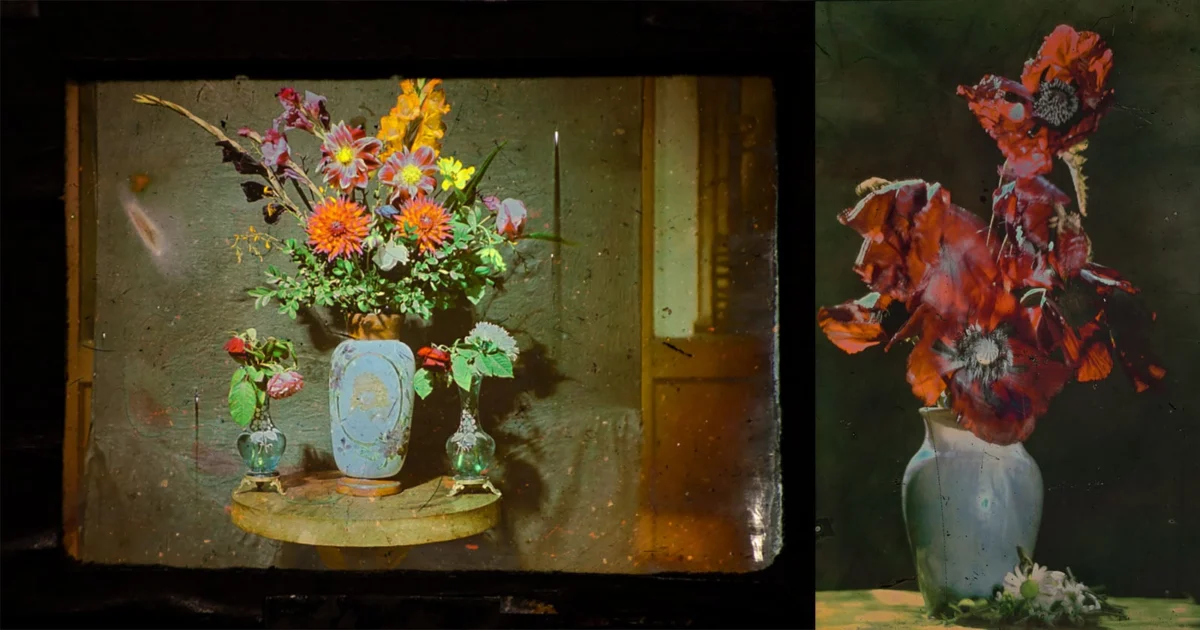
Science educator Steve Mould has released a comprehensive investigation into one of the most sophisticated yet commercially overlooked chapters in the history of imaging: the Lippmann process. In his latest presentation, titled "You’ve Never Seen a Real Photo," Mould explores the physics of interference photography, a technique developed by Gabriel Lippmann that remains the only known method for permanently recording and reproducing the full spectrum of visible light. Unlike modern digital sensors or traditional chemical films, which rely on the biological limitations of human vision to "trick" the brain into seeing color, Lippmann plates capture the actual physical wavelengths of light through a phenomenon known as structural color.
The Genesis of Interference Photography
The history of color photography is largely a history of compromise. In the late 19th century, researchers were divided between two paths: the additive/subtractive method, which uses pigments and filters to approximate colors, and the interferential method, which seeks to record the physical properties of light itself. Gabriel Lippmann, a Luxembourgish-born physicist and inventor, chose the latter. In 1891, he presented his findings to the French Academy of Sciences, demonstrating a method that did not require dyes, pigments, or color filters.
The Lippmann process is rooted in the physics of light interference. To create a Lippmann plate, a photographer must use a panchromatic, ultra-fine-grained black-and-white emulsion. During exposure, this emulsion is placed in direct contact with a reflective surface—historically a pool of liquid mercury. As light enters the camera and passes through the glass plate into the emulsion, it hits the mercury mirror and reflects back upon itself. This reflection creates a "standing wave" pattern within the depth of the emulsion.
Where the incoming and outgoing waves reinforce each other, they create "maxima" of light intensity. These high-intensity points trigger the silver halide crystals in the emulsion. After chemical development, these points are transformed into microscopic layers of metallic silver. These layers act as a series of tiny, precisely spaced mirrors. When the finished plate is viewed under white light, these mirrors reflect only the specific wavelengths that originally created them, effectively reconstructing the original light spectrum. For this groundbreaking achievement, Lippmann was awarded the Nobel Prize in Physics in 1908.
Technical Mechanics and the Role of Structural Color
The primary distinction between a Lippmann plate and a modern photograph lies in the difference between pigment-based color and structural color. Modern digital displays and printed photographs utilize metamerism—a property where different spectral distributions can appear identical to the human eye. By mixing varying intensities of Red, Green, and Blue (RGB), a screen can convince a viewer they are seeing yellow, even though the screen is not emitting a single photon of yellow light.
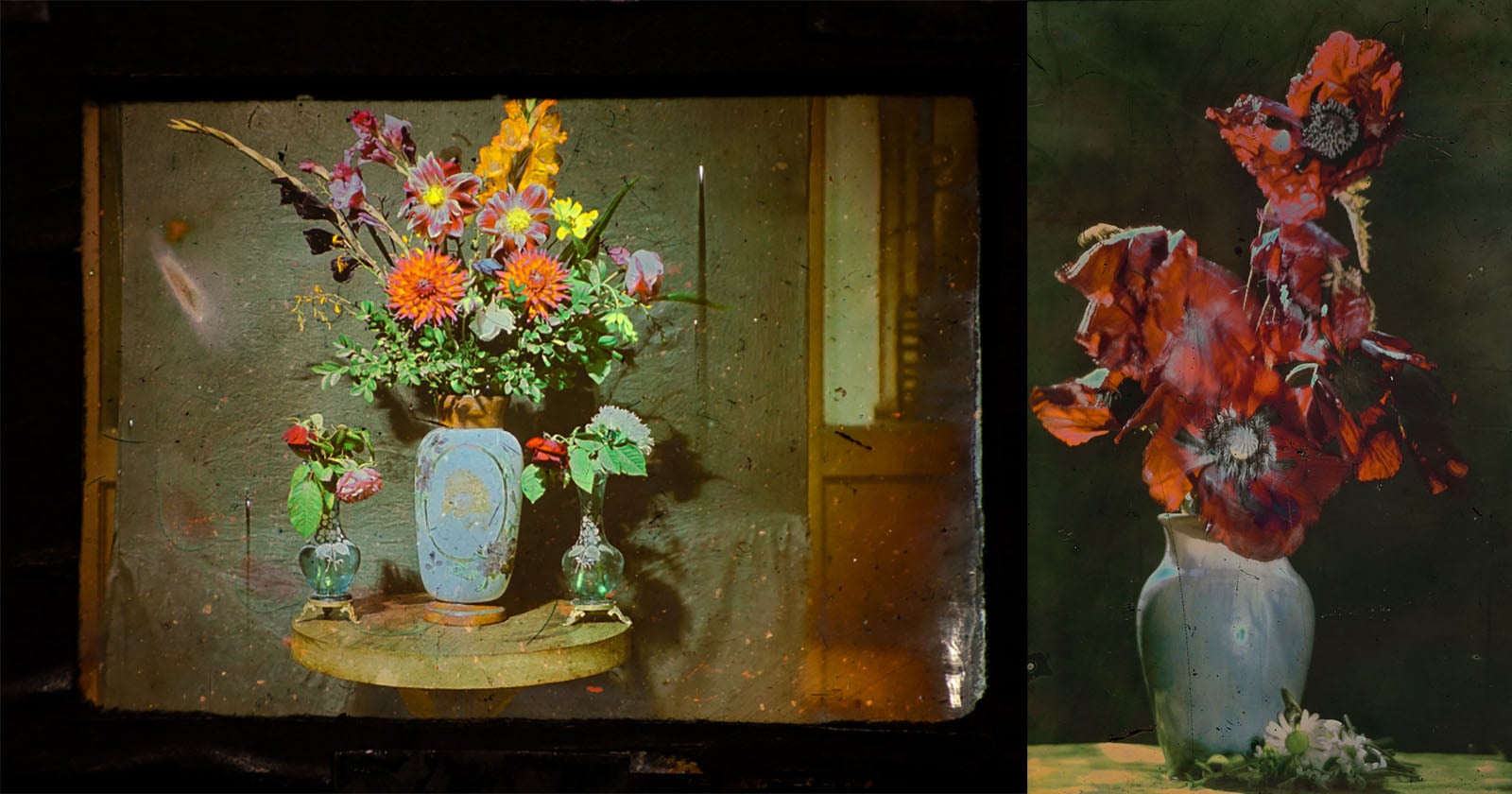
In contrast, a Lippmann plate does not approximate colors. As highlighted in Steve Mould’s analysis, the distance between the silver layers in the emulsion corresponds exactly to half the wavelength of the light that hit the plate. If a blue light with a wavelength of 450 nanometers strikes the plate, it creates mirrors spaced 225 nanometers apart. When white light hits those mirrors, the 450nm wavelength is reflected back through constructive interference, while other wavelengths are cancelled out.
This is the same principle that gives color to peacock feathers, butterfly wings, and soap bubbles. Because the color is a result of physical structure rather than chemical dyes, Lippmann plates are remarkably archival. While a 1970s color print will eventually fade as its dyes break down under ultraviolet light, a Lippmann plate remains vibrant as long as the physical structure of the silver layers remains intact.
Modern Revival and the Contributions of Jon Hilty
Because Lippmann plates work on the level of physical wavelengths, they cannot be accurately represented on a digital screen. A video of a Lippmann plate is merely an RGB approximation of a spectral record. To bridge this gap, Mould collaborated with Jon Hilty, a contemporary photographer and researcher who is among the few individuals in the world still practicing these "lost" color processes.
Hilty provided Mould with authentic Lippmann plates and traditional color photographs for comparison. To demonstrate the difference, Mould utilized a spectrometer to measure the light reflecting off both surfaces. The results were stark: the traditional photograph showed broad, messy peaks of RGB data designed to satisfy the human eye’s cones. The Lippmann plate, however, showed sharp, narrow spikes at specific wavelengths, indicating a true reconstruction of the original light source.
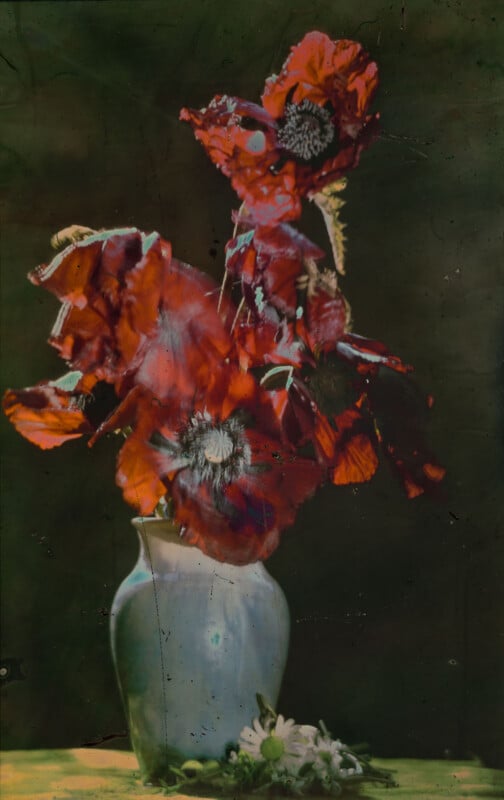
Hilty’s work also extends to the Autochrome process, the technique that eventually rendered Lippmann’s invention commercially obsolete. Invented by the Lumière brothers and marketed in 1907, Autochrome used a mosaic of dyed potato starch grains to filter light. While less scientifically "pure" than the Lippmann process, Autochrome was significantly more practical for the average photographer.
A Chronology of Color Photography Evolution
The trajectory of color photography can be traced through several key milestones that highlight the shift from scientific reproduction to commercial convenience:
- 1861: James Clerk Maxwell produces the first "color" photograph by taking three separate black-and-white images through red, green, and blue filters and projecting them in alignment.
- 1891: Gabriel Lippmann announces the interference process, achieving the first single-exposure color photograph that does not require filters or dyes.
- 1894: Lippmann refines the emulsion to improve sensitivity, though exposure times remain prohibitively long (often several minutes).
- 1903: Auguste and Louis Lumière patent the Autochrome Lumière, a screen-plate process that is easier to manufacture and view.
- 1908: Lippmann receives the Nobel Prize in Physics "for his method of reproducing colours photographically based on the phenomenon of interference."
- 1935: Kodak introduces Kodachrome, a subtractive color process that uses three layers of emulsion. This marks the beginning of the modern era of color film.
- 2021: Researchers at the Swiss Federal Institute of Technology (EPFL) use modern multi-spectral imaging to study original Lippmann plates, proving they contain more data than the human eye can even perceive.
The Limitations of the Lippmann Process
Despite its scientific superiority, the Lippmann process never achieved mainstream success. Several technical hurdles prevented it from becoming the standard for color photography. First, the requirement for a mercury mirror made the cameras heavy, complex, and potentially hazardous. Second, the emulsions required were extremely slow; while a modern digital camera can take a photo in 1/1000th of a second, a Lippmann plate often required minutes of exposure in bright sunlight, making portraiture nearly impossible.
Furthermore, Lippmann plates are unique positives. Because the image is encoded in the physical depth of the emulsion, there is no "negative" from which to make copies. Each plate is a one-of-a-kind object. Viewing the plates is also difficult; because they rely on interference, they must be viewed at a specific angle relative to the light source. If tilted slightly, the colors shift or disappear, a limitation that Mould demonstrates clearly in his video.
Broader Impact and Modern Scientific Implications
While the Lippmann process is no longer a viable consumer technology, its principles are seeing a resurgence in high-tech research. In 2022, researchers at the Massachusetts Institute of Technology (MIT) drew inspiration from Lippmann’s work to create "chameleon-like" materials. By using interference patterns to create structural color in elastic materials, they developed surfaces that change color when stretched or deformed. This has potential applications in pressure-sensing bandages or robotic skins.
Furthermore, the "multi-spectral" nature of Lippmann plates is of immense value to historians and archivists. Because the plates record the actual spectrum of light, researchers can use them to determine the exact chemical composition of the objects in the original photograph—such as the specific dyes used in a 19th-century dress—long after the original object has decayed. This makes Lippmann plates the earliest form of multi-spectral light measurement on record.
The work of educators like Steve Mould and practitioners like Jon Hilty ensures that this pinnacle of optical science is not forgotten. By highlighting the difference between "seeing" a color and "recording" a wavelength, they challenge the modern understanding of what a photograph actually is. In an era of AI-generated imagery and digital filters, the Lippmann plate stands as a reminder of a time when photography was not just an art form, but a rigorous pursuit of physical truth.

