


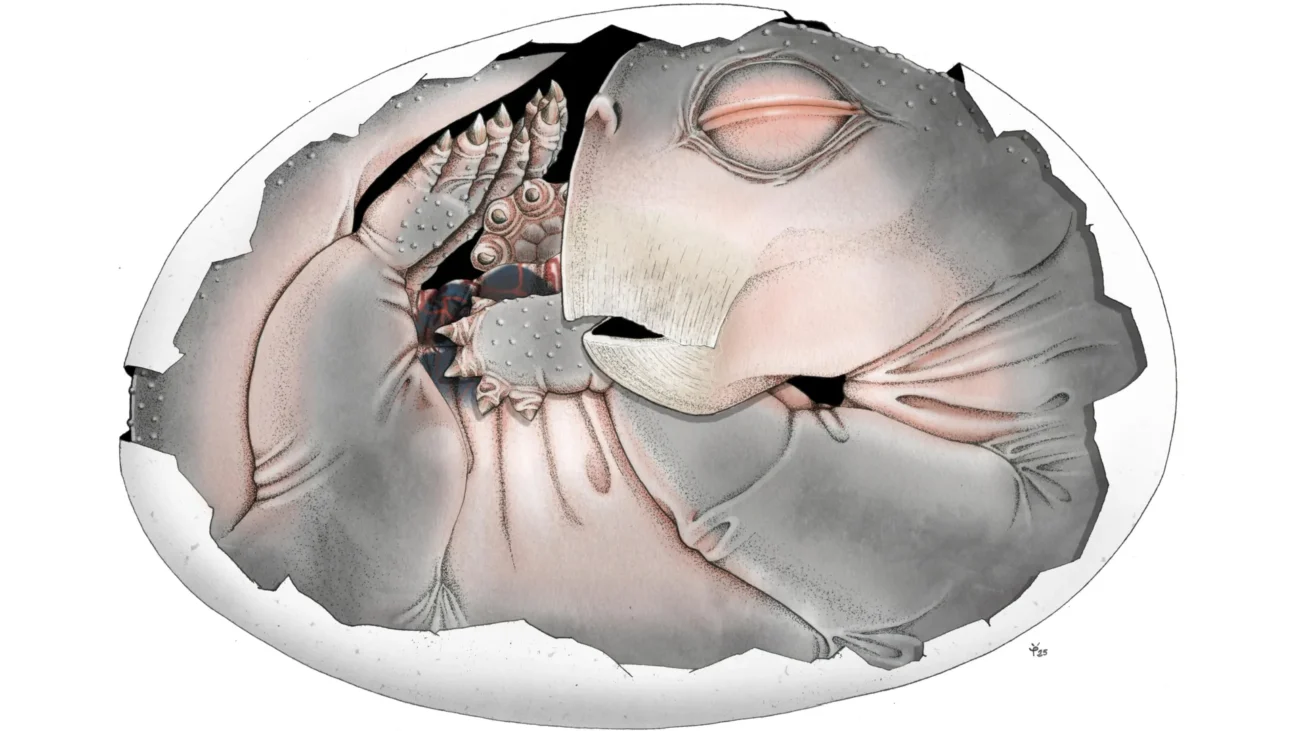
A groundbreaking fossil discovery is illuminating one of the most extraordinary survival sagas in Earth’s deep past, while simultaneously resolving a scientific enigma that has perplexed researchers for decades. The creature in question, Lystrosaurus, a resilient, herbivorous animal considered a distant ancestor of mammals, rose to become one of the planet’s dominant species in the aftermath of the End-Permian Mass Extinction. This cataclysmic event, occurring approximately 252 million years ago, decimated the vast majority of life on Earth. In the face of unimaginable environmental upheaval—characterized by extreme heat, volatile geological conditions, and prolonged periods of aridity—Lystrosaurus not only survived but not only endured but thrived, its success offering a compelling case study in evolutionary resilience.
Recent research, published in the esteemed scientific journal PLOS ONE, details a remarkable find that fundamentally alters our understanding of this ancient animal. An international consortium of scientists, spearheaded by Professor Julien Benoit, Professor Jennifer Botha of the Evolutionary Studies Institute at the University of the Witwatersrand in South Africa, and Dr. Vincent Fernandez of the ESRF—The European Synchrotron in France, have identified a fossilized egg containing a remarkably well-preserved Lystrosaurus embryo, estimated to be around 250 million years old. This specimen represents the first definitively identified egg from a mammal ancestor, providing a long-sought answer to a pivotal question in the study of early mammalian evolution: did the progenitors of mammals reproduce by laying eggs? The answer, unequivocally, is yes.
The Elusive Nature of Ancient Mammal Ancestor Eggs
The researchers posit that the rarity of such discoveries is largely attributable to the presumed composition of these ancient eggs. Unlike the hard, mineralized shells of dinosaur eggs, which readily fossilize, the eggs of early mammal ancestors like Lystrosaurus are believed to have possessed soft, leathery shells. This delicate structure would have significantly hastened their decomposition before the conditions for fossilization could take hold, rendering their preservation an exceptionally rare occurrence.
However, the significance of this discovery extends far beyond confirming the reproductive methods of Lystrosaurus. The fossil, a small nodule initially, was unearthed during a field expedition led by Professor Botha in 2008. It was meticulously prepared by John Nyaphuli, a highly skilled preparator and an exceptional finder of fossils, who recognized the potential significance of the tiny bone fragments within. As Nyaphuli painstakingly worked on the specimen, it became evident that it contained a perfectly curled-up Lystrosaurus hatchling. Professor Botha harbored an early suspicion that the creature had perished within its egg, but the technological means to confirm this hypothesis were not available at the time.
Advanced Imaging Unlocks the Secrets of a Prehistoric Embryo
The advent of cutting-edge synchrotron X-ray computed tomography (CT) scanning technology, coupled with the powerful X-ray capabilities at the ESRF, provided the researchers with the unprecedented ability to scrutinize the fossil in intricate detail. These advanced imaging techniques allowed for a non-destructive, high-resolution examination of the specimen’s internal structure, finally confirming Professor Botha’s long-held suspicions.
Dr. Fernandez articulated the profound excitement surrounding this breakthrough: "Understanding reproduction in mammal ancestors has been a long-lasting enigma, and this fossil provides a key piece to this puzzle. It was essential that we scanned the fossil just right to capture the level of detail needed to resolve such tiny, delicate bones." The detailed scans yielded a crucial insight into the developmental stage of the embryo.
Professor Benoit highlighted a particularly significant observation: "When I saw the incomplete mandibular symphysis, I was genuinely excited. The mandible, the lower jaw, is made up of two halves that must fuse before the animal can feed. The fact that this fusion had not yet occurred shows that the individual would have been incapable of feeding itself." This anatomical detail is pivotal, indicating the embryo was still in a pre-hatching state, and had not yet reached the stage where it could independently sustain itself.
Implications of Large Eggs and Rapid Development
The comprehensive study of the fossilized embryo and its surrounding matrix reveals that Lystrosaurus produced relatively large eggs in proportion to its body size. In extant animal species, larger eggs typically contain a greater volume of yolk, a rich source of nutrients that can sustain embryonic development for extended periods, often negating the need for immediate post-hatching parental provisioning. This characteristic strongly suggests that Lystrosaurus did not nurse its young with milk, a hallmark of modern mammals.
The substantial size of the eggs also conferred a critical advantage in the arid and volatile climate that characterized the post-extinction environment. Larger eggs would have been more resilient to desiccation, a vital trait for survival in an environment prone to prolonged drought.
These findings lead to the conclusion that Lystrosaurus hatchlings were likely precocial. This means they were born or hatched at an advanced stage of development, possessing the capacity for independent survival shortly after emerging from the egg. Such young animals would have been capable of foraging for food, evading predators, and reaching reproductive maturity at a relatively rapid pace. In essence, Lystrosaurus‘s successful strategy involved a combination of rapid growth and early reproduction.
A Winning Strategy in a World Transformed by Catastrophe
In the face of the extreme environmental challenges that followed the End-Permian Mass Extinction, this reproductive and developmental strategy proved remarkably effective. The discovery provides the first direct empirical evidence that the ancestors of mammals reproduced by laying eggs and offers a compelling explanation for the widespread success of Lystrosaurus in the ecosystems that emerged in the wake of this devastating extinction event.
The End-Permian Mass Extinction: A Defining Moment in Earth’s History
The End-Permian Mass Extinction, often referred to as the "Great Dying," stands as the most severe extinction event known in Earth’s history. It marked the boundary between the Permian and Triassic periods, approximately 252 million years ago. The event caused the extinction of an estimated 96% of all marine species and 70% of terrestrial vertebrate species. The scale of this biodiversity loss was unprecedented, fundamentally reshaping the course of evolution.
The primary driver of this catastrophic event is widely attributed to massive volcanic activity in the Siberian Traps. These eruptions released enormous quantities of greenhouse gases, such as carbon dioxide and methane, into the atmosphere. This led to a rapid and dramatic increase in global temperatures, ocean acidification, and widespread anoxia (oxygen depletion) in the oceans. The resulting environmental collapse created an almost insurmountable barrier to survival for most life forms.
The period immediately following the extinction was characterized by a drastically altered planet. The Earth’s climate was extremely hot, atmospheric conditions were unstable, and fresh water was scarce. Life that managed to persist faced a landscape of ecological emptiness and immense evolutionary opportunity. It was within this harsh, transformative environment that creatures like Lystrosaurus found their niche and began their ascent to dominance.
Chronology of Discovery and Research
- 2008: Professor Jennifer Botha leads a field expedition where fossil preparator John Nyaphuli discovers a small nodule containing what appears to be a curled-up Lystrosaurus hatchling. Initial analysis suggests it may have died within an egg, but definitive proof is lacking due to technological limitations.
- Over a decade later: The specimen is revisited by an international research team, including Professor Botha, Professor Julien Benoit, and Dr. Vincent Fernandez.
- Recent years: The fossil undergoes advanced synchrotron X-ray CT scanning at the ESRF in France. This non-destructive imaging technique allows for detailed internal examination of the specimen.
- Present: The research team publishes their findings in PLOS ONE, confirming the presence of a Lystrosaurus embryo within a fossilized egg and providing critical insights into its reproduction and development.
Supporting Data and Evolutionary Context
- Therapsids: Lystrosaurus belongs to the group Therapsida, a diverse clade of synapsid amniotes that were dominant during the Permian period. Therapsids are considered the direct ancestors of mammals.
- Geological Distribution: Fossils of Lystrosaurus are found predominantly in Gondwanan continents, including South Africa, Antarctica, India, and China, indicating its wide distribution across the supercontinent during the Triassic.
- Dominance Post-Extinction: Lystrosaurus fossils are remarkably abundant in the Early Triassic rock layers, often found in dense aggregations, suggesting a rapid population boom and dominance over other surviving species. This abundance is a key indicator of its successful colonization of the post-extinction environment.
- Body Size and Diet: Lystrosaurus was a relatively small to medium-sized animal, typically measuring around a meter in length. It possessed a robust build, a short, stout tail, and a beak-like mouth, indicative of a herbivorous diet, likely consisting of tough, low-lying vegetation.
Official Responses and Expert Reactions
The implications of this discovery have resonated widely within the paleontological community. Professor Anusuya Chinsamy-Turan, a leading expert in vertebrate paleontology and biomechanics at the University of Cape Town, who was not directly involved in the study, commented on its significance: "This is a truly remarkable find. For so long, the reproductive biology of early mammal ancestors has been a subject of much speculation. The confirmation that Lystrosaurus laid eggs, especially with such a well-preserved embryo, provides invaluable direct evidence. It not only fills a critical gap in our knowledge of mammalian origins but also sheds light on how certain lineages were able to weather extreme environmental crises. The technological sophistication employed in this research is also a testament to the progress in paleontology."
Dr. Fernandez, reflecting on the collaborative nature of the research, emphasized the role of international scientific cooperation: "The ESRF provided the essential tools for this breakthrough. Without access to such powerful synchrotrons, this level of detail would have remained hidden. It highlights the importance of global scientific infrastructure and the power of bringing together expertise from different disciplines and countries to tackle fundamental questions in science."
Broader Impact and Future Implications
The discovery of the Lystrosaurus egg has far-reaching implications that extend beyond the immediate understanding of mammal evolution. It underscores the profound influence of reproductive strategies on species’ survival and resilience, particularly in the face of environmental upheaval. The success of Lystrosaurus, with its large, yolk-rich eggs and precocial young, demonstrates how adaptive reproductive traits can be a crucial determinant of success in challenging and unpredictable environments.
In an era increasingly defined by rapid climate change and biodiversity loss, the lessons learned from Lystrosaurus offer a deep-time perspective on resilience. By studying how past organisms navigated global crises and adapted to drastically altered ecosystems, scientists can gain valuable insights into the potential responses of contemporary species to ongoing environmental stress. This research, therefore, is not merely an academic pursuit; it is highly relevant to current biodiversity conservation efforts and the broader challenge of climate change.
Professor Benoit eloquently summarized the dual significance of the find: "This research is important because it provides the first direct evidence that mammal ancestors, such as Lystrosaurus, laid eggs, resolving a long-standing question about the origins of mammalian reproduction. Beyond this fundamental insight, it reveals how reproductive strategies can shape survival in extreme environments: by producing large, yolk-rich eggs and precocial young, Lystrosaurus was able to thrive in the harsh, unpredictable conditions following the end-Permian mass extinction. In a modern context, this work is highly impactful because it offers a deep-time perspective on resilience and adaptability in the face of rapid climate change and ecological crisis. Understanding how past organisms survived global upheaval helps scientists better predict how species today might respond to ongoing environmental stress, making this discovery not just a breakthrough in paleontology, but also highly relevant to current biodiversity and climate challenges. The opportunity to work at the European Synchrotron Radiation Facility alongside beamline scientists was also an unforgettable part of the journey. The cutting-edge data we generated there allowed us to ‘see’ inside the fossil in extraordinary detail, ultimately revealing that the embryo was still at a pre-hatching stage. That moment, when the pieces all came together, was incredibly rewarding."
Professor Botha further elaborated on the historical context and personal satisfaction derived from the research: "What makes this work especially exciting is that we were able to quite literally follow in John Nyaphuli’s footsteps, returning to a specimen he discovered nearly two decades ago and finally solve the puzzle he uncovered. At the time, all we had was a beautifully curled embryo, but no preserved eggshell to prove it had died within an egg. Using modern imaging techniques, we were able to answer that question definitively. It is also thrilling because this discovery breaks entirely new ground. For over 150 years of South African paleontology, no fossil had ever been conclusively identified as a therapsid egg. This is the first time we can say, with confidence, that mammal ancestors like Lystrosaurus laid eggs, making it a true milestone in the field."
The story of Lystrosaurus is a powerful reminder that life on Earth has a remarkable capacity for adaptation and resilience, even in the face of existential threats. This ancient egg, through the persistent efforts of dedicated scientists and advanced technology, has provided a crucial window into the past, offering profound lessons for the future.

