


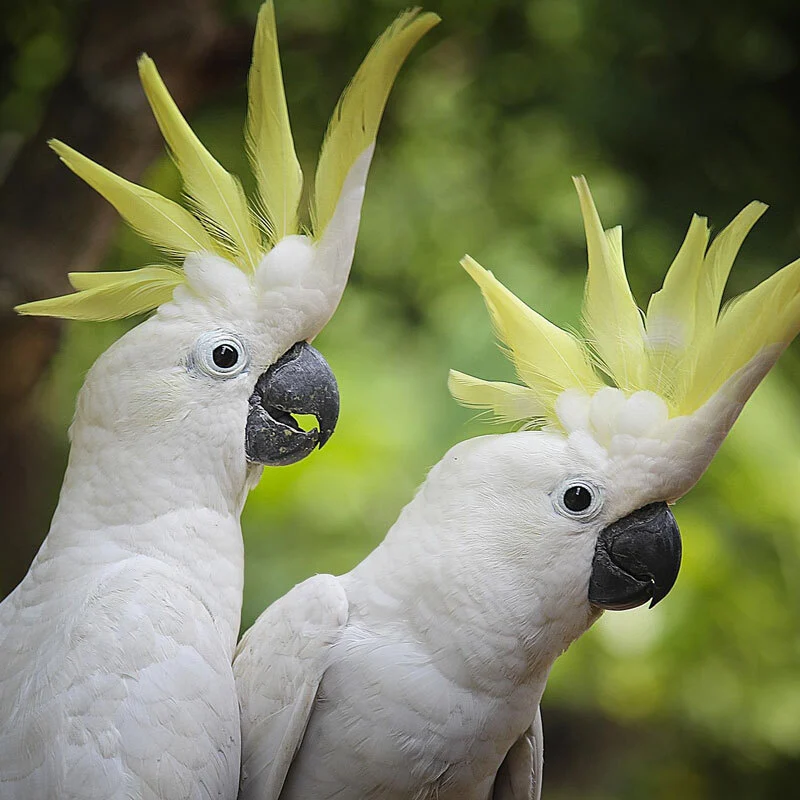
New research has illuminated the sophisticated cognitive abilities of our feathered counterparts, demonstrating that wild sulphur-crested cockatoos exhibit complex social learning behaviours strikingly similar to human cultural transmission, particularly in adopting new food sources. This groundbreaking study, published in the esteemed journal PLOS Biology, challenges long-held assumptions about avian intelligence and underscores the profound influence of social dynamics within bird communities. Far from simple instinct-driven creatures, birds, especially those navigating the complexities of urban environments, prove to be astute observers and quick learners, constantly evaluating and adapting their behaviours based on the actions of their peers.
The study, a collaborative effort involving researchers from prominent institutions including the University of Konstanz (Germany), The Australian National University, the University of California Davis, and The University of Sydney (Australia), embarked on an ambitious mission to unravel the mechanisms of social learning in groups of wild parrots. Their primary objective was to understand how these highly intelligent birds develop an interest in novel food items, a critical survival skill in ever-changing habitats. The findings suggest that the spread of information and the adoption of new behaviours within a bird flock are not merely random occurrences but are driven by a nuanced process of observation, evaluation, and social influence, echoing the way trends and norms propagate through human societies.
Deciphering Avian Social Dynamics: The Experimental Design
To meticulously investigate these social learning processes, the research team devised an ingenious experiment focusing on sulphur-crested cockatoos (Cacatua galerita) residing in various urban and suburban locations across Australia. These iconic birds, known for their striking white plumage and distinctive yellow crests, are highly intelligent, long-lived, and incredibly social, making them ideal subjects for studying complex group behaviours. The core of the experiment involved introducing a novel food item – almonds encased in their shells – which were dyed either blue or red. These coloured almonds served as a clear, visually distinct choice for the birds, allowing researchers to track preferences and the spread of new feeding behaviours.
The methodology involved an initial phase where a small group of "demonstrator" birds were pre-trained to open and consume the coloured almonds. These trained individuals then acted as catalysts for social learning within their respective roost communities. The researchers strategically placed these coloured almonds in areas accessible to the wild cockatoos, carefully monitoring their interactions and choices. This observational approach, combining controlled introduction of novel stimuli with real-world ecological settings, provided invaluable insights into natural learning processes. The study meticulously tracked the behaviour of 349 individual cockatoos across five distinct roost communities over a concentrated 20-day period, recording every instance of interaction with the new food items. This extensive dataset allowed for a comprehensive analysis of how information about novel food sources disseminated through the wider population. The meticulous design ensured that any observed changes in feeding behaviour could be directly attributed to social learning rather than individual trial-and-error.
The Ripple Effect: Observation Leading to Adoption
The most striking revelation of the study was the profound impact of observational learning. Initially, many wild cockatoos exhibited caution towards the unfamiliar coloured almonds, a natural aversion to novelty known as neophobia, which serves as an important survival mechanism in the wild. This innate wariness helps animals avoid potentially toxic or dangerous new food sources. However, this caution quickly dissipated once they observed other birds, particularly the pre-trained demonstrators, confidently consuming the new food. Birds in proximity to the initial demonstrator groups rapidly adopted the habit of cracking open and eating the coloured almonds, demonstrating a clear case of social transmission. This process highlights the efficiency of social learning in bypassing individual risk assessment.
The study further highlighted the critical role of social connectivity between roosts. In communities geographically closer to where the initial learning occurred, the adoption rate of the new feeding behaviour was significantly faster. This suggests that the physical distance between groups, and presumably the frequency of interaction or observation opportunities, directly correlates with the speed at which new information spreads. A compelling anecdote from the research involved a more distant roost where birds initially showed no interest in the coloured almonds. Their reluctance shifted dramatically only after an individual from a neighbouring, already-adapted roost arrived and immediately began consuming the novel food. Within minutes of this new arrival’s demonstration, the resident birds of the previously hesitant roost began to partake in the same selection, illustrating the powerful "copycat" effect and the importance of social cues from established members or successful explorers. This rapid shift underscores the immediate and powerful impact of social influence within these avian networks.
By the conclusion of the 20-day experimental phase, the observation data revealed that the vast majority of the 349 marked cockatoos across all five roosts had not only accepted but were actively enjoying the coloured almonds. Their initial hesitation had been overcome entirely through a process of watching, evaluating, and ultimately emulating the successful foraging behaviours of others. This widespread adoption underscores the efficiency and effectiveness of social learning as a primary mechanism for behavioural change within these complex avian societies. It provides concrete evidence for how information, once acquired by a few, can rapidly become common knowledge across a larger population.
Generational Influences: Young Innovators and Cautious Elders
Perhaps one of the most intriguing findings of the PLOS Biology study was the differential rate of adoption based on age. The research revealed a distinct pattern: younger cockatoos were significantly quicker to adapt to the new feeding behaviour compared to their older, more experienced flock members. This phenomenon is not uncommon in human societies, where younger generations often serve as early adopters of new technologies, fashion trends, or social norms, while older generations tend to observe and evaluate before committing to change. This parallel suggests a fundamental cognitive mechanism at play across species.
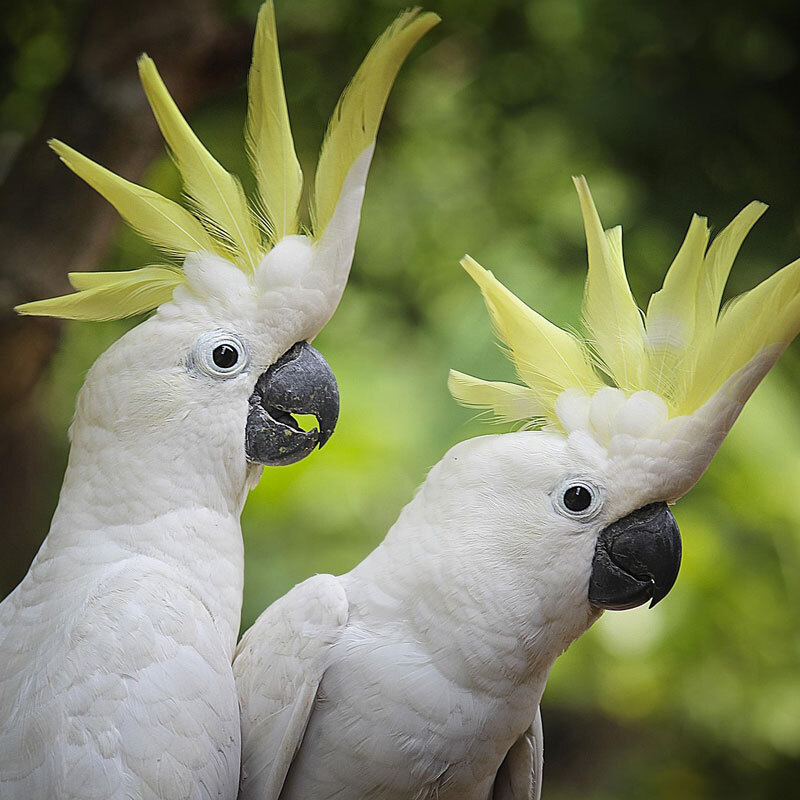
In the cockatoo communities, this meant that the younger birds effectively set the tone for innovation. Their willingness to experiment and embrace the novel food item created a critical mass of adopters, which in turn influenced the older birds. The more seasoned individuals, initially more cautious, appeared to be watching their younger counterparts. Once a sufficient number of younger birds had demonstrated the safety and reward of consuming the coloured almonds, the older birds gradually began to engage in the same behaviour. This indirect influence, where the behaviour of the young eventually persuades the old, presents a fascinating parallel to human cultural dynamics and highlights a complex intergenerational learning process within the flock. It suggests that even within a hierarchical social structure, innovation can bubble up from unexpected sources, ultimately leading to a collective shift in behaviour. Researchers involved in the study indicated that this pattern highlights an adaptive strategy: younger individuals, with less accumulated knowledge, may be more prone to exploration, while older, more experienced individuals, having more to lose, adopt a more conservative approach, waiting for proven success before committing.
The Broader Context: Avian Intelligence and Cultural Transmission
This study adds significant weight to the burgeoning field of avian cognition, which has, over the past few decades, consistently unveiled astonishing levels of intelligence in birds. Traditionally, complex cognitive abilities such as tool use, problem-solving, and cultural transmission were largely attributed to primates. However, research on species like New Caledonian crows, various parrot species, and corvids has systematically dismantled these anthropocentric biases. Crows, for instance, are renowned for their sophisticated tool-making and problem-solving skills, capable of sequential reasoning and planning. Parrots, with their remarkable vocal mimicry and problem-solving abilities, have shown capacities for abstract thought and understanding, often matching the cognitive performance of great apes in certain tasks.
Social learning, as demonstrated in the cockatoo study, is a cornerstone of cultural transmission. It allows for the rapid spread of adaptive behaviours within a population without each individual having to undergo costly trial-and-error learning. For species inhabiting dynamic environments, particularly urban landscapes, the ability to learn from others is an invaluable asset. It enables quick adaptation to new food sources, avoidance of dangers, and the exploitation of novel opportunities presented by human-modified habitats. The cultural transmission of behaviours, whether it’s a specific foraging technique, a migration route, or even a unique vocalisation, can be passed down through generations, shaping the very fabric of a species’ ecological niche and evolutionary trajectory. Experts in avian behaviour often refer to this as a form of "cumulative culture," where innovations build upon previous ones, allowing for increasingly complex behavioural repertoires.
Urban Living: A Crucible for Adaptation
The setting of this study—urban and suburban Australia—is particularly pertinent. Cities, with their abundance of novel resources and challenges, act as a powerful selective pressure, favouring species capable of rapid behavioural adaptation. Urban environments offer new food sources (like discarded human food, or in this case, researcher-provided almonds), new nesting sites (such as building crevices or park trees), and new predators or dangers (like vehicles or domestic animals). For a highly intelligent and social species like the sulphur-crested cockatoo, the urban landscape becomes a crucible for innovation, demanding constant learning and adjustment.
The ability to learn socially allows these birds to quickly capitalize on ephemeral opportunities and navigate potential threats. For example, if one bird discovers a safe way to access a new food source from a human household or discerns a pattern in traffic, that information can rapidly spread through its roost, conferring a survival advantage to the entire group. This study provides empirical evidence for how such adaptive behaviours can emerge and consolidate within urban bird populations, contributing to their remarkable success in coexisting with humans. It underscores the idea that urban wildlife isn’t just surviving despite human encroachment, but actively adapting and evolving new ‘cultures’ of behaviour to thrive within it, demonstrating a dynamic interplay between human activity and wildlife evolution.
Implications for Conservation and Comparative Cognition
The findings from the PLOS Biology study have far-reaching implications, extending beyond mere academic curiosity. For conservation biology, understanding the mechanisms of social learning is crucial, especially in species management and reintroduction programs. If new behaviours or foraging skills are vital for a species’ survival in a particular habitat, knowing how these skills are transmitted socially can inform strategies for training animals prior to release or for facilitating the spread of beneficial behaviours within wild populations. For instance, if a species needs to learn how to access a specific type of food in a new environment, introducing a few ‘experienced’ individuals could accelerate the learning curve for the entire group, dramatically improving reintroduction success rates.
From the perspective of comparative cognition, this research further blurs the lines between human and animal intelligence. It reinforces the understanding that complex cognitive processes, once thought to be unique to humans or a select few mammals, are present across a broader spectrum of the animal kingdom, often evolving independently. The parallels drawn between human societal trends and cockatoo food adoption are not just analogies; they point to fundamental, shared principles of social information processing and cultural evolution. This suggests that the evolutionary pressures favoring social learning are pervasive, leading to similar adaptive solutions across disparate lineages. Dr. Lucy Aplin, a lead researcher from the University of Konstanz, has previously highlighted the importance of understanding these cognitive abilities, noting that "urban environments provide a fantastic natural laboratory to study rapid evolution and behavioural innovation."
Future research building on this study could delve deeper into the specific cues that cockatoos are observing. Are they merely watching what others eat, or are they also interpreting the enthusiasm or success rate of the demonstrator birds? Investigating the neural mechanisms underlying these social learning processes would also offer profound insights into the biological underpinnings of cultural transmission. Furthermore, longitudinal studies could examine the long-term persistence and evolution of these culturally transmitted behaviours, exploring how they might change over generations or in response to new environmental pressures, such as further urbanization or climate shifts. Such studies could provide a timeline of how specific cultural traits emerge, spread, and potentially fade within a wild population, offering unprecedented insights into animal cultural dynamics.
In conclusion, the study on wild sulphur-crested cockatoos serves as a powerful testament to the intricate and intelligent lives of birds. It reveals that beneath their feathered exteriors lie sophisticated minds capable of complex social learning, cultural transmission, and adaptive innovation. As researchers continue to explore the depths of avian cognition, we are reminded that intelligence, in its myriad forms, is a widespread and remarkable feature of the natural world, demanding our continued respect, understanding, and protection. The capacity for birds to learn from one another, much like humans, is a testament to the universal power of shared knowledge in shaping behaviour and ensuring survival in an ever-changing world. This research not only enhances our understanding of cockatoos but also enriches the broader scientific narrative of animal intelligence and the remarkable adaptability of life on Earth.

