


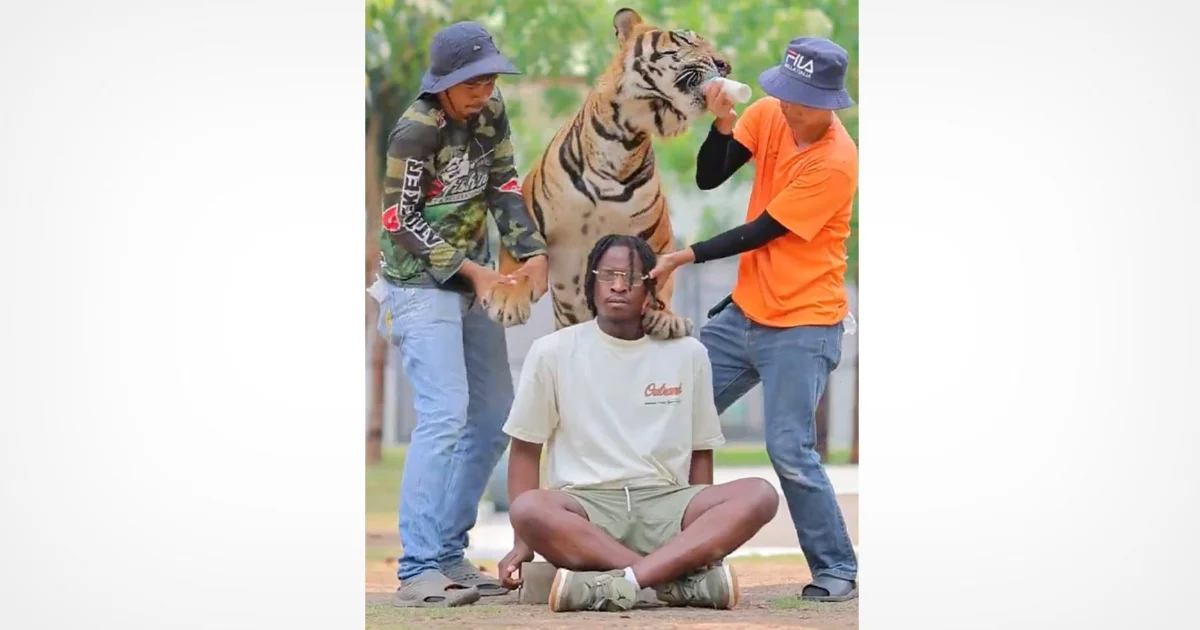
A behind-the-scenes video of a photo shoot at Tiger World Thailand has sparked intense international debate after going viral on social media, shedding a harsh light on the controversial practices of wildlife entertainment venues in Southeast Asia. The footage, which has amassed nearly five million views on the platform X, depicts an American tourist participating in a high-stakes photography session with an adult tiger, an interaction that wildlife experts and animal welfare organizations warn is both physically dangerous for humans and psychologically damaging for the animals involved.
The video captures a moment of palpable tension at the facility, located approximately 60 miles from Bangkok. In the recording, the tourist is seen sitting cross-legged on a brick pedestal while an enormous tiger is guided by zookeepers to stand on its hind legs and rest its heavy paws on the man’s shoulders. The tourist’s facial expressions alternate between a forced smile for the camera and a look of visible terror as the apex predator looms over him. The zookeepers, appearing equally apprehensive, maintain a constant, hovering presence, only stepping away for fractions of a second to allow an off-camera photographer to capture the desired image. To maintain control, staff members are seen repeatedly using bottles of milk to distract the tiger, pulling its attention away the moment it begins to move its head toward the visitor.
The Mechanics of the "Shoulder Pose" and the Business of Wildlife Selfies
Tiger World Thailand, the venue featured in the video, markets these interactions as premium experiences. According to the facility’s official website, a photo session involving the "tiger on shoulders" pose costs upwards of $200, a significant sum in the context of local tourism. The zoo’s promotional materials and instructional signage emphasize that only "strong people" should attempt this specific pose, citing the physical weight and balance required to support a cat that can weigh several hundred pounds.
An instructional poster titled "How to Prepare for a Tiger Standing on Your Shoulders" outlines an 11-step process, advising tourists on how to sit, where to place their hands, and how to maintain their center of gravity. Despite these warnings, the facility’s Instagram page remains saturated with images of tourists—ranging from fitness influencers to casual vacationers—performing the pose. While other interaction options are available, such as sitting beside or petting a reclining tiger, the shoulder pose has emerged as a high-status "trophy" photo for social media platforms, driving a consistent stream of revenue to the park.
A Chronology of Risk: The Reality of Tiger Encounters
The apprehension shown by the zookeepers in the viral video is rooted in a well-documented history of tiger-related accidents in Thailand’s tourism sector. Just one year prior to this viral incident, in May 2025, a tourist was severely mauled at Tiger Kingdom in Phuket while attempting a similar photo shoot. That incident resulted in emergency hospitalization and renewed calls for a ban on direct contact between tourists and large carnivores.
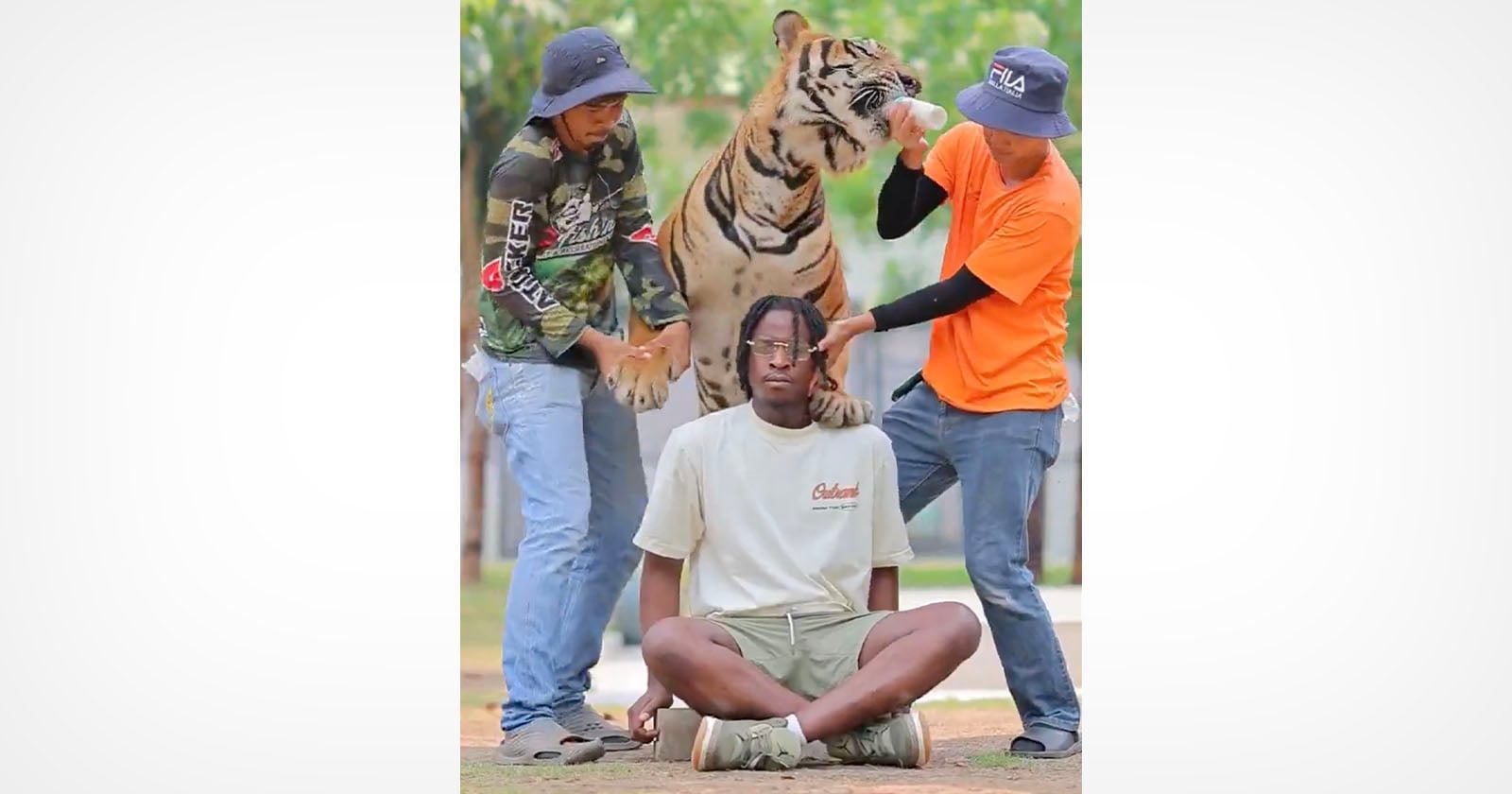
The inherent unpredictability of tigers, even those raised in captivity, remains a primary concern for safety experts. Tigers are instinctive hunters, and the proximity of a human’s neck and shoulders to the animal’s jaws during the "shoulder pose" places the tourist in a position of extreme vulnerability. Veterinary behaviorists note that using milk or food as a constant distraction is a temporary "band-aid" solution that does not mitigate the animal’s predatory instincts or the potential for a sudden, defensive reaction to a tourist’s movement or the flash of a camera.
The Dark Side of the "Conservation" Narrative
While many facilities in Thailand claim that the proceeds from these photo shoots support tiger conservation and the protection of the species in the wild, international non-governmental organizations (NGOs) tell a different story. The Environmental Investigation Agency (EIA) has consistently advised tourists to avoid any venue that offers direct interaction with tigers, labeling the industry as a commercial enterprise that contributes little to nothing to actual conservation efforts.
The EIA points to the infamous case of the Tiger Temple (Wat Pa Luangta Bua Yannasampanno) as a cautionary tale. In 2016, Thai authorities raided the temple following allegations of wildlife trafficking. The investigation led to the gruesome discovery of 40 dead tiger cubs stored in a freezer and the seizure of 147 live tigers. While the animals were relocated to government sanctuaries, approximately half of them died shortly after due to immune system failures and stress-related illnesses, highlighting the fragile health of tigers bred in commercial facilities.
Systematic Welfare Concerns: Speed Breeding and Physical Alterations
The viral video has reignited discussions regarding the "life cycle" of a photo-op tiger. Critics, including investigators from World Animal Protection, argue that the supply of docile tigers is maintained through "speed breeding." In these systems, cubs are removed from their mothers at just two or three weeks of age. This early separation serves two purposes: it allows the cubs to be hand-raised and "socialized" for bottle-feeding by tourists, and it forces the female tigers back into estrus much faster than would occur in nature, allowing them to produce multiple litters per year.
As the cubs grow, they are subjected to rigorous "photo line" schedules, where they are passed between hundreds of tourists daily. To ensure the safety of the paying customers, many facilities resort to "declawing"—a surgical procedure that involves the amputation of the last bone of each toe. This is not a simple nail trimming; it is a permanent disfigurement that can cause chronic pain and mobility issues for the cat as it grows.
Once a tiger reaches adulthood and becomes too large or aggressive to be safely used for photos, it becomes a financial liability. A mature tiger requires a significant amount of meat daily, and without the revenue from photo shoots, these animals are often relegated to cramped, substandard cages. World Animal Protection reports have described tigers in some Thai parks living in enclosures smaller than a one-car garage, a stark contrast to the 10 to 20 miles a wild tiger might roam in a single night.
The Role of Social Media in Fueling Exploitation
The viral nature of the Tiger World Thailand video highlights the complicated role social media plays in wildlife tourism. While the video was shared by some to criticize the practice, the visibility of such interactions often has the unintended consequence of normalizing them. For many travelers, the desire for a unique, high-engagement post on Instagram or X outweighs the ethical considerations or the physical risks.
Data from wildlife trade monitors suggests that as long as there is high demand for "wildlife selfies," facilities will continue to prioritize profit over animal welfare. The "glamorization" of these encounters by influencers often obscures the reality of the tigers’ living conditions and the surgical procedures they may have undergone to make the interaction possible.
Official Responses and the Call for Reform
In response to the growing international outcry, several wildlife advocacy groups have called on the Thai government to implement stricter regulations on "entertainment" zoos. The EIA and World Animal Protection have urged the transition of these facilities into "observation-only" sanctuaries, where tigers can live in large, naturalistic enclosures without human contact.
Legal experts note that while Thailand has made strides in wildlife protection laws, enforcement remains a challenge due to the economic importance of the tourism industry. The commercial breeding of tigers for entertainment remains a legal gray area that facilities exploit to maintain their stocks.
Conclusion: The Moral Responsibility of the Tourist
The viral video of the American tourist at Tiger World Thailand serves as a stark reminder of the hidden costs of a five-second video clip. While the tourist in the footage may have sought a memorable vacation experience, the underlying infrastructure of the industry is built on a foundation of animal exploitation, safety risks, and deceptive conservation claims.
As global awareness of animal rights continues to grow, the pressure on the tourism industry to evolve is increasing. Travel experts suggest that the most effective way for tourists to combat these practices is through their wallets—by choosing to visit legitimate sanctuaries that prioritize animal welfare over photo opportunities. Until the demand for tiger selfies diminishes, the cycle of speed breeding, physical alteration, and confinement is likely to continue, hidden just behind the frame of a viral photo.

