


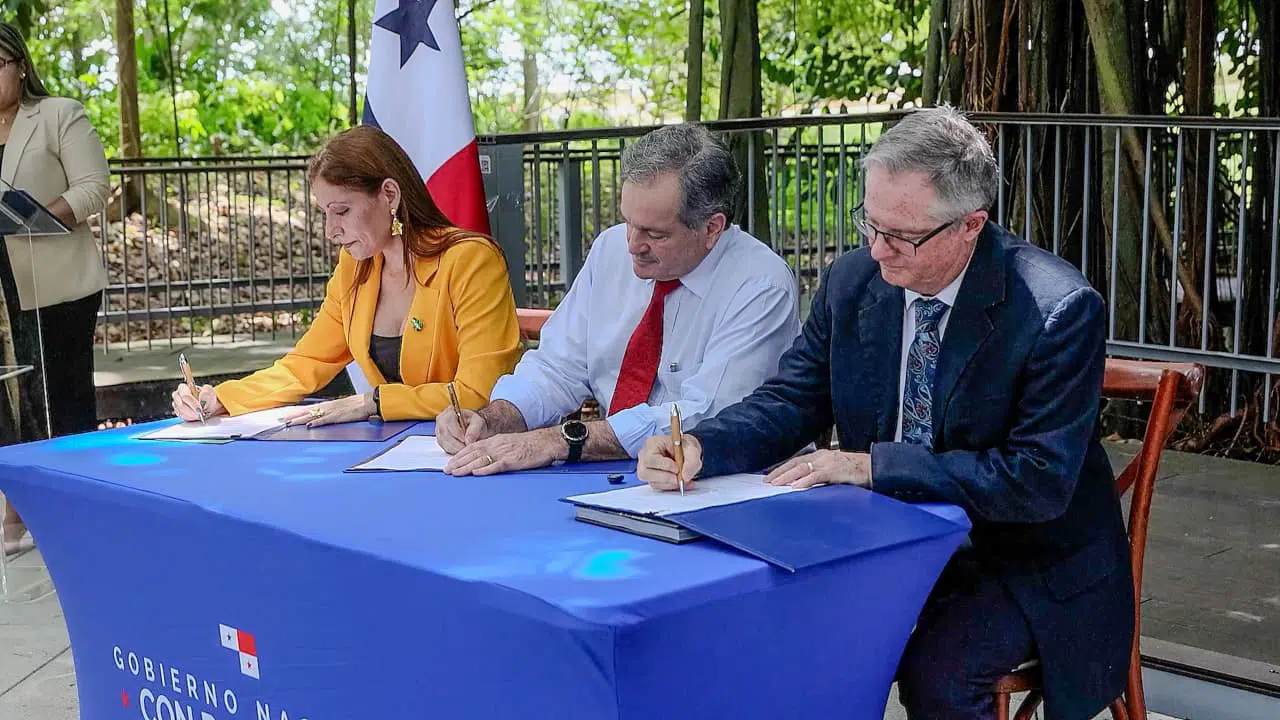
Panama, May 20, 2026 – In a significant stride towards bolstering its national conservation efforts and fulfilling international biodiversity commitments, Panama has officially commenced the comprehensive process of evaluating and updating its network of Key Biodiversity Areas (KBAs). This pivotal initiative was cemented on May 18th with the signing of a Memorandum of Understanding between the Ministry of Environment of Panama, the KBA Partnership, and the Amphibian Survival Alliance (ASA). The agreement formalizes the government’s dedication to systematically identifying, mapping, and documenting sites of critical importance for the nation’s rich biodiversity.
This undertaking is directly aligned with Panama’s obligations under the Kunming-Montreal Global Biodiversity Framework (KMGBF), a landmark international agreement aimed at halting and reversing biodiversity loss. The update process will provide the scientific foundation for implementing Panama’s National Biodiversity Strategy and Action Plan (NBSAP) and will be instrumental in achieving national conservation priorities. A key objective is to advance progress towards the ambitious 30×30 target, which calls for the effective protection and conservation of at least 30% of terrestrial and marine areas by the year 2030.
A Deeper Dive into Panama’s KBA Initiative
The current KBA network in Panama has its roots in the Important Bird Areas (IBA) program, initiated by the Audubon Society of Panama in collaboration with BirdLife International. This program began in 1995, following the acquisition of funding from the Nature Foundation. A significant milestone was reached in 2009 with the publication of "Important Bird Areas of the Americas," which highlighted 53 globally significant IBAs within Panama. These areas collectively spanned an impressive 2,501,046 hectares, representing nearly 29% of the country’s terrestrial surface.
In 2016, the adoption of the Global Standard for the Identification of Key Biodiversity Areas provided a more encompassing framework, recognizing sites important for various species groups, not just birds. Consequently, all of Panama’s previously identified IBAs were officially recognized as KBAs. However, this initial designation was largely driven by avian data, necessitating a more thorough assessment that incorporates a wider spectrum of species and ecosystems. The Ministry of Environment, under the leadership of Minister Juan Carlos Navarro, is spearheading this comprehensive update, working in close partnership with the Amphibian Survival Alliance to convene biodiversity experts from across the nation.

Genesis of the KBA National Coordinating Group
To drive this crucial update, a National Coordinating Group (NCG) for KBAs was formally established during a pivotal meeting on May 19th. This multidisciplinary group comprises experts from various species groups, biodiversity specialists, and public policy professionals. Their mandate is to facilitate the identification and evaluation of key biodiversity sites and, in a subsequent phase, to champion their effective conservation.
The National Coordinating Group includes prominent organizations such as the Audubon Society of Panama, a leading force in avian conservation within the country. Rosabel Miró, Executive Director of the Audubon Society of Panama, emphasized the historical significance of this initiative. "In 2009, we published with Conservation International, a current member of the KBA Partnership, a map of the 57 KBAs identified at that time in Panama. This allowed us to influence national authorities for their recognition in official documents such as the Environmental Atlas (2010) and the National Biodiversity Strategy and Action Plan 2018-2050, among others," Miró stated. She further highlighted the participatory nature of the new process, expressing confidence that "many people across the country will contribute with updated scientific information. A new chapter in the conservation of local and migratory biodiversity is beginning, and we will continue to disseminate its importance to all Panamanians."
Gabriela Toscano, Biodiversity Conservation Manager for BirdLife Americas, also participated in the formation meeting. She shared key technical insights and outlined the functions of the NCG, expressing her optimism about the project’s commencement. "We are witnessing a historic milestone for nature in Panama! The initiation of this process fills us with joy and optimism, as it represents a great opportunity to unite science and action in favor of the country’s incredible biodiversity," Toscano remarked.
Andy Plumptre, Head of the KBA Secretariat, conveyed his support for the endeavor, stating, "I hope to be able to support the Ministry of Environment, the Amphibian Survival Alliance, and all the institutions of the KBA National Coordinating Group to update their KBA network and work towards its conservation."
Implications for National and Global Conservation Goals
The updated KBA network will serve as a direct input for the implementation of Panama’s NBSAP. This strategic document outlines the nation’s approach to biodiversity conservation, encompassing critical areas such as ecosystem restoration, spatial planning, and the protection of threatened species. The refined KBA data will enable more targeted and effective conservation interventions, ensuring that limited resources are directed towards areas with the highest ecological significance.

The KMGBF, adopted in December 2022, sets ambitious targets for the global community to address the biodiversity crisis. Target 3, often referred to as "30×30," is a cornerstone of this framework, aiming to ensure that by 2030, at least 30% of the planet’s land and ocean areas are conserved and effectively managed. Panama’s proactive approach to updating its KBAs demonstrates a strong national commitment to contributing to this global goal. The identification of these vital areas is a prerequisite for their effective protection and management, allowing for the development of appropriate conservation strategies, such as the establishment of protected areas, sustainable land-use planning, and the implementation of species-specific conservation plans.
Supporting Data and Context
Panama, a nation renowned for its exceptional biodiversity due to its strategic location as a biological bridge between North and South America, faces significant conservation challenges. These include habitat fragmentation, the impacts of climate change, and pressures from agricultural expansion and infrastructure development. According to data from the International Union for Conservation of Nature (IUCN), Panama is home to a remarkable number of species, with numerous endemic and threatened populations. For instance, the country boasts over 1,400 species of birds, more than 1,000 species of mammals, and a vast array of reptiles, amphibians, and invertebrates.
The previous designation of IBAs, which are now KBAs, has already demonstrated their value. These sites have often become focal points for conservation efforts, leading to increased awareness, research, and the establishment of protected areas. The expansion of this framework to encompass a broader range of biodiversity will provide a more holistic understanding of ecological priorities. For example, the Amphibian Survival Alliance’s involvement underscores the critical need to protect habitats for amphibians, a group particularly vulnerable to environmental changes and often indicative of ecosystem health.
Broader Impact and Future Outlook
The successful identification and subsequent conservation of Panama’s KBAs will have far-reaching implications. It will not only contribute to the survival of countless species and the preservation of vital ecosystems but will also support sustainable development initiatives. Healthy ecosystems provide essential services, including clean water, pollination, carbon sequestration, and protection against natural disasters, all of which are crucial for human well-being and economic prosperity.
Furthermore, an updated and well-documented KBA network can attract international funding and support for conservation projects. It provides a scientifically robust basis for advocating for policy changes, promoting sustainable tourism, and engaging local communities in conservation efforts. The collaborative nature of this initiative, involving government agencies, NGOs, and scientific experts, is a testament to Panama’s commitment to a unified approach to biodiversity protection. As Panama moves forward with this critical update, the nation is poised to set a precedent for effective biodiversity management in the region and contribute significantly to global conservation objectives.

