


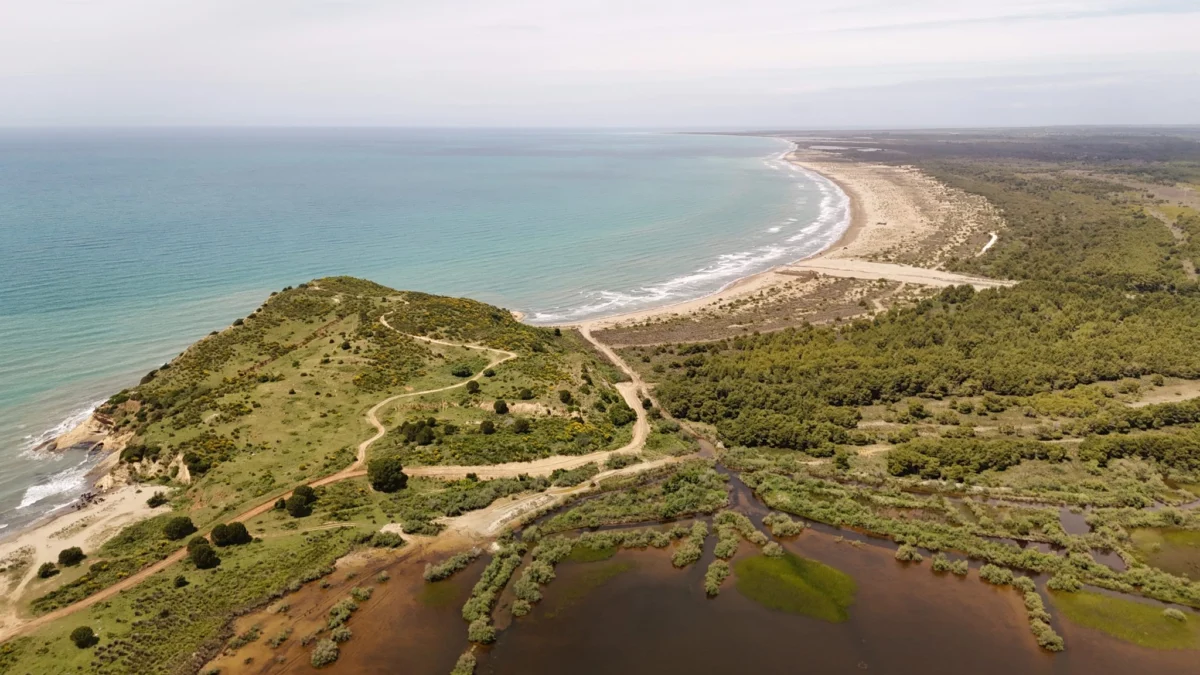
Heavy machinery has been systematically tearing through one of Europe’s most ecologically vital coastal habitats since late April, operating without the necessary permits, bypassing mandatory environmental impact assessments, and with the Albanian government reportedly providing misleading explanations to its parliament. The destruction is concentrated within the Pishë Poro–Narta Protected Area, a significant component of the Vjosa–Narta Protected Landscape and an integral part of the delta of the Vjosa River, renowned as one of Europe’s last remaining truly wild rivers. This ecological devastation is occurring in the same region where a luxury resort development, reportedly backed by Jared Kushner, the son-in-law of former US President Donald Trump, has been planned. Albanian Prime Minister Edi Rama has acknowledged the direct connection between the ongoing construction and this controversial development project.
The Pishë Poro–Narta Protected Area is not merely a scenic coastal zone; it is a critical sanctuary for biodiversity, a linchpin in migratory routes, and a vital refuge for endangered species. This delicate ecosystem shelters over 70 endangered species and serves as a haven for more than 200 bird species, including iconic flamingos and the critically endangered Dalmatian Pelican. Its strategic location along the Adriatic Flyway makes it a crucial stopover point for millions of birds undertaking their arduous annual migrations between Africa and Europe. Furthermore, the surrounding waters are recognized as one of the last remaining Mediterranean refuges for the Mediterranean Monk Seal, a marine mammal facing severe extinction threats, and a key nesting ground for the Loggerhead Sea Turtle, another species of significant conservation concern. Environmental organizations, including BirdLife’s Albanian Partner, PPNEA (Protection and Preservation of Natural Environment in Albania), have characterized the scale of the destruction as unprecedented, deeming it the most severe ecological damage ever recorded within Albania’s protected areas.
The ecological ramifications of the ongoing construction are profound and, in several instances, already irreversible. Ancient sand dunes, designated as Natural Monuments under Albanian law, have been inundated with dumped gravel. Scientists estimate that the damage to these geologically significant formations will take hundreds of years, if not millennia, to recover. Compounding this environmental crisis, one of the two crucial openings connecting the Narta Lagoon to the sea has been deliberately blocked by the construction activities. This action has effectively severed the vital tidal exchange, triggering immediate and cascading negative consequences for the lagoon’s marine life, including fish populations, and consequently impacting the avian species that depend on them for sustenance. The longer this blockage persists, the more severe and potentially permanent the ecological damage becomes, disrupting the delicate balance of the entire food web within this sensitive coastal ecosystem.
When confronted with these alarming developments in parliament, government officials offered explanations that appear to be demonstrably false. They claimed that the obstruction of the lagoon’s opening was undertaken to facilitate the construction of a road intended for "environmental surveying." However, on-the-ground observations and photographic evidence contradict this assertion, revealing the reality of heavy machinery engaged in destructive construction rather than any form of environmental assessment. This discrepancy has fueled public anger and deepened distrust in the government’s transparency and commitment to environmental protection.
The response from the public has been one of widespread outrage and determined resistance. Citizens attempting to stage peaceful protests against the destruction have reportedly been met with violence, and physical barriers, including barbed wire, have been erected to prevent public access to the coastline. Despite these repressive measures, thousands of citizens have mobilized, taking to the streets of Tirana in significant demonstrations to voice their opposition. These protests follow a significant legislative shift earlier in February 2024, when the Albanian government amended the Law on Protected Areas. This amendment has been widely criticized for weakening protections and effectively opening the door to luxury resort construction in zones that were previously under stringent protection, raising serious concerns about the prioritization of private development over environmental conservation.
Voices of Concern and Calls for Action
The escalating situation has drawn strong condemnation from international environmental organizations and local activists, who are raising urgent alarms about the long-term consequences for both the environment and democratic principles.
Anouk Puymartin, Head of Policy at BirdLife Europe and Central Asia, articulated the gravity of the situation: "Barbed wire cannot silence people. Thousands have taken to the streets of Tirana to defend Vjosa-Narta from destruction driven by private profit. A protected landscape of global importance is under attack, and people are demanding an end to the devastation. Nature belongs to everyone, not a handful of investors. The horrendous situation in Vjosa–Narte shows why laws are crucial to protect both people and nature. But those protections mean little if governments fail to uphold them." Her statement underscores the disconnect between legal protections and their enforcement, highlighting the erosion of trust and the potential for political expediency to undermine conservation efforts.
Aleksandr Trajçe, Director of PPNEA, echoed these sentiments, expressing a grim outlook on the future of environmental protection in Albania: "By the time the law on protected areas is brought back in line with EU standards, we fear that very little will remain to be protected. What is happening here is unprecedented. We have never seen anything like this in Albania’s protected areas." His words convey a sense of urgency and a deep concern that current actions are irrevocably damaging the country’s natural heritage, potentially precluding future recovery and rendering conservation efforts futile.
In response to this crisis, BirdLife Europe and Central Asia has issued a series of urgent calls to Albanian institutions. These include demands for the immediate cessation of all construction activities within the Pishë Poro–Narta Protected Area, a comprehensive and independent environmental impact assessment, the full reinstatement of legal protections for the area, and accountability for any individuals found to have violated environmental laws or provided false information.
Furthermore, the organization has appealed to the European Commission, urging them to publicly state that the destruction of protected habitats, the suppression of peaceful protest, and the provision of false information to parliament are incompatible with the principles and aspirations of EU membership. This appeal signifies a broader concern that Albania’s trajectory on environmental governance and democratic rights could jeopardize its path towards closer integration with the European Union.
Broader Implications and International Scrutiny
The unfolding events in Albania raise significant questions about the rule of law, environmental governance, and the protection of fundamental rights. The nation’s wild coast, a valuable natural asset, appears to be under direct assault. Simultaneously, the rights of its citizens to protest peacefully are being curtailed, and governmental transparency is being called into question. The international community, particularly European institutions observing Albania’s progress, faces a critical juncture. They possess both the leverage and the responsibility to intervene and ensure that environmental commitments and democratic norms are upheld.
The involvement of figures like Jared Kushner, whose business interests have previously attracted scrutiny, adds another layer of complexity to the situation, potentially drawing international attention and increasing pressure on the Albanian government to adhere to environmental standards and transparent governance. The precedent set by the government’s actions in the Vjosa–Narta Protected Landscape could have far-reaching consequences, influencing future development projects and the broader perception of Albania as a destination for international investment.
The Pishë Poro–Narta Protected Area’s designation under Albanian law and its international recognition underscore its ecological significance. The efforts of organizations like PPNEA, as BirdLife International’s partner in Albania, are crucial in documenting these violations and advocating for the protection of these invaluable natural spaces. The international community’s response will likely be a key determinant in the long-term fate of this ecologically vital region and the broader trajectory of environmental protection and democratic governance in Albania. The coming weeks and months will be critical in determining whether ecological integrity and the rule of law will prevail over potentially lucrative, yet environmentally destructive, development interests.
Notes to Editors:
[1] The Pishë Poro–Narta Protected Area is situated within the Vjosa–Narta Protected Landscape, an area recognized both under Albanian law and internationally for its exceptional ecological importance. PPNEA (Protection and Preservation of Natural Environment in Albania) is the dedicated partner of BirdLife International in Albania, actively working on conservation initiatives.
[2] Reports emerged in early 2026 regarding plans by Jared Kushner and his wife Ivanka Trump to develop an exclusive tourist destination on the island of Sazan. This initiative garnered significant controversy, with numerous environmental groups expressing deep concerns. Further details can be found in reports from sources such as Euronews.
[3] Statements and proceedings related to the project and governmental explanations have been documented. For instance, a video from the Presidency of the Assembly, titled "On the extraordinary project for Albania and the great untruths that have been circulated in recent days," provides insight into the official discourse surrounding the developments.

