


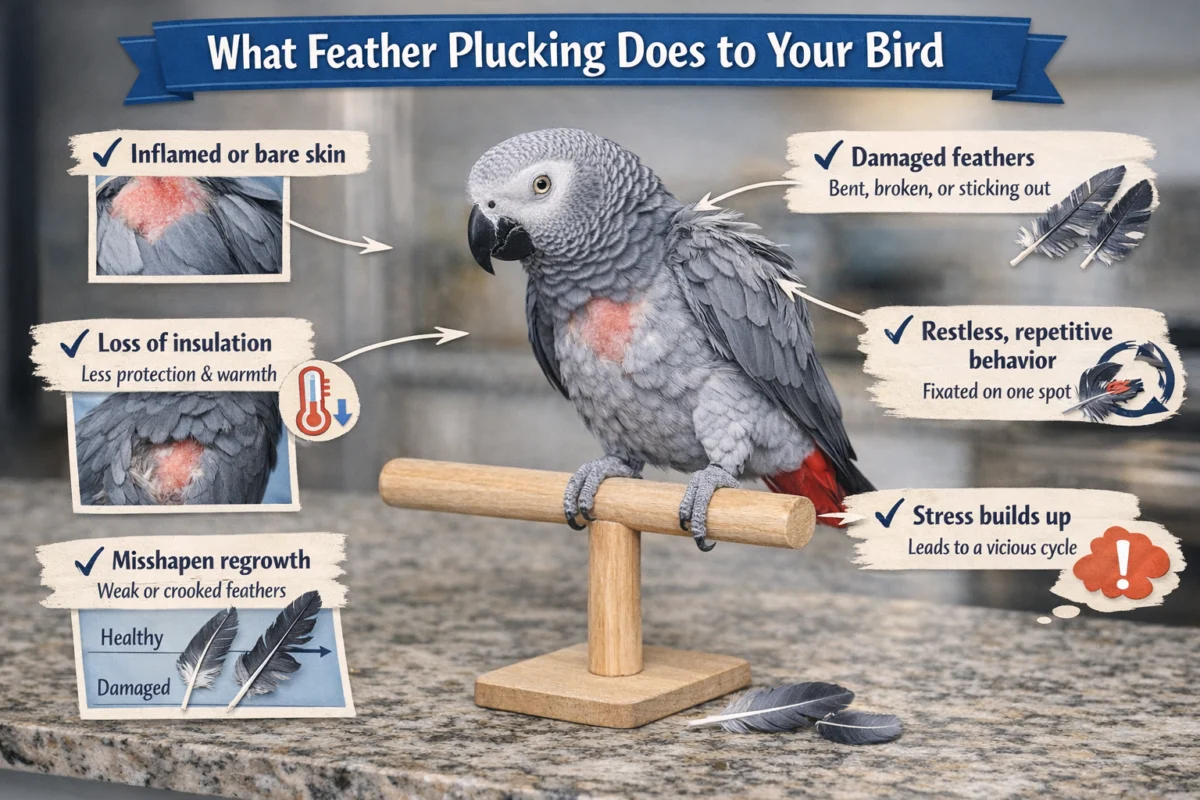
Feather destructive behavior (FDB), commonly known as feather plucking, represents a complex and distressing condition in captive birds, signaling underlying physical or psychological distress that demands immediate and comprehensive attention. Far from a mere grooming eccentricity, this self-inflicted damage to plumage can range from mild feather chewing to severe self-mutilation, impacting a bird’s health, welfare, and overall quality of life. Early recognition and intervention are paramount, as the longer FDB persists, the more entrenched and challenging it becomes to manage, often culminating in chronic issues for the avian patient.
Distinguishing Normal Avian Grooming from Destructive Behavior
The initial challenge for many bird owners lies in accurately identifying FDB, as it can be easily confused with normal avian behaviors such as molting and preening. A clear understanding of these distinctions is critical for timely intervention.
Molting: This is a natural physiological process where birds shed old, worn-out feathers to replace them with new, healthy ones. Molting typically occurs one to two times a year, depending on the species, age, and environmental factors. During a molt, feathers fall out gradually and symmetrically across the body. Owners might observe a light scattering of small, downy feathers or larger contour feathers on the cage floor. New pin feathers, encased in a waxy sheath, emerge, often causing a temporary itchy sensation that prompts increased preening. Crucially, the skin beneath molting feathers remains healthy and intact, and the bird generally appears otherwise well.
Preening: A vital daily activity for all birds, preening involves meticulous maintenance of feathers. Using their beaks and tongues, birds carefully realign feather barbs, remove debris, and apply preen oil (from the uropygial gland) to condition and waterproof their plumage. This behavior is typically calm, methodical, and distributed across various parts of the body. A healthy bird spends a significant portion of its day preening, ensuring its feathers are in optimal condition for flight, insulation, and protection. The outcome of normal preening is smooth, well-kept feathers.
Feather Plucking (Feather Destructive Behavior – FDB): In contrast to normal molting and preening, feather plucking is an abnormal, self-injurious behavior characterized by the bird excessively chewing, biting, or pulling out its own feathers. Unlike the natural shedding of molting, plucked feathers often show signs of damage—frayed edges, broken shafts, or even the entire feather bulb attached. The behavior is frequently repetitive, obsessive, and concentrated on specific areas of the body that are accessible to the beak, such as the chest, legs, flanks, and under the wings. Areas like the head and neck are typically spared unless another bird is involved in allopreening. The skin beneath the plucked feathers may appear irritated, red, or inflamed. Estimates suggest that FDB affects a significant portion of the captive parrot population, with some studies indicating prevalence rates as high as 10-15% in certain species like African Grey Parrots, Cockatoos, and Macaws, though specific data varies widely depending on the diagnostic criteria and population studied.
Self-Mutilation: This represents the most severe progression of FDB. When feather plucking escalates to self-mutilation, the bird no longer targets only feathers but actively damages the underlying skin and tissue. This can involve aggressive biting, tearing, or digging into the skin, leading to open wounds, bleeding, and secondary infections. Self-mutilation is a veterinary emergency requiring immediate intervention to prevent further injury, severe pain, and potentially life-threatening complications. The behavior is often intensely focused, difficult to interrupt, and can rapidly cause significant tissue damage.
The Multifactorial Etiology of Feather Destructive Behavior
The onset of FDB is rarely attributable to a single cause; rather, it typically arises from a complex interplay of medical, environmental, and psychological factors. Over the past few decades, the understanding of FDB has evolved significantly, moving away from simplistic explanations like "bad habits" to a more nuanced, holistic perspective that recognizes the bird’s innate biological and behavioral needs.
Medical Causes: A thorough veterinary examination is the first crucial step, as a significant percentage of FDB cases have an underlying medical basis.
- Infections: Bacterial, fungal, or parasitic infections (e.g., Giardia, feather mites, psittacine circovirus) can cause intense itching, leading to excessive preening that escalates into plucking.
- Allergies: Environmental allergens (dust, pollen, cleaning products) or food allergies can manifest as pruritus (itching), prompting feather destruction.
- Internal Organ Disease: Conditions affecting the liver, kidneys, or thyroid can alter metabolism and skin health, making feathers brittle or skin itchy.
- Nutritional Deficiencies: Diets lacking essential vitamins (especially Vitamin A), minerals (calcium), or amino acids can compromise feather quality and skin integrity. All-seed diets are particularly problematic, often leading to nutrient deficiencies and liver disease.
- Heavy Metal Toxicity: Exposure to lead or zinc can cause neurological and systemic issues, including dermatological signs and behavioral changes that manifest as plucking.
- Pain: Any source of chronic pain, such as arthritis, internal masses, or injuries, can cause a bird to focus on the painful area, leading to plucking.
- Viral Diseases: Psittacine Beak and Feather Disease (PBFD) and Polyomavirus can directly damage feather follicles, leading to abnormal feather growth and associated discomfort or itching.
- Dermatitis: Various skin conditions, including dry skin from low humidity, can cause irritation.
Environmental and Husbandry Factors: Suboptimal living conditions are major contributors to FDB.
- Lack of Enrichment: Captive birds, especially intelligent species like parrots, require constant mental and physical stimulation. A barren cage with few toys, limited foraging opportunities, or insufficient shreddable materials can lead to boredom, frustration, and redirecting energy into feather destruction.
- Inadequate Diet: As mentioned, seed-heavy diets are nutritionally imbalanced and contribute to poor feather and skin health, making birds more susceptible to FDB.
- Poor Cage Environment: Cages that are too small, improperly lit, or placed in high-traffic or isolated areas can induce stress. Lack of appropriate perches (varying textures and diameters) can lead to foot problems and discomfort.
- Low Humidity: Many exotic birds originate from humid environments; dry indoor air can cause skin and feather dryness, leading to itching.
- Inconsistent Routines/Sleep Deprivation: Birds thrive on routine. Irregular feeding times, inconsistent social interaction, or insufficient uninterrupted sleep (typically 10-12 hours in darkness) can lead to chronic stress.
- Exposure to Irritants: Smoke, strong chemical fumes, or certain aerosols can irritate a bird’s respiratory system and skin, triggering plucking.
Behavioral and Psychological Factors:
- Stress and Anxiety: Birds are highly sensitive to stress. Changes in environment, new family members or pets, perceived threats, or lack of a secure environment can trigger anxiety, which manifests as FDB.
- Hormonal Imbalance: During breeding season, hormonal fluctuations can lead to increased nesting behaviors, aggression, or sexual frustration, which may be redirected into plucking. Inappropriate petting (below the neck) can also stimulate hormonal responses.
- Learned Behavior: If plucking results in increased attention from owners (even negative attention), the behavior can become reinforced.
- Obsessive-Compulsive Disorder (OCD-like Behaviors): In some cases, FDB may develop into a compulsive disorder, where the bird continues to pluck even after the original trigger is resolved, due to changes in brain chemistry.
- Trauma: A past traumatic experience, such as a severe fright or neglect, can lead to chronic stress and behavioral issues, including plucking.
The Diagnostic Chronology and Importance of Early Intervention

The diagnostic process for FDB typically follows a structured chronology, beginning with the owner’s initial observations and culminating in a comprehensive veterinary and behavioral assessment.
- Initial Observation (Owner): The process usually starts when an owner notices subtle changes—a few more feathers on the cage floor than usual, a bird spending an unusual amount of time on a particular body part, or early signs of feather damage. This "something feels off" stage is critical.
- Veterinary Consultation: Upon noticing these signs, immediate consultation with an avian veterinarian is advised. The vet will conduct a thorough physical examination, assessing the bird’s overall condition, feather quality, skin integrity, and any signs of discomfort or pain.
- Diagnostic Testing: To rule out medical causes, the vet may perform a battery of tests:
- Blood Work: Complete blood count (CBC) and biochemistry panel to check for infection, inflammation, organ dysfunction, and nutritional deficiencies.
- Feather and Skin Biopsies/Scrapings: To identify parasites, fungal infections, bacterial infections, or specific dermatological conditions.
- Fecal Analysis: To detect internal parasites like Giardia.
- Radiographs (X-rays): To visualize internal organs, check for masses, foreign bodies, or skeletal issues.
- Heavy Metal Screening: Blood tests to detect lead or zinc toxicity.
- Viral Testing: PCR tests for PBFD and Polyomavirus, especially in young birds or those with specific feather abnormalities.
- Environmental and Behavioral Assessment: If medical causes are ruled out or concurrently addressed, the focus shifts to the bird’s environment and behavior. This involves a detailed discussion with the owner about:
- Diet: Type of food, frequency, supplements.
- Cage Setup: Size, perches, toys, location.
- Daily Routine: Sleep schedule, social interaction, enrichment.
- Stressors: Recent changes in the household, perceived threats.
- Observation: The vet or a certified avian behaviorist may observe the bird’s behavior in its home environment.
The timeline from initial observation to diagnosis and intervention is crucial. Early detection, when FDB is in its nascent stages, significantly improves the prognosis for recovery. Addressing the root cause before the behavior becomes a deeply ingrained habit or escalates to self-mutilation allows for more effective and less invasive treatments.
The Profound Impact of Feather Plucking on Avian Health and Welfare
The consequences of FDB extend far beyond cosmetic damage, profoundly affecting a bird’s physical health and psychological well-being.
- Physical Deterioration:
- Skin Damage and Infection: Repeated trauma to the skin leads to irritation, inflammation, and open wounds, creating entry points for bacterial and fungal infections.
- Compromised Thermoregulation: Feathers provide essential insulation. Their loss impairs a bird’s ability to regulate its body temperature, making it susceptible to hypothermia or overheating.
- Loss of Protection: Feathers offer physical protection against trauma and environmental elements. Their absence leaves the skin vulnerable.
- Permanent Follicle Damage: Chronic plucking can permanently damage feather follicles, preventing regrowth or leading to the growth of abnormal, brittle, or discolored feathers.
- Impaired Flight: Damage to primary flight feathers can hinder or eliminate a bird’s ability to fly, impacting its natural behaviors and sense of freedom.
- Psychological Distress:
- Chronic Stress and Anxiety: The underlying causes of plucking, whether medical or environmental, often involve chronic stress, leading to a state of constant anxiety for the bird.
- Reduced Quality of Life: A bird engaged in FDB often experiences discomfort, pain, and frustration, diminishing its overall quality of life.
- Behavioral Sink: In severe, long-standing cases, FDB can become a compulsive behavior, a coping mechanism that offers temporary relief from internal discomfort or stress, perpetuating a vicious cycle.
- Social Impact: Feather loss can affect a bird’s social interactions, as plumage plays a role in communication and mating displays.
From a broader perspective, FDB highlights the challenges of keeping highly intelligent and complex creatures in captive environments. It underscores the responsibility of owners to provide not just basic care but also species-appropriate enrichment, social interaction, and a stimulating environment that mimics their natural habitat as much as possible.
Comprehensive Management and Treatment Strategies
Addressing FDB requires a multi-pronged approach, often involving a team of avian veterinarians, certified avian behaviorists, and dedicated owners. There is no single "cure"; rather, successful outcomes stem from a combination of interventions.
Veterinary Interventions:
- Treating Underlying Medical Conditions: This is the foundational step. Medications for infections (antibiotics, antifungals, antiparasitics), dietary supplements, pain relief, and detoxification protocols are administered as needed.
- Elizabethan Collars (E-collars): In cases of severe plucking or self-mutilation, an E-collar may be necessary to prevent the bird from accessing the damaged areas, allowing skin to heal and feathers to regrow. These are temporary measures and must be used with careful supervision.
- Topical Treatments: Sprays or creams may be used to soothe irritated skin or deter plucking, though these are typically adjuncts to primary treatments.
- Psychopharmacology: In refractory cases where behavioral and environmental modifications are insufficient, and the bird is suffering from severe anxiety or compulsive behavior, anti-anxiety medications (e.g., SSRIs, tricyclic antidepressants) may be prescribed by an avian vet. These are typically used as a last resort and always in conjunction with extensive behavioral modification.
Environmental and Behavioral Modifications: These are critical for long-term success.
- Dietary Overhaul: Transitioning to a high-quality pelleted diet supplemented with a variety of fresh fruits, vegetables, and sprouted grains. Eliminating all-seed diets is paramount.
- Environmental Enrichment: Providing a wide array of species-appropriate toys that encourage foraging, shredding, and manipulation. Rotating toys frequently to maintain novelty. Offering natural branches for perching and chewing.
- Appropriate Cage Size and Setup: Ensuring the cage is large enough for the bird to fully stretch its wings and move comfortably. Providing diverse perch materials and diameters to prevent foot problems.
- Consistent Sleep Schedule: Guaranteeing 10-12 hours of uninterrupted, quiet, dark sleep each night.
- Regular Bathing/Misting: Offering daily opportunities for bathing or misting helps keep skin and feathers hydrated and clean.
- Social Interaction: Providing consistent, positive social interaction tailored to the bird’s species and individual needs. This may involve positive reinforcement training, interactive play, or simply quiet companionship. Avoid inappropriate petting that can trigger hormonal responses.
- Reducing Stressors: Identifying and minimizing environmental stressors, such as loud noises, sudden changes, or perceived threats. Creating a stable and predictable environment.
- Photoperiod Management: Ensuring appropriate light cycles, especially for species prone to hormonal issues.
Official Responses and Professional Guidance:
Avian veterinarians and certified avian behaviorists consistently advocate for a holistic, patient-centered approach to FDB. Dr. Jane Smith, a leading avian veterinarian, states, "Feather plucking is a symptom, not a disease. Our role is to be detectives, meticulously investigating every possible medical, environmental, and behavioral trigger. Rushing to a single solution without a comprehensive diagnostic workup is a disservice to the bird." Organizations like the Association of Avian Veterinarians (AAV) and the International Association of Animal Behavior Consultants (IAABC) provide extensive resources and professional development to ensure best practices in diagnosing and managing FDB. They emphasize the importance of owner education and commitment as crucial factors in successful outcomes.
Prognosis and Long-Term Management
The prognosis for complete feather regrowth and cessation of plucking varies widely depending on the duration and severity of the behavior, the underlying cause, and the owner’s consistency in implementing management strategies. In cases where FDB is caught early and the underlying cause is definitively identified and treated, full recovery is possible. However, for chronic pluckers, especially those with irreversible follicle damage or deeply ingrained compulsive behaviors, complete feather regrowth may not occur. In such instances, the goal shifts to managing the behavior, preventing self-mutilation, and significantly improving the bird’s overall quality of life. This often entails lifelong commitment to environmental enrichment, dietary management, and behavioral support.
In conclusion, feather destructive behavior in avian companions is a complex welfare issue demanding immediate, informed, and dedicated attention. By understanding the critical distinctions between normal grooming and FDB, meticulously investigating its multifactorial causes, and implementing a comprehensive management plan, owners, in collaboration with avian health professionals, can significantly mitigate its impact and provide their feathered companions with a happier, healthier existence. The proactive approach of early detection and intervention remains the most potent tool in the fight against this distressing condition.

