


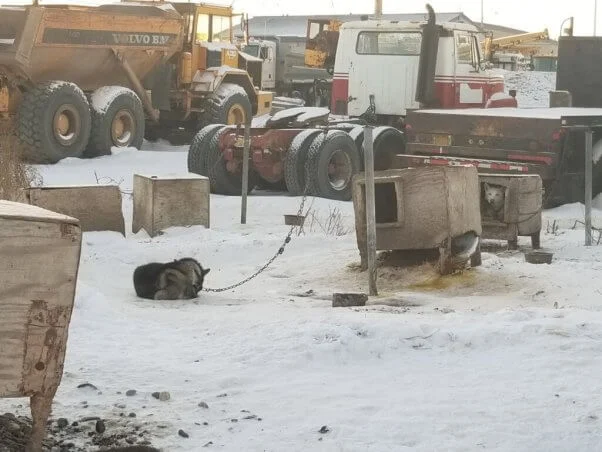
The quietude of the Matanuska-Susitna Borough in Alaska was shattered this week following a gruesome discovery at a local dog-sledding facility that has sparked a statewide conversation regarding animal welfare and the efficacy of local oversight. On April 21, 2026, Alaska State Troopers arrested Misty Rehder on 26 counts of animal cruelty following the discovery of 25 deceased sled dogs at a kennel reportedly known as Walker’s Wild Ride. The incident, characterized by officials and witnesses as one of the most severe cases of animal neglect in recent regional history, has left one surviving dog in critical care and a community demanding answers from the agencies tasked with protecting these animals.
The investigation began in earnest after a local resident, Mike Dolinar, visited the property following rumors that the facility’s dogs were being put up for adoption due to the owner’s inability to care for them. What he found, however, was not a facility in transition, but a scene of profound tragedy. According to statements provided to investigators, the silence of the kennel—usually a place of high-energy barking and activity—was the first indication of the catastrophe. Upon inspecting the dilapidated wooden shelters on the property, Dolinar discovered the remains of 25 dogs. Many were found still tethered to their posts, frozen in place within their shelters, suggesting they had succumbed to the elements and starvation while unable to seek warmth or food.
A Scene of Catastrophic Neglect
The physical evidence at the Walker’s Wild Ride kennel paints a harrowing picture of the final months for the animals stationed there. Witnesses described a landscape of "deep circles" trodden into the frozen earth—a common sign of "pacing," a stereotypical behavior exhibited by tethered animals under extreme psychological and physical distress. The dogs, primarily Alaskan Huskies bred for endurance and cold-weather performance, were found in various states of decay and mummification, indicating that deaths had likely occurred at different intervals throughout the harsh winter months.
Mike Dolinar’s account of the discovery highlighted the visceral nature of the scene. He reported seeing limbs protruding from small, inadequate dog houses and finding animal after animal deceased in their chains. Among the 26 dogs originally accounted for at the site, only one remained alive. This survivor was found in a state of advanced emaciation, having survived the winter while surrounded by the remains of its pack. The dog was immediately seized by authorities and transported to a veterinary facility for emergency stabilization and nutritional rehabilitation.
The Timeline of Reported Failures
The tragedy at the Mat-Su kennel is compounded by allegations that the deaths were preventable. In the months leading up to the discovery, several neighbors and concerned citizens claimed they had filed multiple reports with Matanuska-Susitna Borough Animal Control. These reports detailed concerns regarding the lack of visible food, the absence of personnel at the kennel, and the deteriorating condition of the dogs.
One local resident claimed she had attempted to intervene personally by bringing straw bedding and dog food to the property during a period of extreme sub-zero temperatures. However, she reported being turned away by a borough animal control officer who allegedly insisted that the situation was being monitored and that the owner was in compliance with local ordinances. The disconnect between these citizen reports and the official response has become a primary focal point of the ongoing investigation.
Critics argue that the "hands-off" approach often taken by local authorities regarding working dog kennels in Alaska creates a vacuum where neglect can go unnoticed until it reaches a terminal stage. In the Mat-Su Borough, as in much of Alaska, sled dogs are often classified differently than domestic pets, leading to variations in how "adequate shelter" and "care" are defined and enforced.
Legal Proceedings and the Arrest of Misty Rehder
Following the forensic recovery of the remains and a preliminary veterinary assessment of the lone survivor, Misty Rehder was taken into custody. The 26 counts of Cruelty to Animals filed against her represent each of the dogs found on the property—25 for the deceased and one for the survivor. Under Alaska Statute 11.61.140, animal cruelty can be classified as a Class A misdemeanor or a Class C felony, depending on the severity and the presence of prior convictions. Given the scale of the deaths, legal experts suggest the prosecution may seek the maximum penalties allowed under state law.
The Alaska State Troopers, who took over the lead on the criminal investigation from borough animal control, are currently reviewing the records of the kennel and any communications between the owner and local authorities. The investigation aims to determine the exact cause of death for the 25 dogs, though preliminary findings point toward a combination of dehydration, starvation, and exposure to extreme cold.
The Broader Context of Alaska’s Dog-Sledding Industry
The incident at Walker’s Wild Ride has reignited a long-standing debate over the ethics and regulation of the dog-sledding industry in Alaska. While dog mushing is the official state sport and a significant driver of winter tourism, it has faced increasing scrutiny from international animal rights organizations like PETA (People for the Ethical Treatment of Animals).
Advocates for reform point out that many commercial kennels utilize "tethering" or "chaining" as a primary method of containment. While proponents of the practice argue it prevents fights between high-energy dogs and allows for individual monitoring, welfare experts argue that long-term chaining leads to muscle atrophy, psychological trauma, and an inability for the dogs to effectively regulate their body temperature by moving freely.
The commercial aspect of the industry—ranging from high-stakes races like the Iditarod to tourist-oriented sled rides—relies on a large population of dogs. When these businesses face financial hardship or when owners become overwhelmed, the "surplus" or "retired" dogs often fall into a precarious legal and physical state. The case of Misty Rehder is being cited by activists as a symptomatic failure of an industry that treats sentient animals as "equipment" rather than companions.
Data and Statistics on Sled Dog Welfare
Reliable data on sled dog mortality in private kennels is notoriously difficult to obtain due to the lack of a centralized registry or mandatory reporting for non-racing deaths. However, the Iditarod Trail Sled Dog Race, the industry’s most visible event, has documented over 150 dog deaths since its inception in 1973, according to various animal welfare tracking groups. While racing deaths often receive media attention, "kennel deaths"—those occurring outside of organized competition—frequently go unreported unless discovered by third parties, as was the case in the Mat-Su Borough.
In 2023 and 2024, audits of animal control facilities in various Alaskan boroughs revealed significant staffing shortages and a backlog of welfare checks. In the Mat-Su Borough specifically, the ratio of animal control officers to the geographic area they must cover is one of the highest in the state, often resulting in a reactive rather than proactive approach to animal welfare complaints.
Official Responses and Public Reaction
The Matanuska-Susitna Borough government has issued a brief statement acknowledging the investigation but has declined to comment on the specific allegations of negligence regarding animal control’s prior visits to the kennel. "The Borough is cooperating fully with the Alaska State Troopers in their criminal investigation," the statement read. "We take all allegations of animal cruelty seriously and are conducting an internal review of our procedures and responses related to this case."
Public reaction has been swift and condemnatory. Local social media groups have been flooded with tributes to the deceased dogs and calls for a complete overhaul of the borough’s animal control department. Protests have been organized outside the borough offices, with participants demanding that animal control officers be held accountable if it is proven they ignored viable evidence of neglect.
Animal rights organizations have also used the tragedy to call for a boycott of dog-sledding tourism. PETA issued a statement urging travelers to Alaska to avoid any excursions that involve visits to kennels or sled rides, arguing that the "profit-driven nature of the industry inherently leads to the commodification and eventual neglect of the dogs."
Implications for Future Policy
The fallout from the Walker’s Wild Ride investigation is expected to lead to legislative discussions in the Alaska State Capitol. Potential reforms being discussed by local advocates include:
- Mandatory Kennel Inspections: Implementing a licensing and regular inspection framework for any facility housing more than a specific number of dogs (e.g., 10 or more).
- Tethering Restrictions: Following the lead of several Lower 48 states by placing strict limits on how long a dog can be continuously chained and requiring specific standards for tethering equipment.
- Enhanced Transparency: Requiring animal control agencies to provide public logs of welfare checks and the outcomes of those checks to ensure accountability.
As the legal case against Misty Rehder moves forward, the surviving dog remains a symbol of the tragedy. Currently being cared for by a specialized rescue group, the dog is reportedly showing signs of recovery, though the long-term psychological effects of its ordeal remain unknown.
The 25 dogs that perished in the Mat-Su Borough have become a catalyst for a movement seeking to bridge the gap between Alaska’s cultural heritage of mushing and modern standards of animal welfare. For the community of Matanuska-Susitna, the goal is now to ensure that the silence of a kennel never again serves as a warning of such preventable loss.

