


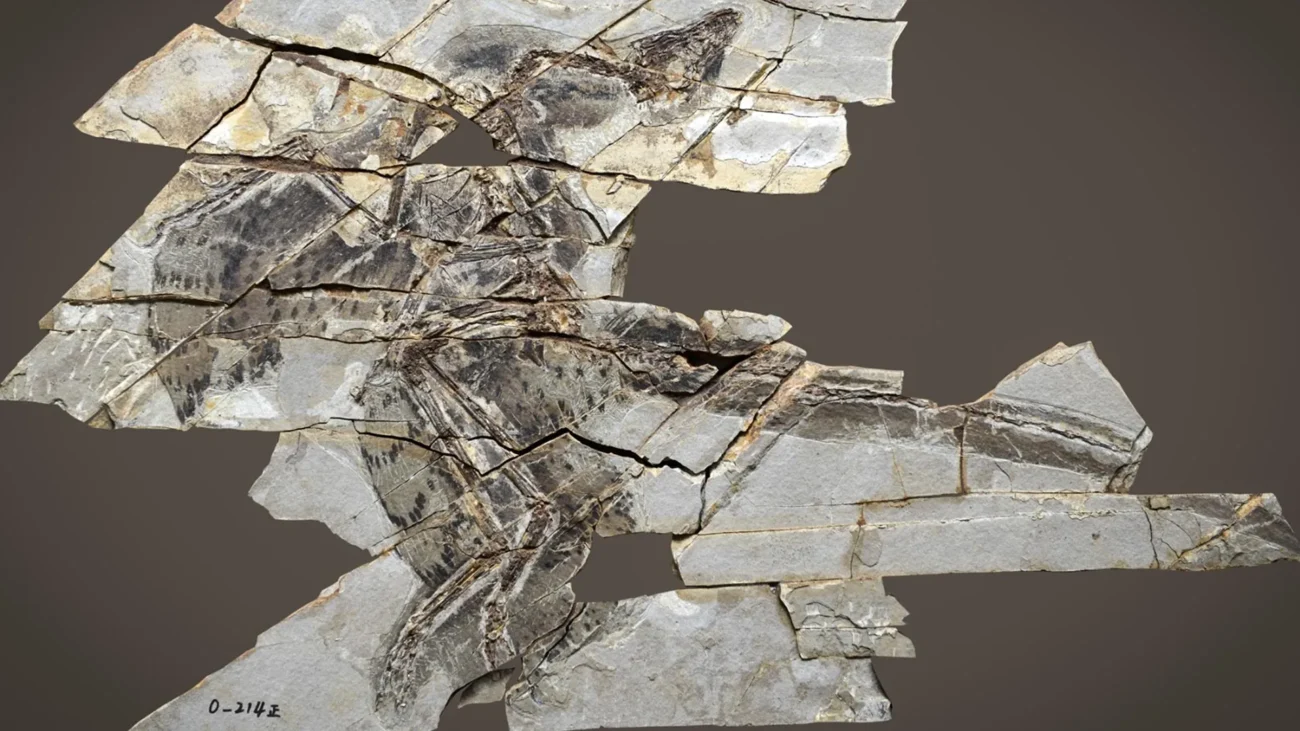
A groundbreaking new study, analyzing exceptionally preserved dinosaur fossils, suggests that some feathered dinosaurs had already lost the capacity for flight, a finding that significantly reshapes our understanding of the evolution of flight in both avian and non-avian dinosaurs. The research, spearheaded by Dr. Yosef Kiat of Tel Aviv University’s School of Zoology and the Steinhardt Museum of Natural History, in collaboration with international colleagues from China and the United States, focused on rare specimens that not only retained their feathers but also their original coloration. Published in the esteemed journal Communications Biology by Nature Portfolio, this investigation offers an unprecedented glimpse into the lives of creatures that roamed the Earth approximately 160 million years ago, during the Jurassic period.
Unraveling the Mystery of Feathered Flightlessness
The core of this compelling discovery lies in the intricate analysis of feather molting patterns, a process that, until now, has been difficult to ascertain from fossil evidence. "Feather molting seems like a small technical detail," explained Dr. Kiat, an ornithologist specializing in feather morphology and function, "but when examined in fossils, it can change everything we thought about the origins of flight, highlighting how complex and diverse wing evolution truly was." The study’s implications are profound, indicating that the evolutionary trajectory of flight was not a linear progression but a dynamic process involving both the development and subsequent loss of aerial capabilities in certain dinosaur lineages. This challenges the long-held assumption that all feathered dinosaurs were on a direct path to becoming birds, capable of flight.
The Evolutionary Tapestry of Feathers and Flight
To comprehend the significance of this finding, it’s crucial to place it within the broader context of dinosaur evolution. Dinosaurs diverged from other reptilian lineages roughly 240 million years ago. In the ensuing evolutionary epochs, a remarkable innovation emerged: feathers. These lightweight, proteinaceous structures, initially thought to be solely for insulation or display, began to play a pivotal role in the development of flight.
Around 175 million years ago, during the Middle Jurassic, a prominent group of feathered dinosaurs known as Pennaraptora emerged. These dinosaurs are considered direct ancestors of modern birds, and it is within this lineage that the evolution of flight is most intensely studied. Pennaraptora were the only dinosaur group to survive the catastrophic mass extinction event at the end of the Cretaceous period, approximately 66 million years ago, ultimately giving rise to the birds we see today. Scientists have long posited that feathers in Pennaraptora evolved primarily for flight. However, the new research introduces a nuanced perspective, suggesting that environmental pressures or shifts in lifestyle may have led some species within this group to adapt by losing their flight abilities, mirroring the phenomenon observed in extant flightless birds like ostriches, emus, and penguins.
Anchiornis: A Window into the Past
The focal point of Dr. Kiat’s research was the genus Anchiornis. This small, feathered dinosaur, belonging to the Pennaraptoran lineage, inhabited what is now northeastern China during the Late Jurassic period. The study meticulously examined nine Anchiornis fossils unearthed from this region. What makes these specimens particularly extraordinary is their exceptional preservation, which extends beyond skeletal structure to include the delicate details of their feathers. Critically, the unique geological conditions in eastern China have allowed for the preservation of melanosomes, organelles within cells that contain pigments, thereby retaining the original coloration of the feathers.
Each of the analyzed Anchiornis specimens displayed a striking pattern: wing feathers that were predominantly white, adorned with a distinct black spot at their tips. This remarkable level of preservation provided researchers with an unparalleled opportunity to study not only the physical form of the feathers but also their growth and potential function. "This preserved coloration allowed researchers to closely examine the structure and growth of the feathers in ways that are usually impossible with fossils," Dr. Kiat stated.
Deciphering Flight Through Molting Patterns
The key to unlocking the flight capabilities of Anchiornis lay in understanding its molting patterns. Feathers, while appearing static, are dynamic structures that undergo a cycle of growth, wear, and replacement. Dr. Kiat explained the biological basis of this process: "Feathers grow for two to three weeks. Reaching their final size, they detach from the blood vessels that fed them during growth and become dead material. Worn over time, they are shed and replaced by new feathers – in a process called molting, which tells an important story."
In birds that rely on flight for survival, molting is a carefully orchestrated and gradual process. This orderly shedding and regrowth of feathers maintain the symmetry of the wings, ensuring that the animal can continue to fly, albeit with potentially reduced efficiency, during the molting period. This is crucial for foraging, escaping predators, and migration. In stark contrast, flightless birds often exhibit more random and irregular molting patterns. Their wings, no longer essential for aerial locomotion, do not require the same precise maintenance. "In birds without flight ability, on the other hand, molting is more random and irregular," Dr. Kiat elaborated. "Consequently, the molting pattern tells us whether a certain winged creature was capable of flight."
By applying this understanding to the fossilized Anchiornis feathers, the research team identified a continuous line of black spots along the edges of the wing feathers. More significantly, they observed developing feathers whose black spots were not aligned with the pattern of the fully formed feathers. This misalignment indicated that new feathers were growing in at different stages, disrupting the synchronized regrowth pattern necessary for sustained flight. "A detailed analysis revealed that the molting pattern was irregular rather than orderly," the study concluded.
The Verdict: Flightless Dinosaurs
Based on this evidence, Dr. Kiat and his colleagues reached a definitive conclusion: Anchiornis was likely incapable of flight. "Based on my familiarity with modern birds, I identified a molting pattern indicating that these dinosaurs were probably flightless," Dr. Kiat asserted. He underscored the rarity and significance of this finding, emphasizing that the preserved coloration of the feathers provided insights into a functional trait – flight ability – which is rarely preserved in the fossil record, which typically offers only skeletal evidence.
This discovery adds Anchiornis to a growing list of feathered dinosaurs that, despite possessing elaborate feather structures, did not utilize them for powered flight. Other examples include Caudipteryx and Protarchaeopteryx. This growing body of evidence strongly suggests that feathers evolved for purposes other than flight, such as insulation, display, or thermoregulation, before being co-opted for aerial locomotion in some lineages.
Broader Implications for Evolutionary Science
The findings from the Anchiornis study carry profound implications for our understanding of the evolution of flight and the diversity of life in the Mesozoic era. The complex and often circuitous path that led to the development of flight in birds is now even more apparent. It suggests a period of significant evolutionary experimentation, where flight capabilities were acquired, refined, and in some cases, lost.
"Feather molting seems like a small technical detail – but when examined in fossils, it can change everything we thought about the origins of flight," Dr. Kiat reiterated. "Anchiornis now joins the list of dinosaurs that were covered in feathers but not capable of flight, highlighting how complex and diverse wing evolution truly was." This challenges a simplistic, linear model of evolution and instead presents a picture of a more intricate and branching evolutionary tree, where multiple pathways were explored.
Expert Reactions and Future Research
While the study’s authors are at the forefront of this research, other paleontologists have reacted with keen interest. Dr. Anya Sharma, a paleontologist specializing in avian evolution not involved in the study, commented, "This is a truly remarkable piece of research. The preservation of coloration and the detailed analysis of molting patterns offer a level of insight we rarely achieve with fossil specimens. It reinforces the idea that the evolution of feathers was a multi-stage process, with flight being a later, and not universally adopted, adaptation."
The implications extend beyond just understanding dinosaur flight. It prompts further questions about the ecological roles these flightless, feathered dinosaurs played. Were they ground-dwelling predators, herbivores, or scavengers? Did their impressive plumage serve social functions, attracting mates or signaling within their species?
Future research will likely focus on examining other feathered dinosaur fossils with similar preservation qualities to see if irregular molting patterns are a common feature in non-avian dinosaurs. Advances in imaging technologies, such as synchrotron microtomography, could also provide even more detailed analyses of feather structure and growth patterns in fossils. Furthermore, comparative studies with extant flightless birds will continue to refine our understanding of the functional constraints and evolutionary pressures that lead to the loss of flight.
The discovery that some of the most bird-like dinosaurs were not capable of flight underscores the fact that evolution is not a march towards perfection but a series of adaptations to changing environments and selective pressures. The story of Anchiornis is a powerful testament to the intricate and often surprising nature of life’s history on Earth, reminding us that even seemingly small details, like the way feathers are replaced, can fundamentally alter our perception of ancient ecosystems and the evolutionary journey of life.

