


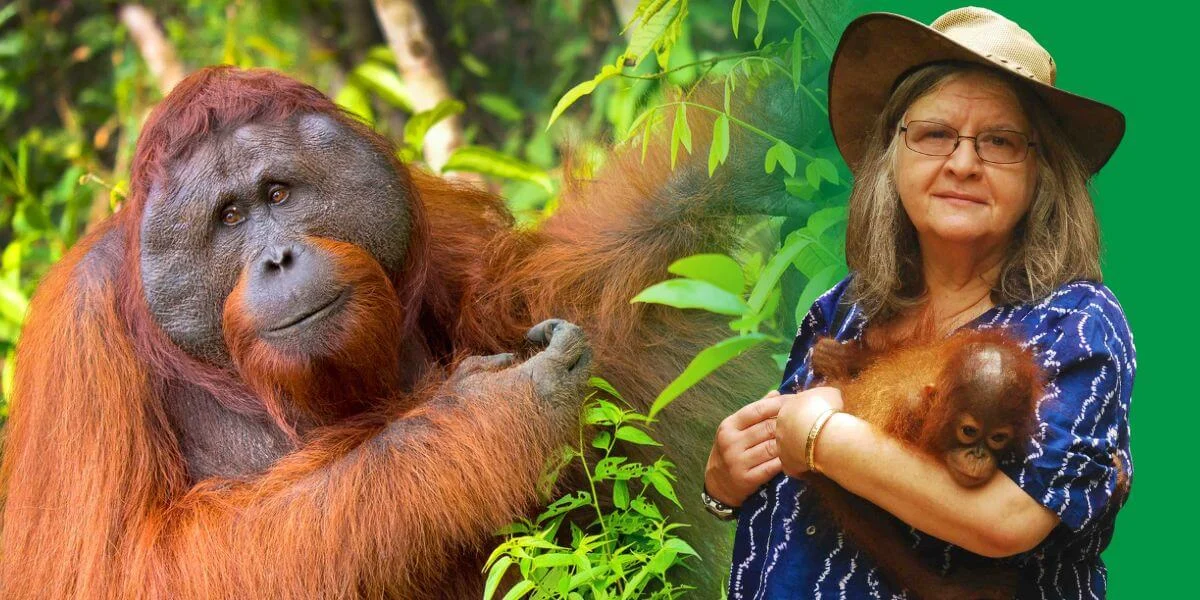
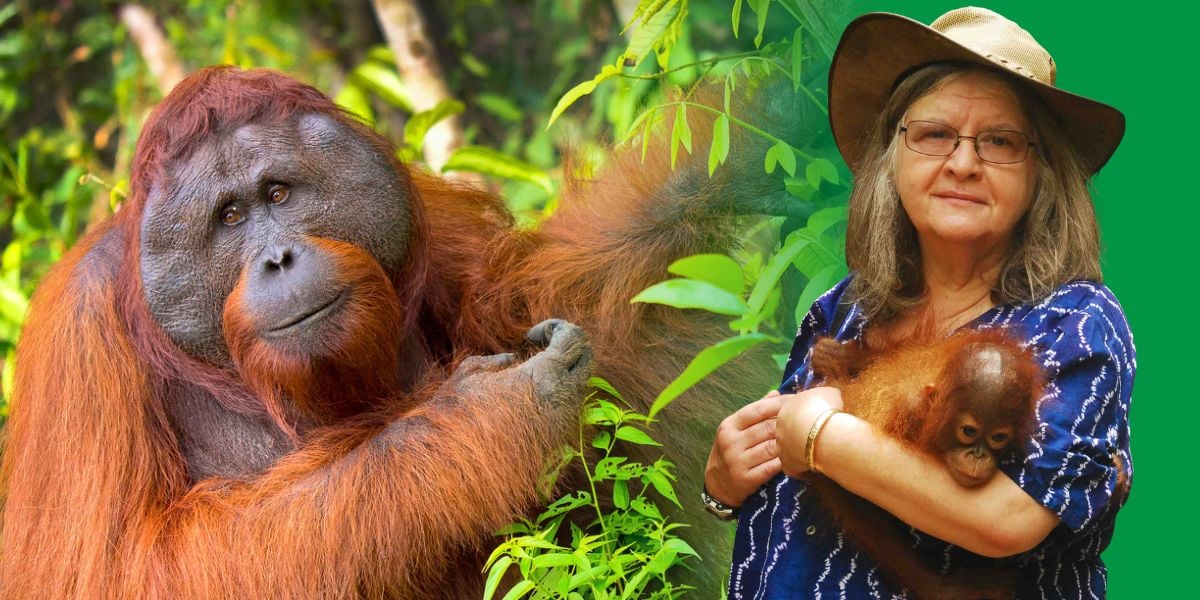
The global scientific and conservation communities are mourning the passing of Dr. Birutė Galdikas, a titan of primatology whose five decades of immersion in the rainforests of Borneo fundamentally altered the human understanding of great apes. As a member of the "Trimates," the trio of female researchers handpicked by paleoanthropologist Louis Leakey to study the great apes in their natural habitats, Dr. Galdikas occupied a rarefied space in history alongside Jane Goodall and the late Dian Fossey. Her death marks the end of an era in field biology, leaving behind a legacy defined by rigorous scientific inquiry, fierce environmental advocacy, and a profound empathy for the "gardeners of the forest."
For over 50 years, Dr. Galdikas served as the world’s leading authority on the orangutan (genus Pongo), an animal that, prior to her arrival in Indonesia in 1971, was among the least understood of the great apes. Operating primarily out of Tanjung Puting National Park in Central Kalimantan, she established one of the longest continuous field studies of any wild mammal in history. Her work transitioned from pure academic observation into a lifelong crusade against the extinction of a species now listed as critically endangered. Through the Orangutan Foundation International (OFI), which she co-founded, she facilitated the rehabilitation of hundreds of orphaned and displaced primates, while simultaneously battling the encroaching tide of illegal logging and palm oil plantation expansion.
The Leakey Legacy and the Birth of Camp Leakey
The trajectory of Dr. Galdikas’s life was set in motion during her graduate studies at the University of California, Los Angeles (UCLA). It was there that she met Dr. Louis Leakey, the renowned Kenyan paleoanthropologist who believed that studying great apes in the wild was the key to unlocking the mysteries of human evolution. Leakey had already sent Jane Goodall to study chimpanzees in Tanzania and Dian Fossey to observe mountain gorillas in Rwanda. In Galdikas, he found the tenacity required to track the elusive, solitary, and canopy-dwelling orangutans of Southeast Asia.
In 1971, at the age of 25, Galdikas arrived in the swampy jungles of Borneo. With little more than a primitive hut and a determination to endure one of the most challenging field environments on Earth, she established "Camp Leakey," named in honor of her mentor. The conditions were grueling; she faced malaria, leeches, and the logistical nightmare of tracking animals that spent nearly 95 percent of their lives high in the forest canopy. Unlike chimpanzees or gorillas, which live in social groups on the ground or in low vegetation, orangutans are semi-solitary and move through the treetops with deceptive speed.
Galdikas’s early research provided the first comprehensive data on orangutan life history. She documented their diet, which consists of over 400 different types of food, and their complex social structures. One of her most significant scientific contributions was the discovery of the orangutan’s exceptionally long birth interval—approximately eight years—which is the longest of any land mammal. This finding had profound implications for conservation, as it revealed that orangutan populations are incredibly slow to recover from any decrease in numbers.
Scientific Contributions and the "Trimates" Distinction
Dr. Galdikas’s inclusion in the "Trimates" (sometimes referred to as "Leakey’s Angels") was not merely a matter of gender, but a recognition of a specific methodology. At a time when primatology was dominated by laboratory-based behavioral studies, Leakey and his proteges championed long-term, immersive field observation. This approach allowed Galdikas to witness behaviors that shorter studies would have missed, such as the intricate ways mother orangutans teach their offspring how to forage and navigate the forest.
Throughout her career, Galdikas challenged the prevailing view that orangutans were "solitary" in the sense of being anti-social. She observed that while they do not live in large troops like baboons or chimpanzees, they maintain a "dispersed" social network, with individuals recognizing one another and occasionally congregating during periods of high fruit abundance. Her work also highlighted the intelligence of the species, documenting their ability to use tools—such as using leaves as napkins or umbrellas—and their sophisticated spatial memory, which allows them to track the fruiting cycles of hundreds of tree species across vast territories.
Conservation Advocacy and the Palm Oil Crisis
As the decades passed, Dr. Galdikas’s role shifted from researcher to protector. She witnessed firsthand the devastating transformation of the Bornean landscape. Between 1970 and the present, Indonesia has lost millions of hectares of primary rainforest to logging, mining, and, most significantly, the industrial-scale cultivation of oil palm.
In response to these threats, Galdikas co-founded Orangutan Foundation International (OFI) in 1986. The organization became a beacon for conservation, focusing on three main pillars: habitat protection, scientific research, and rehabilitation. Dr. Galdikas was a pioneer in the rehabilitation of "ex-captive" orangutans—individuals that had been illegally taken from the wild to be kept as pets. She developed protocols for teaching these orphaned primates the survival skills they would have normally learned from their mothers, eventually releasing them back into protected forests.
Her advocacy often put her at odds with powerful economic interests. She was a vocal critic of the palm oil industry, which she argued was the single greatest threat to the survival of the orangutan. Her work was instrumental in the expansion and protection of Tanjung Puting National Park, which today serves as one of the few remaining strongholds for the species. For her efforts, she received numerous accolades, including the Tyler Prize for Environmental Achievement and the PETA Humanitarian Award, recognizing her belief that all primates deserve the right to live free from human interference.
Literary Impact and Public Perception
Beyond her scientific papers, Dr. Galdikas was a prolific communicator who brought the plight of the orangutan to a global audience. Her 1995 memoir, Reflections of Eden: My Years with the Orangutans of Borneo, became a seminal text in environmental literature. In it, she provided a deeply personal account of her life in the jungle, describing the orangutans not just as subjects of study, but as "thinking, living beings" with distinct personalities and emotional lives.
She was featured on the cover of National Geographic twice, in 1975 and 1998, which helped cement her image as a global icon of conservation. Her work was also the subject of the 2011 IMAX documentary Born to Be Wild, which showcased the rehabilitation work at her center in Kalimantan. Through these platforms, she educated millions on the interconnectedness of human and non-human primates, famously stating, "You’re looking at a fully conscious thinking, living being that is basically the same as us."
Advocacy Beyond the Great Apes
While her name was synonymous with orangutans, Dr. Galdikas was an advocate for all primates. She frequently spoke out against the use of macaques and other monkeys in laboratory research and the pet trade. Drawing on her field observations, she noted the profound emotional capacity of macaques, once describing the "palpable grief" of a macaque mother carrying her deceased infant.
This holistic view of animal welfare led her to collaborate with organizations like PETA, where she lent her expertise to campaigns aimed at ending the exploitation of primates in the entertainment and research industries. She argued that the ethical treatment of animals was a prerequisite for true conservation, as a society that does not value the individual life of an animal is unlikely to value the survival of an entire species.
Implications for the Future of Primatology
The passing of Dr. Galdikas leaves a significant void in the field of anthropology. However, her influence persists through the generations of Indonesian and international students she mentored. As a professor at Simon Fraser University and a guest professor at Universitas Nasional in Jakarta, she was instrumental in building the capacity of Indonesian scientists to lead conservation efforts in their own country.
The future of the orangutan remains precarious. With current estimates suggesting that fewer than 100,000 Bornean orangutans remain in the wild, the work started at Camp Leakey is more urgent than ever. The challenges of climate change, forest fires, and continued habitat fragmentation require the same level of tenacity that Galdikas displayed when she first stepped into the Borneo mud in 1971.
Final Reflections on a Life of Purpose
Dr. Birutė Galdikas lived a life that was, in many ways, an act of defiance. She defied the expectations of what a woman scientist could achieve in the 1970s; she defied the isolation of the jungle for half a century; and she defied the political and economic forces that sought to erase the rainforest.
Her legacy is found not just in the volumes of data she collected, but in the thousands of acres of forest that still stand because of her advocacy and the individual orangutans that swing through the canopy of Tanjung Puting, free and wild. As the world reflects on her contributions, the message she leaves behind is clear: the survival of our fellow primates is inextricably linked to our own humanity, and the time to protect them is running out. Dr. Galdikas didn’t just study the "gardeners of the forest"; she became their most formidable guardian.

