


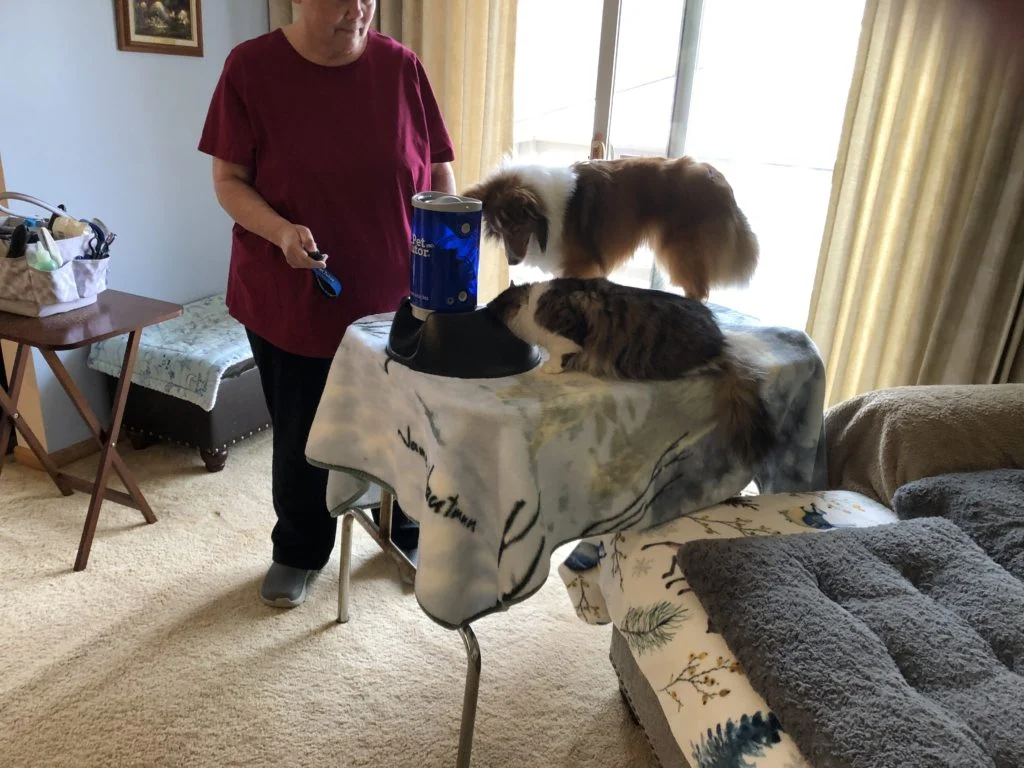
The recent Clicker Expo in Arlington, Virginia, a premier event for animal training professionals and enthusiasts, served as a vibrant hub for knowledge exchange, networking, and the unveiling of cutting-edge tools designed to enhance positive reinforcement methodologies. Amidst the flurry of educational sessions and collaborative discussions, a particular innovation captured significant attention: a new, more compact version of the renowned Pet Tutor feeder from Smart Animal Training Systems. This development signals a clear trend towards greater portability and versatility in advanced pet technology, addressing specific practical needs within the training community and promising broader implications for animal welfare.
The Nexus of Learning and Innovation: Clicker Expo’s Significance
Clicker Expo, an annual conference organized by Karen Pryor Academy, stands as a cornerstone event for those dedicated to positive reinforcement training. Attracting hundreds of attendees, including veterinarians, trainers, behaviorists, and pet owners, the expo offers a unique platform for learning the latest scientific advancements in animal behavior, refining training techniques, and fostering a community of practice. Participants engage in hands-on workshops, lectures, and interactive sessions led by some of the most respected figures in the field, all centered around force-free, science-based methods. The event’s atmosphere is conducive to creativity and discovery, making it an ideal venue for companies like Smart Animal Training Systems to showcase their latest innovations. The gathering in Arlington, held several weeks prior to the initial report, provided a crucial setting for experts to engage directly with new technologies and provide immediate, valuable feedback.
Smart Animal Training Systems: Pioneering Remote Reinforcement
Smart Animal Training Systems has carved out a significant niche in the pet technology market with its flagship product, the Pet Tutor. This device represents a paradigm shift in animal training, offering remote, automatic food delivery that enables hands-free reinforcement. Controlled via a smartphone app or remote clicker, the Pet Tutor allows trainers to mark desired behaviors with precision and deliver treats instantly, eliminating the need for manual treat pouches and the potential for fumbling or delayed reinforcement. This capability is particularly beneficial for complex behaviors, desensitization protocols, and working with animals that are easily distracted or sensitive to human proximity. The technology supports a wide range of applications, from basic obedience and trick training to cooperative care and managing reactive behaviors, fostering independence in the animal and enabling trainers to focus intently on observation and timing.
Introducing the Pet Tutor Shorty: A Compact Evolution
At the heart of the recent excitement was the unveiling of the "Shorty Pet Tutor," a smaller, more streamlined version of the original feeder. While functionally identical to its larger counterpart, the reduced size immediately struck a chord with attendees. As described by Dr. Deborah Jones, a distinguished psychology professor and veteran animal trainer, the compact design was an instant draw, likened to a "magpie drawn to shiny objects." This initial aesthetic appeal quickly transitioned into a recognition of significant practical advantages, particularly for professionals and pet owners who frequently travel or operate in diverse environments.
Representatives from Smart Animal Training Systems, including Wes and Amanda, who manned the Pet Tutor exhibit, noted the consistent feedback from users expressing a desire for more portable solutions. The development of the Shorty Pet Tutor directly responds to this market demand, reflecting a broader industry trend towards miniaturization and enhanced user convenience in pet tech. While specific dimensions were not immediately released, the visual comparison presented at the expo clearly demonstrated a substantial reduction in footprint, promising a new level of portability for the device.
Enhanced Portability and Reduced Footprint: Key Advantages
The primary benefit of the Pet Tutor Shorty lies in its improved portability. Dr. Jones, who frequently travels with her dogs for training and events, highlighted the constant challenge of maximizing space in her vehicle. The original Pet Tutor, while invaluable, occupied a noticeable volume. The Shorty’s compact design means it can be "tucked into an empty corner," significantly easing the logistics of transporting training equipment. This seemingly minor change holds substantial implications for professional trainers who often carry multiple tools and for pet owners who wish to maintain consistent training routines while on vacation or during visits to new locations. The ability to seamlessly integrate the feeder into travel plans ensures that positive reinforcement remains a readily available resource, regardless of location.
Beyond travel, the smaller form factor offers considerable advantages in confined spaces. Many trainers and pet owners utilize crates for their dogs, both for safety during travel and as a designated safe space at home. The original Pet Tutor could sometimes be cumbersome in smaller crates, potentially impinging on the animal’s space. The Shorty, by contrast, takes up "less crate space," a particularly valuable feature for owners of small dog breeds or those using smaller crate sizes. This design improvement ensures that the training environment within a crate remains comfortable and non-restrictive, promoting a more positive association with the space itself.
Furthermore, the reduced capacity of the Shorty Pet Tutor addresses a common issue of food waste. Dr. Jones noted that she rarely filled the larger feeder to capacity, often leading to unused treats that would either need to be emptied or risked spoilage before the next training session. The smaller hopper of the Shorty eliminates this problem, ensuring that only the necessary amount of food is used, thereby minimizing waste and optimizing resource management. This detail, while seemingly minor, contributes to the overall efficiency and sustainability of training practices, particularly for individuals conducting frequent, shorter sessions.
Early Adoption and Initial Testing: Pixel’s First Experience

As one of the earliest individuals to acquire the compact feeder, Dr. Jones immediately put the Pet Tutor Shorty to the test with a small dog named Pixel. Her approach underscored the careful, consent-based methodologies central to modern positive reinforcement. The initial introduction was staged to be as "easy and non-threatening as possible," with the feeder placed on a table. This setup allowed Pixel to observe the device and receive treats without direct interaction, fostering a positive association from a safe distance. This deliberate strategy ensures that animals learn to associate the feeder’s light and sound cue with immediate, predictable reinforcement, rather than developing anxiety or frustration by attempting to manipulate the device itself.
The demonstration videos provided by Dr. Jones offered clear insights into the Pet Tutor’s efficacy. The device’s distinct light and beeping sound serve as a precise marker, similar to a traditional clicker, immediately preceding the automatic delivery of food. This streamlined process eliminates the need for trainers to juggle a clicker and treats simultaneously, allowing for greater focus on the animal’s behavior and timing. The hands-free operation translates into smoother, more efficient training sessions, particularly for complex behaviors requiring rapid, successive approximations.
Pioneering Cooperative Care: The Role of Touch Conditioning
Following the initial introduction, Dr. Jones advanced Pixel’s training to include touch conditioning on a grooming table. This phase highlighted another critical application of the Pet Tutor: facilitating cooperative care. Cooperative care, a rapidly growing area in animal training, focuses on teaching animals to willingly participate in their own husbandry and veterinary procedures. By systematically pairing gentle touch with immediate positive reinforcement from the Pet Tutor, Dr. Jones began to condition Pixel to develop a positive emotional response to physical handling. The methodology is clear: the touch must precede the treat, establishing the touch as a reliable predictor of something desirable.
A crucial moment in Pixel’s training video demonstrated the core principles of consent and feedback. At one point, after a touch to his outside hip, Pixel jumped off the table. Rather than viewing this as defiance, Dr. Jones interpreted it as invaluable "feedback," indicating that the intensity or location of the touch was "too much for him." This immediate adjustment in her approach – making subsequent repetitions easier – exemplifies the two fundamental rules she adheres to in handling: (1) dogs are free to leave if they feel the need, and (2) their leaving is direct feedback informing necessary changes in training.
The Philosophy of Consent in Animal Training
This emphasis on an "escape route" and listening to an animal’s behavioral cues is a cornerstone of progressive dog training and aligns with the broader concept of consent in animal interactions. By providing animals with agency – the option to disengage if uncomfortable – trainers build profound trust and reduce stress. Paradoxically, once animals understand they have this freedom, they "rarely take advantage of it." Their willingness to stay and participate increases when they know they are not trapped or forced. When they do choose to leave, it serves as an unequivocal signal that the training pressure has exceeded their comfort threshold, prompting the trainer to modify their approach. This dynamic fosters a two-way communication system, where the animal’s behavior is actively acknowledged and responded to, leading to more resilient, confident, and willing learners. This approach is gaining increasing traction in veterinary medicine and animal welfare circles, advocating for practices that prioritize the emotional well-being of animals during necessary procedures.
Expanding Resources: Cooperative Care with Deb Jones
To further champion the principles of cooperative care, Dr. Jones has launched a dedicated YouTube channel titled "Cooperative Care with Deb Jones." This new platform serves as a vital resource for pet owners and professionals seeking guidance on preparing animals for a wide array of grooming and veterinary procedures. The channel promises a growing library of short, instructive training videos, leveraging Dr. Jones’s extensive expertise and the practical application of tools like the Pet Tutor to demystify and simplify complex conditioning protocols. The initiative underscores the increasing recognition of cooperative care as a fundamental component of responsible pet ownership, empowering individuals to proactively manage their pets’ health and well-being with minimal stress.
Broader Implications: The Future of Pet Technology and Welfare
The introduction of the Pet Tutor Shorty at Clicker Expo, coupled with Dr. Jones’s insights and new educational initiatives, highlights significant trends within the pet industry. The demand for advanced pet technology that is both effective and user-friendly continues to grow. Owners and professionals alike are seeking tools that enhance training efficiency, improve animal welfare, and integrate seamlessly into daily routines. The miniaturization of devices like the Pet Tutor aligns with consumer expectations for portability and adaptability in an increasingly mobile world.
The emphasis on cooperative care and consent-based training also reflects an evolving understanding of animal sentience and the ethical responsibilities of pet ownership. Modern training increasingly moves beyond mere obedience, focusing on building strong, trusting relationships and ensuring animals are active participants in their own care. Tools that facilitate precise, positive reinforcement, such as the Pet Tutor, are instrumental in achieving these goals, enabling nuanced communication and reducing the reliance on coercive methods.
Dr. Deborah Jones, Ph.D., stands as a testament to the blend of academic rigor and practical application in the field of animal behavior. A retired psychology professor, her 25+ years of experience in animal training, marked by a steadfast commitment to positive reinforcement, has culminated in 12 books, numerous DVD series, and high-level titles in agility, rally, and obedience with multiple breeds. Her current endeavors, including online training classes and webinars at Fenzidogsportsacademy.com and her personal website k9infocus.com, continue to shape the landscape of contemporary animal training. Her early adoption and enthusiastic endorsement of the Pet Tutor Shorty underscore its potential to significantly impact how trainers and owners approach the practicalities of positive reinforcement and cooperative care.
As the Pet Tutor Shorty prepares for wider public release, its arrival is anticipated to further democratize advanced training techniques, making precise, hands-free reinforcement more accessible to a broader audience. This innovation, born from a confluence of technological advancement and a deep understanding of animal behavior, exemplifies how thoughtful design can contribute to more effective training, reduced stress for animals, and ultimately, stronger human-animal bonds. The trajectory of pet technology appears set towards more intuitive, portable, and ethically aligned solutions, with the Pet Tutor Shorty serving as a prime example of this progressive movement.

