


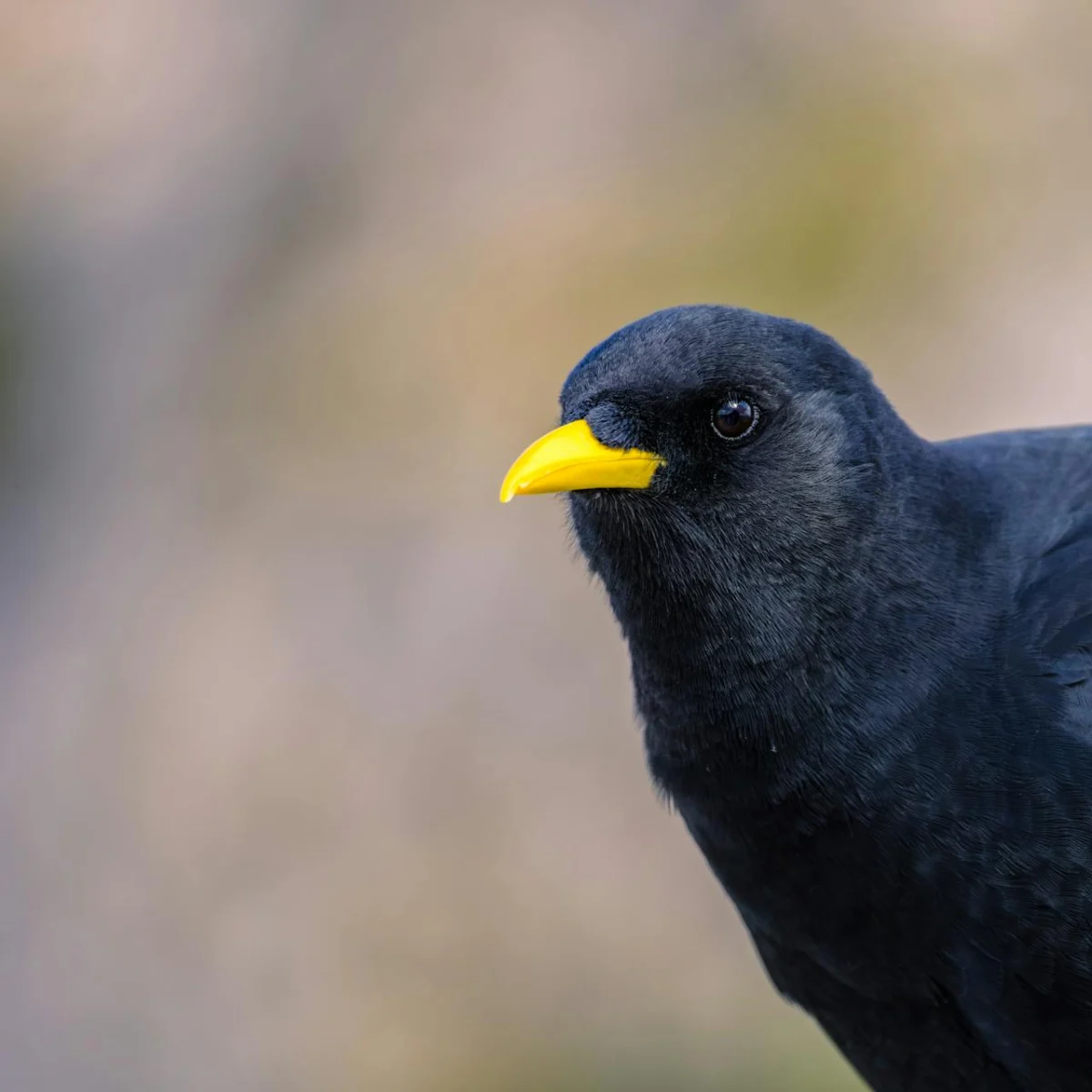
Black birds with yellow beaks represent some of the most captivating and readily identifiable avian species globally. The stark contrast between their glossy, dark plumage and vibrant, often golden beaks ensures they command attention in diverse environments, from dense forests and wetlands to bustling urban landscapes and rugged coastlines. Beyond their striking visual appeal, these birds are remarkable for their inherent intelligence, remarkable adaptability, sophisticated vocalizations, and crucial roles within their respective ecosystems. Their presence spans continents and cultures, from the familiar European blackbird gracing garden spaces to the unique species found on isolated tropical islands, consistently capturing human fascination.
The Evolutionary Rationale Behind the Striking Color Contrast
The coloration of birds is never a random occurrence; it is a product of evolutionary pressures and serves distinct biological functions. For the black plumage, several purposes are theorized. In shaded environments, dark feathers can provide effective camouflage, allowing birds to blend seamlessly with their surroundings and evade predators. Conversely, in cooler climates, black feathers are highly efficient at absorbing solar radiation, helping birds maintain their body temperature. This dark coloration can also serve as a visual signal, indicating dominance and health to potential mates and rivals, a common strategy in avian social hierarchies.
The bright yellow beaks, in contrast, are frequently linked to a bird’s diet and overall fitness. In numerous species, the intensity and vibrancy of the beak’s yellow hue are indicative of the bird’s nutritional status and the strength of its immune system. A well-nourished bird with a robust immune system will typically display a brighter, more saturated beak color, making it a more attractive prospect during the critical mating season. This visual cue allows potential partners to assess the quality of a mate at a glance.

Furthermore, this bold color contrast serves a vital communicative purpose within the species themselves. In environments with dense foliage or crowded colonies where visual cues can be easily obscured, a brightly colored beak acts as a distinct visual signal. It plays a crucial role during courtship displays, facilitating recognition and attraction between individuals. It also aids in territorial disputes, clearly marking the individual and its boundaries, and during feeding interactions, helping to identify flock members or offspring. For human observers, this distinct marking makes these birds particularly easy to identify, even from a considerable distance, contributing to their widespread recognition and appreciation.
Iconic Representatives of the Black and Yellow Palette
The Common Blackbird (Turdus merula)
The Common Blackbird is arguably the archetypal "black bird" for many, its perceived simplicity masking a profound visual impact. The adult male is cloaked in a uniform, velvety black plumage that possesses a subtle sheen, reminiscent of polished obsidian. This dark, almost monochromatic canvas serves as the perfect backdrop for its most distinguishing feature: a vivid, bright yellow to orange bill.
To complete its striking appearance, the Common Blackbird also sports a matching yellow eye-ring, which imparts a bright, alert, and almost intelligent expression against its dark feathers. It is important to note that this iconic high-contrast coloration is almost exclusively a male trait. Females and juvenile blackbirds exhibit a more camouflaged, streaky brown plumage, lacking the dramatic "sunshine-on-shadow" contrast that makes the adult male so conspicuous in gardens and woodlands across Europe. This sexual dimorphism is a common evolutionary strategy, with males often displaying more elaborate or contrasting plumage to attract mates, while females opt for more subdued colors for better camouflage during nesting and incubation.

The Common Hill Myna (Gracula religiosa)
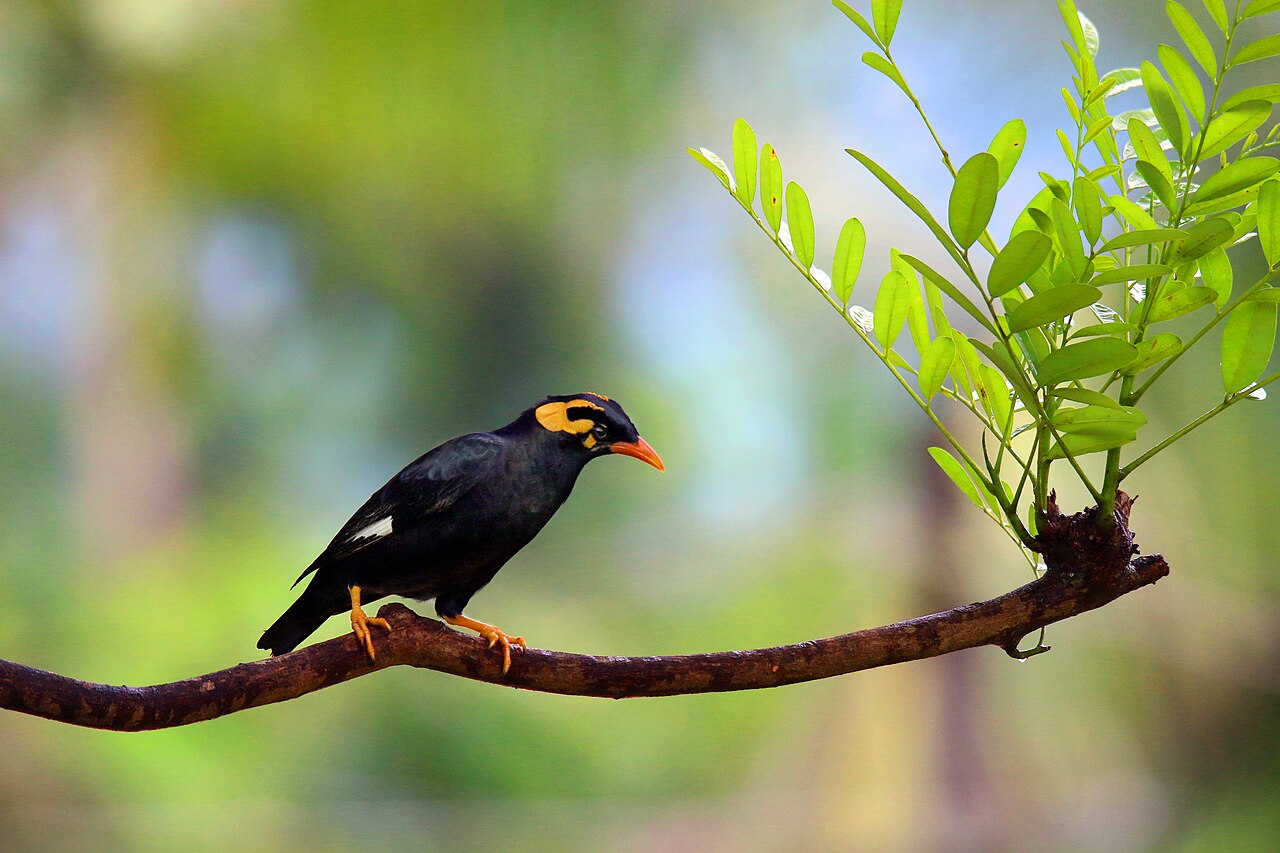
The Common Hill Myna elevates the black-and-yellow aesthetic into a more elaborate and visually rich presentation. Its plumage is not merely black but a deeply iridescent affair, shimmering with hues of purple and green that shift and gleam like polished metal under varying light conditions. This dark, lustrous body is dramatically contrasted by a bright orange-yellow bill, which is robust and slightly curved, perfectly adapted for its diet of fruits.
However, the Hill Myna’s most flamboyant adornment lies in its bright yellow wattles. These are fleshy, bare patches of skin that wrap around the back of its head, resembling a pair of golden ribbons. These wattles, in conjunction with the yellow bill, create a bold, almost "splashed" effect against the dark, iridescent head, lending the Hill Myna a far more ornate and visually arresting appearance than the understated Common Blackbird. This species is also renowned for its remarkable vocal abilities, including its capacity for mimicry, which has led to its popularity in captivity.
The Yellow-billed Chough (Pyrrhocorax graculus)
The Yellow-billed Chough, also known as the Alpine Chough, represents the high-altitude specialist within the black-and-yellow avian group, bringing this distinctive color palette to some of the world’s most dramatic landscapes. Its plumage is a dense, uniform jet-black, often exhibiting a metallic greenish sheen that aids in absorbing precious heat in the thin, cold air of mountainous regions. Against this dark silhouette, its short, bright lemon-yellow bill provides a sharp, vibrant contrast.
Distinguishing it further from other black-and-yellow birds, the Chough introduces a third vivid color into its visual repertoire: striking red legs. These provide a surprising and welcome splash of warmth against the stark backdrop of snow and gray rock characteristic of its alpine habitat. This species is an aerial virtuoso, and observing its yellow bill leading the way as it executes high-speed acrobatic maneuvers above the treeline is one of the most iconic and memorable sights in the mountain ranges of the Himalayas and the Alps. Their adaptability to harsh conditions and their distinctive appearance have made them symbols of resilience in these challenging environments.
The European Starling (Sturnus vulgaris)
The European Starling offers a complex and almost "maximalist" interpretation of the black-and-yellow theme. During the spring breeding season, it presents as a solid black bird with a conspicuously bright lemon-yellow bill. However, closer inspection reveals a mesmerizing kaleidoscope of subtle colors. Its feathers are not simply black but are imbued with an intense iridescence, shimmering with oily purples, greens, and bronzes that shift and change with the bird’s movements.

This metallic sheen is frequently punctuated by tiny white or cream-colored speckles, often referred to as "stars," which are the tips of its feathers and give the bird its common name. The yellow bill serves as a significant indicator of the breeding season. As summer transitions into autumn, the bill color undergoes a remarkable change, darkening to a sober, deep black for the winter months. This seasonal color change in the bill is a fascinating adaptation, likely linked to hormonal changes and dietary shifts associated with reproduction and overwintering. The European Starling’s adaptability has led to its widespread distribution, and in some regions, it has become an invasive species, highlighting the complex relationship between human activity and avian populations.
The Regent Bowerbird (Sericulus chrysocephalus)
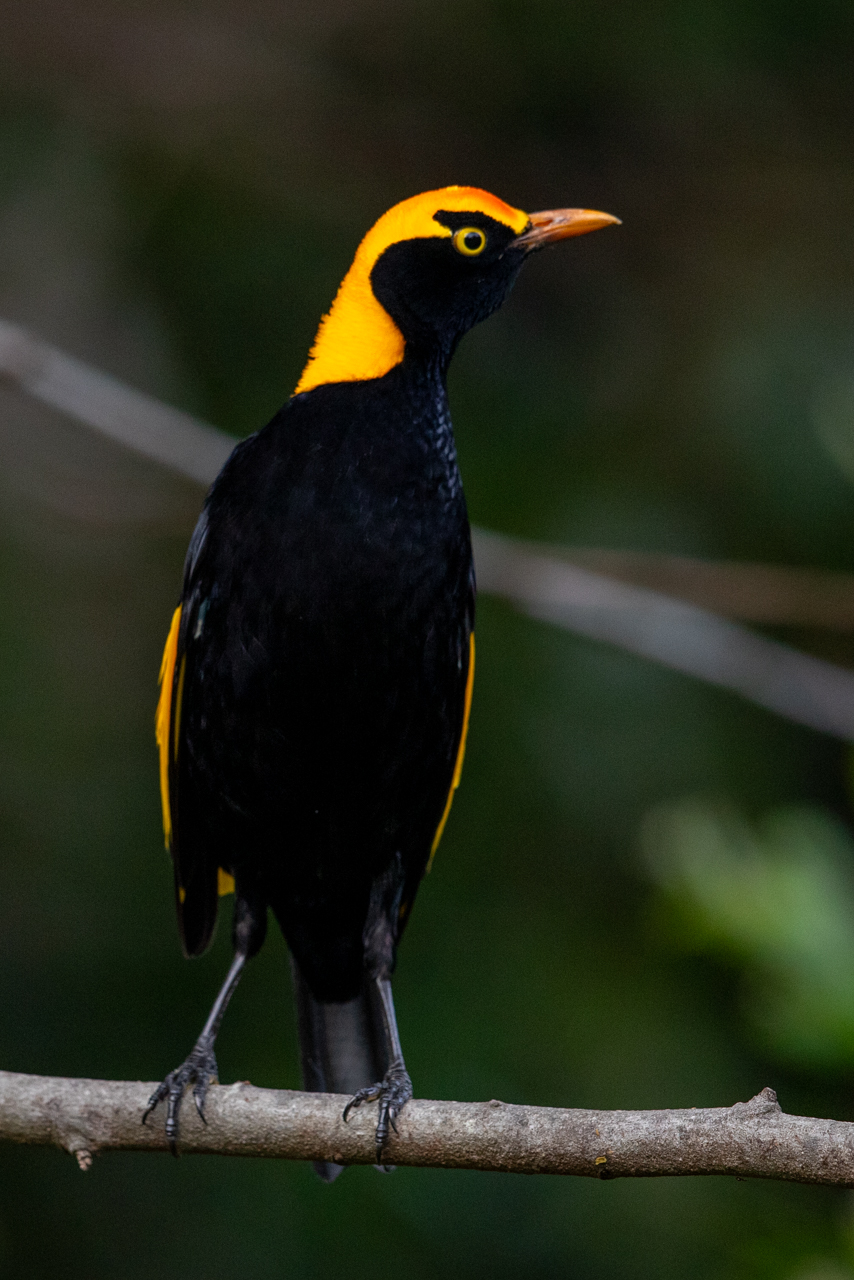
The Regent Bowerbird is arguably the most visually spectacular member of the "black and yellow" avian fraternity, appearing less like a typical garden bird and more like a living jewel. The male’s plumage is a masterful display of high-fashion contrast. His back and wings are adorned with a blindingly bright, velvety yellow, so saturated it can appear almost orange in the dappled light of its rainforest home. This vibrant yellow is sharply contrasted by his head, throat, and tail, which are a deep, shimmering jet-black.
This striking coloration extends beyond just feathers. The Regent Bowerbird sports piercing yellow eyes and a yellowish-horn bill, culminating in a visual presentation that makes it one of the most arresting and breathtaking birds found in the Australian rainforests. Male bowerbirds are also renowned for their elaborate courtship rituals, constructing intricate bowers decorated with brightly colored objects to attract females, further showcasing their vibrant aesthetic.

Behavioral Prowess and Cognitive Abilities
Many species of black birds with yellow beaks belong to avian families celebrated for their high intelligence and complex behavioral repertoires. Blackbirds, mynas, and choughs, among others, consistently demonstrate sophisticated problem-solving skills, a capacity for social learning, and remarkable adaptability to changing circumstances. These birds can readily acquire new feeding strategies, distinguish and recognize individual humans with whom they interact, and adjust their behavior quickly to environmental shifts, whether natural or anthropogenically induced.
Vocal communication stands out as another defining characteristic. While not all species within this group are adept mimics, many possess exceptionally rich and varied repertoires of calls and songs. These vocalizations serve critical functions, including attracting mates, warding off rivals, and coordinating group activities. In increasingly noisy urban environments, some species have demonstrated an astonishing ability to adapt their songs, altering pitch and timing to cut through the cacophony of traffic noise, a testament to their cognitive flexibility. This ability to modify vocalizations in response to anthropogenic noise pollution is a growing area of research, providing insights into avian perception and adaptation.
Dietary Habits and Ecological Contributions
The dietary habits of most black birds with yellow beaks are largely omnivorous, contributing to their ecological success across a wide range of habitats. Their diets commonly include a diverse array of food sources such as insects, worms, fruits, seeds, small reptiles, and even scraps of human food, particularly in urban settings. This dietary flexibility is a key factor in their ability to thrive in both pristine natural environments and human-altered landscapes.
Their role in insect control is significant; by consuming vast quantities of insects, they help to regulate pest populations, providing a valuable natural service to agriculture and forest ecosystems. Furthermore, their consumption of fruits and subsequent dispersal of seeds plays a crucial role in plant regeneration and the maintenance of overall ecosystem health. By spreading seeds to new areas, they facilitate the recolonization of disturbed habitats and contribute to biodiversity.
In coastal and marine ecosystems, seabirds featuring yellow beaks often contribute to nutrient cycling in unique ways. Their droppings, collectively known as guano, are exceptionally rich in essential nutrients like nitrogen and phosphorus. This nutrient-rich material can significantly fertilize island ecosystems, supporting unique flora and fauna that might otherwise be limited by nutrient availability. This process is vital for the health of island food webs and the specialized ecosystems they support.
Cultural Tapestry and Symbolic Meanings
These visually striking birds have woven themselves into the fabric of human culture, appearing in folklore, poetry, and symbolic representations across various societies. In European literature and art, the blackbird is often associated with the dawn, the beauty of song, and moments of quiet contemplation. Its common presence in gardens has solidified its status as a symbol of everyday beauty, resilience, and the natural world’s gentle persistence. In parts of Asia, mynas are particularly admired for their intelligence and vocal prowess, sometimes being perceived as clever, even mischievous, tricksters in traditional tales.
However, the relationship between certain species and humans is not always one of simple admiration. Invasive populations of species like the Common Myna, for instance, can pose significant ecological challenges. Their aggressive behavior and prolific breeding can lead to them outcompeting native bird species for resources, thereby disrupting local ecological balances and contributing to declines in native biodiversity. This dual role—as both a celebrated avian wonder and a potential ecological concern—underscores the potent adaptability and influence these birds can wield.
Conservation Challenges and Future Prospects
While many black birds with yellow beaks remain abundant, a considerable number face severe threats that jeopardize their long-term survival. Habitat loss, driven by agricultural expansion, urbanization, and deforestation, is a primary concern, diminishing the available living space and food sources for these species. Climate change presents a more insidious threat, altering weather patterns, food availability, and breeding cycles. Pollution, from pesticides in agricultural areas to plastic waste in marine environments, also takes a significant toll. Furthermore, the illegal wildlife trade, particularly for species like the Common Hill Myna, has led to alarming population declines due to trapping for the pet trade.

Conservation initiatives are increasingly focused on multifaceted approaches. Habitat protection and restoration are paramount, aiming to preserve and expand the natural environments these birds depend on. Stricter legal enforcement against illegal trapping and trade is crucial to curb demand for wild-caught birds. Public education campaigns play a vital role in raising awareness about the ecological importance of these species and fostering a greater sense of stewardship.
Species that demonstrate greater adaptability to urban environments, such as the Common Blackbird, highlight the potential for coexistence between humans and wildlife. However, even these resilient birds are not immune to the impacts of modern life. Pesticide use in urban gardens can poison birds directly or indirectly by reducing insect prey. Window collisions remain a significant cause of mortality, particularly for fast-flying species. The ongoing loss of green spaces in cities further exacerbates these challenges. Therefore, protecting these birds often necessitates a broader commitment to protecting and enhancing entire urban ecosystems, which in turn benefits a multitude of other species and improves the quality of life for human inhabitants. The future of these striking birds hinges on a concerted effort to balance human development with the imperative of biodiversity conservation.

