


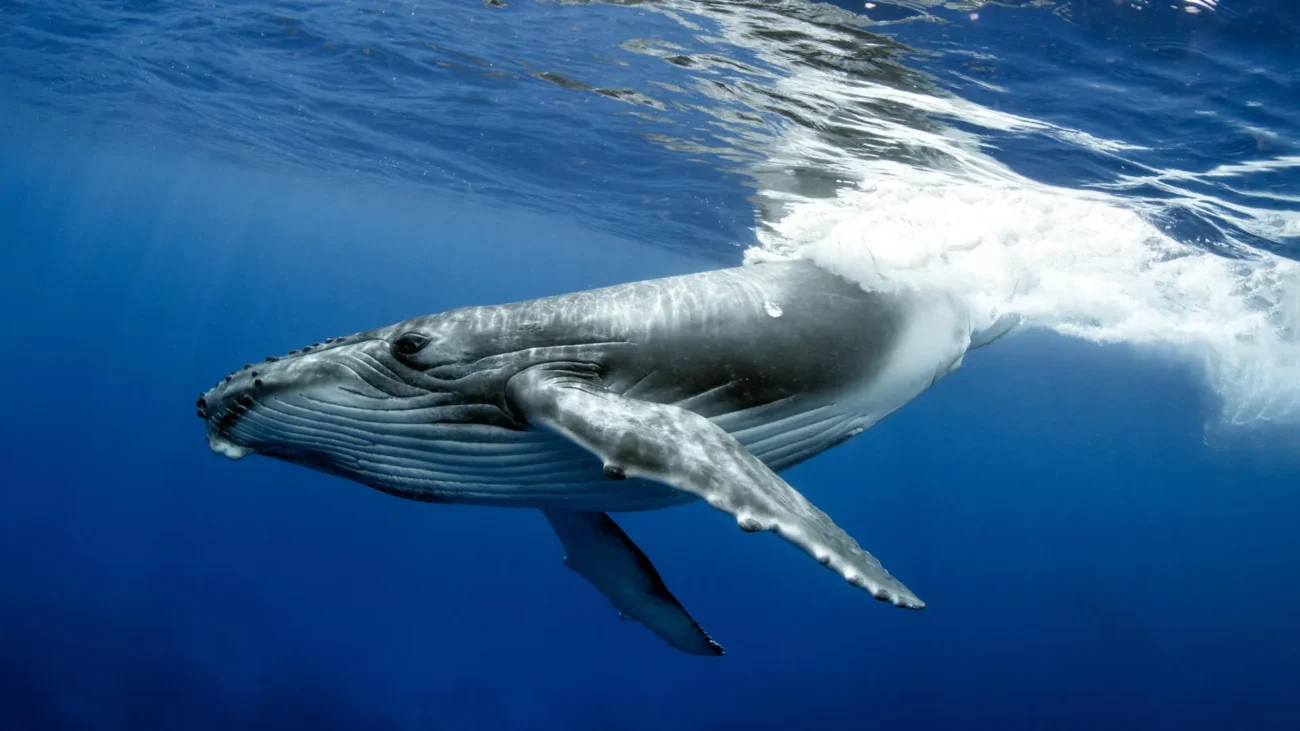
Scientists have documented an extraordinary feat of whale migration, confirming for the first time that humpback whales have traveled between breeding grounds in eastern Australia and Brazil, traversing more than 14,000 kilometers of open ocean. This remarkable discovery marks the greatest confirmed distance ever recorded between sightings of individual humpback whales globally, pushing the boundaries of our understanding of marine mammal movements and the vastness of oceanic connectivity.
The groundbreaking findings, published in the journal Royal Society Open Science, were made possible through the meticulous analysis of tens of thousands of fluke photographs, the unique patterns on the underside of a whale’s tail. These individual identifiers allowed researchers to connect the journeys of specific whales across hemispheres and oceans, revealing migratory routes previously thought to be geographically and behaviorally impossible for single individuals.
"Discoveries like this are only possible because of investment into long-term, multi-decadal research programs and international collaboration," stated Stephanie Stack, a PhD candidate at Griffith University and co-author of the study. "These whales were photographed decades apart, by different people, in opposite parts of the world, separated by two different oceans, and yet we can connect their journey. It’s a testament to persistent scientific inquiry and the power of shared data."
Whale Tail Photographs Reveal Record Journeys
The identification process relied on a sophisticated comparison of fluke photographs, a method akin to fingerprinting for whales. Each humpback whale possesses a distinctive pattern of scars, nicks, and pigmentation on its flukes, making them individually identifiable. Researchers meticulously analyzed a vast database of these images, searching for matches that spanned immense geographical distances and significant time intervals.
One of the most astonishing cases involved a whale first photographed in Hervey Bay, Queensland, Australia, in 2007. This individual was subsequently sighted again in the same locale in 2013, before an extraordinary reappearance near São Paulo, Brazil, in 2019. The minimum straight-line distance between these two key breeding grounds is approximately 14,200 kilometers, a span comparable to the journey from Sydney to London. Scientists emphasize that this is a minimum estimate, as the whale likely traveled considerably farther along a more circuitous route, the precise details of which remain unknown.
An even more remarkable account emerged from a second whale. This individual was initially photographed in 2003 off Brazil’s Abrolhos Bank, a renowned humpback whale nursery situated off the coast of Bahia. At the time of its first sighting, it was observed swimming within a lively pod of nine adult whales. Twenty-two years later, in September 2025, the same whale was spotted alone in Hervey Bay, Australia. The documented distance between these two sightings was a staggering 15,100 kilometers, establishing a new world record for the longest known movement of an individual humpback whale.
Decades of Research and Citizen Science Fuel Discovery
The foundation of this landmark study is built upon a colossal dataset comprising 19,283 high-quality fluke photographs. These images were meticulously collected over a period spanning from 1984 to 2025, originating from both eastern Australia and Latin America. Crucially, the data was not solely gathered by professional marine biologists. A significant portion of these invaluable images were contributed by citizen scientists through the global whale tracking platform, Happywhale. This collaborative effort underscores the vital role of public engagement in advancing scientific understanding.
To process this immense volume of photographic evidence, researchers employed advanced automated image recognition software. This technology was instrumental in sifting through the vast number of images, identifying potential matches. Each potential match was then subjected to rigorous manual verification by experienced scientists to ensure the accuracy and reliability of the findings.
"This kind of research highlights the value of citizen science," commented Dr. Cristina Castro, lead researcher from the Pacific Whale Foundation. "Every photo contributes to our understanding of whale biology and, in this case, helped uncover one of the most extreme movements ever recorded. Without the dedication of individuals submitting their sightings, these incredible journeys might have remained hidden."
Despite the extraordinary distances covered by these two individuals, researchers were keen to highlight the rarity of such extensive trans-hemispheric migrations. Across more than four decades of data encompassing nearly 20,000 identified humpback whales, only these two individuals exhibited such extreme movements between the eastern Australian and Brazilian breeding regions. This represents a mere 0.01 percent of the whales included in the comprehensive records, underscoring the exceptional nature of these journeys.
The Significance of Rare Whale Crossings
The implications of these rare but profound migratory events extend far beyond setting new distance records. Scientists posit that these infrequent exchanges between distant breeding grounds play a crucial role in the long-term health and resilience of whale populations.
"Despite their rarity, these exchanges matter for the long-term health of whale populations," Ms. Stack elaborated. "Occasional individuals moving between distant breeding grounds can help maintain genetic diversity across populations and may even carry new song styles from one region to another. Humpback whale songs are known to spread culturally across ocean basins, much like music trends in human populations." This cultural transmission of songs suggests a potential for greater connectivity and shared behaviors between seemingly isolated populations.
Furthermore, these findings lend strong support to what researchers term the "Southern Ocean Exchange" hypothesis. This theory proposes that humpback whales from disparate breeding populations may converge in shared feeding grounds within the Antarctic. It is during their subsequent return migration that some individuals might deviate from their usual routes, eventually settling in entirely new breeding regions. This suggests a dynamic and fluid migratory network, rather than rigid, predefined pathways.
Broader Implications and Future Projections
The study’s authors also draw attention to the potential influence of climate change on these migratory patterns. As global temperatures rise and impact polar ice formations, shifts in the distribution of Antarctic krill – the primary food source for humpback whales – are becoming increasingly evident. These changes in food availability and accessibility in critical feeding grounds could, researchers believe, lead to more frequent and extensive migrations, potentially making these rare crossings more common in the future. Alterations in ocean currents and sea ice extent could also play a significant role in influencing migratory routes.
The research team’s ongoing work aims to further unravel the complexities of humpback whale migration and the factors influencing their movements. Understanding these dynamics is critical for effective conservation strategies, particularly in the face of ongoing environmental changes. The study, "First evidence of bidirectional exchange between distant humpback whale breeding populations in eastern Australia and Brazil," represents a significant leap forward in our comprehension of these magnificent marine mammals and the interconnectedness of our planet’s oceans. It serves as a powerful reminder of the vast, unexplored territories within the marine environment and the enduring mysteries that still await discovery. The collaborative spirit of citizen science, coupled with dedicated long-term research, continues to unlock profound insights into the natural world, highlighting the importance of continued investment in both scientific endeavors and public participation.

