


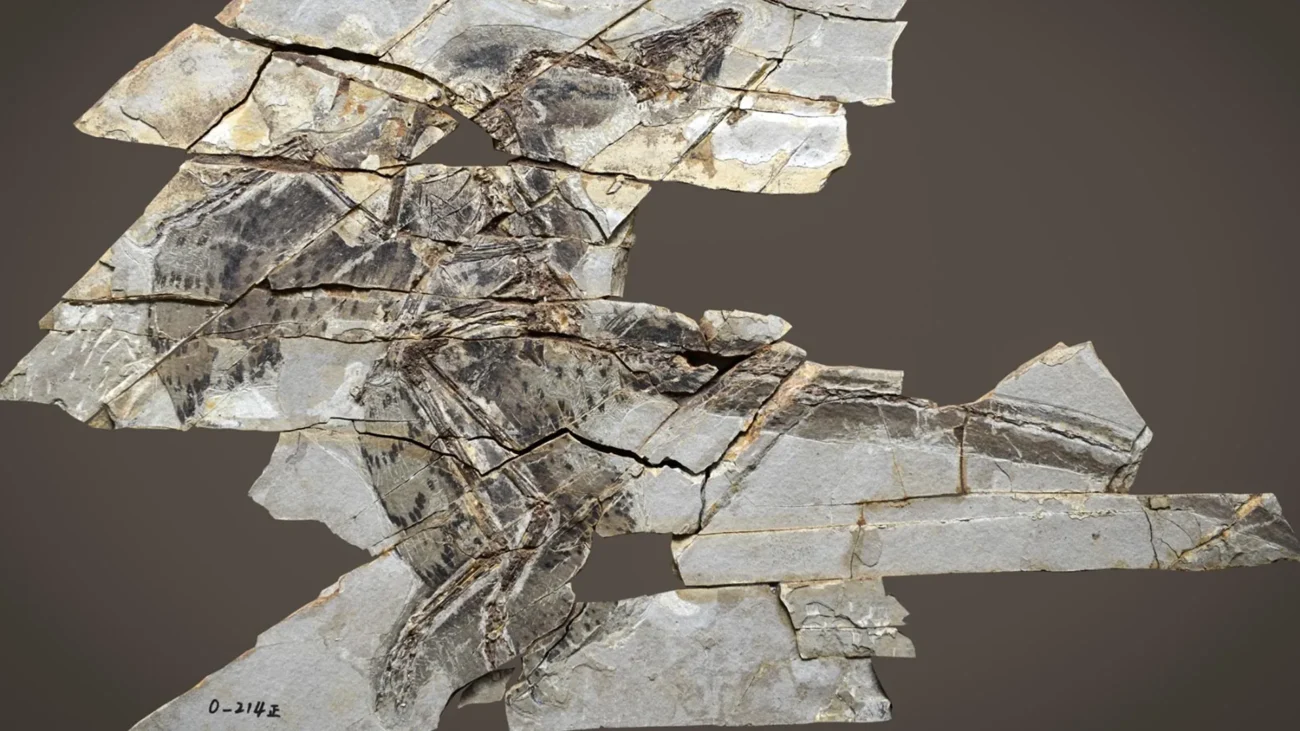
A groundbreaking study of exceptionally preserved dinosaur fossils from eastern China is rewriting our understanding of avian evolution, suggesting that some feathered dinosaurs, despite possessing complex plumage, had already lost the capacity for flight 160 million years ago. The research, led by Dr. Yosef Kiat from Tel Aviv University’s School of Zoology and the Steinhardt Museum of Natural History, analyzed the molting patterns of Anchiornis, a small, feathered dinosaur, revealing that its wing feather replacement was irregular, a characteristic indicative of flightlessness in modern birds. This discovery challenges long-held assumptions about the unidirectional progression of flight evolution and underscores the intricate and sometimes circuitous pathways that led to the development of wings in both dinosaurs and their modern avian descendants.
The implications of this finding are profound, offering a rare glimpse into the lived realities of prehistoric creatures and providing critical data points for reconstructing the evolutionary trajectory of flight. "Feather molting seems like a small technical detail," explained the research team, "but when examined in fossils, it can change everything we thought about the origins of flight, highlighting how complex and diverse wing evolution truly was." This sentiment is echoed by paleontologists worldwide, who see this research as a pivotal moment in understanding the nuanced nature of evolutionary adaptation.
The Ancient Canvas: Feather Evolution and the Pennaraptoran Lineage
The evolutionary story of feathers is a complex tapestry, predating the advent of true flight. Dinosaurs diverged from other reptiles approximately 240 million years ago. In the ensuing evolutionary eons, many dinosaur lineages independently developed feathers, which served a variety of purposes beyond flight, including thermoregulation and display. These early feathers were not necessarily precursors to flight; rather, they represent a broader evolutionary innovation that was later co-opted for aerial locomotion by certain groups.
A pivotal moment in this narrative occurred around 175 million years ago with the emergence of the Pennaraptora, a clade of feathered dinosaurs that includes the direct ancestors of modern birds. These dinosaurs are of immense scientific interest as they represent the lineage that ultimately survived the Cretaceous-Paleogene extinction event 66 million years ago, thereby giving rise to all extant bird species. While scientists have long posited that Pennaraptora evolved feathers primarily for flight, the new study introduces a compelling counterpoint: the possibility that some members of this group, even with sophisticated feather structures, may have experienced a regression in their flight capabilities.
This concept of losing a developed ability is not unprecedented in evolutionary biology. Similar to how ostriches and penguins, descendants of flying birds, have evolved to become flightless due to environmental pressures and lifestyle adaptations, it is now plausible that certain feathered dinosaurs underwent a comparable evolutionary trajectory. This suggests that the development of flight was not a singular, inevitable march towards aerial mastery, but rather a dynamic process involving experimentation, adaptation, and even the occasional loss of specialized traits.
Unearthing the Past: The Exceptional Preservation of Anchiornis Fossils
The linchpin of this groundbreaking research lies in the extraordinary preservation of nine Anchiornis fossils unearthed in eastern China. These specimens are exceptionally rare, not only for their intact feathers but also for the preservation of their original coloration. This remarkable state of preservation is attributed to unique geological and environmental conditions in the fossilization sites, which effectively froze these ancient creatures in time.
The Anchiornis fossils display wing feathers that are strikingly white with a distinct black spot at the tip. This precise and vibrant coloration is crucial for the study. In typical fossil analysis, detailed examination of feather structure and growth is often limited by the degradation of organic material over millions of years. However, the preserved pigments in these Anchiornis fossils allowed researchers to scrutinize the feather microstructure and, critically, infer patterns of growth and replacement.
This level of detail is unparalleled in most fossil discoveries. It provides a tangible link to the living organism, allowing scientists to move beyond skeletal morphology and infer functional aspects of these extinct animals. The preserved coloration acts as a biological fingerprint, offering insights into the life history and capabilities of creatures that roamed the Earth during the Jurassic period.
The Language of Molting: Decoding Flightlessness from Fossilized Feathers
The key to unlocking the flight capabilities of Anchiornis lies in understanding the process of feather molting. Dr. Kiat, an ornithologist with a specialization in feather biology, explained the fundamental principles. Feathers, like hair or nails in mammals, grow from a vascularized base. This growth phase typically lasts for a few weeks, after which the feather matures, detaches from its blood supply, and becomes non-living material. Over time, these feathers become worn and are eventually shed and replaced by new ones in a cyclical process known as molting.
The manner in which an animal molts its feathers is a strong indicator of its flight ability. For birds that rely on flight for survival—hunting, escaping predators, or migration—molting is a carefully orchestrated, gradual process. This orderly replacement ensures that the wings maintain their aerodynamic integrity and symmetry, allowing the bird to continue flying, albeit perhaps with some minor adjustments, even during the molting period. This strategy minimizes the vulnerability associated with a sudden loss of flight.
In stark contrast, flightless birds, such as ostriches or penguins, exhibit a more random and irregular molting pattern. Because flight is not a critical requirement for their survival, they do not need to maintain aerodynamic symmetry during feather replacement. They can shed multiple feathers simultaneously from different parts of the wing, often leading to a more conspicuous and less coordinated shedding process.
By meticulously examining the fossilized wing feathers of Anchiornis, the research team identified a continuous line of these distinctive black spots along the edges of the wings. Crucially, they also observed developing feathers where the black spots were misaligned, indicating that these new feathers were still in the process of growth. A detailed analysis of this arrangement revealed that the molting pattern was not orderly and symmetrical as seen in flying birds, but rather irregular. This irregularity strongly suggests that Anchiornis was not capable of sustained flight.
"Based on my familiarity with modern birds, I identified a molting pattern indicating that these dinosaurs were probably flightless," Dr. Kiat stated. "This is a rare and especially exciting finding: the preserved coloration of the feathers gave us a unique opportunity to identify a functional trait of these ancient creatures—not only the body structure preserved in fossils of skeletons and bones."
Broader Implications: Revisiting the Dawn of Avian Flight
The conclusion that Anchiornis was likely flightless, despite possessing well-developed feathers, has significant implications for our understanding of the evolution of flight. It suggests that the development of feathers and the evolution of flight were not always intertwined in a linear fashion. Many dinosaurs evolved feathers for purposes other than flight, and even within lineages that eventually led to flying birds, there were branches that experimented with flight and, in some cases, abandoned it.
This finding adds Anchiornis to a growing list of feathered dinosaurs that were not capable of flight, underscoring the complexity and diversity of wing evolution. It challenges the simplistic narrative that feathers were solely an adaptation for flight and highlights that the evolutionary path towards powered flight was likely a more convoluted journey, marked by diverse strategies and even evolutionary reversals.
The research team emphasized that "feather molting seems like a small technical detail—but when examined in fossils, it can change everything we thought about the origins of flight, highlighting how complex and diverse wing evolution truly was." This sentiment resonates with the broader scientific community, which views this study as a crucial piece of evidence in the ongoing effort to reconstruct the intricate evolutionary history of birds.
Supporting Data and Context: The Jurassic World of Anchiornis
Anchiornis huxleyi lived during the Late Jurassic epoch, approximately 160 million years ago, in what is now Liaoning Province, China. This region is renowned for its exceptionally rich fossil beds, particularly those preserving soft tissues and coloration. Anchiornis was a small, theropod dinosaur, measuring about 34 centimeters (13 inches) in length and weighing approximately 110 grams (0.24 pounds). Its feathered body, including long feathers on its arms and legs, has long led to its classification as a potential ancestor or close relative of birds.
The distinctive black and white coloration observed in the fossils is particularly interesting. In modern birds, such patterns can serve various functions, including camouflage, species recognition, or sexual signaling. The presence of these specific markings on Anchiornis suggests that even if it couldn’t fly, its feathers played a role in its daily life and social interactions.
The study’s findings are published in the prestigious journal Communications Biology by Nature Portfolio, a testament to the significance and rigor of the research. The collaboration involved researchers from China and the United States, underscoring the international nature of paleontological discovery and analysis.
Broader Impact and Future Directions
This research compels a re-evaluation of our models for the evolution of flight. Instead of a direct, linear progression, the evidence points towards a more nuanced process involving multiple evolutionary experiments with feathers and flight. It suggests that the ability to fly may have evolved and been subsequently lost multiple times within different dinosaur lineages.
The implications extend to understanding the evolutionary pressures that shaped bird diversification. The existence of flightless feathered dinosaurs highlights that ecological niches and selective pressures can lead to the abandonment of flight, even in groups that possessed the necessary anatomical structures. This understanding is critical for comprehending the vast diversity of bird forms and functions observed today.
Future research will likely focus on examining other feathered dinosaur fossils for similar molting patterns. Expanding the sample size and geographic diversity of such studies will be crucial to building a more comprehensive picture of flight evolution across the Mesozoic era. Furthermore, advanced imaging techniques and biomechanical analyses may offer additional insights into the functional capabilities of these ancient creatures.
The study by Dr. Kiat and his colleagues serves as a powerful reminder that the history of life is rarely a simple, predictable march of progress. Instead, it is a complex narrative of adaptation, innovation, and sometimes, the surprising reversal of evolutionary fortunes. The humble act of feather molting, once considered a minor detail, has now become a key to unlocking profound secrets about the origins of flight and the remarkable evolutionary journey of dinosaurs to birds.

