



For years, dedicated animal advocates have been working tirelessly to shift public perception of rats, aiming to establish them as beloved companions rather than unwanted pests. One such initiative involved monthly tabling events at a prominent bookstore in the author’s city, organized by Any Rat Rescue (ARR). The primary objectives of these events were to educate the public about the unique qualities of rats as pets, dismantle prevalent negative stereotypes, and raise awareness for ARR’s foster rats seeking permanent homes. These outreach efforts consistently revealed a significant gap in the general population’s understanding of these intelligent and social creatures. A recurring misconception that often surprised organizers was the notion that rats cannot coexist with other household pets. Many individuals expressed concerns, stating, "I can’t have rats because I have cats," or "I have dogs," suggesting an inherent incompatibility. This belief, however, stands in stark contrast to the reality experienced by many rat owners who successfully integrate rats into multi-species households, including those with cats, dogs, mice, fish, ferrets, and even human children.
The Complexities of Cohabitation: Beyond the Food Chain
The perceived threat posed by other pets to rats is understandable, given the natural predator-prey dynamics that exist in the animal kingdom. However, the successful integration of rats into a multi-pet environment hinges on a nuanced understanding of "cohabitation," which does not necessarily imply direct interaction between species. Instead, it emphasizes creating an environment where all animals can coexist safely and harmoniously. This often means implementing strict separation protocols, especially when interactions do occur.
"The food chain is a very real thing, so it’s reasonable to fear that other types of pets could pose a threat to your rats’ physical and mental well-being," notes an expert in exotic pet care. "However, cohabitation doesn’t mean your rats should be freely interacting with other species in your home. In truth, pet rats should be separated from other animals for their safety. While some supervised interaction might be possible with adequate training and vigilance, expecting or forcing friendships between vastly different species is unrealistic and potentially dangerous."
A critical principle in ensuring the safety of pet rats is the absolute prohibition of unsupervised interactions with potential predators, such as cats and dogs. Even the most docile and well-trained animal can act unpredictably in a split second, leading to potentially fatal consequences for a rat. This underscores the paramount importance of constant human supervision whenever rats and other pets share the same general living space.
Essential Considerations for a Harmonious Multi-Pet Household
Establishing a safe and enriching environment for rats within a home that also houses other animals requires careful planning and a commitment to providing appropriate accommodations. The specific needs and capabilities of each household member, both human and animal, must be taken into account.
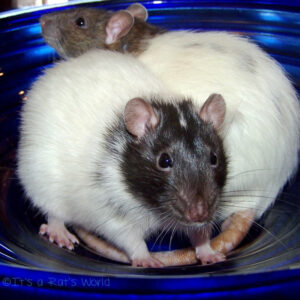
"Every household’s living situation, financial resources, and individual circumstances are unique, all of which factor into the type of habitat and environment your rats will have," explains a seasoned rat rescuer. "This makes it impossible to generalize which pets are or aren’t suitable for rat owners. Instead, ask yourself these important questions to help you determine if your living situation can provide both physical safety and emotional well-being for your rats if other animals become involved."
Key questions that prospective or current multi-pet owners should consider include:
- Dedicated Space: Can a room be designated specifically for the rats, ensuring it is off-limits to other animals? If not, will the rats be housed in a common area where other pets frequent?
- Cage Security: If rats are housed in a room with other pets, will their cage be securely enclosed, preventing other animals from reaching or disturbing them? Will there be continuous supervision of other animals when they are in proximity to the rat enclosure?
- Out-of-Cage Time: Where will the rats be allowed to play and explore daily, outside of their cage? Will other animals have access to these areas during the rats’ playtime?
- Training and Supervision: Have other pets been trained to be around rats? What level of supervision can be provided during any potential interactions?
The psychological impact of other animals on rats cannot be overstated. Some rats experience significant fear and anxiety when potential predators are nearby, even if their lives are not immediately threatened. Conversely, some rats may become agitated and territorial. While some rats may exhibit curiosity towards other species, their reactions are often unpredictable, even for those seemingly familiar with the animals in their environment. Owners must be prepared to adapt their living arrangements to meet the rats’ needs, which may include establishing a completely separate living space.
Creating a Stress-Free Sanctuary for Rats
The presence of other pets can introduce stressors into a rat’s life, even if unintentional. Dogs and cats may exhibit behaviors such as obsessively hovering near cages, whimpering, salivating, or attempting to bat at cage bars. These actions, while potentially harmless in intent, can create a constant state of unease for rats.
"It’s not uncommon for dogs or cats to obsessively hover, whimper, or salivate around a rat cage. They might even try knocking smaller cages over. Cats are also prone to batting at the bars," observes a veterinarian specializing in small mammals. "While some rats might tolerate this attention, many, especially those with a history of trauma, will be apprehensive or downright frightened of other pets."

In cases where other pets persistently pester the rats, or if the rats exhibit signs of fear, stress, or depression, permanent separation becomes a necessary measure. This might involve relocating the rats to a dedicated room or ensuring the other pet is confined to a different part of the house during the rats’ active hours. The ultimate goal is to provide the rats with a secure and peaceful environment where they can thrive.
For owners who cannot provide an entirely separate room, creative solutions can be implemented. For example, a modified cage with a Dutch door design can allow for airflow and interaction opportunities during the day while securely preventing access by other pets at night. The key is to establish clear boundaries and ensure the rats’ habitat remains a safe haven.
The Influence of Personality and Training on Inter-Species Relations
The success of integrating rats into a multi-pet household is significantly influenced by the individual personalities and training levels of both the rats and the other animals involved. Certain breeds of dogs and cats possess a higher prey drive, which can present a greater challenge when introducing them to smaller animals.
Dog breeds historically bred for hunting, such as terriers and hounds, may exhibit a stronger instinct to chase and capture prey. Similarly, some cat breeds are more predisposed to predatory behavior. However, it is crucial to remember that breed is not the sole determinant of an animal’s behavior. Individual temperament, socialization, and consistent training play equally vital roles.
"Some dog breeds have a much higher prey drive than others, making them far more dangerous around rats. An example would be hunting dogs or dogs categorized as ‘ratters,’ which were originally bred to hunt and kill rats," explains a certified animal behaviorist. "Certain cat breeds are more predatory than others as well. However, I know of at least four that are known for having a lower prey drive: Ragdoll, Persian, Scottish Fold, and Himalayan. Of course, the breed alone does not determine how a dog or cat might react to seeing a rat. Much of it is based on their individual personalities, their size, and how easily trained they are."

Positive reinforcement training, focusing on desensitization and counter-conditioning, can be instrumental in modifying a dog’s or cat’s natural instincts. This process involves gradually exposing the other pet to the rats in a controlled environment, rewarding calm and non-aggressive behavior. It is a time-consuming endeavor that requires patience, consistency, and a deep understanding of animal behavior.
Case Study: Juno’s Journey to Cohabitation
The story of Juno, a pit bull terrier mix, exemplifies the challenges and rewards of integrating animals with strong predatory instincts into a home with rats. Initially, Juno exhibited an extreme prey drive, attempting to attack any rat she encountered. Her owner, an experienced rat advocate, had previously avoided adopting terrier breeds due to their known hunting tendencies. However, circumstances led to Juno’s adoption, and the process of her integration was arduous.
"Not all dogs make it that easy, however," the author recounts. "I always avoided adopting any terrier or dachshund mix (despite my love for wiener dogs), due to personal experiences concerning small pets that I’ve had with these ‘ratter’ breeds. But, in 2021, for some ungodly reason, I went against my own rule. We ended up adopting what we thought was a laid-back, pit bull terrier."
Juno’s initial reactions were alarming, including attempts to physically assault her owner when holding a rat. This necessitated the use of a dedicated, rat-only room, a crucial safety measure that allowed for gradual acclimatization. Over months of dedicated training, Juno’s behavior began to shift. She learned to tolerate the presence of rats, eventually reaching a point where she could be in the same room during supervised free-ranging sessions. While Juno never developed a close bond with the rats, she learned to respect their space and refrain from predatory actions.
"It took months of work and tremendous amounts of patience before I could hold a rat in Juno’s presence without a reaction. Then, after a solid year of continual training, Juno was actually capable of being in the living room while the rats free-ranged on the couch! She cocked her head quizzically at them, but she obeyed and came nowhere near the couch while the rats were on it," the author shares. "She also got to where she could walk past their cage without the slightest reaction, even when new rats joined the family. I never taught her to interact with a rat like the other dogs, though, it just wasn’t worth the risk."

Juno’s story highlights that with significant commitment, professional guidance, and an understanding of individual animal temperaments, even dogs with high prey drives can learn to coexist peacefully with rats, albeit with stringent safety protocols in place.
Rats as Potential "Troublemakers" in a Multi-Pet Environment
It is essential to acknowledge that rats themselves can exhibit aggressive or territorial behaviors, particularly when they feel threatened or are defending their space. There are documented instances of rats defending themselves against predators, including snakes.
Furthermore, rats can pose a risk to other rodents. The assumption that rats and hamsters will naturally get along is often unfounded, as rats have been known to injure or even kill smaller rodents. Similarly, due to wild rats’ known predatory behavior towards birds and their nests, it is advisable to keep pet rats separated from avian companions. While these animals can coexist in the same household, maintaining separate living environments is crucial for the safety of all species.
Finding Harmony in a Multi-Species Household
The journey to a harmonious multi-pet household can be a dynamic one. While some integrations happen with surprising ease, others require significant effort and adaptation. The author reflects, "Sometimes cohabitation comes easily and falls into a perfect rhythm. Other times you wonder why you decided to add that high-maintenance dog to your serene house of rats."
However, the rewards of successfully managing a multi-species environment can be profound. By approaching pet ownership with preparedness, a willingness to address challenges, and a commitment to understanding each animal’s needs, the complexities of multi-pet living become more manageable. The unique ways in which each animal provides companionship and enrichment can create a deeply fulfilling and rewarding living experience. The author concludes, "For me, I personally find a multi-pet household to be quite rewarding. Each type of animal has its own unique way of providing love when I need it the most, and I wouldn’t want it any other way." This sentiment underscores the potential for deep connection and mutual respect to flourish across species, provided responsible ownership and a dedication to safety are prioritized.

