


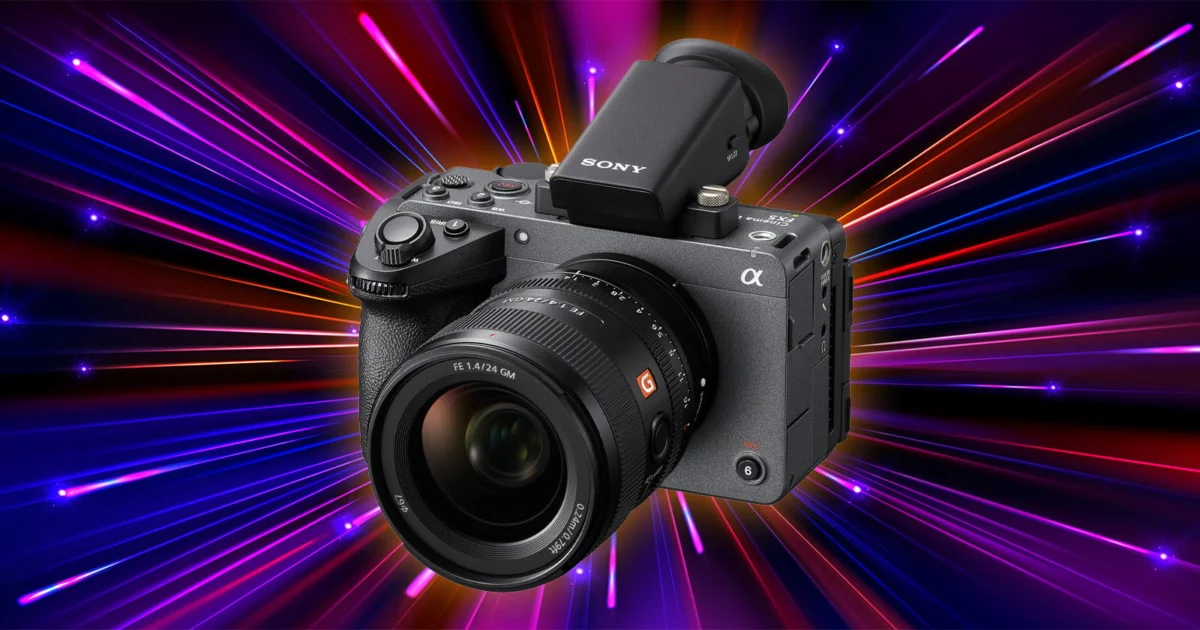
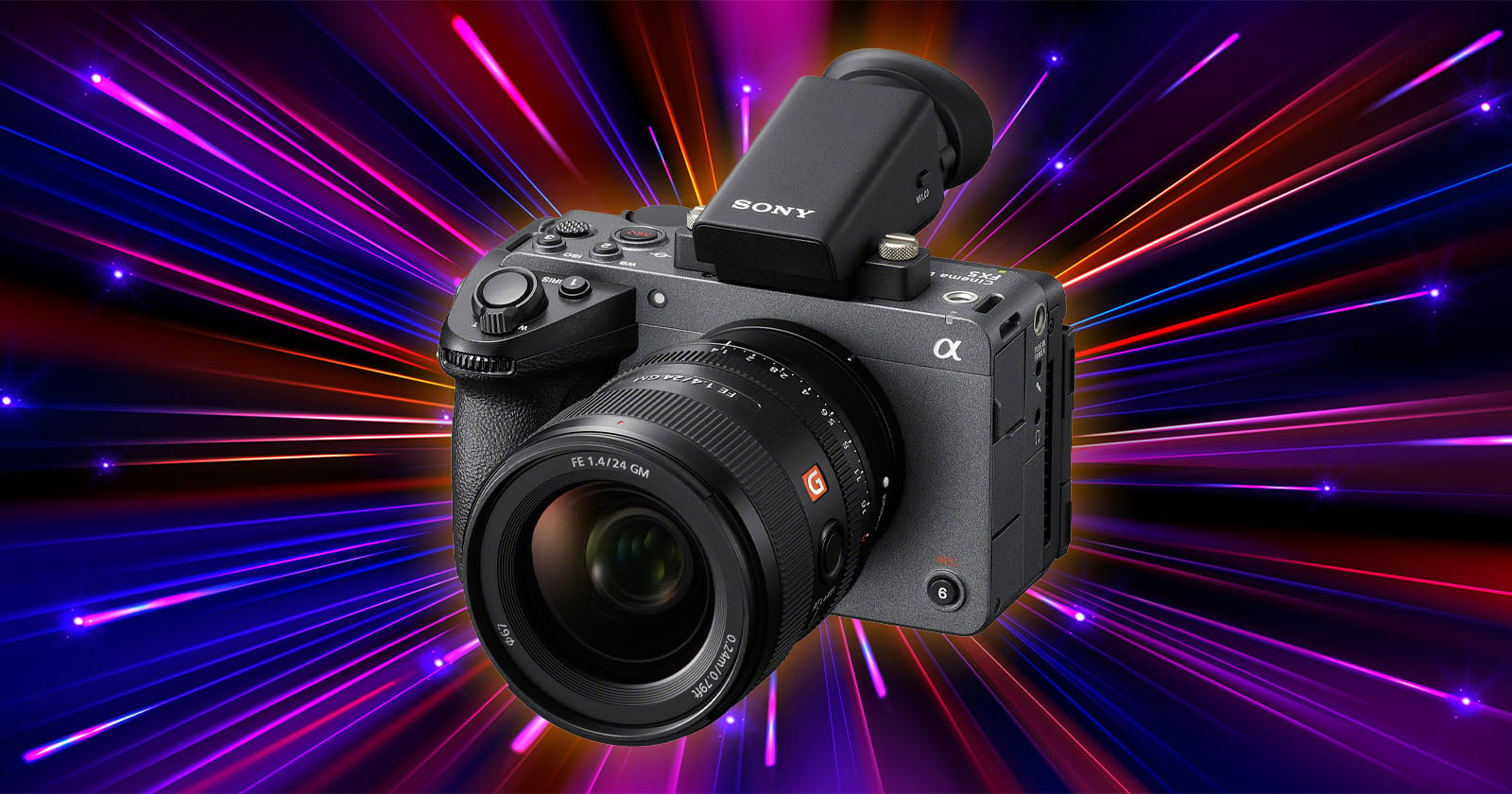
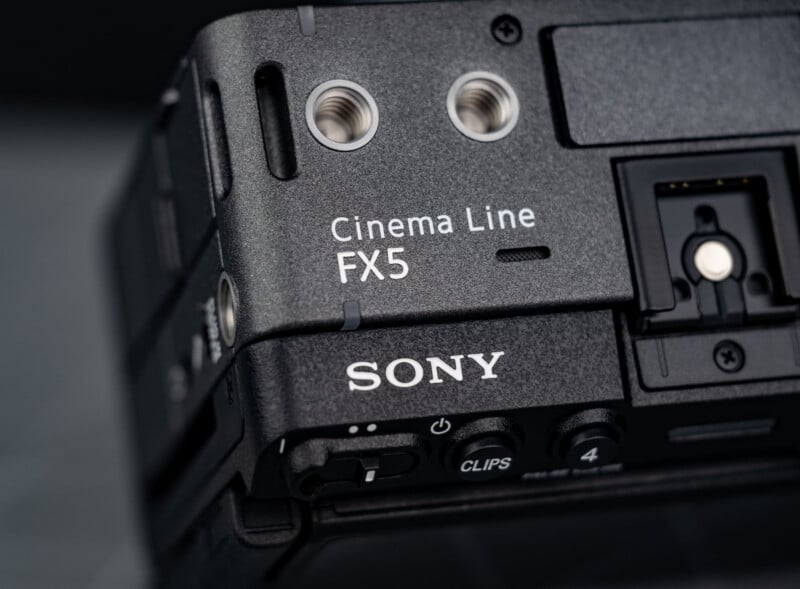
The unveiling of the Sony FX5 marks a pivotal shift in the trajectory of the Sony Cinema Line, introducing a mid-tier powerhouse that addresses long-standing industry demands for internal RAW recording and Open Gate functionality. Positioned strategically between the compact FX3 and the broadcast-ready FX6, the FX5 arrives as a response to an increasingly competitive landscape where rivals such as Nikon, Canon, and Panasonic have aggressively integrated high-end cinema features into smaller form factors. By introducing a new 16.6-megapixel sensor and the Bionz XR2 processor, Sony has not merely updated an existing model but has instead established a new product segment designed to serve as a primary camera for independent filmmakers and a high-performance "B-camera" for large-scale productions.
Evolution of the Sony Cinema Line and Market Context
To understand the significance of the FX5, one must examine the timeline of Sony’s FX series development. The Sony FX9 was released in late 2019, followed by the FX6 in late 2020 and the FX3 in early 2021. For over five years, these cameras defined the mirrorless-adjacent cinema market. However, as the industry pivoted toward flexible aspect ratios for social media and high-bit-depth internal workflows, Sony’s reliance on 4K-capped sensors and external RAW recording via HDMI began to draw criticism from professional quarters.
The demand for "Open Gate" recording—utilizing the full height and width of the sensor—became a rallying cry for cinematographers using anamorphic lenses or those requiring the ability to crop vertical 9:16 content from a horizontal 3:2 or 4:3 frame. While competitors like the Panasonic Lumix S5IIX and the Nikon Z9 embraced these features, Sony’s FX line remained tethered to traditional 16:9 or 17:9 aspect ratios. The FX5 represents the formal end of this era, signaling Sony’s commitment to modern, flexible workflows that prioritize post-production latitude.
Technical Specifications and the New 5K Sensor
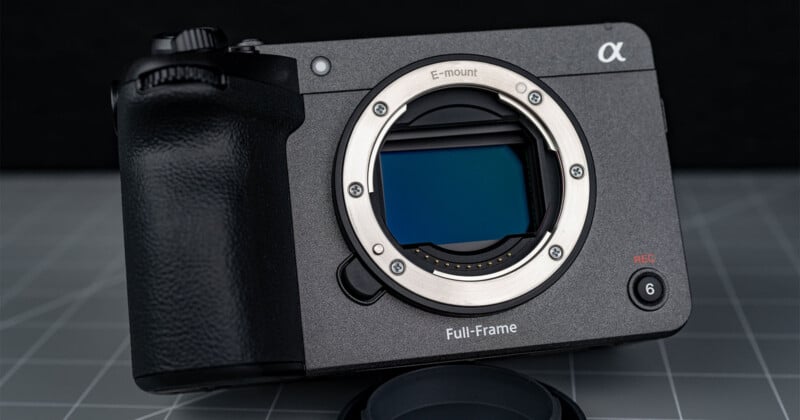
At the heart of the Sony FX5 is a newly developed 16.6-megapixel full-frame sensor. Industry analysts have noted that this sensor appears to be a specialized variant of the high-resolution architecture found in the Alpha 7R series, potentially utilizing a Quad Bayer pattern to optimize for video readout speeds and dynamic range. This hardware enables a maximum resolution of 5K, a deliberate choice that offers a significant detail boost over 4K without the massive data overhead and heat management challenges associated with 8K acquisition.
The camera is powered by the Bionz XR2 processor, which provides the computational overhead necessary for 16-bit internal RAW recording in the X-OCN (extended tonal range Original Camera Negative) format. Previously, 16-bit X-OCN was reserved for Sony’s high-end Venice and PMW-F55 cinema cameras, often requiring expensive external recorders like the AXS-R7. Bringing this level of data depth to a compact, $4,900 body is a move that dramatically lowers the barrier to entry for high-end color grading and visual effects workflows.
Internal RAW and Open Gate: Bridging the Professional Gap
The inclusion of internal 16-bit RAW recording is perhaps the most consequential feature of the FX5. By eliminating the need for external monitors like the Atomos Ninja to capture RAW data, Sony has streamlined the physical footprint of the camera, making it more viable for gimbal work, drone cinematography, and "run-and-gun" documentary filmmaking. The X-OCN format is renowned for its efficiency, offering manageable file sizes while preserving the linear light information necessary for HDR mastering.
Furthermore, the implementation of Open Gate recording allows filmmakers to capture the full sensor area. While Sony has currently limited Open Gate to RAW recording modes, it provides the necessary "safety area" for anamorphic desqueeze and multi-platform delivery. In an era where a single shoot must often produce a 2.39:1 theatrical trailer, a 16:9 television spot, and a 9:16 TikTok ad, the ability to capture the maximum amount of vertical and horizontal data is no longer a luxury but a professional necessity.
Ergonomics, Monitoring, and the Triple Base ISO System
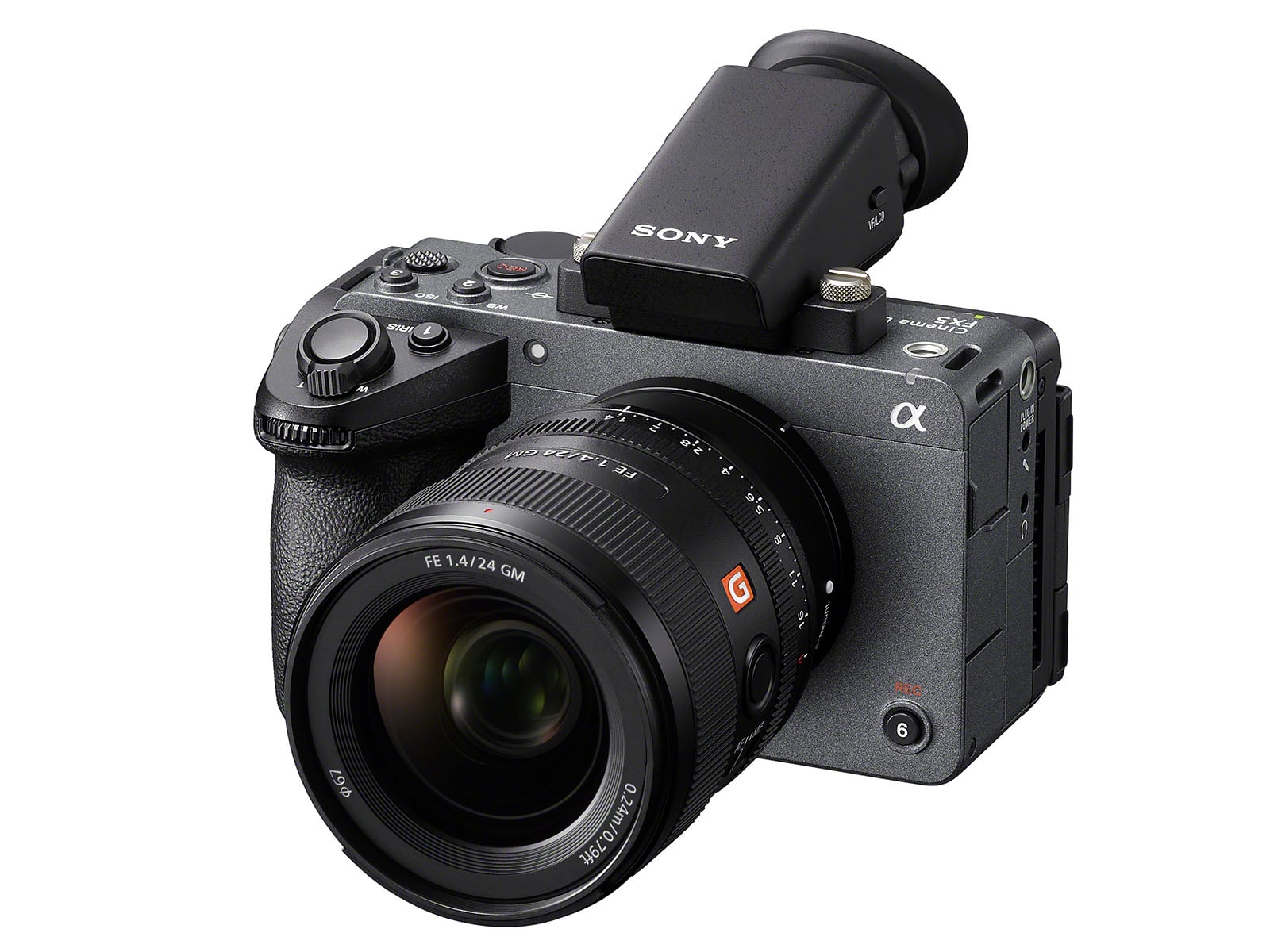
The FX5 introduces several ergonomic refinements that distinguish it from the Alpha-style body of the FX3. Most notable is the detachable electronic viewfinder (EVF) and a larger, high-brightness rear LCD screen. This modular approach allows users to strip the camera down for lightweight operations or build it up for traditional eye-level filming. However, the design involves a trade-off: when the EVF is mounted, it obstructs the Multi Interface (MI) shoe. This is a critical consideration for audio professionals, as the MI shoe is required for Sony’s proprietary 32-bit float audio adapters.
To compensate for lighting challenges, the FX5 features a sophisticated Triple Base ISO system. Unlike standard dual-ISO cameras, the FX5 offers base sensitivities at ISO 800, 4000, and 12800. This provides clean signal-to-noise ratios across a vast range of environments, from bright daylight to extremely low-light interior scenes.
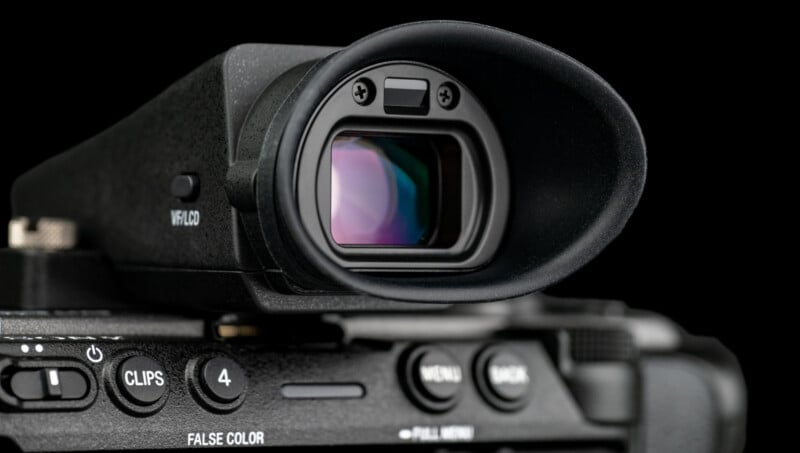
The user interface has also seen a total overhaul, drawing inspiration from the flagship CineAlta Venice. The inclusion of professional monitoring tools—such as built-in waveforms, vectorscopes, and false color—allows cinematographers to judge exposure with scientific precision, moving away from the more consumer-oriented "histogram" approach found in previous Alpha-series cameras.
Strategic Market Positioning and Pricing
The Sony FX5 enters the market at a retail price of approximately $4,900. This pricing strategy places it in direct competition with the Canon EOS C70 and the Blackmagic Design URSA Cine line. By pricing the FX5 $1,000 above the FX3 and $1,000 below the FX6, Sony has created a clear ladder for professional advancement:
- Sony FX3 ($3,899): Ideal for solo content creators and wedding filmmakers who prioritize autofocus and a compact form factor without the need for RAW or 5K.
- Sony FX5 ($4,900): Targeted at independent cinematographers, commercial directors, and B-camera operators who require internal RAW and Open Gate for high-end delivery.
- Sony FX6 ($5,999): Remains the choice for broadcast and reality TV due to its internal electronic Variable ND filter, SDI output, and Genlock capabilities—features notably absent from the FX5.
Industry Implications and Future Outlook
The release of the FX5 is expected to have a ripple effect across the cinema camera industry. For years, Sony was seen as conservative regarding internal RAW recording, likely to protect its higher-end Venice sales. The decision to break this "product protectionism" suggests that the pressure from the mirrorless market has forced Sony’s hand.
Filmmaking communities have reacted with cautious optimism. While the lack of an internal ND filter in the FX5 is seen as a drawback compared to the FX6, the addition of 5K resolution and internal RAW is viewed as a more than fair exchange for the price point. Early feedback from industry consultants suggests that the FX5 will likely become the new standard for mid-budget commercial productions and high-end narrative shorts.
Furthermore, the FX5 sets a new baseline for what is expected in future Sony releases. It is highly probable that the technology debuted here—the Bionz XR2 processor and the Triple Base ISO architecture—will eventually find its way into a "Mark II" version of the FX6 or even a future Alpha 7S IV.
Conclusion
The Sony FX5 represents a significant maturation of the Cinema Line. It acknowledges that the modern filmmaker requires more than just high-quality 4K; they require the flexibility of RAW data, the versatility of Open Gate aspect ratios, and the reliability of professional monitoring tools. While it does not replace the FX6 as a broadcast workhorse due to the omission of SDI and internal NDs, it fills a critical void in the market for a high-latitude, compact cinema camera. As Sony begins this new chapter, the FX5 stands as a testament to the company’s ability to evolve in the face of intense competition, delivering a tool that is likely to dominate the independent filmmaking scene for years to come.

