


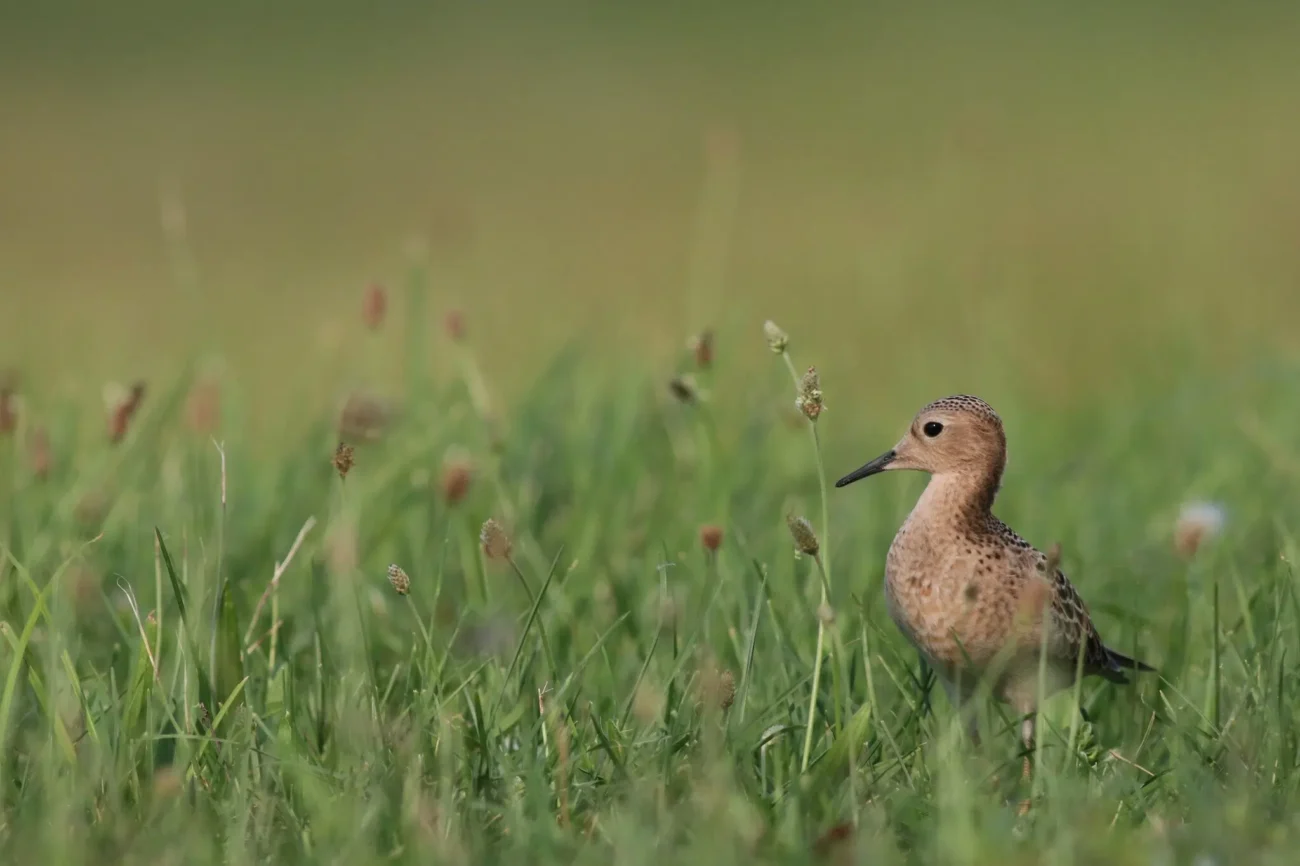
Birds navigate the globe using intricate aerial superhighways known as flyways, essential routes for their arduous migrations between breeding grounds, vital feeding areas, and seasonal refuges. Among these remarkable avian travelers is the Buff-breasted Sandpiper (Calidris subruficollis), a long-distance migrant undertaking a circular journey along the Americas Flyway. This species traverses the expansive grasslands of North America to reach its wintering grounds in the temperate South American pampas. With an estimated global population of approximately 550,000 individuals, the Buff-breasted Sandpiper thrives in a variety of ecosystems, including dry grasslands, prairies, and agricultural fields. Despite its widespread presence, the species is listed as Vulnerable on the IUCN Red List of Threatened Species, facing persistent threats such as habitat conversion and the lingering impacts of historical hunting practices.
The Buff-breasted Sandpiper’s annual cycle begins in the Arctic tundra, where it breeds sporadically across a vast expanse stretching from central Alaska to Devon Island in Canada. A unique characteristic among shorebird species is its lek mating system. During the breeding season, males congregate in specific display areas, engaging in elaborate courtship rituals to attract females. Following this intensive breeding period, the sandpipers embark on a distinctive circular migration. They journey south through the North American Great Plains, a critical corridor for refueling and resting, before reaching their primary wintering grounds in the vast pampas of Argentina, Uruguay, and Brazil. The return journey north presents a different set of ecological demands. Between February and April, the birds traverse the Llanos de la Orinoquia, a seasonally dry savanna region spanning Colombia and Venezuela, which provides crucial feeding opportunities during this critical phase of their migration.
Vital Stopover Sites and Wintering Grounds: Pillars of Survival
Throughout their southbound migration, a network of Key Biodiversity Areas (KBAs) across the Americas serves as indispensable "fuelling stations" and secure refuges for these intrepid travelers. KBAs are globally recognized sites of exceptional importance for biodiversity conservation. For the Buff-breasted Sandpiper, these areas are not merely transit points but critical components of their survival strategy, offering essential resources at precisely the right moments in their life cycle.
West Mamoré River (Bolivia): A Critical Bottleneck
The West Mamoré River region in Bolivia stands out as the most crucial KBA for the Buff-breasted Sandpiper within the country. Astonishingly, over 40% of the species’ global population utilizes this site and the adjacent Beni savanna grasslands during their southbound migration. The sandpipers primarily forage in the shortgrass areas found along river edges, maintained by the grazing of livestock, and on sandy banks flanking the Mamoré and Madre de Dios rivers. They actively avoid the denser tallgrass savannas and the forested islands that dot the landscape. The reliance on the Beni Savanna ecosystem during the southbound migration is absolute; the grasslands are dry and provide optimal foraging conditions. However, during the northbound migration, these same grasslands become inundated, rendering them largely unsuitable for foraging. This seasonal dependency highlights the vulnerability of the species to changes in water regimes and habitat management.
Estuário da Laguna dos Patos (Brazil): A Major Concentration Point
Located at the southernmost edge of the Patos Lagoon in Brazil, the Estuário da Laguna dos Patos, and specifically Torotama Island within it, consistently hosts the largest aggregations of Buff-breasted Sandpipers observed in Brazil. This site’s ecological significance is undeniable, yet it faces mounting pressures from urban expansion and the increasing threat of flooding, posing a direct risk to the sandpipers’ vital wintering habitat. The delicate balance of this estuarine environment is crucial for supporting such large numbers of migratory birds.
Laguna de Rocha (Uruguay): A Protected Wintering Haven
Laguna de Rocha in Uruguay is a confirmed KBA of global priority and plays a pivotal role as an important wintering ground for the Buff-breasted Sandpiper. This brackish lagoon is part of a broader coastal lagoon system that extends across southeastern Brazil and eastern Uruguay. Its designation as a KBA signifies its exceptional biodiversity value. Furthermore, its recognition as a Western Hemisphere Shorebird Reserve Network (WHSRN) site and a Ramsar site underscores its international importance for wetland conservation and migratory shorebird populations. This multi-layered protection reflects the site’s critical role in the sandpiper’s annual cycle.

Bahía de Samborombón y Punta Rasa (Argentina): Southern Summering Grounds
The Bahía de Samborombón y Punta Rasa KBA in Argentina is a principal stopover and wintering site where substantial numbers of migratory shorebirds converge during the austral summer. This region protects some of the last remaining expanses of intact Pampas grassland, a habitat type that has seen significant decline. Its qualification as a KBA is based on the presence of the Buff-breasted Sandpiper, among other significant bird species. Similar to Laguna de Rocha, this site is also recognized as a WHSRN and Ramsar site, underscoring its critical role in supporting continental migratory bird populations. The preservation of these Pampa grasslands is paramount for the long-term survival of species like the Buff-breasted Sandpiper.
The Critical Northbound Journey: Staging Grounds in the Llanos
As the Buff-breasted Sandpiper commences its arduous journey back north, typically between February and April, the Llanos de la Orinoquia region in Colombia and Venezuela transforms into a series of high-stakes staging grounds. These seasonally dry savannas are essential for the birds to replenish their energy reserves before completing their migration.
Reservas de la Vereda Altagracia (Colombia): Essential High Ground
The Reservas de la Vereda Altagracia KBA in Colombia plays a crucial role during the spring migration. This site supports more than 1% of the global population of the Buff-breasted Sandpiper. The species relies on elevated areas, referred to as "benches," which remain dry as the rainy season begins to set in. These patches of relatively dry land provide vital foraging opportunities during a period of transition, making this KBA a critical link in the northbound migration chain.
Puerto Rico y La Polonia Natural Reserve (Colombia): Savannas and Sustainable Ranching
This private reserve in Colombia is dedicated to the protection of natural savannas and wetlands. Its management practices, particularly its traditional livestock management, are remarkably aligned with conservation goals. The grazed grassland structure maintained through these practices is precisely what the Buff-breasted Sandpiper requires for successful foraging. The integration of sustainable agriculture and conservation demonstrates a promising model for the co-existence of human activities and biodiversity preservation.
Conservation in Action: Protecting Grassland Ecosystems Across the Americas
The overarching conservation strategy for the Americas Flyways places a significant emphasis on the protection of grassland ecosystems. These vast landscapes, stretching from the Southern Cone’s Pampas to the Chihuahuan Desert and the Great Plains, are vital for numerous migratory bird species, including the Buff-breasted Sandpiper.
Alianza del Pastizal: A Regional Grassland Conservation Initiative
Established in 2006 by BirdLife International, the Alianza del Pastizal (Grasslands Alliance) is a cornerstone of grassland conservation in the Southern Cone. This initiative is implemented through BirdLife’s Partners: Aves Argentinas, SAVE Brasil, Guyra Paraguay, and Aves Uruguay. The Alianza del Pastizal unites producers, conservationists, researchers, and government agencies, promoting grassland-based livestock systems as a tool for habitat restoration and the conservation of grassland birds and other key biodiversity. This collaborative approach has yielded significant results, with the nature-friendly livestock management system now encompassing over 1 million hectares and engaging hundreds of landowners across the four participating countries. The success of this initiative lies in its recognition that sustainable production and biodiversity conservation are not mutually exclusive but can be mutually reinforcing.

Beni Eco-Friendly Ranching Alliance: Sustainable Practices in Bolivia
In the Beni Savanna of Bolivia, the Beni Eco-Friendly Ranching Alliance, founded by Asociación Armonía in collaboration with the Beni Cattle Ranchers’ Federation, is another exemplary conservation effort. This alliance brings together ranchers committed to producing beef through sustainable grazing practices. Armonía works closely with its members, facilitating the transition from conventional cattle ranching to shorebird-friendly management. This approach aims to maintain high-quality grassland habitat while simultaneously enhancing the sustainability and productivity of ranching operations. Such initiatives are crucial for safeguarding the delicate ecological balance of the Beni Savanna, a critical stopover for the Buff-breasted Sandpiper.
Barba Azul Nature Reserve: A Sanctuary for Shorebirds
Asociación Armonía also established the Barba Azul Nature Reserve in 2008. This 12,200-hectare reserve is Bolivia’s sole Western Hemisphere Shorebird Reserve Network Site of Regional Importance, a designation earned due to the significant numbers of Buff-breasted Sandpipers that migrate through the area annually. To ensure the reserve’s long-term financial viability, Armonía manages a herd of approximately 1,200 cattle. Livestock grazing, when carefully managed, serves as a critical management tool. By maintaining grass heights between 4 and 6 cm at river-edge shortgrass sites, the grazing regime creates optimal foraging habitat for the Buff-breasted Sandpiper, demonstrating how integrated land management can support both conservation and economic activities.
Implications for Biodiversity and Cross-Continental Cooperation
The remarkable migratory journey of the Buff-breasted Sandpiper serves as a potent symbol of interconnectedness. It underscores how a single species’ life cycle can bridge vast geographical distances, linking diverse ecosystems and cultures across an entire continent. The protection of the network of KBAs that facilitate these transcontinental voyages is paramount. These interconnected sites are not merely crucial for the persistence of the Buff-breasted Sandpiper but for a multitude of migratory bird species that rely on these same routes and habitats.
The ongoing threats to these grassland ecosystems, including habitat fragmentation, agricultural intensification, and the impacts of climate change, necessitate sustained and collaborative conservation efforts. The success of initiatives like Alianza del Pastizal and the Beni Eco-Friendly Ranching Alliance highlights the potential for innovative, landscape-level conservation that integrates the needs of local communities and producers with the imperative of biodiversity protection.
The analysis of these KBAs reveals a complex web of ecological dependencies. The specific habitat requirements of the Buff-breasted Sandpiper, such as the shortgrass areas maintained by grazing along riverbanks in Bolivia or the expansive, relatively undisturbed grasslands of the pampas, emphasize the need for nuanced and site-specific conservation strategies. Furthermore, the vulnerability of these sites to threats like urban expansion and flooding in Brazil underscores the importance of robust land-use planning and climate change adaptation measures.
The formal recognition of these sites as KBAs, WHSRN sites, and Ramsar sites provides a framework for international cooperation and resource allocation. These designations facilitate the sharing of best practices, the mobilization of funding, and the development of coordinated conservation policies across national borders. The future of the Buff-breasted Sandpiper, and indeed many other migratory species, hinges on the continued commitment to protecting these vital ecological corridors and fostering a shared understanding of their global significance. The story of this small sandpiper is a powerful reminder of the intricate tapestry of life that spans the Americas and the collective responsibility we share in preserving it for future generations.

