


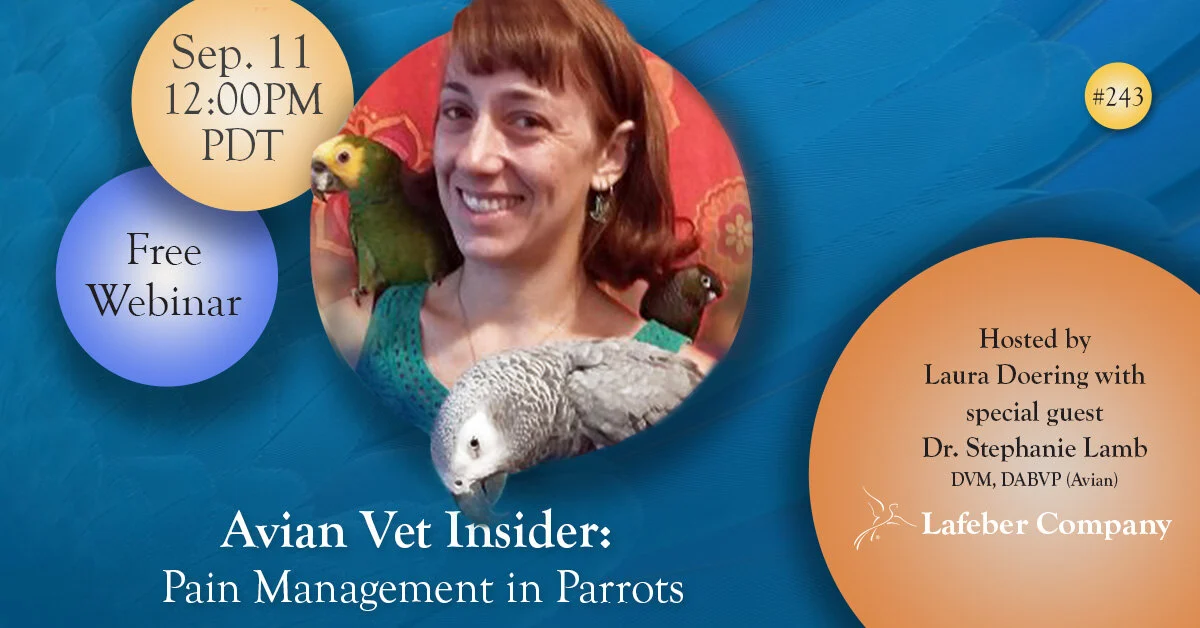
September is recognized globally as Animal Pain Awareness Month, an initiative dedicated to educating pet owners and professionals about the identification, assessment, and management of pain in domestic and wild animals. In alignment with this observance, Lafeber’s Pet Birds has announced a specialized webinar titled "Avian Vet Insider — Pain Management in Parrots," scheduled for Friday, September 11, 2026, at 12:00 p.m. PDT. The session will be led by Dr. Lamb, a specialist in avian medicine, who will address the complex challenge of detecting and treating pain in psittacine species.
The Challenge of Pain Detection in Avian Species
Recognizing pain in parrots remains one of the most significant challenges for avian practitioners and bird owners alike. Unlike mammals, which often exhibit clear, instinctual behaviors when suffering—such as limping or vocalizing—birds have evolved to mask signs of illness or injury as a defense mechanism against predation. In the wild, a bird that displays overt weakness is frequently targeted by predators; consequently, pet birds often hide their discomfort until a condition has reached an advanced stage.
During the upcoming webinar, Dr. Lamb will provide an analytical breakdown of subtle ethological changes that indicate physiological distress. These markers may include changes in posture, reduced activity levels, alterations in perching habits, or shifts in grooming behavior. By teaching owners to observe these "micro-signs" of discomfort, the presentation aims to improve early intervention rates, which are critical for successful recovery and long-term prognosis in avian patients.
Pharmacological and Alternative Approaches
The webinar will transition from diagnostic observation to therapeutic intervention, focusing on the current standards of care in avian pain management. The medical landscape for parrots has evolved significantly over the last decade, moving away from a "wait-and-see" approach toward proactive, multimodal analgesia.
Dr. Lamb is expected to cover several key areas of clinical treatment:
- Non-Steroidal Anti-Inflammatory Drugs (NSAIDs): A discussion on the appropriate use, dosage, and potential renal or hepatic side effects of common avian NSAIDs.
- Opioids and Adjuncts: An overview of how these medications are titrated for surgical recovery or chronic orthopedic conditions.
- Multimodal Analgesia: The logic behind using two or more drugs with different mechanisms of action to achieve better pain control with lower doses of individual medications, thereby reducing systemic toxicity.
- Integrative and Alternative Therapies: The role of laser therapy, acupuncture, and environmental modifications in chronic pain management, such as arthritis in aging parrots.
Chronology of Avian Pain Awareness
The necessity for this educational event stems from a growing body of veterinary literature that highlights the high prevalence of undiagnosed pain in captive birds.
- Pre-2015: Avian medicine primarily relied on the assumption that birds experienced pain similarly to mammals but lacked specific avian-validated analgesics.
- 2015–2020: Increased clinical research led to the publication of several key papers on the pharmacokinetics of common pain relievers in psittacines, providing vets with evidence-based dosing schedules.
- 2021–2025: The shift toward "Fear-Free" and "Low-Stress" handling protocols in veterinary clinics emphasized the importance of pain mitigation to reduce stress during medical procedures.
- 2026: The current focus has moved toward long-term management of chronic conditions, such as pododermatitis (bumblefoot) and degenerative joint disease, which are increasingly common as captive parrots live longer, healthier lives.
Data-Driven Insights on Avian Health
Supporting the urgency of this topic is the increasing longevity of companion parrots. With advancements in avian nutrition—such as the development of formulated diets—parrots are frequently living into their third, fourth, or even fifth decade. This increased lifespan carries the inevitable consequence of age-related ailments.

According to data from avian health registries, orthopedic issues and inflammatory conditions are among the top five reasons for veterinary visits in senior parrots. Despite this, surveys conducted by avian advocacy groups suggest that fewer than 40% of bird owners feel confident in their ability to detect early signs of pain in their companions. The "Avian Vet Insider" series serves as a critical bridge between academic veterinary medicine and the practical application of care in the home environment.
The Role of Preventive Care and Monitoring
Beyond the administration of medication, the webinar will underscore the importance of preventative care. Clinical experts argue that pain management is not merely a reactive treatment but an integral part of maintaining a bird’s overall quality of life. Dr. Lamb’s presentation will emphasize the "pain diary" approach, where owners track daily behaviors to establish a baseline. Deviations from this baseline often provide the first objective evidence that a parrot is suffering, long before blood tests or radiographic imaging confirm the underlying pathology.
Broader Implications for the Avian Community
The implications of this webinar extend beyond the individual pet owner. By fostering a more informed community, the initiative contributes to the professionalization of the avian pet industry. When owners become more adept at identifying early distress, they seek veterinary attention sooner. This leads to higher rates of successful treatment, reduced medical costs associated with emergency care for late-stage conditions, and a general improvement in the standard of care for captive birds.
Furthermore, the integration of alternative therapies, such as low-level laser therapy (LLLT), represents a significant shift in how veterinarians approach chronic, non-surgical pain. The scientific community has observed that these therapies can reduce inflammation and improve mobility in elderly birds without the systemic risks associated with long-term pharmacological use. Dr. Lamb’s inclusion of these methods suggests a holistic approach to avian welfare that balances modern medicine with emerging therapeutic techniques.
Registration and Participation
The webinar is open to the public, including avian enthusiasts, rescue organization staff, and veterinary technicians. Attendees are encouraged to utilize the provided time zone converter, as the 12:00 p.m. PDT start time may vary significantly for global participants. The platform, hosted via Zoom, allows for a Q&A segment, providing an opportunity for attendees to seek clarification on specific health concerns or medication protocols.
As the industry prepares for this event, the focus remains clear: the objective is to demystify the silent suffering of parrots and empower those responsible for their care to act with confidence and medical accuracy. By prioritizing pain management, the avian community reaffirms its commitment to the welfare of these intelligent, complex, and long-lived companions.
For those interested in participating, registration is now open through the official Lafeber’s Pet Birds portal. Given the focus on specialized clinical knowledge, the session is expected to draw a high attendance from the international avian veterinary community and dedicated pet owners looking to enhance their husbandry standards.
In conclusion, the September 11 event is more than a standard educational webinar; it is a vital response to the evolving needs of the modern avian pet. By synthesizing clinical research with practical home-based care strategies, Dr. Lamb and the organizers are addressing a critical knowledge gap. As awareness of animal welfare continues to rise globally, sessions like these ensure that the standard of care for parrots keeps pace with the best practices of modern veterinary medicine, ultimately ensuring that captive birds live not just longer, but more comfortable lives.

