


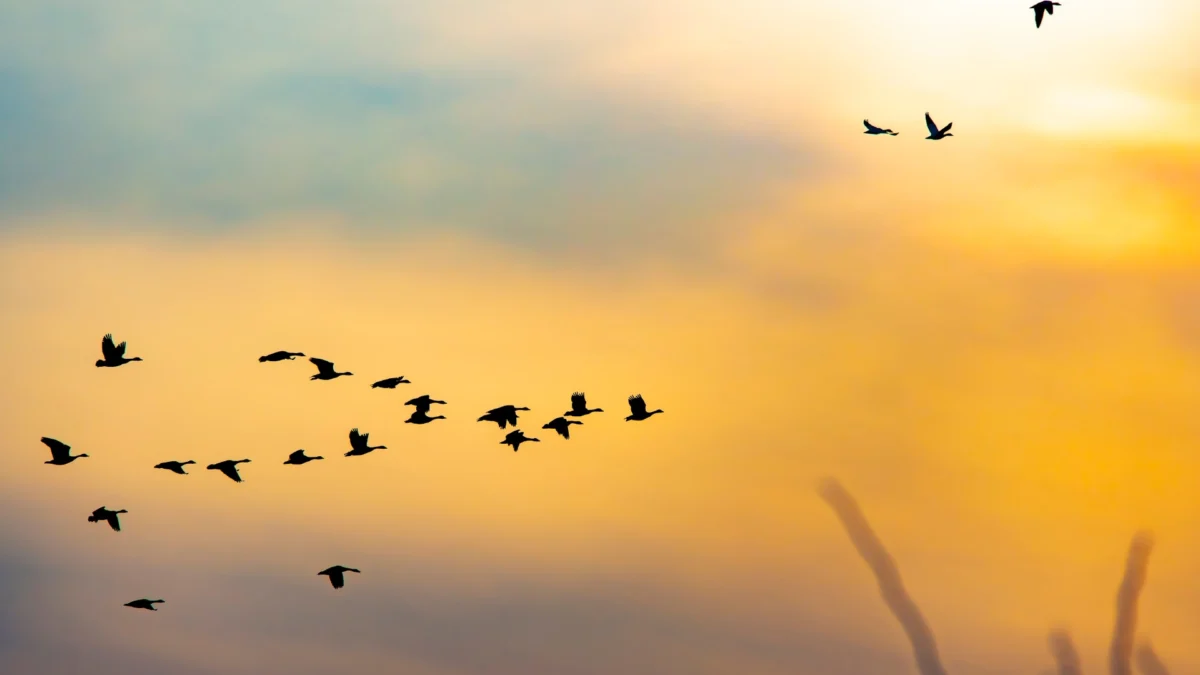
The North American continent is currently experiencing one of its most significant natural spectacles: the annual fall migration. Driven by a complex interplay of hormonal changes, celestial navigation, and shifting weather patterns, hundreds of millions of avian travelers are embarking on a perilous journey from their breeding grounds in the north to wintering territories in the south. According to the latest data from the Cornell Lab of Ornithology’s BirdCast project, which utilizes weather surveillance radar to track biological movements in the atmosphere, this week represents a major surge in activity, with over 200 million birds currently in flight across the United States.
A Geographic Snapshot of the Migration Surge
The current movement is heavily concentrated through the central corridor of the United States. Meteorological conditions, including favorable tailwinds and the cooling temperatures characteristic of late August, have created an ideal "highway" for millions of songbirds, shorebirds, and raptors.
On August 26, the BirdCast data identified Iowa, Missouri, Kansas, Oklahoma, and Texas as the primary hotspots for migration intensity. This follows a trend observed earlier in the week in the upper Midwest, where Minnesota, North Dakota, and South Dakota served as key departure zones. For observers in these regions, the timing is critical; as birds navigate these corridors, they rely on local ecosystems to rest and refuel. The sudden influx of species in these states is a direct result of the birds’ reliance on atmospheric "flow," where they capitalize on nocturnal wind patterns to minimize energy expenditure during their long-distance flight.
The Science of Nocturnal Flight
A common misconception among casual observers is that bird migration is a continuous, steady movement visible during daylight hours. In reality, the vast majority of North American songbirds—including warblers, thrushes, vireos, and flycatchers—are nocturnal migrants. By traveling under the cover of darkness, these birds gain several evolutionary advantages: they avoid the heat of the day, which helps prevent dehydration; they escape the attention of diurnal predators like hawks and falcons; and they utilize more stable, cooler air masses that are often more conducive to sustained flight.
Because these movements are invisible to the naked eye, scientists rely on sophisticated radar infrastructure. Weather surveillance radar, typically used to track precipitation and storm fronts, is sensitive enough to detect the "biological clutter" of avian swarms. By filtering out rain and wind, researchers at the Cornell Lab of Ornithology and other institutions can estimate the density and direction of these migrations. On peak nights during the height of the season, it is estimated that more than one billion birds may be airborne simultaneously across the United States, making the current count of 200 million a significant, though early, indicator of the intensity yet to come.
Chronology of the 2026 Season
The migration cycle is not a singular event but a prolonged, rhythmic process that spans from late summer through late autumn. In early August, the first harbingers of migration—typically adult shorebirds and early-nesting songbirds—began their southern trek. As the calendar approaches September, the movement patterns will diversify, with juvenile birds beginning their inaugural journeys.
The current surge on August 26 is consistent with historical averages for the end of summer. As the season progresses into mid-September, the migration will broaden in scope, affecting both the Atlantic and Pacific flyways in addition to the central corridor. By October, the focus will shift toward raptors and waterfowl, which follow different environmental cues and flight strategies compared to the delicate songbirds currently dominating the radar.
Supporting Data and Environmental Context
The scale of this migration is staggering. Ornithologists point out that the survival of these species depends heavily on the availability of "stopover habitats." These are the patches of forest, wetlands, and grasslands where birds land to feed on insects, berries, and seeds. The loss of such habitats due to urban development and agricultural expansion remains a primary concern for conservationists.

Data from the North American Bird Conservation Initiative (NABCI) indicates that since 1970, North America has lost nearly three billion birds. This statistic underscores the importance of migration events; the journey is physically exhausting, and the birds are at their most vulnerable during their stopovers. Providing safe, high-quality foraging grounds during these high-traffic weeks can be the difference between a successful migration and a fatal one.
Expert Perspectives and Conservation Implications
While the data provided by BirdCast is primarily intended for research and public awareness, its implications for public policy and environmental management are significant. Conservation organizations, such as the National Audubon Society, frequently use this data to advocate for "Lights Out" initiatives. During peak migration nights, urban light pollution can disorient birds, causing them to collide with buildings or circle lights until they succumb to exhaustion.
"The radar imagery gives us a window into a hidden world," says one representative familiar with the project. "When we see these massive movements, it serves as a call to action. Whether it’s turning off non-essential exterior lighting or ensuring that our local parks are managed with native plants that support migratory insects, the public has a role to play in the survival of these species."
What Birdwatchers Should Look For
For the birding community, the current weather-driven migration is an opportunity to witness species that may be absent from their local areas for the rest of the year. The strategy for the "post-migration morning" is well-established: birdwatchers are encouraged to head to local parks, woodland edges, and wetlands shortly after dawn. Because these birds have spent the night flying, they are often hungry and tired, leading them to forage more openly than they might otherwise.
Key species to watch for in late August include:
- Warblers: Often the most sought-after by birders, these small, colorful birds move in "waves" that can appear suddenly in a canopy after a migration event.
- Vireos and Flycatchers: These species are highly active during the early morning hours, particularly along forest edges.
- Shorebirds: In areas where water levels have receded, shorebirds will congregate on mudflats, providing excellent viewing opportunities.
The sudden arrival of these species—sometimes referred to by birders as a "fallout"—can turn a quiet backyard into a vibrant hub of activity. While it is impossible to predict with 100% accuracy exactly where a flock will land, the BirdCast map serves as a vital diagnostic tool for enthusiasts to gauge the probability of such events.
The Broader Impact: A Changing Climate
It is important to note that migration is a biological phenomenon highly sensitive to environmental change. Climate change is currently altering the timing of insect emergence, which in turn affects when birds decide to migrate. If the "green-up" of the northern forests happens earlier due to warmer springs, the insects that birds rely on may reach their peak before the birds arrive, or vice-versa.
The 2026 migration season will provide further data points for researchers studying these phenological mismatches. By tracking the timing of these 200-million-bird surges, scientists can better understand how avian populations are adapting—or failing to adapt—to a rapidly warming world.
Conclusion
The current migration event is a reminder of the resilience and complexity of the natural world. As 200 million birds pass through the central United States, they are participating in a cycle that has persisted for millennia. For the average citizen, the sight of a warbler in a backyard tree or the sound of an unfamiliar chirp in the early morning is a fleeting connection to this global phenomenon. By utilizing resources like the BirdCast forecasts and supporting the protection of migratory stopovers, the public can help ensure that these billions of travelers continue to grace the skies for generations to come. As the week unfolds, those in the central states are encouraged to look upward, keeping in mind that while the birds may be invisible to the radar for long, their journey is one of the most remarkable displays of endurance in the animal kingdom.

