


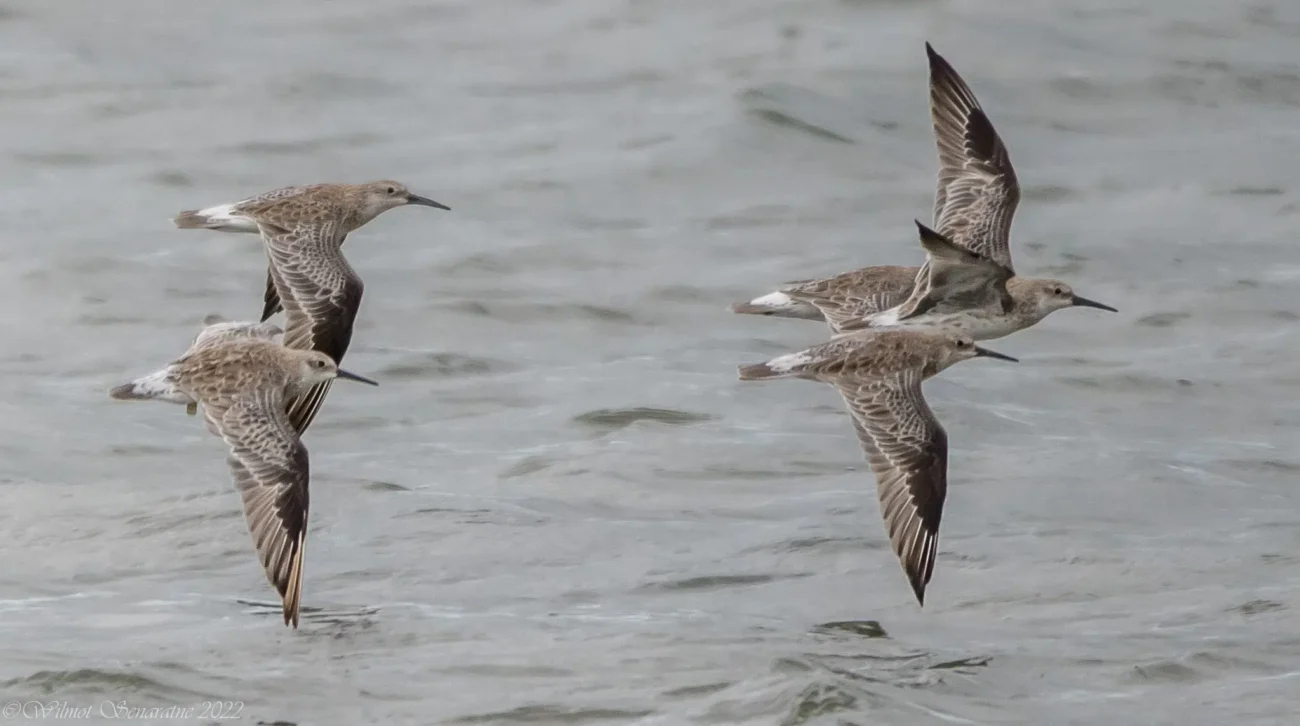
The East Asian-Australasian Flyway (EAAF) represents one of the most significant biological conduits on the planet, a vast aerial superhighway stretching from the harsh, windswept tundra of the Siberian Arctic to the temperate shores of Australia and New Zealand. Twice annually, this route facilitates the movement of millions of migratory birds, including at least 523 distinct species that rely on a chain of interconnected coastal wetlands to survive their arduous journeys. Among the most vulnerable of these travelers is the Great Knot (Calidris tenuirostris), an endangered shorebird whose life cycle is inextricably linked to a fragile network of Key Biodiversity Areas (KBAs). The conservation of these specific sites is not merely an environmental concern but a prerequisite for maintaining the ecological integrity of the entire two-continent corridor.
The Epic Migration of a Resilient Species
The Great Knot, a medium-sized wader, is a testament to the endurance of avian life. Its annual migration is a feat of biological engineering, requiring the bird to traverse diverse climates and landscapes. The species breeds primarily in the high-latitude mountains of northeastern Russia. As the northern summer wanes, the birds initiate a southward exodus, traveling thousands of kilometers to reach their wintering grounds. These destinations are geographically dispersed, ranging from the tropical wetlands of Southeast Asia and the coastal regions of India, Bangladesh, and Pakistan, to the eastern coast of the Arabian Peninsula and the expansive intertidal zones of Australia.

The species is currently classified as Endangered on the IUCN Red List, a status driven by the rapid degradation of its stopover habitats. Because the Great Knot is a "refueling specialist," it relies on specific tidal flats to feed on bivalves and marine worms. If these sites are lost to development or pollution, the birds lack the fat stores required to complete the next leg of their journey, often leading to population declines.
Chronology of the Flyway Journey
The migration cycle of the Great Knot is dictated by seasonal shifts and the availability of food resources at stopover sites.
- Breeding Season (June–August): Great Knots congregate in the rocky, upland tundra of Russia. This is the only period where the species remains stationary for an extended duration.
- Southward Migration (September–November): Birds depart the Arctic, funneling through the Yellow Sea region of China and the Korean Peninsula. These stopovers are critical; researchers have observed that birds arriving in poorer condition at these sites have significantly lower survival rates.
- Non-breeding Season (December–March): The population disperses across Southeast Asia, South Asia, and Oceania. During these months, the birds undergo a period of intense feeding to rebuild energy reserves.
- Northward Migration (April–May): This is often considered the most "time-pressured" phase. The birds must return to the Arctic in optimal physical condition to commence nesting. Any delay at a KBA during this period can result in total reproductive failure for the season.
Strategic Hubs: The Pillars of Survival
The EAAF is supported by a series of high-priority KBAs that function as essential refueling stations. Among these, the Inner Gulf of Thailand, the Yalu Jiang Estuary in China, and Sonadia Island in Bangladesh stand out as linchpins of the network.

The Inner Gulf of Thailand
The Inner Gulf of Thailand serves as a crucial wintering and transit hub for between 150,000 and 300,000 migratory waterbirds annually. The region’s significance lies in its unique blend of mangrove forests and salt pans. Pak Thale, a primary sanctuary within this landscape, has become a model for community-based conservation. The Bird Conservation Society of Thailand has successfully engaged local salt farmers, incentivizing the maintenance of salt pans as high-tide roosting sites. By transitioning toward "biodiversity-friendly" salt production and promoting ecotourism, the project demonstrates that economic development can coexist with the protection of endangered migratory species.
The Yalu Jiang Estuary
Located at the border of China and North Korea, the Yalu Jiang Estuary is a massive, 689-square-kilometer KBA dominated by extensive tidal flats. It acts as a primary "springboard" for Great Knots heading toward the Arctic. During peak migration, the site hosts upwards of 70,000 birds at a time. However, the estuary is under significant stress. Industrial encroachment, including oil and gas exploration, as well as land reclamation for infrastructure, poses a direct threat to the intertidal mudflats. Environmental analysts suggest that the continued loss of habitat in the Yellow Sea region is the single greatest driver of the Great Knot’s decline.
Sonadia Island: A Bangladesh Refuge
Sonadia Island, a 29.8-square-kilometer KBA in Bangladesh, serves as a vital refuge during the non-breeding season. Its low-lying, intertidal nature makes it an ideal feeding ground for waders. Unlike some of the more industrialized stopovers, Sonadia’s primary challenges involve managing human pressure and local development. Protecting this site is essential for the species’ winter survival, as it provides a stable environment for birds to recover from the exhaustion of their southward migration.

Supporting Data and Ecological Analysis
The reliance of the Great Knot on these sites is supported by extensive telemetry data. Tracking studies have shown that these birds exhibit "site fidelity," meaning they return to the exact same estuaries and mudflats year after year. This behavior makes the species highly vulnerable to localized habitat loss.
If a single KBA is destroyed, the birds do not simply move to the next available mudflat; they are often unable to find sufficient food elsewhere, leading to a "bottleneck" effect. Ornithological surveys indicate that the Great Knot population has seen a steady decline of roughly 3–5% annually over the last two decades. While climate change—specifically the rising sea levels impacting intertidal zones—is an emerging threat, the immediate priority remains the protection of these sites from land-use changes.
Official Perspectives and Conservation Strategy
International conservation organizations, including BirdLife International and regional partners, have long advocated for a "flyway-wide" approach to management. A spokesperson for regional conservation efforts recently noted, "We cannot conserve a migratory species by focusing on one country alone. The Great Knot connects the Arctic to the Tropics; its survival is a shared responsibility that spans political and cultural borders."

The consensus among wildlife biologists is that the designation of these sites as Key Biodiversity Areas is only the first step. The next, more difficult phase involves the implementation of legal protections that prevent industrial development. Several NGOs have called for:
- Strengthened International Treaties: Expanding the scope of the EAAF Partnership to enforce stricter land-use regulations at identified "red-flag" sites.
- Community Incentives: Replicating the Thai model of salt-pan conservation in other regions to ensure that local livelihoods are aligned with, rather than opposed to, bird conservation.
- Monitoring and Surveillance: Utilizing satellite imagery to detect unauthorized land reclamation in real-time.
Broader Implications: The Human-Nature Connection
The migration of the Great Knot serves as a biological indicator of the health of the entire flyway. These birds act as a mirror for human activity; the same coastal areas they require for survival are often the regions where humans concentrate their own industrial, agricultural, and urban efforts.
The degradation of these KBAs has consequences that extend beyond the loss of a single bird species. These wetlands act as natural barriers against storm surges, carbon sinks for climate mitigation, and nurseries for the fish stocks that sustain local fishing communities. Therefore, the conservation of the Great Knot is synonymous with the preservation of the essential ecosystem services that support millions of people living along the coasts of Asia and Australia. As international policies continue to evolve, the ability to safeguard these corridors will reflect the global commitment to maintaining biodiversity in an increasingly fragmented world. The Great Knot’s journey is, in essence, a call to manage our shared coastal spaces with the same endurance and precision that the birds exhibit in their own remarkable flight.

