


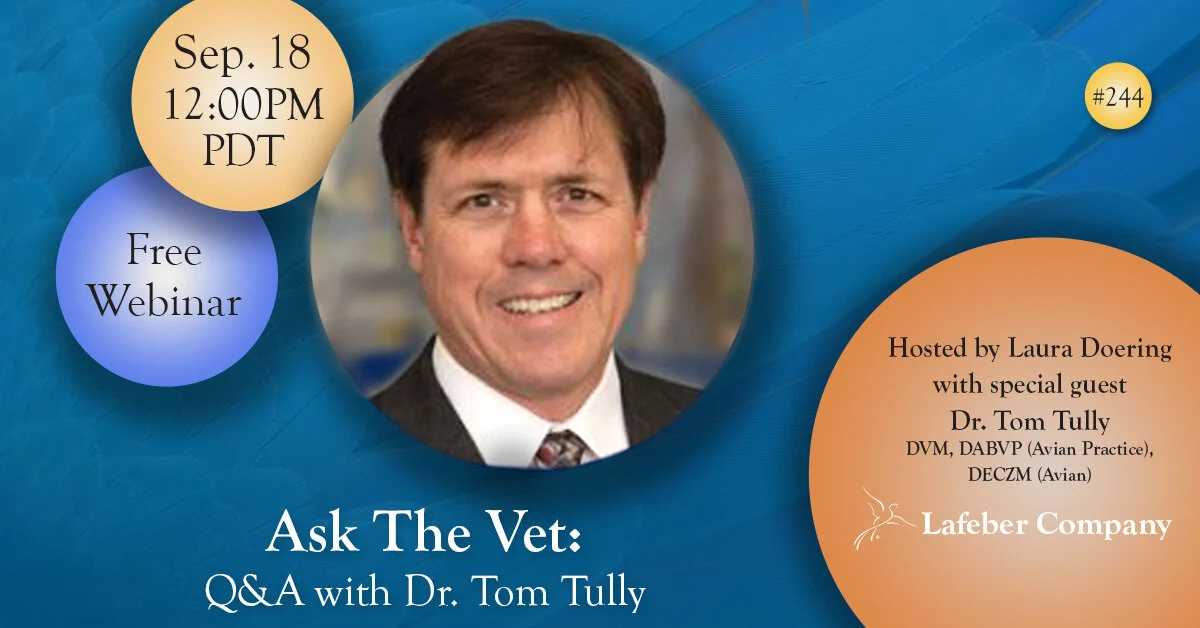
The pursuit of avian excellence in domestic settings requires a specialized understanding of complex physiological and behavioral needs, a standard that remains a primary objective for the global bird-owning community. On Friday, September 18, 2026, at 12:00 p.m. PDT, Lafeber Company will host its latest installment of the Ask The Vet webinar series. This interactive session features Dr. Tom Tully, DVM, DABVP (Avian Practice), DECZM (Avian), and will be moderated by Laura Doering, a veteran journalist formerly at the helm of Bird Talk and Birds USA magazines. The event serves as a platform for pet owners to engage directly with a leading authority in avian medicine, bridging the gap between clinical expertise and home-based care.
The Role of Specialized Avian Care in Domestic Environments
The domestic bird population faces unique health challenges that often differ significantly from traditional companion animals like canines or felines. Avian species, particularly parrots, are exotic animals that retain many of the biological imperatives of their wild counterparts, despite living in controlled human environments. This creates a distinct set of husbandry requirements—ranging from specialized nutritional profiles to the mitigation of environmental stressors—that often leave owners seeking expert guidance.
Dr. Tom Tully, recognized internationally for his board certification in avian practice, has long championed the concept of the "educated bird owner." The philosophy behind the Ask The Vet series is predicated on the evidence that improved owner literacy leads to better long-term clinical outcomes for avian patients. By providing direct access to a specialist, the organizers aim to reduce the prevalence of preventable health issues, such as malnutrition and obesity-related metabolic diseases, which remain leading causes of morbidity in pet birds.
Chronology and Event Structure
The September 18 webinar is part of a recurring series designed to provide consistent support to the avian community. Historically, these sessions have evolved from simple Q&A formats into comprehensive educational seminars.
- 11:45 a.m. PDT: Virtual lobby opens for registered attendees to ensure technical readiness.
- 12:00 p.m. PDT: Official commencement of the live broadcast, featuring an introduction by Laura Doering.
- 12:10 p.m. PDT: Segment one: Focused discussion on common seasonal health concerns or current research in avian nutrition.
- 12:30 p.m. PDT: Primary interactive Q&A session, where Dr. Tully addresses pre-submitted and live participant queries.
- 1:00 p.m. PDT: Closing remarks and resources for follow-up care or veterinary referral guidance.
This structure allows for both structured learning and flexible responses to the specific needs of the audience. Attendees are encouraged to verify their local start times using global time zone converters to ensure participation in the live, rather than recorded, experience.
Data-Driven Insights into Avian Health
Statistical data from the avian veterinary field suggests that a significant percentage of house-call or clinic visits could be preempted by early detection of subtle behavioral changes. Research indicates that birds, as prey species, possess an evolutionary drive to mask signs of illness until a condition has reached a critical stage. Consequently, owners who are trained to identify minute deviations in behavior—such as shifts in vocalization, grooming patterns, or fecal output—are significantly more likely to facilitate early medical intervention.
Nutritional health remains a cornerstone of the webinar’s curriculum. According to surveys conducted by avian health organizations, a majority of captive parrots are provided diets lacking in essential micronutrients, leading to deficiencies that manifest in feather quality, immune suppression, and hormonal imbalances. Dr. Tully’s participation emphasizes the necessity of evidence-based diet management, moving away from seed-heavy diets toward nutritionally complete formulated feeds supplemented with species-appropriate produce.
Official Perspectives and Pedagogical Goals
The collaboration between Lafeber Company and Dr. Tully reflects a broader industry trend toward preventative medicine. In an official statement regarding the event, organizers underscored that the goal is not to replace the primary care veterinarian, but to augment the owner’s capability to act as an effective steward.
"The ability to interact with a practitioner of Dr. Tully’s caliber provides a unique value proposition for the average bird owner," noted a spokesperson involved in the coordination of the event. "The nuances of avian biology are profound. When an owner understands the ‘why’ behind a specific care protocol, compliance increases, and the bird’s welfare is fundamentally enhanced."
Dr. Tully, throughout his career, has consistently argued that the standard of care for exotic pets must rise to match that of traditional household companions. By answering questions that differentiate between behavioral issues—often stemming from social or psychological deficits—and physiological ailments, the webinar provides a triage framework that empowers owners to make informed decisions before an emergency arises.
Implications for the Future of Avian Stewardship
The digital format of this event represents a democratization of veterinary knowledge. Historically, access to board-certified avian specialists was limited by geography, as specialized clinics are often concentrated in major urban hubs. The integration of high-definition streaming and real-time Q&A technology effectively eliminates these barriers, allowing owners in rural or underserved areas to benefit from the same level of expertise as those residing near academic veterinary centers.
Furthermore, the longevity of species such as macaws and cockatoos—which can span several decades—demands a long-term commitment to learning. As new research emerges regarding avian cognition, hormonal management, and environmental enrichment, the need for continuous education becomes apparent. The Ask The Vet series acts as a repository of this evolving knowledge, ensuring that the stewardship practices of today are not reliant on outdated or anecdotal information.
Summary of Participation
For those planning to attend the September 18 session, registration is required via the official Zoom portal. The process is designed to be streamlined, allowing participants to register in advance and receive a unique access link. Attendees are encouraged to prepare their questions beforehand to ensure clarity and relevance, particularly if their questions pertain to specific symptoms or behavioral patterns observed in their pets.
While the session is provided free of charge, its impact is measured by the subsequent improvements in bird care reported by attendees. The intersection of clinical expertise, professional moderation, and open access makes this webinar a significant event in the 2026 avian calendar. By prioritizing the intersection of health, nutrition, and behavioral science, the organizers continue to foster a community of proactive and informed bird owners, ultimately contributing to a higher standard of living for captive avian populations globally.
As the date approaches, the focus remains on the critical importance of the owner-bird dynamic. In the absence of a primary care veterinarian’s direct physical exam, this webinar provides the necessary theoretical foundation that every responsible owner should possess. Whether addressing the complexities of molting, the risks of avian zoonotic diseases, or the intricacies of social bonding, the event stands as a vital resource in the modern era of pet care.

