


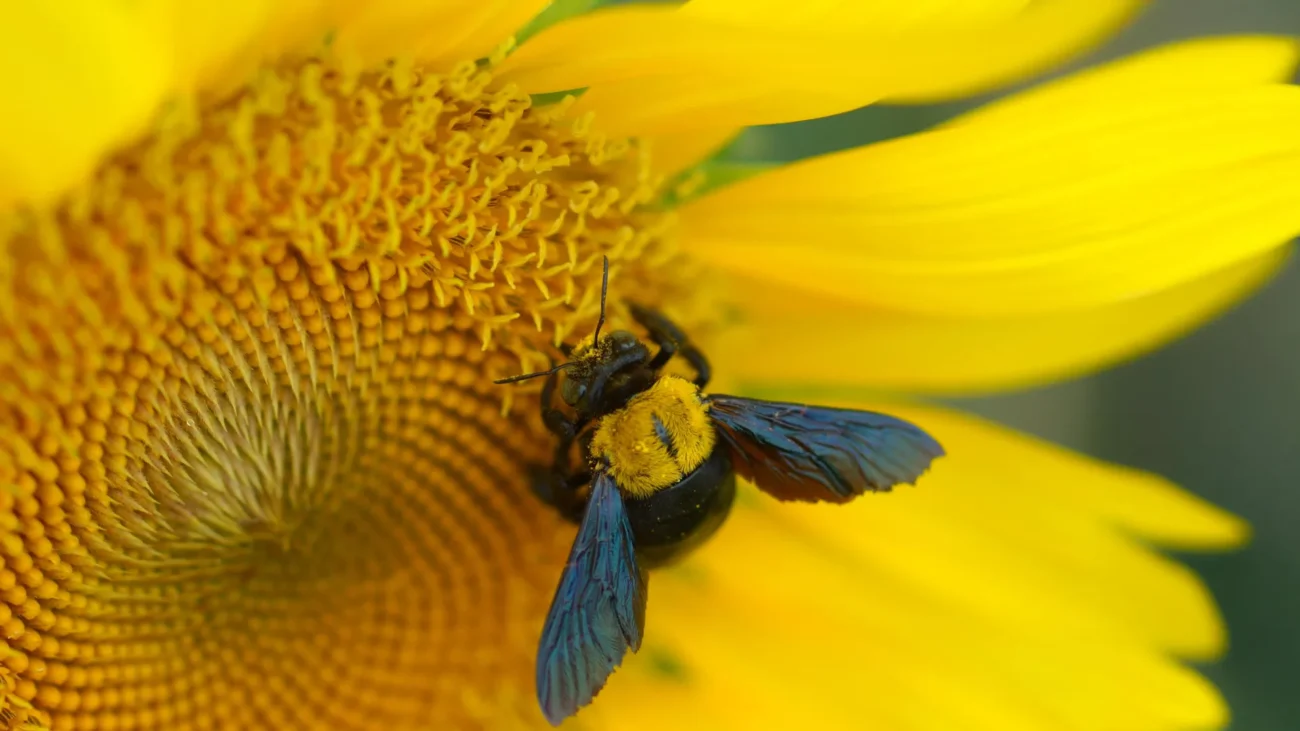
The quiet crisis unfolding within the world’s ecosystems has reached a critical juncture for some of nature’s most industrious laborers, as recent scientific investigations reveal that native bee species relying on plant stems for their nurseries are alarmingly vulnerable to the accelerating pace of global warming. While public consciousness regarding pollinator decline has historically centered on European honeybees and habitat loss due to deforestation, a comprehensive collaborative study published in the prestigious journal Nature Communications shifts the scientific lens toward native Australian bees. The findings paint a stark picture: architecture dictates survival. While subterranean dwellers can burrow away from scorching heatwaves, stem-nesting insects find themselves trapped in natural solar ovens, with little to no thermal insulation to shield them from extreme temperature spikes.
This landmark research was spearheaded by an extensive coalition of academic institutions spanning the Australian continent. Researchers from Macquarie University, The University of Sydney, La Trobe University, Flinders University, the University of Wollongong, Adelaide University, and The University of Queensland pooled their expertise to examine the physiological heat tolerance of 95 distinct native bee species. Spanning geographical coordinates from the sultry, humid tropical north down to the cooler, temperate southern regions of eastern mainland Australia, the research team sought to map out how evolutionary traits dictate an insect’s capacity to withstand thermal stress in an era defined by anthropogenic climate change.
The Architectural Divide: How Nesting Behavior Dictates Thermal Exposure
Australia boasts an extraordinary wealth of biodiversity, housing approximately 1,700 native bee species. Unlike the social, hive-building honeybees introduced by European settlers, the vast majority of Australia’s native bees are solitary creatures, exhibiting a fascinating array of lifestyles and reproductive strategies. Generally speaking, these native populations can be categorized into three primary nesting guilds: subterranean nesters that excavate elaborate tunnels and burrows deep into the earth; wood-nesting species that utilize pre-existing cavities in decaying timber, tree hollows, or fallen branches; and stem-nesting bees that occupy hollow or pithy plant stems, twigs, and small natural openings in flora.
The divergence in survival rates among these groups under thermal stress is starkly dictated by physics and geography. Lead author Dr. Carmen da Silva, a Research Fellow within the Pollinator Futures Research Centre at Macquarie University in Sydney, emphasizes the protective advantages afforded by subterranean architecture.
"Bees that nest underground can hide from extreme heat," Dr. da Silva explains. "As a result, they don’t experience temperatures as high as those that live above ground, particularly species that live in thin plant stems that offer very little insulation from the heat outside."
In contrast, those residing in narrow plant stems are completely exposed to the whims of atmospheric weather patterns. Because plant stems possess minimal mass and lack thermal inertia, they absorb and radiate heat rapidly. Consequently, stem-nesting species exhibit the lowest capacity to buffer against unfavorable environmental temperatures, placing them on the front line of climate vulnerability and making them susceptible to near-term population declines as global temperatures continue to rise.
Geographic Vulnerability and the Tropical Paradox
Beyond nesting mechanics, the study uncovered a compelling geographic gradient in thermal resilience. When analyzing the distribution of the 95 species across eastern Australia, the researchers noted that bee populations inhabiting tropical regions closer to the equator face the most severe overall risks from a warming climate.
This discovery challenges intuitive assumptions within conservation ecology. One might naturally presume that insects evolving in traditionally warm, tropical climates would possess superior physiological adaptations to handle high temperatures. However, Dr. Vanessa Kellermann, a Senior Lecturer in the Department of Ecology, Plant and Animal Sciences at La Trobe University and a senior author of the study, points out the profound complexities involved in forecasting climate vulnerability.
"Predicting which species will be vulnerable to climate change is one of the biggest challenges in ecology," Dr. Kellermann notes. "We found bee species with the highest heat tolerance were not necessarily the safest from warming, because many of them already live in extremely hot environments."
This phenomenon underscores the concept of thermal safety margins. Tropical species are frequently operating close to their maximum physiological limits. Even if a tropical bee possesses a high absolute heat tolerance, it may already inhabit an environment that pushes those limits to the brink. When additional increments of global warming are factored in, these species find themselves with virtually no evolutionary wiggle room, as the ambient temperatures frequently breach their critical thermal maxima.
The Broader Ecological and Agricultural Implications
The ramifications of a widespread native bee decline extend far beyond the loss of biodiversity; they strike at the heart of ecological stability and global food security. While agricultural sectors heavily rely on managed honeybee colonies for crop pollination, native bees play an irreplaceable, specialized role in fertilizing both wild flora and high-value agricultural commodities.
Dr. da Silva underscores the dual importance of these insects: "Bees are critical in ecosystems all over the world because of their role as pollinators, and they’re under threat from warming and drying climates. Bees sustain native ecosystems and play a crucial role in agricultural crop production — tropical native bees are vital pollinators for crops like macadamia nuts, avocados, mangos, and lychees."
The pollination of macadamias and avocados, in particular, relies heavily on the efficient foraging behaviors of native insect populations. Unlike honeybees, which may ignore certain floral structures or struggle with specific pollination mechanics, many native Australian bees are co-evolved with native flora and agricultural crops, performing "buzz pollination" or other specialized techniques necessary to maximize fruit set and crop yields. A destabilization of these native populations due to thermal stress threatens commercial agricultural supply chains, potentially leading to reduced harvests and economic strain for growers specializing in tropical and subtropical orchards.
Knowledge Gaps and the Path Forward for Conservation
Despite their immense ecological and economic value, Australia’s native bees remain under-studied compared to their vertebrate counterparts or high-profile invertebrate species like butterflies. The sheer diversity of the continent’s bee fauna—ranging from the iconic, metallic-green neon cuckoo bee to tiny, stingless social bees—presents a monumental challenge for taxonomists and conservation planners alike.
Dr. Ros Gloag, a co-senior author of the study and Senior Lecturer in Evolutionary Biology in the School of Life and Environmental Sciences at the University of Sydney, highlights the urgent need for foundational research into insect behavior and ecology.
"We still know so little about most of Australia’s amazing native bees," Dr. Gloag states. "This study helps us recognise that having a better understanding of native bee behavior is key to identifying the greatest threats to their wild populations."
Without granular data regarding the microclimates experienced by bees inside their nests, researchers cannot accurately model future extinction risks or design targeted conservation interventions. Traditional conservation strategies—such as establishing protected wilderness areas—may prove insufficient if the fundamental microhabitats within those areas, such as the availability of suitable plant stems and deadwood, are altered or superheated by changing climate conditions.
A Critical Turning Point for Insect Conservation
The publication of this research in Nature Communications marks a pivotal shift in how scientists assess climate vulnerability among invertebrates. By moving past broad generalizations and examining the specific micro-architectural realities of nesting guilds, researchers have provided conservationists with a sharper analytical tool.
Moving forward, wildlife management and agricultural planning must account for the micro-climatic conditions experienced by vulnerable species. Protecting stem-nesting bees will likely require active habitat management strategies that preserve dense understories, maintain corridors of diverse native vegetation, and ensure an abundance of nesting substrates that can buffer against extreme heat events.
As global greenhouse gas emissions continue to drive ambient temperatures upward, the plight of the stem-nesting bee serves as a canary in the coal mine for insect biodiversity. Safeguarding these microscopic architects requires a concerted effort from the scientific community, agricultural industries, and policymakers to preserve not just the open landscapes where bees forage, but the delicate, hidden micro-environments where the next generation of pollinators is raised.

