


The tranquil waters of the Vjosa-Narta Protected Landscape, one of the most significant ecological corridors in the Mediterranean, have become the epicenter of a fierce national debate regarding the future of Albania’s development. In early May, the sudden arrival of heavy machinery within this protected zone ignited a confrontation that has transcended local environmental concerns, evolving into a litmus test for the rule of law, government transparency, and the nation’s aspirations for European Union integration. As the country balances its economic ambitions against its international environmental obligations, the Vjosa-Narta delta stands as a symbol of a broader struggle: whether to prioritize short-term luxury tourism or long-term ecological and democratic sustainability.
A Chronology of the Crisis
The controversy began in early May, when local observers and conservationists witnessed the unannounced arrival of industrial vehicles within the Narta Lagoon, a critical component of the Vjosa-Narta Protected Landscape. The government initially characterized these activities as a "technical survey" intended to facilitate a preliminary environmental assessment for a proposed luxury resort project. However, the physical intervention on the ground quickly contradicted official statements.
Within days, the channel connecting the Narta Lagoon to the Adriatic Sea—a vital artery for the lagoon’s hydrological health—was completely obstructed by construction debris and earthworks. By blocking this connection, the intervention halted the natural exchange of water, threatening the delicate salinity balance and oxygen levels necessary to sustain the lagoon’s unique ecosystem.
By mid-May, local residents and activists mobilized to halt the machinery, only to be met by private security firms and the installation of barbed-wire fencing. Footage of these confrontations, which depicted citizens clashing with private contractors, circulated globally, drawing immediate condemnation from international NGOs and environmental watchdogs. These grassroots protests rapidly expanded, evolving into nightly demonstrations in Tirana that have persisted for over three months.
Ecological Significance and the Risks of Irreversible Damage
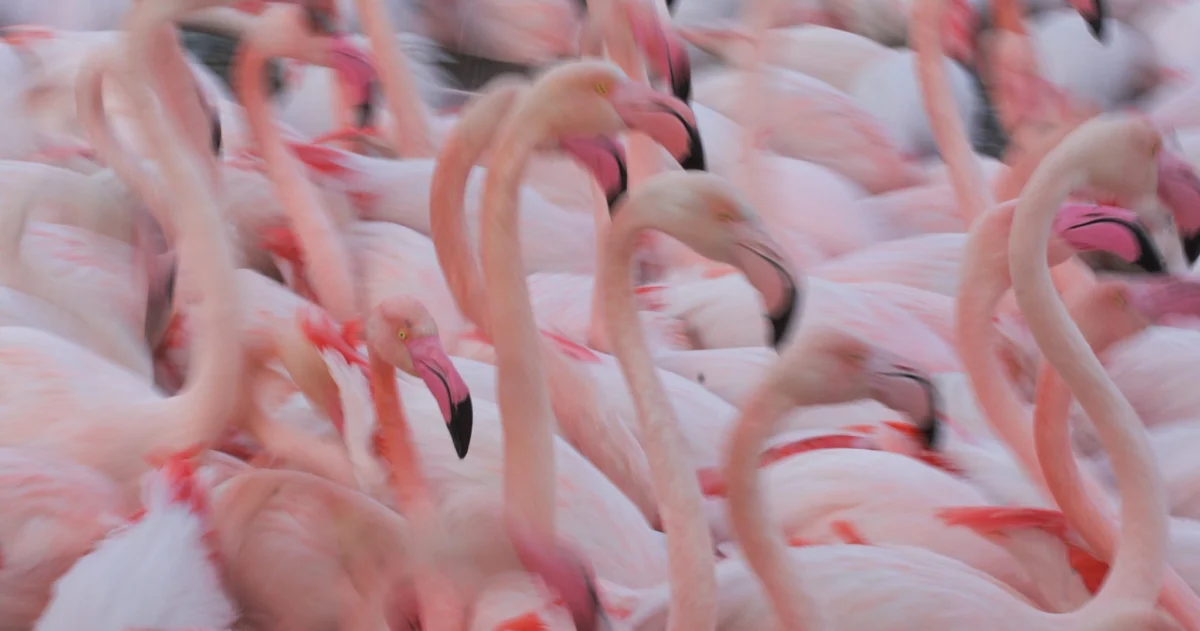
The Vjosa-Narta landscape is not merely a scenic coastline; it is an irreplaceable biological sanctuary. As part of the wider Vjosa Delta—often described as Europe’s last wild river system—this region supports a staggering array of biodiversity. It serves as a critical stopover on the Adriatic Flyway, a primary migratory route for birds traveling between Africa and Europe. Ornithologists have documented over 200 bird species within the area, including the iconic Dalmatian pelican and large populations of Greater Flamingos.
Beyond its avian significance, the delta contains three "priority" habitat types as classified under European Union standards, including sensitive wetlands, coastal dunes, and rare forest ecosystems. Scientists warn that the hydrological disruption caused by the May intervention risked an ecological collapse. The obstruction of the lagoon’s mouth endangered the food chain, specifically threatening the nesting grounds of sea turtles and the feeding habits of resident bird populations. Environmental experts emphasize that the damage inflicted on these habitats cannot be easily reversed; some areas, if fully degraded, would require decades of active restoration to return to their baseline state.
Legislative Friction: The 2024 Law and EU Accession
At the heart of the legal dispute is a controversial legislative amendment passed in 2024, which effectively reclassified previously protected areas to permit large-scale luxury tourism and infrastructure development. This legislative pivot has placed the Albanian government in direct conflict with European Union environmental directives, specifically the Habitats Directive and the Birds Directive.
The EU’s position has been firm. Membership accession is contingent upon adhering to a strictly defined "acquis communautaire," which mandates rigorous protection for areas of high ecological value. The European Parliament signaled its stance on June 17, issuing a formal resolution that called for an immediate moratorium on all construction permits and ongoing works within protected sites until the 2024 law is repealed. This development transformed a local land-use dispute into a core requirement for Albania’s EU integration. Failure to reconcile this law with EU standards could theoretically stall the country’s progress toward membership, underscoring the high political stakes involved.
Official Responses and the Governance Gap
The Albanian government has faced intense scrutiny over its handling of the Vjosa-Narta project. While authorities maintain that the projects are essential for economic growth and the modernization of the tourism sector, the lack of a transparent, independent Environmental Impact Assessment (EIA) has severely eroded public trust.
Critics argue that the government’s reliance on private security to manage public dissent in a protected area reflects a troubling shift in governance. By prioritizing investment interests over established environmental protections, the administration has been accused of bypassing democratic oversight and public consultation. International observers, including representatives from the European Commission, have noted that the lack of institutional transparency in the Narta case is inconsistent with the standards of a candidate country preparing for EU integration.
Analytical Perspective: Development vs. Preservation
The struggle in the Vjosa-Narta region highlights a recurring dilemma for emerging economies in the Mediterranean: the pursuit of "mass tourism" as a quick engine for GDP growth versus the preservation of natural capital. Analysis of the tourism sector indicates that high-end, sustainable, and eco-conscious tourism is increasingly the most profitable long-term strategy for Mediterranean nations.
Destroying the very landscape that attracts visitors in order to build luxury resorts is, according to many economists, a "perverse incentive." Once the wild, pristine character of the Vjosa Delta is replaced by concrete infrastructure, its primary value—as a unique, protected, and biodiverse destination—is permanently extinguished. Albania stands at a crossroads where it can either replicate the unsustainable development patterns seen in other Mediterranean countries during the late 20th century, or it can pioneer a model that integrates ecological conservation with economic advancement.
The Path Forward: A Question of National Identity
As the one-hundred-day mark of the protests passes, the Vjosa-Narta crisis remains unresolved. While the lagoon mouth has been reopened—allowing for the temporary resumption of natural water flow—the threat of further development persists. The flamingos and pelicans continue to inhabit the lagoon, but their future remains tethered to the legislative and political choices of the state.
The protesters in Tirana and the local communities in the delta view this not merely as an environmental fight, but as a defining moment for Albania’s national identity. They argue that a modern, democratic Albania should be defined by its ability to protect its natural heritage for future generations, rather than selling it off to the highest bidder.
The international community continues to watch closely. The resolution of the Vjosa-Narta case will likely serve as a precedent for how Albania handles similar conflicts as it approaches the final stages of its EU accession. For the government, the challenge is clear: it must decide whether to entrench a governance model that views public land as an asset for exploitation, or to pivot toward a model defined by legal compliance, democratic transparency, and the long-term stewardship of the nation’s most vital ecological assets. The choice, while complex, will ultimately dictate the environmental legacy of the country for decades to come.

